
REVIEW · EVEREST BASE CAMP TREKS
Gokyo to Everest Base Camp Trek
The great appeal here is that you do not simply walk to Everest Base Camp and turn around. You first reach the turquoise Gokyo Lakes, climb Gokyo Ri at 5,483 meters, then cross the high Cho La Pass before approaching Everest from the west. It is a tougher, more varied route through Sherpa country, with suspension bridges, glaciers, monasteries, and huge Himalayan views.
I like the practical setup: flights, permits, meals, a guide, porter support, filtered trail water, and a sleeping bag are included. I also like the built-in acclimatization days at Namche and Gokyo. The main drawback is the altitude and the demanding schedule, especially the early start for Cho La and the long day to Everest Base Camp.
Key points to know before booking
- Gokyo comes before Everest Base Camp: You see the famous base camp route and the quieter Gokyo Valley in one trip.
- Cho La reaches 5,300 meters: This is a real high-pass crossing, not just a scenic walk.
- Gokyo Ri and Kala Patthar add major climbs: Both viewpoints require effort but offer some of the finest mountain panoramas.
- The package is well supported: Flights, airport transfers, permits, meals, guide, porter, gear, and lodging are included.
- The group is capped at 15 people: That is small enough for personal support without promising a private trek.
- Weather can change the plan: Lukla flights and high-pass conditions are outside the operator’s control.
Why this route is more rewarding than a standard Everest walk
The usual Everest Base Camp route is famous for good reason, but the Gokyo to Everest Base Camp circuit gives you more variety. You follow the Dudh Koshi River into the Gokyo Valley, reach the source area around the Gokyo Lakes, climb Gokyo Ri, cross Cho La, and then join the classic route near Lobuche.
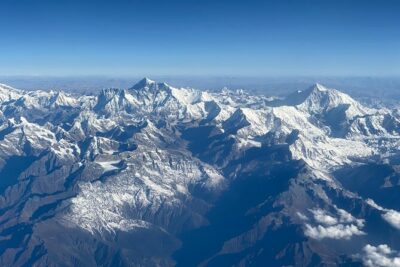
That extra section matters. Gokyo offers wide views toward Cho Oyu, Everest, and Makalu, while the Cho La crossing brings a more remote, serious mountain feel. You also get the Sherpa towns of Namche Bazaar, Phortse, Pangboche, and Tengboche rather than seeing only the main trail.
The tradeoff is simple: this is not the easiest version of the Everest trek. You spend several nights above 4,000 meters, sleep in basic mountain lodges, and cross a 5,300-meter pass. You should have a moderate fitness level and be comfortable walking for many hours on uneven ground.
More Hiking Tours in Kathmandu
- Everest Base Camp Trek – 14 Days
★ 5.0 · 1,499 reviews - Everest Base Camp Trekking
★ 5.0 · 485 reviews - Nagarkot Sunrise View and Day Hiking from Kathmandu
★ 5.0 · 471 reviews
Days 1 and 2: Kathmandu to Lukla and Phakding
Your trip begins with airport pickup at Tribhuvan International Airport in Kathmandu. An Ace the Himalaya representative meets you outside the terminal and transfers you to your starting hotel. The package includes two nights in a three-star Kathmandu hotel, though the detailed schedule uses one arrival night and one return night.
The next morning starts early with a roughly 35-minute flight to Lukla and Tenzing and Hillary Airport at 2,804 meters. This short flight is a major part of the adventure. It replaces several days of road travel and puts you directly at the trailhead.
From Lukla, you begin walking toward Phakding. The day is long in the schedule, though the actual walking time can vary with flight timing and trail conditions. Your guide briefs you on the route and helps set the pace.
Phakding is a useful first stop because the elevation gain is limited compared with the days ahead. You stay in a guesthouse, and accommodation in Lukla, Phakding, and Namche is described as twin sharing with attached toilets. Do not expect city-hotel comfort once you leave Kathmandu.
Day 3: Suspension bridges and the climb to Namche Bazaar
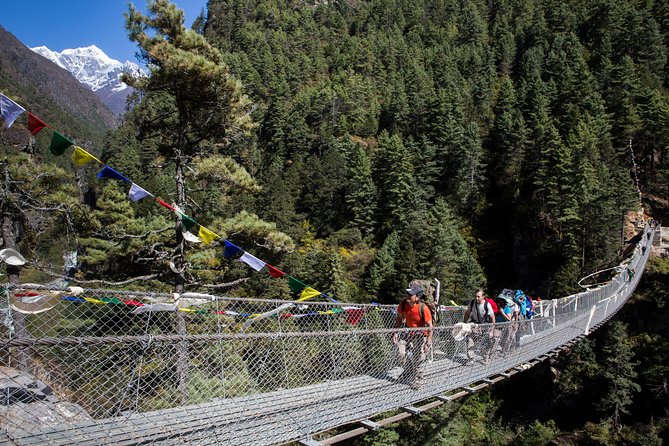
The path follows the Dudh Koshi and crosses the river several times on suspension bridges decorated with prayer flags. These crossings are memorable, though the height and movement can make the first ones feel exciting.
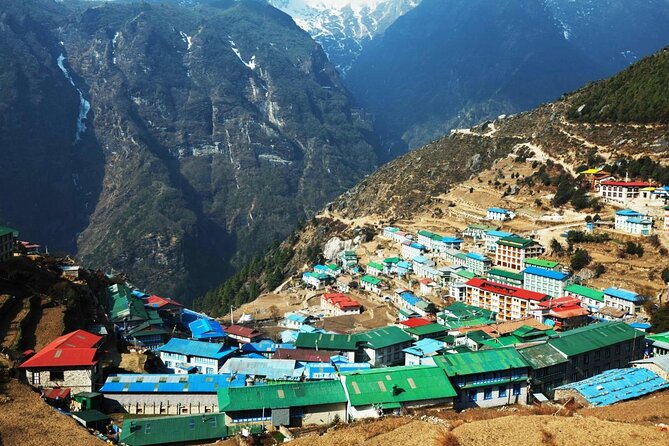
After entering Sagarmatha National Park, the trail climbs toward Namche Bazaar. This is one of the key physical tests early in the trek. The town sits at about 3,440 meters and is the main trading and supply center for the Khumbu region.
Namche is more than an overnight stop. It is where you begin to understand how mountain communities function. You may see porters, trekkers, pack animals, shops, lodges, and Buddhist symbols sharing the same steep streets.
Day 4: Acclimatization in Namche
A rest day in Namche is one of the smartest parts of the schedule. You do not spend the whole day in bed. Instead, the plan calls for a short hike to a museum featuring Sherpa customs and local mountain culture.
The point is to climb higher for a while and then sleep lower. That gentle exposure helps your body adjust before the trail rises toward 5,000 meters and beyond. Use the day to drink water, organize your pack, and tell your guide honestly how you feel.
The group limit of 15 is helpful here. It allows the guide to keep an eye on different walking speeds and symptoms, although the experience will still be shared with others rather than tailored entirely to you.
More Everest Base Camp Treks in Kathmandu:
- Everest Base Camp Helicopter Tour landing at Everest View Hotel
★ 5.0 · 668 reviews - Everest Base Camp Trekking – 13 Day
★ 5.0 · 365 reviews - Everest Base Camp Trek -14 Days
★ 5.0 · 321 reviews - Everest Base Camp Helicopter Tour landing at Hotel Everest View
★ 5.0 · 218 reviews
Days 5 and 6: Phortse, Machhermo, and the approach to Gokyo
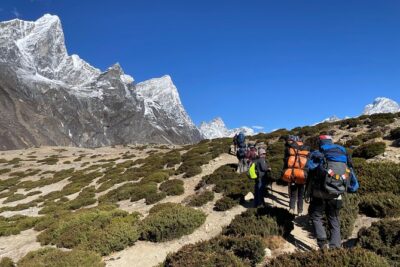
Leaving Namche, the trail climbs through rhododendron, juniper, and conifer country toward Phortse. In spring, the forest can make this section especially appealing, but the path is still a serious uphill walk.
You pass Yak Kharka and gain views down toward Kengtega and up toward Cho Oyu. Phortse gives you a quieter night than Namche and places you closer to the high valley.
The next stage reaches Machhermo. You climb a ridge with views back toward Kengtega, descend to a river, then climb again toward the terminal moraine of the Ngozumpa Glacier. The repeated ups and downs can feel harder than a steady ascent, particularly as the air gets thinner.
Machhermo is an important altitude stop before Gokyo. This is the point where pacing becomes more important than speed. If you rush now, the following climbs can become much less enjoyable.
Days 7 and 8: Gokyo Lakes and Gokyo Ri
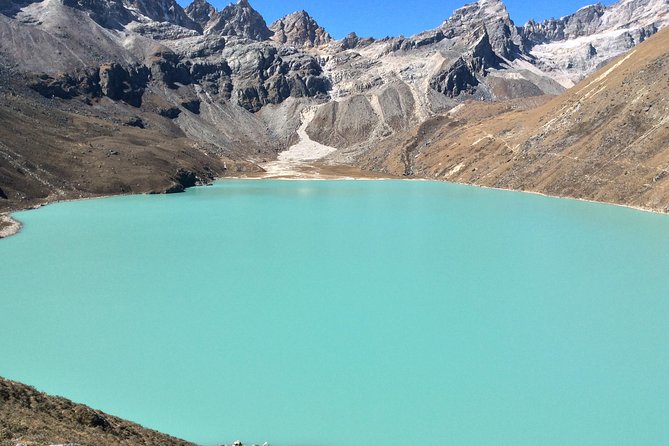
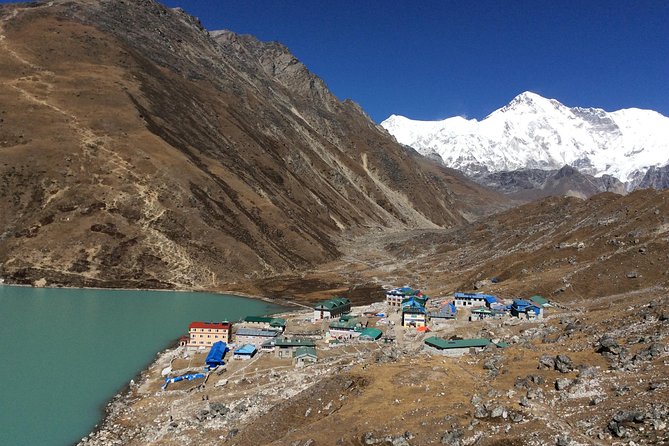
Gokyo sits at about 4,790 meters and serves as your base for two nights. The village and surrounding lakes are among the strongest reasons to choose this circuit.
The route follows the Dudh Koshi toward its source area and the Gokyo Lakes. The water, ice, rock, and high peaks create a setting very different from the lower river valleys. You also gain a west-facing view toward Cho Oyu, Everest, and Makalu.
Day 8 brings the climb to Gokyo Ri, listed at 5,483 meters. The ascent is steep, and the thin air makes every step count. The reward is a broad panorama over the Gokyo Valley, surrounding peaks, and glacier country.
This is not a casual viewpoint walk. You need to start with enough energy and accept that the climb may take time. A guide can help with timing and pace, especially if weather changes. The summit attempt is included, but reaching the top should never matter more than staying safe.
Day 9: Thangnak and the reality of remote lodges
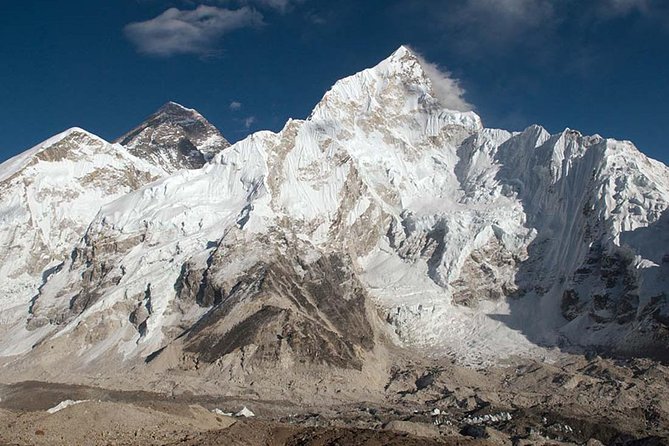
After Gokyo, you walk toward Thangnak, also known as Dragnag in some maps and route descriptions. This is the staging point for Cho La.
Accommodation here is specifically described as very basic, with dormitory-style rooms because of the remote location. That detail is worth taking seriously. You may have more basic facilities than in Lukla, Phakding, or Namche, and comfort will be limited.
This short pause is valuable because it puts you close to the pass. It also gives you time to prepare clothing, water, snacks, and any gear needed for an early start.
Day 10: Crossing Cho La at 5,300 meters
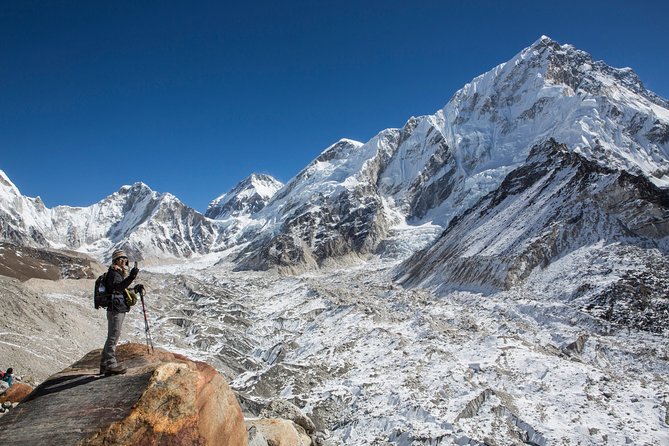
Cho La is the defining challenge of the circuit. The group starts around 4:00 or 5:00 in the morning, aiming to reach the pass between 9:00 and 10:00 before afternoon weather worsens.
At about 5,300 meters, this is high-altitude trekking in a serious sense. The route may include snow and difficult footing, depending on conditions. You should expect a demanding day, not a simple connection between two villages.
The early start has a practical purpose. Mountain weather can shift quickly, and reaching the pass earlier may offer a better chance of stable conditions. Still, the pass is not guaranteed. If snow, storms, or trail conditions make it unsafe, your guide may need to change the plan.
Past Cho La, the trail leads toward Lobuche. The combination of height, cold, uneven ground, and a long day makes this one of the sections where fitness and sensible pacing matter most.
Day 11: Lobuche and the approach to Everest Base Camp
The route to Lobuche is described as easier and shorter, taking about four hours. That gives you a useful recovery period after Cho La.
Lobuche is a key staging point for Everest Base Camp. By now, the route feels more exposed and more focused on the high mountain goal. The rest day is not necessarily a full rest day, but the shorter walk allows your body to settle before the major base camp push.
You will likely appreciate the simple rhythm of this part of the trip: walk, eat, drink, rest, and prepare for the next morning. At high altitude, ordinary routines become important.
Day 12: The long walk to Everest Base Camp
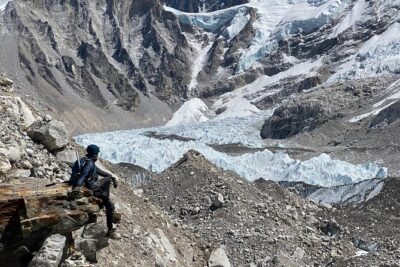
The walk to Everest Base Camp follows the Khumbu Glacier and reaches about 5,365 meters. It is described as a big and difficult day, and you should plan for a slow pace over rough terrain.
Base Camp is the emotional center of the trek. You are as close as a non-climber can get to Everest without mountaineering equipment. In spring, expedition activity may add tents and movement to the scene, though the exact appearance depends on the season.
Keep your expectations realistic. Mount Everest itself is not always displayed in the clearest way from Base Camp. The glacier, moraine, surrounding peaks, and the knowledge of where climbers begin their ascent are all part of the experience.
The return to your lodge is part of the same long day. Save energy for the walk back. Reaching Base Camp is not the end of the day’s effort.
Day 13: Kala Patthar for the classic Everest view
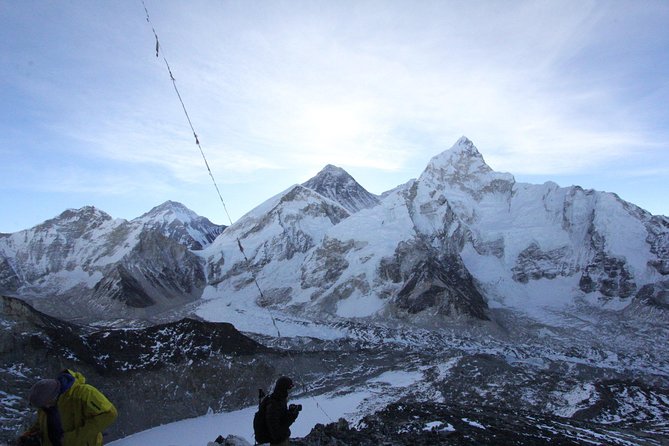
Kala Patthar reaches about 5,555 meters and is described as one of the hardest but most rewarding days. The climb is demanding, especially after the base camp walk.
The viewpoint is prized for its mountain panorama and close visual relationship with Everest. Many people find the view from Kala Patthar more satisfying than the view from Base Camp itself because the summit and surrounding peaks are easier to appreciate from above.
The schedule gives only a short listed duration for the stop, but do not read that as an easy excursion. The climb, time at the viewpoint, and descent all require effort. Cold, wind, and thin air can make the top uncomfortable even when the view is clear.
Days 14 to 16: Returning through Namche and Lukla
After the high point of the trek, you descend through Pangboche and Tengboche before reaching Namche. Going downhill is generally easier on your breathing, but it can be hard on knees and ankles.
Tengboche is notable for its Buddhist monastery and mountain setting. The itinerary highlights monasteries at high elevation, so this part adds a cultural dimension to a trip that could otherwise become all about peaks and mileage.
You spend another night in Namche, then continue to Lukla on the final trekking day. The afternoon in Lukla is free, giving you time to reflect, rest, or look around town.
The return flight to Kathmandu takes about 35 minutes. Weather can disrupt flights in the Everest region, so keep your schedule flexible if you have an international flight immediately after the trek. The standard plan includes a final Kathmandu night and airport drop-off on Day 17.
What the $2,200 price really covers
At $2,200 per person, this is not a cheap walk, but the package includes many costs that can add up quickly. You receive airport transfers, two Kathmandu hotel nights, trekking accommodation, a licensed English-speaking guide, one porter for every two clients, trekking permits, domestic airfare, meals during the trek, filtered water, a duffel bag, sun hat, down jacket, and sleeping bag.
The included Katadyn Pocket Water Filter is a useful detail. Instead of relying only on purchased bottled water, the operator provides filtered trail water. Seasonal fruit is also included, a small but welcome addition during long days.
The package covers breakfast for 16 days, lunch for 14 days, and dinner for 14 days. Lunch and dinner in Kathmandu are not included. Alcohol, hot and cold drinks, personal equipment, international airfare, visa costs, insurance, and staff tips are extra.
The biggest financial issue is insurance. You must have coverage for emergency high-altitude rescue and evacuation. Do not treat this as optional. The trek reaches more than 5,500 meters and crosses a high pass where weather can change quickly.
Tips for the guide, porter, and driver are expected. Add that cost to your planning rather than treating the advertised price as the final amount.
Guides, porters, and how the support works
A licensed English-speaking guide and one porter for every two clients are included. The porter arrangement reduces the weight you carry, though you should still keep a daypack with clothing, water, snacks, medication, and valuables.
Past departures have included guides named Nima, Raj Kumar, Raj N, Ramesh, Ganesh, and Lakpa Sherpa, along with porters such as Biroj, Sonam, and Haym. Your assigned team can vary, so do not book on the assumption that a particular person will lead your trek.
The strongest practical feature is flexibility. The route passes depend on weather and trail conditions, and several departures required guides to adjust timing or options. A safety-first approach matters more than rigidly following a printed schedule.
Who should book this Everest circuit
You should consider this trek if you want more than the standard Everest Base Camp route and have the stamina for long, high-altitude days. It suits people who value mountain scenery, Sherpa culture, Buddhist monasteries, and a route that includes both Gokyo and the main Everest corridor.
It is less suitable if you want comfortable lodging, short walking days, or a predictable holiday schedule. The remote Thangnak night is basic, Cho La may involve snow, and the Lukla flights depend on weather.
The maximum group size is 15, which gives you a social group without the scale of a large expedition. Group discounts are available, and confirmation is provided at booking. You need to start at Tribhuvan Airport in Kathmandu, and the experience ends there after the return transfer.
Cancellation is flexible up to six full days before the start for a full refund. A cancellation two to six days ahead receives 50 percent, while cancellations less than two days ahead are nonrefundable. Poor weather cancellation brings a different date or full refund.
Should you book the Gokyo to Everest Base Camp Trek?
I would book this route if the Gokyo Lakes and Cho La sound as appealing to you as Everest Base Camp itself. The circuit offers more scenery and a stronger sense of progression than a direct out-and-back trek, and the included flights, staff, meals, permits, water system, and gear make the $2,200 price easier to justify.
I would not book it for a casual mountain holiday. The high pass, Gokyo Ri, Kala Patthar, and Base Camp all demand real effort. If you prepare properly, listen to your guide, and accept basic conditions, this is a powerful 17-day introduction to the Everest Himalayas.
FAQ
How long is the Gokyo to Everest Base Camp Trek?
The trek lasts approximately 17 days, including arrival and departure arrangements in Kathmandu, the flights between Kathmandu and Lukla, and the walking route through Gokyo, Cho La, Everest Base Camp, and Kala Patthar.
Where does the trek start and finish?
It starts at Tribhuvan International Airport in Kathmandu, Nepal. The activity ends back at the same meeting point after the return to Kathmandu and airport transfer.
What is the maximum group size?
The group can include a maximum of 15 people.
Are flights between Kathmandu and Lukla included?
Yes. The package includes Kathmandu to Lukla and Lukla to Kathmandu airfare.
Is accommodation included?
Yes. Two nights in a three-star Kathmandu hotel and 14 nights in twin-sharing guesthouses are included. Accommodation in Lukla, Phakding, and Namche has attached toilets. Thangnak accommodation is described as basic and dormitory-based.
Are meals included?
Breakfast is included for 16 days, while lunch and dinner are included for 14 days. Lunch and dinner in Kathmandu are not included.
Is a guide and porter included?
Yes. The package includes a licensed English-speaking trekking guide and one porter for every two clients.
Is trekking equipment provided?
A down jacket and sleeping bag are provided for the trek and must be returned afterward. The operator also provides a duffel or kit bag and sun hat. Other personal trekking equipment is not included.
Do I need travel insurance?
Yes. You need travel insurance that covers emergency high-altitude rescue and evacuation. International airfare, Nepal’s entry visa, drinks, personal equipment, and staff tips are also excluded from the price.
Recently added around Kathmandu
- Kathmandu Airport Pickup and Drop-off Services★ 5.0 · 3 reviews
- Kathmandu Paragliding★ 5.0 · 3 reviews
- Kathmandu Chandragiri Cable Car and Swayambhunath Private Tour★ 5.0 · 3 reviews
- Explore The Beauty Of Langtang Valley In 8-Days Trek★ 5.0 · 3 reviews
- Kathmandu: Nightlife and Pub Crawl Tour★ 5.0 · 3 reviews
- Kathmandu: Momo Making Class with a Local Chef★ 5.0 · 3 reviews
- Mountain Flight Experience in Nepal★ 4.5 · 3 reviews
- Everest Base Camp Trek★ 5.0 · 3 reviews
Other Everest Base Camp Treks worth a look
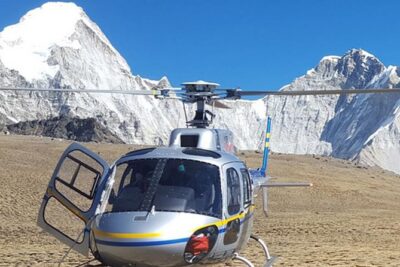
Everest Base Camp Helicopter Tour landing at Everest View Hotel
Read our review →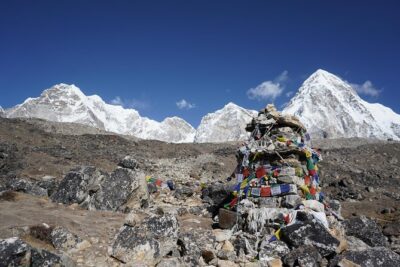
Everest Base Camp Helicopter Tour landing at Hotel Everest View
Read our review →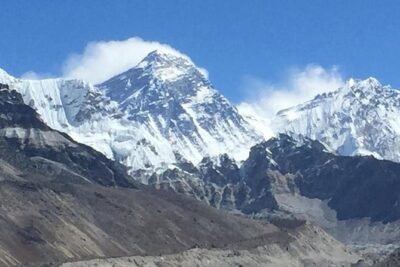
This tour also appears in