
REVIEW · PASHUPATINATH TOURS
Kathmandu: Pashupatinath Temple Aarti Night Tour
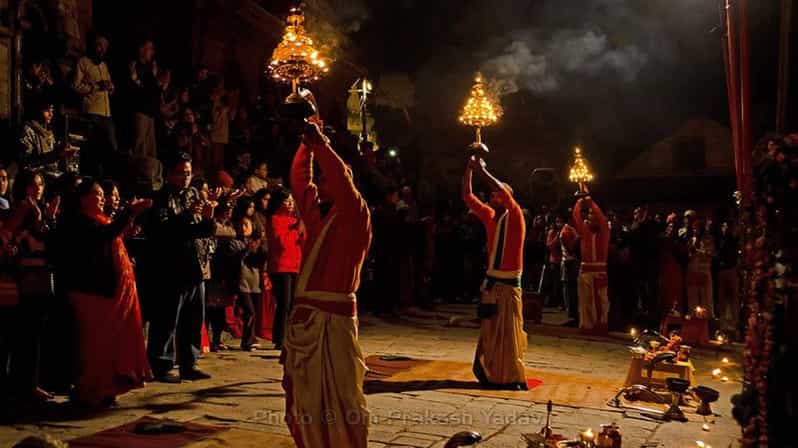
Pashupatinath Temple is at its most affecting after dark, when lamps, chanting, and the Bagmati River turn a major pilgrimage site into a place of active worship. The three-hour private tour includes the evening Aarti ceremony, the temple complex, and the riverside cremation area.
I like the hotel pickup and private car, which remove the usual Kathmandu transport fuss. I also like having an English-speaking guide to explain Lord Shiva, the temple’s customs, and the meaning of what you are seeing. The main caution is timing: one guest arrived late because of the driver and missed the start of the ceremony.
Key points to know
- The Aarti is the centerpiece: You watch an evening light ceremony connected with Hindu worship beside the Bagmati River.
- The setting is a working religious site: Pashupatinath is not simply an old monument. Pilgrims pray here, and cremations take place at Arya Ghat.
- Private touring keeps the pace flexible: You travel with your own group, guide, and included hotel transport.
- Guide Madhu has received especially warm praise: He is noted for enthusiastic explanations and historical stories around the temple grounds.
- The $71 price covers the practical essentials: Transport, hotel pickup and return, guide, entry ticket, and taxes are included.
- Plan for a respectful visit: Bring your passport or a copy, and remember that the cremation area is a place of mourning, not a sightseeing show.
Pashupatinath after sunset
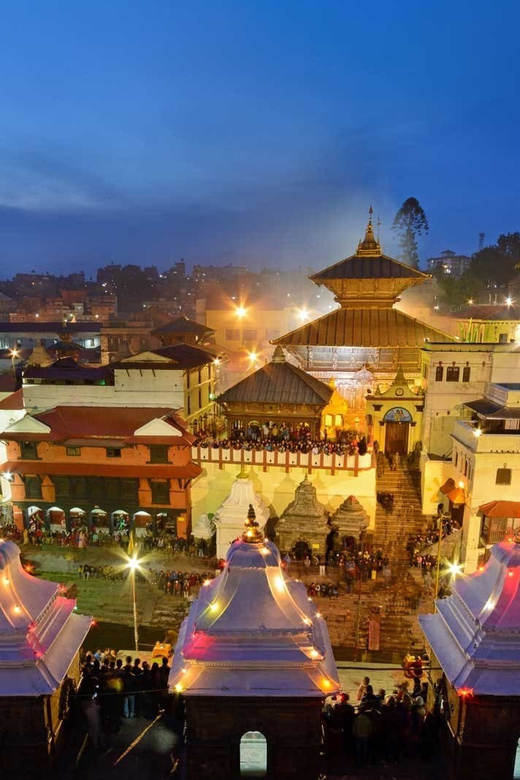
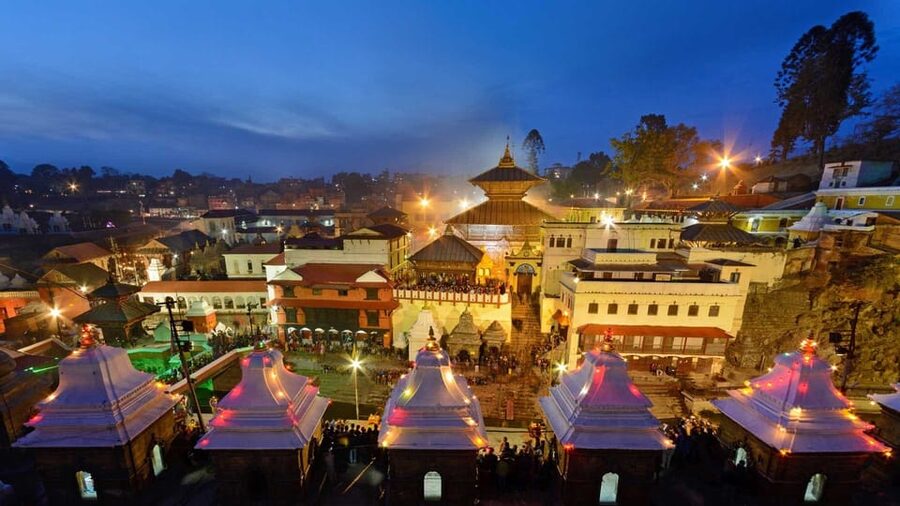
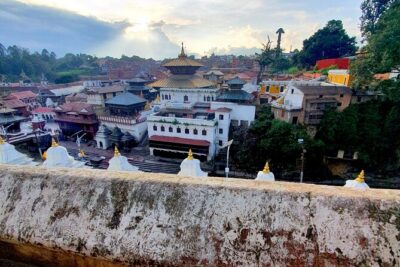
The Pashupatinath Temple complex stretches along both banks of the Bagmati River in Kathmandu. It is one of Nepal’s most important Hindu sites and a UNESCO World Heritage Site, dedicated to Pashupatinath, a form of Lord Shiva.
At night, the golden roof and silver doors catch the light in a way they do not during a quick daytime pass. The evening setting also brings the religious life of the site into sharper focus. You are not just looking at a pagoda-style building from the 17th century. You are watching people pray, offer lamps, gather by the river, and take part in a living tradition.
The complex is believed to have roots reaching back to the 5th century, though the present structure follows several reconstructions and largely dates from the 17th century. That distinction matters. What you see today is not one untouched ancient building, but a long-running sacred site shaped by centuries of rebuilding and devotion.
I find this more rewarding than a standard monument visit because the temple is still used for its original purpose. You should expect religious activity, solemn moments, and a setting that can feel intense rather than polished or museum-like.
More Pashupatinath visits:
- Kathmandu Spiritual Sites: Bodhnath & Pashupatinath Tour
★ 5.0 · 185 reviews - Kathmandu: Pashupatinath Temple Evening Aarati Tour
★ 5.0 · 36 reviews - Pashupatinath Temple, Hindu Crematorium and Aarati in-depth Tour
★ 5.0 · 25 reviews
Hotel pickup and the three-hour evening plan
The tour begins with pickup from your Kathmandu hotel. You are asked to wait in the lobby 15 minutes before the scheduled departure, a small step that matters in Kathmandu traffic and helps the evening get moving on time.
Transport to and from Pashupatinath is included, along with your entry ticket and an English-speaking licensed guide. Since this is a private group, you do not have to match the pace of a large sightseeing party. That is useful at a place where you may want extra time to understand what is happening.
The total duration is three hours. The exact starting time depends on availability, so check the offered departure times before booking. The evening is built around the Aarti, so punctuality is especially important. One guest had a late driver and missed the beginning of the ceremony, although the rest of the visit was still worthwhile.
That is the main practical weakness to keep in mind. A delayed pickup can cost you the most time-sensitive part of the experience. I would be ready in the lobby early and contact the provider promptly if your vehicle has not arrived.
Entering the temple complex with a local guide
Once you reach Pashupatinath, your guide leads you through the complex and explains its religious role. The guide is not just there to point out the roof and doors. You can expect background on Lord Pashupatinath, the temple’s place in Hindu worship, and the traditions connected with the river and surrounding shrines.
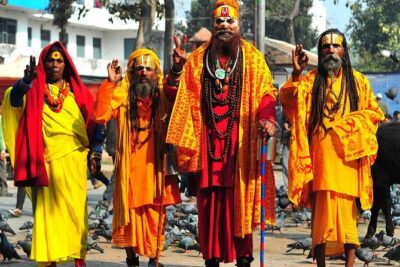
The smaller temples, ashrams, and other structures help make sense of the site. Without context, the complex can feel like a collection of buildings and rituals. With an explanation, the pieces connect: the main pagoda, the riverbank, the shrines, and the worshippers all belong to one sacred area.
Guide Madhu received specific praise for his enthusiasm, historical stories, and willingness to show the temple grounds. That gives you a useful idea of the guide style offered here. The experience is likely to be strongest when you ask questions and allow time for explanation, rather than treating the visit as a quick photo stop.
The tour is conducted in English. It is also listed as wheelchair accessible, though the information does not give details about every surface, riverside section, or route inside the complex. If you use a wheelchair, it is sensible to confirm the exact accessible path before departure.
The golden roof, silver doors, and Shiva tradition
The main temple is a pagoda-style structure with a golden roof and intricately carved silver doors. These are the most recognizable architectural features, but the religious meaning behind the building is the real reason the visit carries weight.
Pashupatinath is dedicated to Lord Pashupatinath, an incarnation of Lord Shiva. For Hindus, it is one of the world’s holiest pilgrimage places. The site draws large numbers of devotees throughout the year and becomes especially important during Maha Shivaratri, the major annual festival dedicated to Shiva.
You may not need a long lecture on Hindu theology to appreciate the setting. What helps is a clear explanation of why people come, what offerings mean, and how the Aarti fits into worship. This is where a good guide adds value to the entry ticket.
The visit is not promoted as a full religious ceremony for participants. You are there to observe respectfully and learn. Dress and behavior should match the setting, and you should follow the guide’s advice about where to stand and what may be photographed.
More things to do after dark in Kathmandu:
- Kathmandu Sunset Tour by Rickshaw Including Durbar Square Visit
★ 5.0 · 73 reviews - 3 Nights 4 Days Chitwan National Park with Tower Night Stay
★ 5.0 · 41 reviews - 3 night 4 Day Yoga & Ayurveda Retreat to Detox the Body & Mind, Nepal
★ 5.0 · 37 reviews - Pashupatinath Evening Aarati: Few Divinely Hours in Kathmandu
★ 4.5 · 23 reviews
Watching the Bagmati Aarti
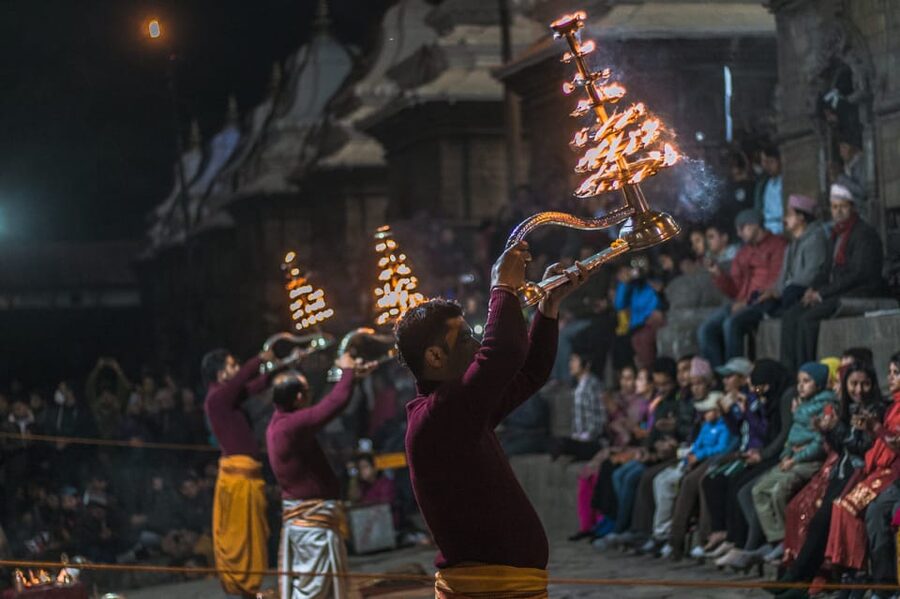
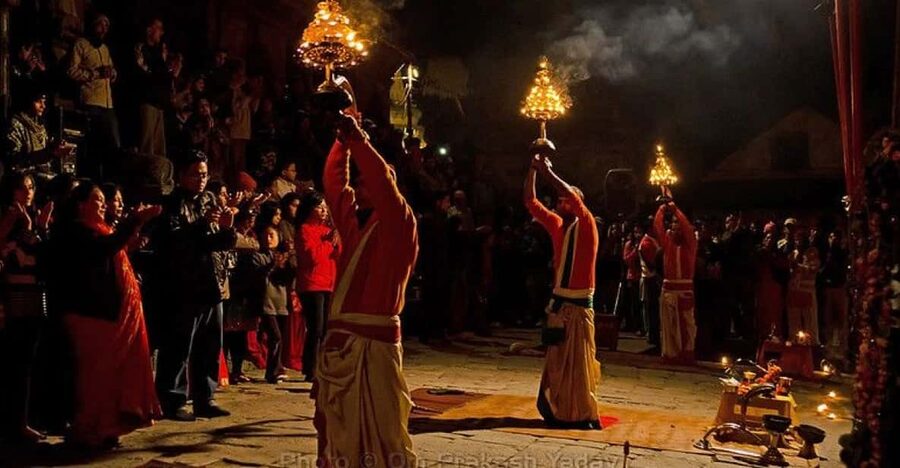
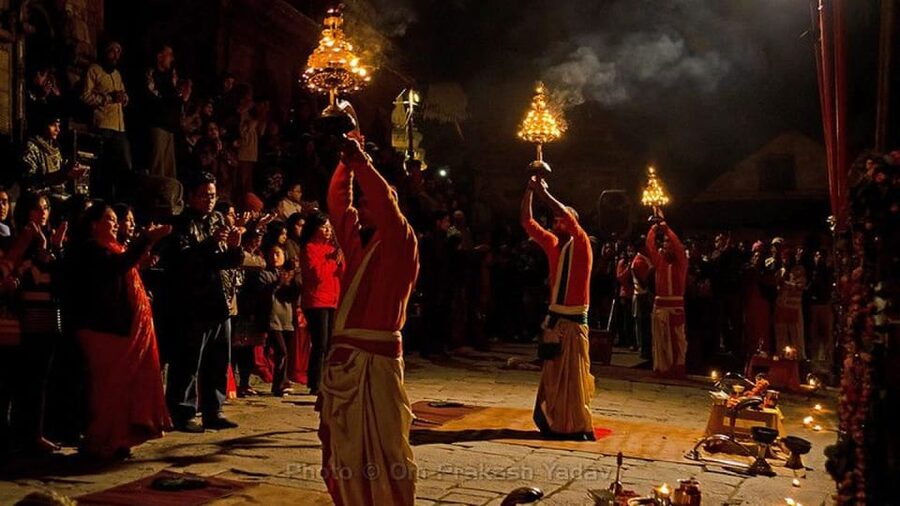
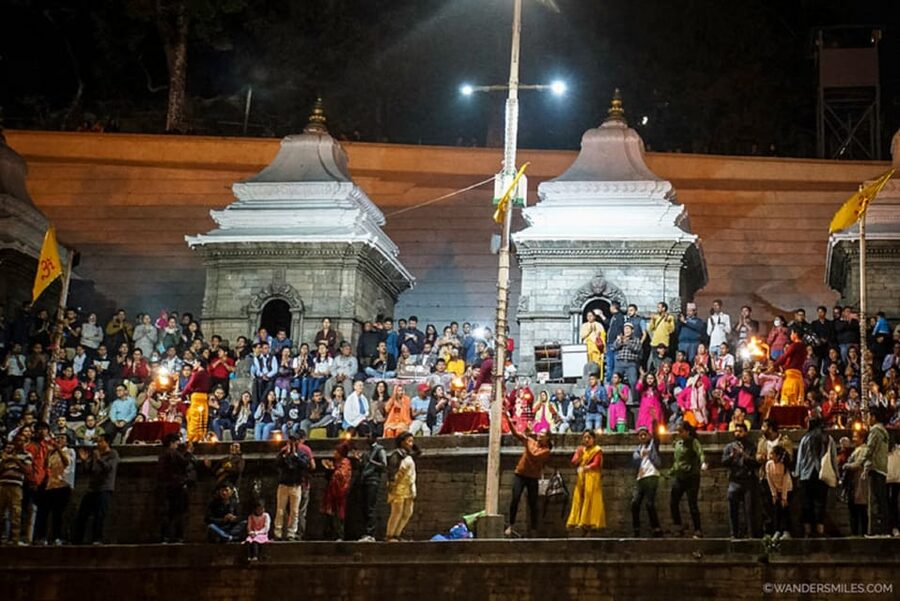
The Aarti is the evening focal point. It is a ceremony of light and devotion held at the Bagmati River, with lamps used as part of the worship. The combination of ritual, music or chanting, riverbank views, and gathered worshippers creates the most memorable part of the three-hour outing.
The ceremony is also the reason timing matters more here than on a typical temple tour. You cannot simply arrive whenever you like and expect to see the same thing. The tour is arranged around the special evening Aarti, but a late pickup can still mean missing its opening moments.
I would treat the ceremony as something to watch quietly rather than something to consume quickly through a camera. The atmosphere is religious and communal. You can take in the movement of the lamps and the sound of the prayers, but the setting calls for patience and restraint.
The Aarti gives the tour its strongest cultural value. The golden temple is impressive, but the ceremony shows how the site functions today. It turns a visit from architectural sightseeing into an encounter with a continuing practice.
Arya Ghat and the Bagmati River
The Pashupatinath complex also includes Arya Ghat, the riverside cremation site. Hindu cremations take place here, and the site is connected with the belief that cremation at Pashupatinath can help the deceased reach moksha, or liberation from the cycle of rebirth.
This part of the visit can be moving and difficult. One guest described watching a live cremation alongside the Aarti as a powerful experience. That does not make it entertainment. You may witness a family’s private grief in a public religious setting, so you should keep your distance, avoid intrusive behavior, and follow local guidance about photography.
The contrast between the Aarti and the cremation area is one of the most striking aspects of Pashupatinath. One riverbank may carry lamps and communal prayer, while another section is connected with death rites. That combination reflects the site’s role in Hindu life and death, but it also means this tour is not ideal for anyone seeking a light, easygoing evening outing.
Your guide’s explanations are especially useful here. The rituals can be hard to interpret from a distance, and a sensitive explanation helps you understand the religious meaning without reducing the moment to a spectacle.
What the private format adds at $71
At $71 per person, this is not the cheapest way to see Pashupatinath if you only want a quick look at the exterior. The value comes from the bundle: hotel pickup and return, private transport, an English-speaking licensed guide, the entry ticket, and taxes.
For a solo visitor or a small group, that convenience can be meaningful. You avoid arranging a separate taxi at night, locating the entrance on your own, and trying to understand a large temple complex without help. The private format also gives you a more personal setting for questions.
The price is easier to justify if you value context and transport more than a bare admission ticket. It is less compelling if you already have local transport, know the complex well, or prefer to explore independently.
Food and drinks are not included. The three-hour duration keeps the evening focused, but you should plan your meal separately. This is a temple visit with transport, not a dinner tour.
The transport receives a high rating overall, with 86 percent of ratings giving it a perfect score. Still, the late pickup reported by one person is worth remembering. Strong overall transport feedback does not remove the need to be ready early and confirm the pickup point.
Who will enjoy this Kathmandu night tour
I would recommend this experience to you if you want an organized introduction to Hindu worship in Kathmandu and prefer not to manage evening transport yourself. It is particularly suitable for first-time visitors, solo travelers who want a guide nearby, and anyone interested in the connection between religion, architecture, ritual, and death customs.
A solo woman can also find reassurance in the private format and hotel return. One solo female guest felt safe and well informed throughout the visit, which reflects the practical benefit of having a guide and arranged transport.
You should think carefully before booking if you are uncomfortable around cremation rites or want a purely architectural tour. Arya Ghat is an important part of the complex, and the Aarti can be emotionally powerful. This is a serious religious place, not a staged evening performance.
The tour is conducted in English, and the private group setup lets you ask for explanations at your own level. It is listed as wheelchair accessible, but you should confirm the precise route if mobility access is essential.
Simple ways to prepare
Bring your passport, or a copy of it, because this is listed as a required item. Keep it accessible rather than buried in your luggage.
Wait in your hotel lobby 15 minutes before pickup. I would allow a little extra time beyond that, since missing the start of the Aarti is the one clear timing risk attached to the experience.
Wear clothing suited to a major religious site and prepare for a respectful, observant visit. The information provided does not specify a dress code, so the safest approach is modest clothing and careful attention to your guide’s instructions.
You do not need to budget for an entry ticket or transport at the temple, since both are included. You do need to arrange your own food and drinks.
The tour offers free cancellation up to 24 hours before departure for a full refund, and you can reserve now while paying later. Those options are useful if your Kathmandu schedule is still changing.
Should you book the Pashupatinath Aarti tour?
Book it if you want the Aarti, a guide who can explain the temple’s meaning, and a simple hotel-to-hotel evening. The strongest parts are the private transport, the cultural context, and the chance to see Pashupatinath as a working place of worship rather than just a historic building.
The $71 cost is fair for the convenience and included services, especially if you are traveling alone or in a small group. Just protect the ceremony’s start time by waiting early in the lobby, and approach Arya Ghat with the respect it deserves.
Skip it if you only want photographs of the golden roof or prefer to explore without a guide. For most visitors seeking a thoughtful, well-organized introduction to one of Kathmandu’s most important religious sites, this three-hour night tour is a strong choice.
FAQ
How long does the Pashupatinath Aarti night tour last?
The tour lasts three hours, including transport to and from the temple.
What is included in the $71 price?
The price includes hotel pickup and drop-off, transportation, a licensed English-speaking guide, the Pashupatinath entry ticket, and all taxes.
Is the Aarti ceremony included?
Yes. The itinerary is built around the special evening Aarti ceremony at Pashupatinath.
Is this a private tour?
Yes. The activity is operated as a private group tour.
Is hotel pickup available?
Yes. Pickup and return to your hotel are included. You should wait in the hotel lobby 15 minutes before departure.
What language does the guide speak?
The live guide speaks English.
What should I bring?
Bring your passport. A copy of your passport is accepted.
Can I cancel the booking?
Yes. You can cancel up to 24 hours in advance for a full refund. The activity also offers a reserve now and pay later option.
Recently added around Kathmandu
- Kathmandu Paragliding★ 5.0 · 3 reviews
- Kathmandu Airport Pickup and Drop-off Services★ 5.0 · 3 reviews
- Explore The Beauty Of Langtang Valley In 8-Days Trek★ 5.0 · 3 reviews
- Kathmandu Chandragiri Cable Car and Swayambhunath Private Tour★ 5.0 · 3 reviews
- Kathmandu: Nightlife and Pub Crawl Tour★ 5.0 · 3 reviews
- Mountain Flight Experience in Nepal★ 4.5 · 3 reviews
- Kathmandu: Momo Making Class with a Local Chef★ 5.0 · 3 reviews
- Everest Base Camp Trek★ 5.0 · 3 reviews
Other Pashupatinath Tours worth a look
Kathmandu Spiritual Sites: Bodhnath & Pashupatinath Tour
Read our review →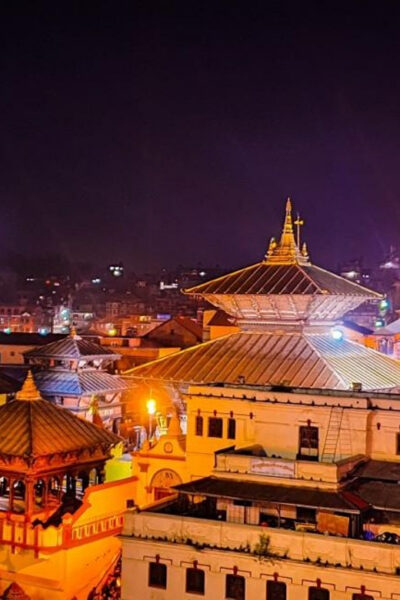
Pashupatinath Temple, Hindu Crematorium and Aarati in-depth Tour
Read our review →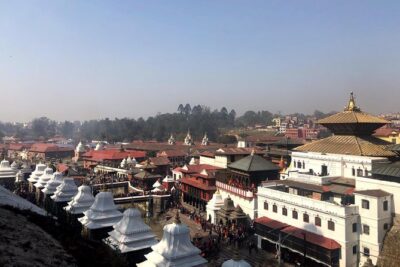
Pashupatinath Evening Aarati: Few Divinely Hours in Kathmandu
Read our review →
PashupatiNath and BoudhaNath – Private/Small Group
Read our review →
Private Half-Day Tour of Boudhanath and Pashupatinath Temples in Kathmandu
Read our review →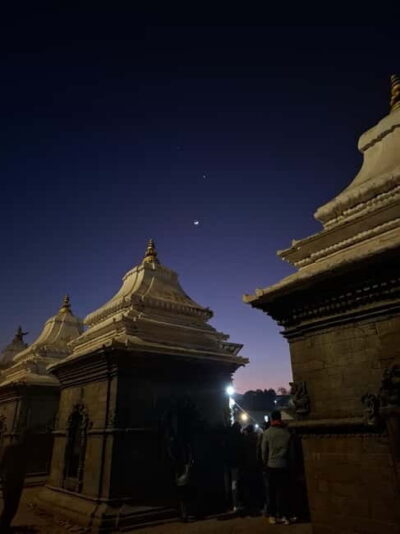
Katmandu: Pashupatinath Open Cremation & Evening Aarati
Read our review →This tour also appears in