
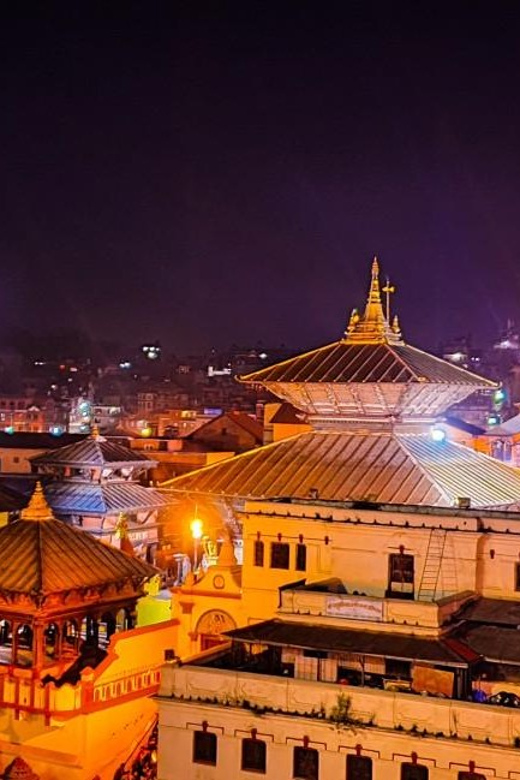
REVIEW · PASHUPATINATH TOURS
Kathmandu: Pashupatinath Temple Evening Aarati Tour
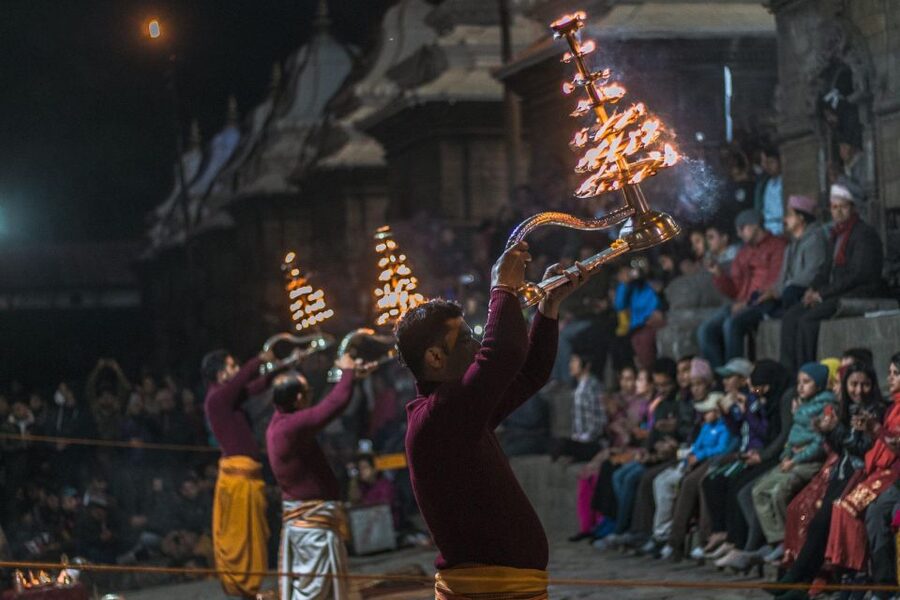
At Pashupatinath, the evening ends with priests lifting oil lamps beside the Bagmati River while songs, bells, and prayers fill the air. I like the 6:00 to 6:30 PM Aarati because it gives you a clear focal point, and I like having a guide explain Hindu symbols and customs as the ceremony unfolds. The main drawback is that the NPR 1,000 temple fee is extra, and non-Hindus cannot enter the inner temple.
I also like the convenience of private hotel transport from central Kathmandu, especially after a long day in the city. Guides such as Razz, Raz, and Shankar have received particularly warm praise for clear explanations and finding a good place to sit. Still, the area can be packed, and one serious complaint involved alleged pressure to buy an expensive rudraksha item, so keep shopping separate from the religious visit.
Key points at a glance
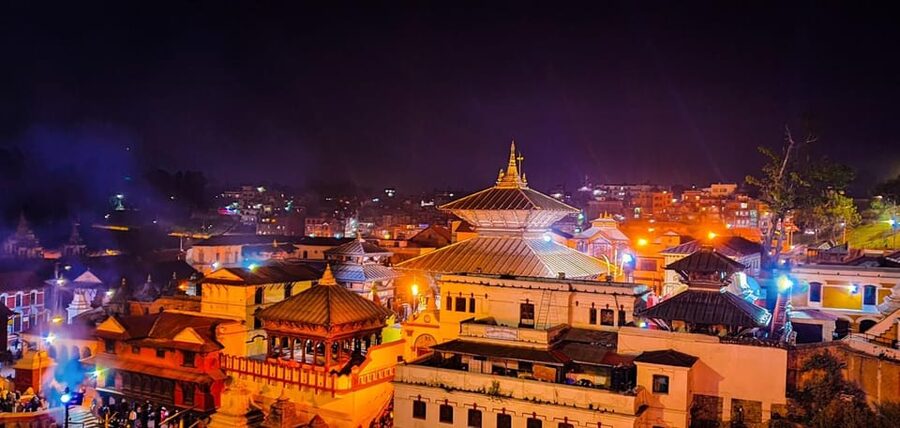
- Oil lamps beside the Bagmati River: Watch priests move lamps in circles during the central evening prayer.
- A 6:00 to 6:30 PM start: The exact time changes with the season, so confirm the pickup time before leaving.
- A guide who adds context: Razz, Raz, and Shankar are among the guides specifically praised for explaining Hindu and Buddhist traditions.
- A private three-hour outing: Air-conditioned transport, hotel pickup, and hotel drop-off are included for central Kathmandu hotels.
- NPR 1,000 extra at the monument: The entry charge is not included in the advertised $22 price.
- A sacred place with firm limits: Non-Hindus can watch the Aarati from the Bagmati River banks but cannot enter the main temple.
Why the Bagmati Aarati is worth your evening
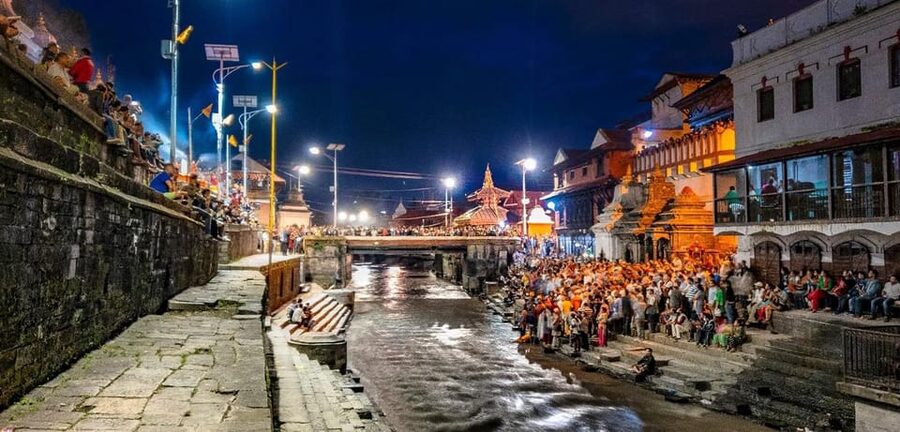
Pashupatinath is one of Kathmandu’s most important Hindu religious sites, and the Bagmati Aarati offers a way to see its worship from the riverbank. The ceremony began in 2000 and became a regular tradition in 2006. Its purpose is not simply to entertain an audience. It is a collective prayer for the well-being of all souls, offered with gratitude to God.
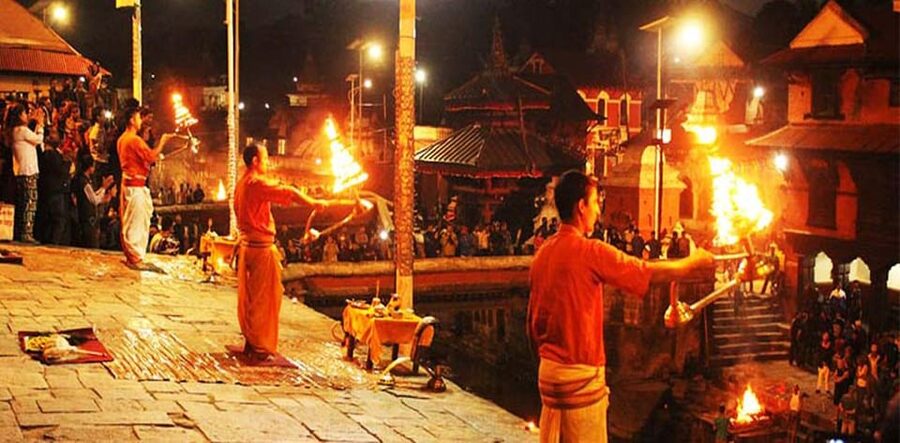
The word Aarati refers to a worship ritual using light. During the ceremony, priests chant sacred words and move oil lamps in slow circles. Devotees sing bhajans, or religious songs, while the river and temple form the setting behind them. The lamps give the ceremony a warm visual center, but the sound is just as important. You hear chanting, singing, and the repeated rhythm of prayer.
The Bagmati River is sacred in Hindu belief. The supplied tour information notes the belief that bathing in the river washes away sins. You do not need to take part in any bathing ritual to understand why the river matters. Simply watching the prayer beside the water helps explain the connection between place, faith, and daily religious life in Kathmandu.
A divine dance called Tandav may also be part of the religious expression, honoring Lord Shiva. The Aarati has special meaning on Mondays, holidays, and festivals such as Maha Shivaratri and Haritalika Teej. Those dates can bring larger crowds, so the ceremony may feel more intense and less easy to watch from close range.
More Pashupatinath visits:
- Kathmandu Spiritual Sites: Bodhnath & Pashupatinath Tour
★ 5.0 · 185 reviews - Kathmandu: Pashupatinath Temple Evening Aarati Tour
★ 5.0 · 36 reviews - Kathmandu: Pashupatinath Temple Aarti Night Tour
★ 4.8 · 29 reviews
The three-hour route from hotel to riverbank
The outing begins with pickup from one of three central areas: Boudhha, Thamel, or Kathmandu. You travel in a private, air-conditioned vehicle with an English-speaking guide. Central hotel pickup and drop-off are included, while hotels outside the city center may require an additional fee.
This arrangement is useful in the evening. Kathmandu traffic can make short distances feel slow, and finding your way to the temple at the right time can be frustrating if you are unfamiliar with the city. Private transport also means you return to your hotel after the ceremony instead of arranging a ride while crowds are leaving.
The stated duration is three hours, including the visit and transport. The exact balance depends on your pickup point, traffic, and how early you arrive. You should not read the three-hour length as three uninterrupted hours inside the temple compound. The main event is the evening Aarati, with time around it for walking, explanations, and getting into position.
Your return can be arranged to Kathmandu, Thamel, or Boudhha. Confirm the exact hotel location and pickup details when booking, particularly if your accommodation is beyond central Kathmandu.
Getting into Pashupatinath Temple
Pashupatinath is an active place of worship, not a museum arranged for easy sightseeing. Your guide can help you understand the religious setting, point out important features, and explain what is happening without asking you to treat the ceremony as a performance.
The main temple has a strict rule: non-Hindus cannot enter. That does not prevent you from seeing the Bagmati Aarati. The ceremony takes place beside the river, and you can watch from the riverbanks. This distinction matters, because the tour is suitable for non-Hindu visitors, but it does not provide access to every part of the temple complex.
Dress modestly. Cover your shoulders and knees, and choose clothing that feels respectful rather than purely practical. Incense smoke and chanting are normal parts of the evening. If you are sensitive to smoke, prepare for it instead of expecting a quiet, scent-free visit.
Photography is generally allowed, but use restraint. Keep your attention on the ritual, avoid disrupting worship, and follow your guide’s advice about where and when to take pictures. A bright phone screen or careless movement can be distracting in a ceremony built around concentration and prayer.
Finding a good place for the Aarati
The Aarati usually begins around 6:00 or 6:30 PM, with seasonal variation. Arriving early is sensible, especially on weekends, Mondays, holidays, and festival days. The busiest periods include Maha Shivaratri and Haritalika Teej.
A good viewing position makes a real difference. One particularly positive account praised guide Razz for finding a place to sit on a very busy Saturday evening. That small service is worth more than it may sound. If you arrive just before the lamps are raised, you may spend the ceremony standing behind taller people or trying to see through a moving crowd.
The exact seating arrangement is not guaranteed, so do not book this expecting reserved front-row chairs. Still, having a guide who knows the site and the timing can make it easier to find a workable position. Keep your expectations realistic on major festival nights, when no guide can control the size of the crowd.
The riverbank setting also means the experience is partly about atmosphere rather than a perfect close-up view. You will see the lamps and hear the prayers, but the distance may vary. The ceremony’s sound, movement, and shared attention often matter as much as the visual detail.
More things to do after dark in Kathmandu:
- Kathmandu Sunset Tour by Rickshaw Including Durbar Square Visit
★ 5.0 · 73 reviews - 3 Nights 4 Days Chitwan National Park with Tower Night Stay
★ 5.0 · 41 reviews - 3 night 4 Day Yoga & Ayurveda Retreat to Detox the Body & Mind, Nepal
★ 5.0 · 37 reviews - Pashupatinath Evening Aarati: Few Divinely Hours in Kathmandu
★ 4.5 · 23 reviews
What the guides add
The guide is the main reason to choose this organized visit instead of simply arriving on your own. A well-timed explanation can clarify why the lamps move in circles, why the river is honored, and how Lord Shiva relates to Pashupatinath.
Razz, also referred to as Raz in some feedback, was praised for explaining Hindu traditions as well as Buddhism in clear English. Shankar was praised for explaining religion, the gods, and the cremation process. Ravi was specifically connected with efficient hotel pickup and driving, while another short comment praised a guide named Rag.
Guide assignments can change, so you should not assume you will receive a particular person unless the provider confirms it. The useful point is the role itself: your guide can give structure to a ceremony that may otherwise seem beautiful but difficult to interpret.
One account described seeing cremations close by during the visit. Cremation activity is part of the wider religious setting around the Bagmati, but it should not be treated as a guaranteed stop or a sightseeing attraction. If you encounter it, behave quietly and respectfully. Families and religious workers are dealing with something solemn, not staging a display.
What the $22 price really covers
At $22 per person, the tour is priced as a short private cultural outing rather than a full-day sightseeing package. You are paying for hotel pickup and drop-off, a private air-conditioned vehicle, an English-speaking guide, and taxes. For a first evening in Kathmandu, that combination can be good value because it removes transport planning and gives you help with a complex religious site.
The extra charge is important. Monument entry costs NPR 1,000 per person and must be paid separately on the day. Add that to the advertised price when comparing this tour with a self-guided visit or another evening activity.
Meals and drinks are not included. Personal expenses are also your responsibility. The tour is only three hours, so it is easy to combine with dinner before or after, but the package itself does not provide food.
The private vehicle is another part of the value. You are not sharing a scheduled bus, and central hotel pickup is included. That is especially helpful if you are staying in Thamel, Boudhha, or central Kathmandu and want a simple evening plan. Outlying hotels may cost more for pickup, so ask before confirming.
A note about shopping and personal spending
The religious visit and the commercial activity around Pashupatinath are separate matters. You may see shops selling religious objects, including rudraksha beads and related items. You do not need to buy anything for the Aarati.
One very negative account alleged that a guide directed a visitor toward a shop, helped arrange a purchase, and received a commission on an item priced at NPR 40,000. This is a serious concern, even though the other supplied accounts were strongly positive. My practical advice is simple: do not feel pressured to shop, ask for prices and alternatives, and decline firmly if you are not interested.
The experience provider is Breakfree Adventures Pvt. Ltd. If a guide pushes you toward a purchase, report it to the provider and keep receipts or payment records. A religious tour should remain focused on the temple, the river, and the ceremony.
Who will get the most from this visit
This tour suits you if you want cultural context without spending a full day on temple visits. It is also a good fit if you are staying in central Kathmandu and prefer a private ride rather than negotiating evening transport yourself.
First-time visitors to Nepal may benefit most from the guide’s explanations. Hindu ritual can be hard to interpret from a distance, and the guide can explain the role of the lamps, chants, songs, river, and temple. If you already know Pashupatinath well, the main value is convenience and a timed visit to the Aarati.
The tour is less suitable if you want a quiet, uncrowded experience. The ceremony attracts many people, and festival evenings can be especially full. It is also not the right choice if you expect to enter the main temple as a non-Hindu visitor.
Photography-focused visitors should come with modest expectations. You can generally take photographs, but the crowd, riverbank position, smoke, and respectful limits may make close, polished images difficult. Approach it as a religious ceremony first and a photo opportunity second.
Booking details worth checking
You can cancel up to 24 hours in advance for a full refund, and the reserve-now, pay-later option keeps payment flexible. Availability should be checked for the desired start time because the Aarati schedule changes with the season.
Ask for the pickup time, especially if you are staying outside the city center. Also confirm whether your hotel is considered central, since an extra fee may apply for outlying locations.
The advertised tour language is English. If a specific guide is important to you, ask whether Razz, Raz, Shankar, Ravi, or another named guide is available, but understand that assignments are not guaranteed.
Should you book the Pashupatinath Aarati Tour?
I would book this tour if you want to see an important Kathmandu ritual with transport and an English explanation already arranged. The best reasons are the riverbank ceremony, the private evening ride, and the chance to reach the viewing area early enough to find a decent place.
I would skip it if you dislike crowds, incense, chanting, or religious sites with strict access rules. Remember that the NPR 1,000 monument fee is extra, non-Hindus cannot enter the main temple, and shopping is not part of the experience.
For most first-time visitors, $22 plus the entry fee is a fair price for a focused three-hour introduction to Pashupatinath. Go modestly dressed, arrive ready for a crowd, keep your wallet closed unless you genuinely want to buy something, and let the lamps and prayers take center stage.
FAQ
What time does the Pashupatinath Aarati start?
The evening Aarati usually starts around 6:00 to 6:30 PM. The exact time can change with the season, so check availability and confirm your pickup time.
How long is the tour?
The tour lasts three hours, including the guided Pashupatinath visit and private transportation.
Is hotel pickup included?
Yes. Pickup and drop-off are included from hotels in central Kathmandu, including the Boudhha, Thamel, and Kathmandu areas. An additional fee may apply for hotels outside the city center.
Is transportation private?
Yes. The tour includes private, air-conditioned transportation.
Can non-Hindus enter Pashupatinath Temple?
No. Non-Hindus cannot enter the main temple, but they can view the Aarati from the Bagmati River banks.
Is the monument entry fee included?
No. The monument entry fee is NPR 1,000 per person and must be paid separately on the day of the visit.
Is photography allowed during the Aarati?
Photography is generally allowed. You should remain respectful during the rituals and follow your guide’s advice about appropriate places and moments for taking pictures.
What should I wear?
Cover your shoulders and knees because Pashupatinath is a sacred Hindu site. You should also be prepared for incense smoke and chanting during the ceremony.
Recently added around Kathmandu
- Kathmandu Airport Pickup and Drop-off Services★ 5.0 · 3 reviews
- Kathmandu Paragliding★ 5.0 · 3 reviews
- Explore The Beauty Of Langtang Valley In 8-Days Trek★ 5.0 · 3 reviews
- Kathmandu Chandragiri Cable Car and Swayambhunath Private Tour★ 5.0 · 3 reviews
- Kathmandu: Nightlife and Pub Crawl Tour★ 5.0 · 3 reviews
- Kathmandu: Momo Making Class with a Local Chef★ 5.0 · 3 reviews
- Mountain Flight Experience in Nepal★ 4.5 · 3 reviews
- Everest Base Camp Trek★ 5.0 · 3 reviews
Other Pashupatinath Tours worth a look
Kathmandu Spiritual Sites: Bodhnath & Pashupatinath Tour
Read our review →
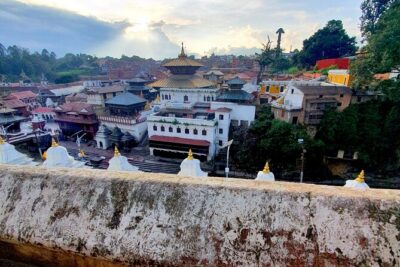
Pashupatinath Temple, Hindu Crematorium and Aarati in-depth Tour
Read our review →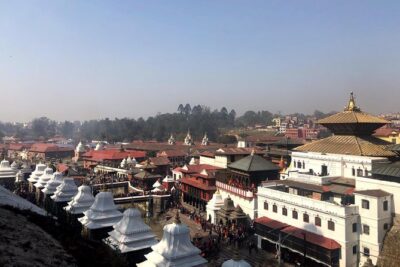
Pashupatinath Evening Aarati: Few Divinely Hours in Kathmandu
Read our review →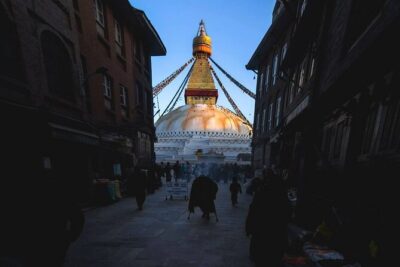
PashupatiNath and BoudhaNath – Private/Small Group
Read our review →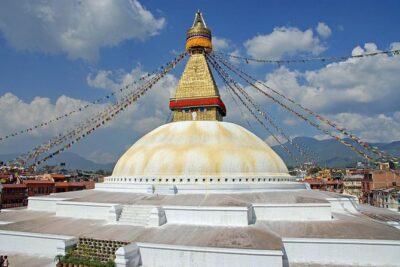
Private Half-Day Tour of Boudhanath and Pashupatinath Temples in Kathmandu
Read our review →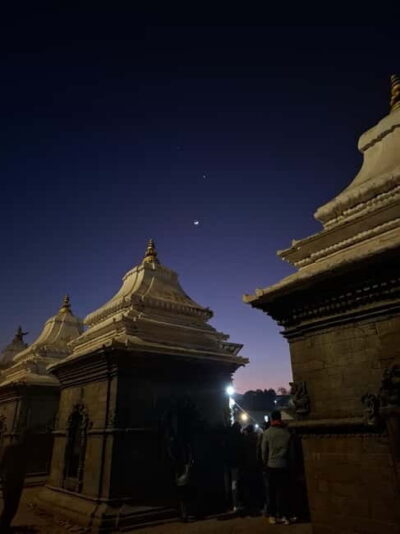
Katmandu: Pashupatinath Open Cremation & Evening Aarati
Read our review →This tour also appears in