
REVIEW · PASHUPATINATH TOURS
Kathmandu: Pashupatinath Temple Evening Aarati Tour
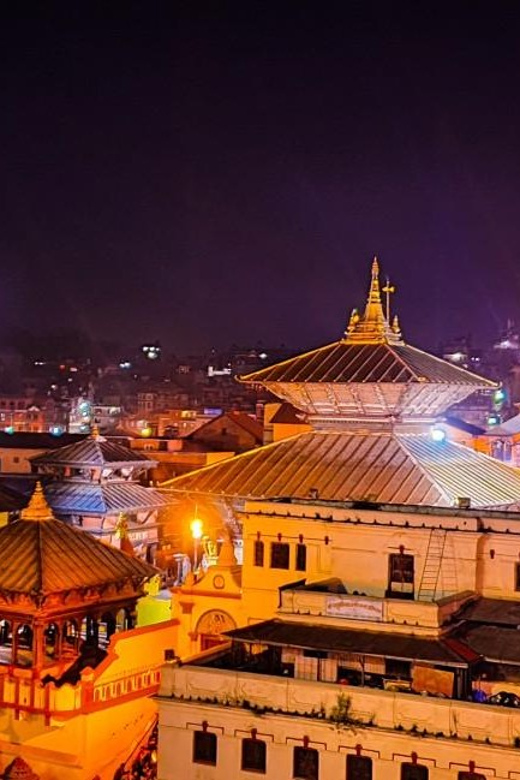
As daylight fades at Pashupatinath Temple, the Bagmati River becomes the setting for one of Kathmandu’s most striking public rituals. Priests chant Vedic mantras, bells ring, incense burns, and oil lamps move in slow patterns before Lord Shiva. The ceremony is less a show than a living act of worship, and your guide helps you understand what you are seeing.
I like two things in particular: the late afternoon arrival, which gives you time to see the temple complex before the ceremony, and the personal attention of a private English-speaking guide. Ramesh is often praised for his clear explanations and patience, while Rajat and Anjan have also led strong tours. The guide can make the difference between watching a ritual and understanding it.
The main consideration is timing. The Aarati begins around 6 p.m., but traffic in Kathmandu can affect the drive and evening crowds gather along the riverbank. You should also expect a spiritual ceremony rather than a relaxed sightseeing stop. Dress and behave respectfully, and follow directions about where photography is allowed.
Key points to know before booking
- The ceremony begins around 6 p.m. Plan for a late afternoon pickup and an evening return to your Kathmandu hotel.
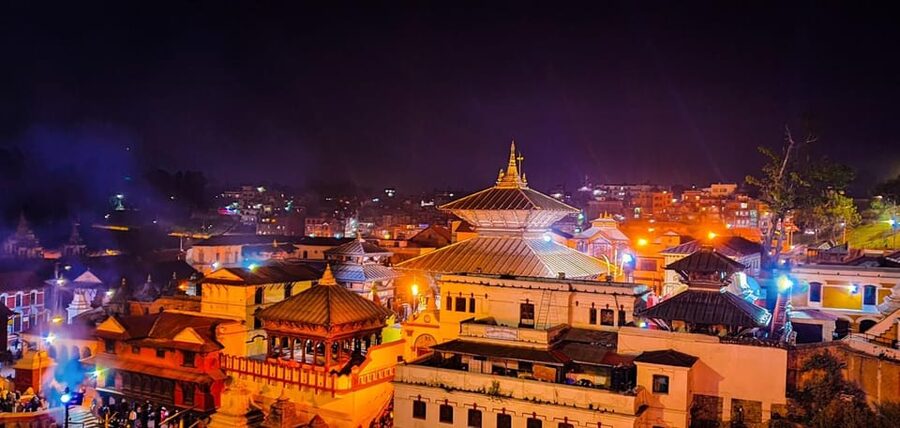
- The Aarati takes place beside the Bagmati River. You watch priests chant, ring bells, burn incense, and wave oil lamps before Lord Shiva.
- A private guide adds real value. Ramesh, Rajat, and Anjan are named guides associated with highly praised experiences, with Ramesh receiving especially warm comments for his explanations.
- The temple visit comes before the ritual. You get a guided look at Pashupatinath, followed by time to explore on your own.
- The $45 price covers the practical essentials. Hotel transport, entry, guide service, taxes, and service charges are included.
- Photography has limits. You can capture moments in permitted areas, but the ceremony and temple grounds call for restraint.
Why the evening Aarati is worth your time
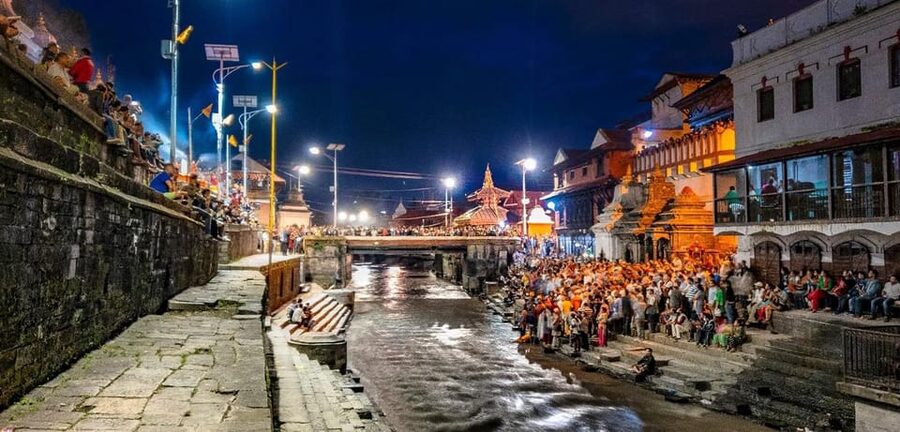
Pashupatinath is one of Nepal’s most important Hindu religious sites, but you do not need to be Hindu to appreciate the evening worship. The Aarati offers a direct look at a tradition practiced in public, with local worshippers gathered beside the Bagmati River as the light changes from sunset to night.
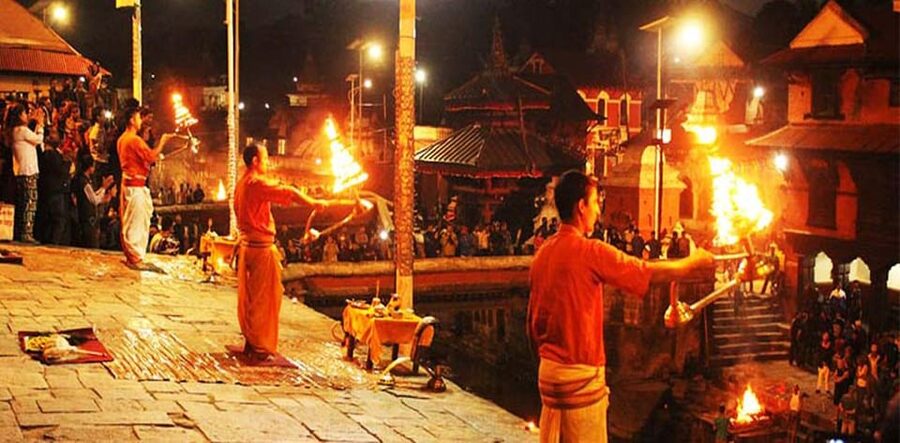
The power of the ceremony comes from several elements working together. You hear Sanskrit prayers and hymns, the ringing of bells, and classical instruments. You see flames moving through the dim air, incense rising, and priests carrying out a sequence of actions that have meaning beyond their visual appeal.
Without context, it would be easy to focus only on the lamps and music. A good guide explains the basic purpose of Aarati, the role of prayer, and the place of Lord Shiva in Hindu worship. Ramesh is particularly useful for visitors who want to ask questions about rituals, customs, and local beliefs. Several comments about his tours highlight his patience and ability to explain complex ideas in plain English.
I also like that this is not built around a long list of unrelated sights. The whole evening has a clear purpose: see Pashupatinath, understand its setting, and watch the riverbank worship. If you have only a few days in Kathmandu, that focus can be an advantage.
More Pashupatinath visits:
- Kathmandu Spiritual Sites: Bodhnath & Pashupatinath Tour
★ 5.0 · 185 reviews - Kathmandu: Pashupatinath Temple Aarti Night Tour
★ 4.8 · 29 reviews - Pashupatinath Temple, Hindu Crematorium and Aarati in-depth Tour
★ 5.0 · 25 reviews
Late afternoon pickup from Kathmandu
The experience begins with hotel pickup in Kathmandu. Transportation to and from Pashupatinath is included, which removes the need to arrange a taxi during the busiest part of the day.
The drive itself is practical rather than scenic. Kathmandu traffic can be slow, especially later in the day, so the three-hour schedule should be treated as an approximate evening outing rather than a rigid timetable. The tour details do not give a fixed pickup time, so you need to check the available starting time when booking.
The transport is provided for a private group, not a large shared coach. That matters if you want to ask questions, adjust the pace of the preliminary visit, or spend extra time taking photographs in permitted areas. The driver named in one particularly positive account is Santosh, who was described as polite and safe.
You will want to arrive before the Aarati begins. The early arrival gives you time to see part of the temple complex in daylight and let your guide explain the religious setting before the crowd gathers for the ceremony.
Exploring Pashupatinath before the prayers
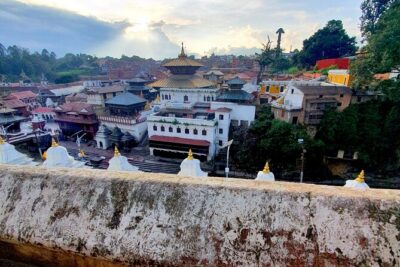
Pashupatinath is located beside the Bagmati River, and the Aarati takes place on the river’s eastern side. Your guide leads a tour of the complex and explains its religious importance, historical background, and customs.
The guided portion is important because the site is not simply a monument to view from the outside. It is an active Hindu place of worship. The meaning of particular spaces, objects, and actions may not be obvious if you are seeing them without help.
You then have some time for independent exploration before the ceremony. That gives you a chance to look around at your own pace, take in views of the temple, and prepare for the riverbank gathering.
The entry ticket is included, and the tour offers skip-the-ticket-line access. That saves a little time, though it does not mean you will avoid all waiting or crowding around the Aarati itself. The ceremony draws many people to the riverbank, and your best view depends on where the group is positioned.
One point to keep in mind is that access within a Hindu temple complex can be governed by religious rules. The provided tour information does not specify every area open to visitors. Follow your guide’s instructions, especially around worshippers, shrines, and photography.
What happens during the 6 p.m. Aarati
The Aarati is the heart of the evening. Around 6 p.m., priests lead a worship ritual involving prayers, lamps, incense, bells, music, and hymns dedicated to the gods. The ceremony takes place beside the Bagmati River, on the temple’s eastern side.
The word Aarati refers to a ritual using light. In this setting, the oil lamps are not merely decorative. Their movement forms part of the act of worship, and the chanting and music help create a shared religious atmosphere.
You may notice how quickly the riverbank changes as evening arrives. People gather, conversation gives way to attention, and the lamps become more visible as the sky darkens. The ceremony is visually strong, but it is important to remember that local worshippers are taking part in a religious observance, not attending a performance arranged for tourists.
That distinction shapes the right way to experience it. Watch quietly, listen to the guide when there is a suitable pause, and avoid treating every moment as a photo opportunity. Photography is allowed in permitted areas, but the tour information does not define those areas in detail. Ask before raising your camera, and keep your attention on the ritual itself.
A guide can also explain what you are hearing and seeing without turning the ceremony into a lecture. Ramesh has been praised for helping people understand not just what happens, but why it matters to local people. Rajat is also described as friendly and well informed, while Anjan has been noted for clear English and helpful explanations of Hindu religion.
More things to do after dark in Kathmandu:
- Kathmandu Sunset Tour by Rickshaw Including Durbar Square Visit
★ 5.0 · 73 reviews - 3 Nights 4 Days Chitwan National Park with Tower Night Stay
★ 5.0 · 41 reviews - 3 night 4 Day Yoga & Ayurveda Retreat to Detox the Body & Mind, Nepal
★ 5.0 · 37 reviews - Pashupatinath Evening Aarati: Few Divinely Hours in Kathmandu
★ 4.5 · 23 reviews
The value of a private guide
At $45 per person, this tour is not the cheapest way to reach Pashupatinath. You are paying for more than admission. The price includes hotel pickup and drop-off, private transportation, an English-speaking licensed guide, the temple entry ticket, taxes, and service charges.
That package can be good value if you want a simple evening plan. You do not need to arrange transport, locate the temple, work out the timing, or figure out what the ritual means once you arrive.
The strongest part of the value is the guide. Pashupatinath can be visually compelling but culturally difficult to read. A private guide gives you room to ask direct questions about Hindu customs and traditions. That is especially useful if this is your first visit to Nepal or your first time attending a Hindu ceremony.
Several guides are associated with this experience. Ramesh appears frequently in the available comments and is praised for being patient, friendly, and clear. He has also accommodated photography requests and made time for questions. Rajat is described as informative and approachable, and Anjan is noted for speaking English well and explaining the Aarati in detail.
One unusual detail is that Ramesh has also spoken Spanish with a visitor. The advertised tour language is English, so you should not book expecting a Spanish-language tour, but this suggests that communication may be flexible in some cases.
The private format is also helpful for photographers. If you want a few careful images from permitted locations, tell your guide early. One visitor specifically received extra time and help with photography concerns. Still, the ceremony should come first. A good guide will help you find a respectful viewpoint rather than encourage intrusive pictures.
What this tour does not include
Food and drinks are not included. This is not much of a problem because the tour lasts three hours and is built around the temple visit and ceremony, but you should eat beforehand if you prefer not to wait until returning to your hotel.
The tour also does not promise a long general sightseeing tour of Kathmandu. Its focus is Pashupatinath and the Aarati. If you want a broad city tour, this is not the right activity to combine with that goal.
Likewise, the ceremony is not presented as a private or exclusive religious event. You will be watching a public ritual alongside local people and other attendees. That gives the evening its authenticity, but it also means the riverbank may feel crowded and the viewing position may not be fully under your control.
The listed duration is three hours. That is enough for transport, a guided temple visit, some independent time, and the Aarati, but it leaves little room for major delays. Kathmandu traffic is the main practical reason to keep your schedule flexible afterward.
Who will enjoy this evening most
I would recommend the tour to you if you want cultural explanation along with sightseeing. It suits first-time visitors to Kathmandu, people curious about Hindu traditions, and anyone who prefers a guide to provide meaning rather than simply point out buildings.
It is also a good fit for photographers who understand that respectful observation comes before getting the perfect frame. The lamps, smoke, river, music, and evening light offer strong visual subjects, and a private guide can help you manage your time.
The experience may be less suitable if you want a quiet temple visit with no crowds. The Aarati attracts a large gathering, and the ceremony is public. It may also disappoint you if you expect an entertainment show with a predictable, tourist-focused format. Its appeal lies in observing worship as it happens.
Families and older visitors may appreciate the included transport and short overall duration, though the supplied information does not describe the terrain or accessibility conditions. If mobility is a concern, ask the provider before booking.
Practical advice for a respectful visit
Wear clothing suitable for a religious site. The supplied information does not set a formal dress code, but modest clothing and quiet behavior are sensible choices.
Arrive with an open mind. You do not need to understand every prayer or ritual action to appreciate the ceremony, but you should avoid judging the experience only by how photogenic it is.
Ask your guide questions before the Aarati begins. Ramesh and the other guides are praised for explaining Hindu culture, traditions, and ritual details. Once the prayers start, you may have fewer chances for conversation.
Keep your camera ready but use it carefully. Photography is possible in permitted areas, yet the tour details do not guarantee that every part of the complex or ceremony can be photographed. Ask your guide where it is appropriate.
Finally, leave space in your evening schedule. The tour lasts three hours, but Kathmandu traffic can affect the return journey. The booking terms allow cancellation up to 24 hours before the start for a full refund, and you can reserve now and pay later, which helps if your plans are still shifting.
Should you book the Pashupatinath Aarati tour?
Book it if you want a focused, well-explained introduction to Hindu worship in Kathmandu. The $45 fee is reasonable when you count the private transport, temple admission, guide, and hotel return. The guide is the key benefit, especially if you are lucky enough to work with Ramesh, Rajat, or Anjan.
Skip it if you are mainly looking for a quick photo stop or a broad Kathmandu sightseeing tour. The Aarati calls for patience and respect, and the crowd and timing may not suit everyone.
For most first-time visitors, I would place this among the more worthwhile evening activities in Kathmandu. You see a major religious site, hear the prayers, watch the lamps by the Bagmati River, and gain enough explanation to understand why the ritual matters.
FAQ
How much does the Pashupatinath Temple Evening Aarati Tour cost?
The tour costs $45 per person.
How long does the experience last?
The activity lasts three hours, including hotel pickup, transportation, the temple visit, the Aarati, and the return to Kathmandu.
What time does the Aarati ceremony begin?
The ceremony commences around 6 p.m. Starting times can vary, so check availability when booking.
Is hotel pickup and drop-off included?
Yes. Hotel pickup and drop-off in Kathmandu are included, along with transportation to and from Pashupatinath Temple.
Is the tour private?
Yes. The group type is a private group.
What language does the guide speak?
The live tour guide language is English. Guides associated with the experience include Ramesh, Rajat, and Anjan.
What is included in the price?
The price includes hotel pickup and drop-off, transportation, a licensed English-speaking guide, the Pashupatinath entry ticket, taxes, and service charges.
Can I cancel or pay later?
You can cancel up to 24 hours in advance for a full refund. The reserve now and pay later option lets you book without paying at the time of reservation.
Recently added around Kathmandu
- Kathmandu Paragliding★ 5.0 · 3 reviews
- Kathmandu Airport Pickup and Drop-off Services★ 5.0 · 3 reviews
- Kathmandu Chandragiri Cable Car and Swayambhunath Private Tour★ 5.0 · 3 reviews
- Explore The Beauty Of Langtang Valley In 8-Days Trek★ 5.0 · 3 reviews
- Kathmandu: Nightlife and Pub Crawl Tour★ 5.0 · 3 reviews
- Mountain Flight Experience in Nepal★ 4.5 · 3 reviews
- Kathmandu: Momo Making Class with a Local Chef★ 5.0 · 3 reviews
- Everest Base Camp Trek★ 5.0 · 3 reviews
Other Pashupatinath Tours worth a look
Kathmandu Spiritual Sites: Bodhnath & Pashupatinath Tour
Read our review →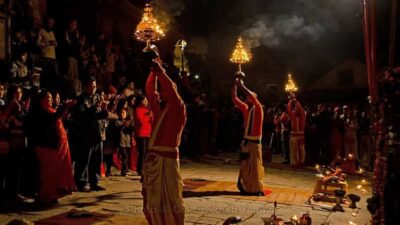
Pashupatinath Temple, Hindu Crematorium and Aarati in-depth Tour
Read our review →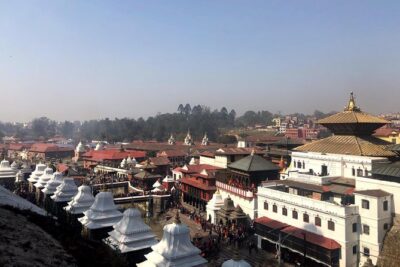
Pashupatinath Evening Aarati: Few Divinely Hours in Kathmandu
Read our review →
PashupatiNath and BoudhaNath – Private/Small Group
Read our review →
Private Half-Day Tour of Boudhanath and Pashupatinath Temples in Kathmandu
Read our review →
Katmandu: Pashupatinath Open Cremation & Evening Aarati
Read our review →This tour also appears in