
REVIEW · EVEREST BASE CAMP TREKS
Luxury Everest Base Camp Trek -11 Days
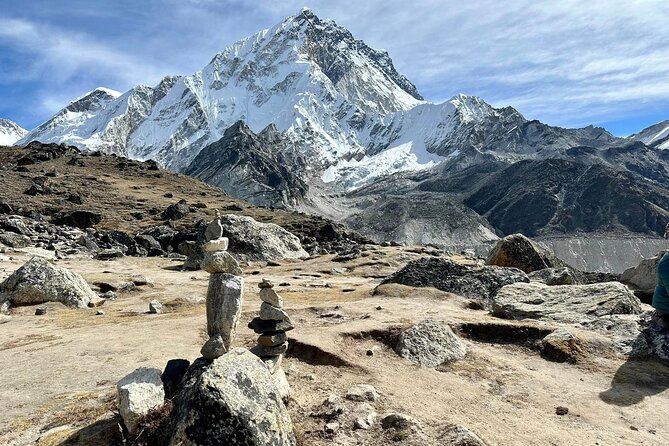
The most unusual part of this 11-day Everest Base Camp trek comes at the end: after walking to Base Camp and climbing Kalapatthar, you return from Gorakshep to Kathmandu by shared helicopter. That saves you several hard days on the same trail and gives you a second look at the Himalayas from the air.
I like the careful altitude plan, with rest days in Namche Bazaar and Dingboche. I also like the practical level of support: upgraded teahouses, a porter for every two clients, meals on the trail, and a guide who stays with your private group. The main drawback is the $4,500 price, which is high for Nepal, even though the helicopter and upgraded lodging explain much of the cost.
Key points to know before booking
- Return by helicopter: Fly from Gorakshep to Kathmandu after reaching Everest Base Camp and Kalapatthar.
- Two altitude breaks: Spend acclimatization days around Namche Bazaar and Dingboche rather than rushing uphill.
- Upgraded teahouses: Sleep in twin-share teahouses with more comfort than a basic trekking package promises.
- Private group format: Only your own group takes part, with a guide and one porter for every two clients.
- Useful Kathmandu support: Airport pickup, two nights in a five-star hotel, a farewell dinner, and airport transfer are included.
- Best in spring or autumn: More stable weather helps both mountain views and helicopter operations.
Why the Gorakshep helicopter changes the trek
Classic Everest Base Camp trips usually return on foot. That means more days on the trail, more nights at altitude, and a longer total schedule. Here, you walk the important upper section, then use a shared helicopter from Gorakshep to Kathmandu.
That is a major comfort advantage, but it is also the part of the trip most affected by weather. Helicopters need suitable conditions, and mountain weather can change quickly. The package includes travel and rescue arrangements, but any delay that creates extra nights, meals, or hotel costs is your responsibility.
The flight also changes the feel of the adventure. You still earn the views by walking from Lukla through the Khumbu Valley, but the return flight gives you a broad aerial look at the route. If your priority is spending as much time as possible on foot, this is not the purest version of the classic trek. If your priority is seeing Everest while reducing the return strain, it makes good sense.
More Hiking Tours in Kathmandu
- Everest Base Camp Trek – 14 Days
★ 5.0 · 1,499 reviews - Everest Base Camp Trekking
★ 5.0 · 485 reviews - Nagarkot Sunrise View and Day Hiking from Kathmandu
★ 5.0 · 471 reviews
Day 1: A soft landing in Kathmandu
Your trip begins with pickup at Tribhuvan International Airport. A representative from Himalayan Adventure Treks and Tours transfers you by private vehicle to your hotel.
Two nights in a five-star Kathmandu hotel are included, with breakfast. That gives you a comfortable start before the early mountain flight and a proper place to rest after arriving from an international journey.
The first day is mainly about arrival and settling in. Ask about the exact timing of the next morning’s departure, especially since the activity start time is listed as 6:00 am. Nepal’s mountain flights often require an early start, so keep your first evening simple.
The final night includes a farewell dinner at an authentic Nepalese restaurant with a cultural performance. This is a nice touch because it gives the trip a clear beginning and ending in Kathmandu, rather than treating the capital as only a transfer point.
Day 2: Flying to Lukla and starting the trail
You fly from Kathmandu to Lukla, which sits at about 2,860 meters. Depending on operating conditions, the flight may be listed from Kathmandu or from Ramechhap, with the package covering the Kathmandu to Lukla or Ramechhap to Lukla ticket.
Lukla is the trailhead for the Khumbu route. From there, you begin walking toward Phakding. This first hiking day is useful because it gets you moving without sending you straight into the highest part of the route.
The flight is an important practical consideration. Mountain aviation can be delayed by weather, and the package specifically warns that delays may create extra costs. Keep some flexibility in your plans, and do not schedule a tight international connection immediately after the trek.
Day 3: Phakding to Namche Bazaar
The walk from Phakding to Namche Bazaar is one of the first serious days on the route. Namche sits at about 3,440 meters and is the main trading and lodging center of the Khumbu region.
This section introduces you to the rhythm of the trek: steady uphill walking, mountain views, suspension bridges, and a growing sense that the road network is far behind. The route is not just a march toward Everest. It is also a passage through communities that depend on trekking and mountain trade.
Namche is a good place to pause because the elevation gain becomes more noticeable here. Your guide can help manage the pace, and the private format means you are not forced to match the speed of a large group.
More Everest Base Camp Treks in Kathmandu:
- Everest Base Camp Helicopter Tour landing at Everest View Hotel
★ 5.0 · 668 reviews - Everest Base Camp Trekking – 13 Day
★ 5.0 · 365 reviews - Everest Base Camp Trek -14 Days
★ 5.0 · 321 reviews - Everest Base Camp Helicopter Tour landing at Hotel Everest View
★ 5.0 · 218 reviews
Day 4: Acclimatization around Namche
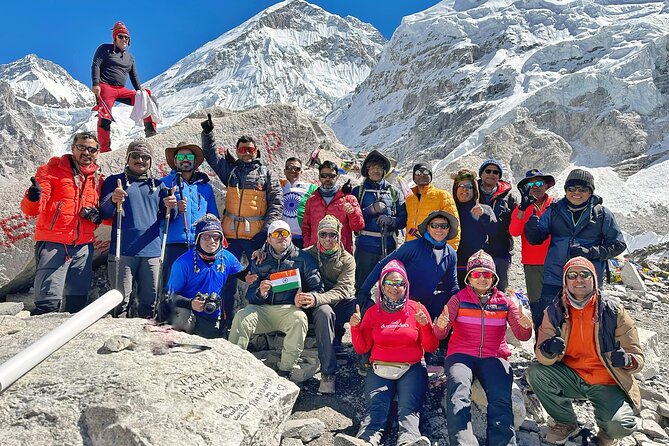
Day four is a rest and acclimatization day at roughly 3,880 meters. The purpose is practical: you give your body time to adjust before gaining more height.
The schedule includes an opportunity to see Everest from the Hotel Everest View area. This is one of the more appealing features of the route because you get a mountain viewpoint without giving up a full day of progress.
Do not treat an acclimatization day as wasted time. At these heights, moving too fast can ruin the trip. Use the day for a gradual outing, a slow meal, and careful attention to how you feel. The itinerary is better for including this pause than for trying to compress the route.
Day 5: Hotel Everest View to Tengboche
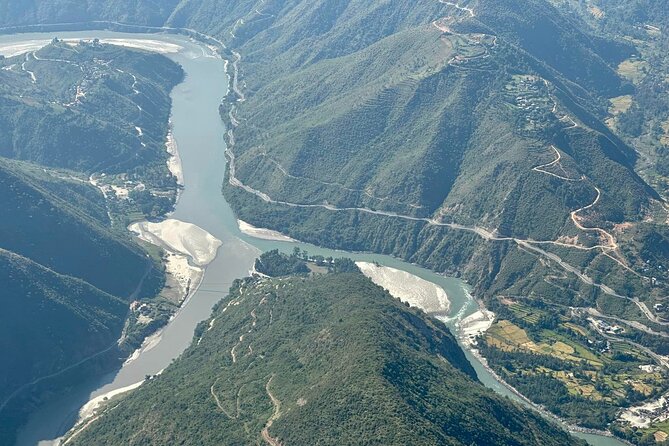
The walk to Tengboche takes about four to five hours and reaches approximately 3,820 meters. Tengboche is known for its monastery and its mountain setting, making it one of the most memorable cultural stops on the trek.
This is a shorter day by trekking standards, which helps after the Namche acclimatization period. The route also gives you time to notice the contrast between the cultivated lower valley and the more severe upper country.
The upgraded teahouse arrangement matters here. You are still staying in mountain lodgings, not luxury hotels, but the package promises upgraded teahouses on a twin-sharing basis. That can mean a more comfortable night than a basic trek, though you should still expect simple high-altitude accommodation rather than five-star service.
Day 6: Diboche to Dingboche
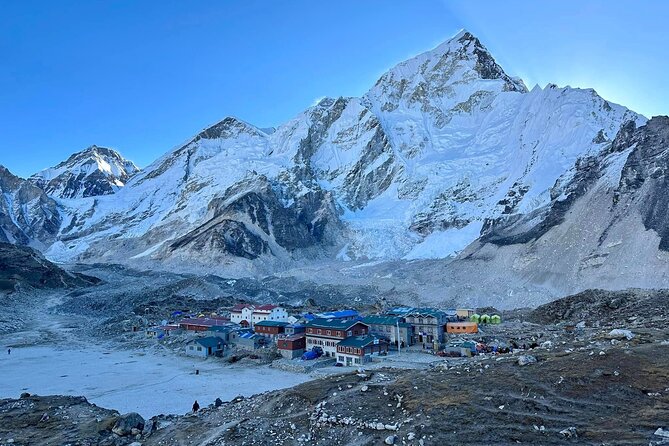
The walk from Diboche to Dingboche takes about five to six hours and reaches 4,360 meters. This is a clear step into serious altitude, even though the day is described as moderate.
Dingboche is an important overnight stop because the next day is reserved for acclimatization. The surrounding peaks and open mountain views become increasingly dramatic, but the thin air also makes ordinary uphill walking feel harder.
Your guide is especially important here. A good guide does more than lead the path. The company’s guiding team includes Prakash, who has been singled out for his care and leadership, while owner Bhagwat has been praised for careful planning and communication. You should confirm who will lead your particular departure before booking, since names associated with the company do not guarantee a specific assignment.
Day 7: A second altitude day in Dingboche
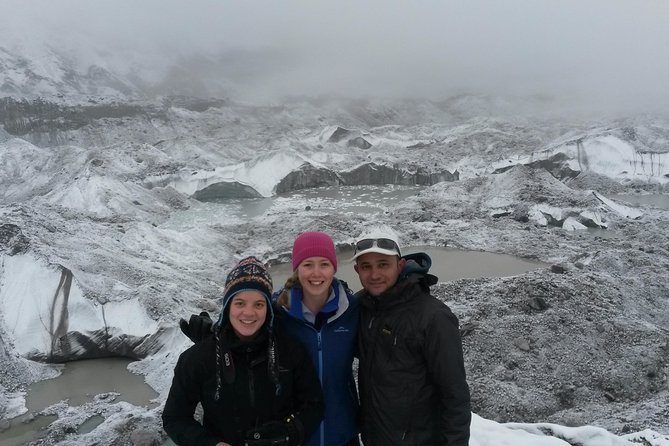
The Dingboche acclimatization day is spent at about 4,360 meters. It gives your body another chance to adjust before the route climbs toward Lobuche and Gorakshep.
The schedule allows an acclimatization outing rather than a complete day indoors. That is the right balance. You want enough movement to help your adjustment, but not so much that you arrive exhausted for the upper trail.
This is also a good day to check your gear and personal routine. Battery charging, hot showers, bottled or boiled water, and extra services cost more and are not included. Budget for those items if they matter to you, and carry enough personal cash for mountain expenses.
Day 8: Dingboche to Lobuche
The trek to Lobuche takes around five to six hours. The route crosses high, rocky ground and can be exposed to difficult weather. At this point, the physical challenge is no longer just the distance. Cold, wind, altitude, and uneven terrain all shape the day.
Lobuche is a staging point for the final approach to Base Camp. The overnight stop keeps the next day from becoming an even longer push from Dingboche.
You should approach this day with patience. A moderate rating at lower altitude does not mean easy at this height. Walk slowly, drink according to your guide’s advice, and report any concerning symptoms rather than trying to hide them to protect the schedule.
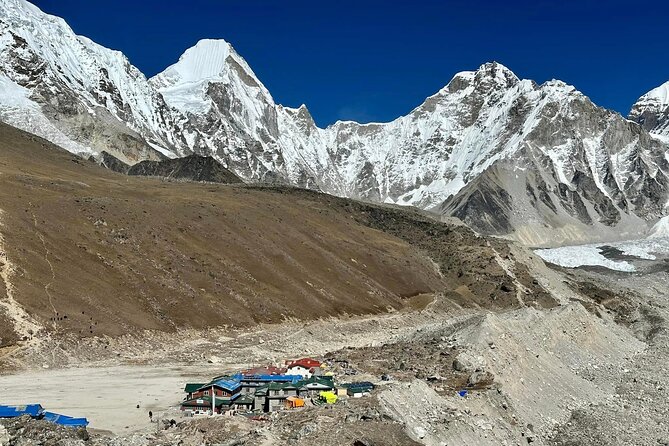
Day 9: Lobuche to Gorakshep and Everest Base Camp
This is the main goal of the trek. The route to Gorakshep and Everest Base Camp takes about six to seven hours and includes rocky terrain, glacial moraine, and a steady climb.
The trail becomes more demanding here. The surface is rough, the air is thin, and the walking day is long. You will see major Himalayan peaks and the rough upper valley, but the physical effort can limit how much time you spend taking it all in.
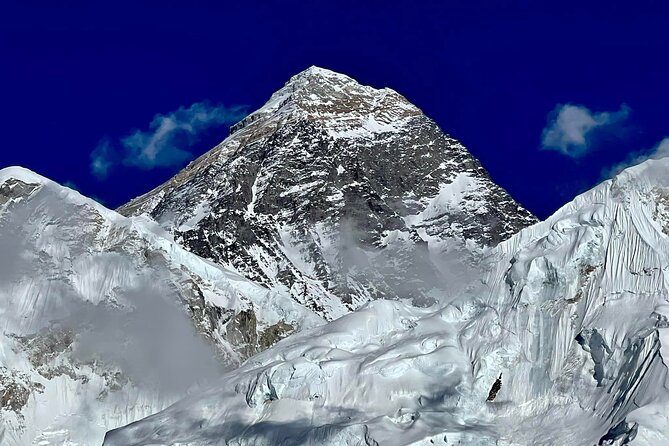
Everest Base Camp itself is a powerful destination, though the view of Everest from Base Camp is not always the best because nearby peaks and ridges can block it. That is why Kalapatthar on the next day matters so much. Base Camp gives you the destination and the glacier setting. Kalapatthar gives you the classic wide view.
Accommodation at Gorakshep is included under the upgraded teahouse plan, but the word upgraded should be kept in perspective. At this elevation, comfort is relative. You should expect a basic mountain night, even within a higher-priced package.
Day 10: Kalapatthar at 5,545 meters
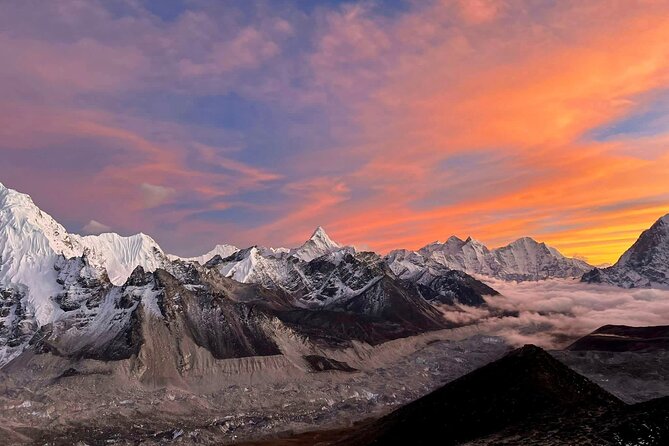
The route from Gorakshep includes a hike to Kalapatthar, at 5,545 meters, or 18,192 feet. This is the highest point on the scheduled walking route and one of the strongest viewpoints in the Everest region.
The climb is strenuous because the altitude is extreme. The reward is a broad view of Everest and the surrounding ranges. Plan to move slowly and allow the guide to set the pace.
After the Kalapatthar section, the package includes a shared helicopter from Gorakshep to Kathmandu. This is the trip’s defining convenience. You avoid the long return walk, reduce the number of nights in high-altitude teahouses, and reach Kathmandu far sooner than you would on a standard round-trip trek.
Because the helicopter is shared, it is not a private flight reserved only for your group. The exact operation can depend on weather and flight conditions, so keep the stated extra-cost policy in mind. If a delay forces you to remain in the mountains or spend another night in Kathmandu, those additional costs are excluded.
Day 11: Airport transfer and the trip home
A company representative takes you to the airport about three hours before your scheduled flight. The activity ends back at the Kathmandu meeting point.
The final transfer is useful after a demanding trip, especially if your international departure is early or you are carrying trekking gear. The package does not cover an extra Kathmandu hotel night caused by an early arrival, late departure, or an early return from the mountain.
Plan your international flights with breathing room. The mountain flight to Lukla, the helicopter from Gorakshep, and weather conditions can all affect timing. A little flexibility is worth more than a carefully arranged connection that leaves no margin for delay.
What the $4,500 price really buys
At $4,500 per person, this is not a budget Everest Base Camp trek. The cost includes several items that are often separate in cheaper packages:
- Private airport transfers
- Two nights in a five-star Kathmandu hotel with breakfast
- Meals during the trek
- TIMS registration and Khumbu Valley fees
- An experienced guide
- One porter for every two clients
- Twin-share upgraded teahouses
- Kathmandu to Lukla or Ramechhap to Lukla flights
- Shared helicopter transport from Gorakshep to Kathmandu
- A duffle bag and company T-shirt
- Travel and rescue arrangements
- First-aid supplies
- Farewell dinner with a cultural performance
The helicopter is the main reason the price is higher. It replaces the return trekking days and adds a memorable aerial element, but it also brings weather risk and a shared-flight limitation.
You still need to pay for your Nepal visa, international airfare, travel and rescue insurance, personal purchases, phone use, laundry, bar bills, battery charging, hot showers, extra porters, and bottled or boiled water. Tips for the guide and porter are also excluded.
For me, the package offers reasonable value if you want a shorter, more comfortable version of the classic trek and do not want to organize each service yourself. It offers less value if you are fit, have plenty of time, and mainly want the lowest possible cost.
Who this luxury trek suits best
This trip fits you if you want Everest Base Camp but prefer support, private-group travel, and a quicker return. Families may also appreciate the private format and the reduced number of days spent retracing the route.
You should have a moderate level of physical fitness. This is not a sightseeing tour with a few walks. You will hike for five to seven hours on several days, reach 5,545 meters, and deal with cold and difficult conditions.
The trek also suits people who value personal assistance. The company provides a guide, porter support, meals, accommodation, airport pickup, and rescue arrangements. Past clients have used the company repeatedly, and Bhagwat has been described as highly involved in planning and communication, including answering questions over an extended preparation period.
That said, no operator can remove the basic demands of altitude. A high price does not make the trail flat, the air thicker, or the weather predictable.
Best seasons and useful planning advice
Spring and autumn are listed as the best seasons for this trip because weather is more stable for helicopter flights and Himalayan views. These periods are also the sensible choice if your main goal is clear mountain scenery.
Tell the company about dietary requirements when you book. Vegetarian meals are available, but the request should be made in advance.
The activity includes mobile ticketing and confirmation at booking. Airport pickup is offered, and the advertised start time is 6:00 am. Cancellation is free if you cancel at least 24 hours before the local start time. Cancellations or changes made later are not accepted for a refund.
Should you book the Luxury Everest Base Camp Trek?
Book it if you want the classic approach to Everest Base Camp, two planned acclimatization days, improved mountain lodging, strong logistical support, and a helicopter return. The combination gives you both the physical achievement of reaching Base Camp and the comfort of avoiding the long walk back.
Think twice if your budget is tight or if walking the entire round trip is important to you. You are paying a premium for time, convenience, and the return flight, not for a soft adventure.
Before committing, ask who your guide will be, confirm whether your departure will fly from Kathmandu or Ramechhap, and check exactly how weather delays are handled. If those details suit your plans, this is a well-supported way to experience Everest without spending nearly as long on the return trail.
FAQ
How long is the Luxury Everest Base Camp Trek?
The trek lasts approximately 11 days, beginning with airport pickup in Kathmandu and ending with an airport transfer on the final day.
Is the helicopter ride included?
Yes. A shared helicopter from Gorakshep to Kathmandu is included in the package price.
What level of fitness is required?
The experience is intended for people with a moderate level of physical fitness. The route includes several five to seven-hour hiking days and reaches Kalapatthar at 5,545 meters.
Are meals included during the trek?
Breakfast, lunch, and dinner are included during the trekking portion. Meals in Kathmandu are not included except for breakfast at the included hotel and the farewell dinner.
Is this a private tour?
Yes. Only your own group takes part in the activity. The package includes an experienced guide and one porter for every two clients.
Can I cancel for a full refund?
You can cancel at least 24 hours before the local start time for a full refund. Cancellations or changes made less than 24 hours before the start are not accepted for a refund.
Recently added around Kathmandu
- Kathmandu Airport Pickup and Drop-off Services★ 5.0 · 3 reviews
- Kathmandu Paragliding★ 5.0 · 3 reviews
- Explore The Beauty Of Langtang Valley In 8-Days Trek★ 5.0 · 3 reviews
- Kathmandu Chandragiri Cable Car and Swayambhunath Private Tour★ 5.0 · 3 reviews
- Kathmandu: Nightlife and Pub Crawl Tour★ 5.0 · 3 reviews
- Kathmandu: Momo Making Class with a Local Chef★ 5.0 · 3 reviews
- Mountain Flight Experience in Nepal★ 4.5 · 3 reviews
- Everest Base Camp Trek★ 5.0 · 3 reviews
Other Everest Base Camp Treks worth a look


Everest Base Camp Helicopter Tour landing at Everest View Hotel
Read our review →


Everest Base Camp Helicopter Tour landing at Hotel Everest View
Read our review →

This tour also appears in