
REVIEW · UNESCO HERITAGE SITE TOURS
Old Kathmandu Walking Tour, Historic World Heritage Durbar Square
Kathmandu reveals itself best in its side streets, not just from behind the camera at a major monument. This private four-to-five-hour walk links old Newar courtyards, Buddhist shrines, Hindu temples, Asan Market, and Kathmandu Durbar Square in one steady morning.
I like the mix of famous sights and places most visitors would pass without noticing. I also like the relaxed finish at Cafe Mitra, where you can talk through what you have seen with guides such as Mahesh Shreshtha or Modo. The main consideration is cost: at $28 per person, this is good value for a private experience, but less so if you want only a quick look at Durbar Square.
Key points at a glance
- Old Kathmandu beyond the main square: Visit small courtyards, neighborhood shrines, and an old Buddhist monastery linked to the name Thamel.
- Asan Market at its best: See where local people shop for food, clothing, metal goods, and religious items.
- Two faiths in one morning: The route shows how Buddhist and Hindu places of worship share the same historic streets.
- Kathmandu Durbar Square included: Spend time among royal courtyards, temples, and the Kumari Temple area.
- Private, guided touring: Only your group takes part, with pickup offered from Thamel and private transportation to the starting point.
- Tea and conversation at the end: The walk closes at Cafe Mitra with coffee or tea and time for questions.
Why this walk is a useful first look at Kathmandu
The tour is designed as an introduction to Kathmandu that moves from ordinary local life toward the city’s best-known royal square. You are not simply driven to a monument, given a short explanation, and sent back to your hotel. Instead, the morning builds a picture of the old city through markets, courtyards, shrines, monasteries, and palace architecture.
That order matters. Asan Market makes more sense after you have seen the older religious quarters, and Kathmandu Durbar Square feels less isolated when you have already walked through the streets that surround it. You get a sense of Kathmandu as a living city rather than a collection of separate sights.
The walk begins at 9 a.m. from Amrit Marg in Kathmandu. If you are staying in Thamel, pickup can begin in your hotel lobby. If you are outside the meeting area, private transportation takes you to the starting point, with the stated drive taking about 20 minutes.
Because the activity is private, the pace and questions belong to your group. That is especially helpful in Kathmandu, where a small shrine or carved doorway can prompt a long explanation. The route is also a better fit for people who want context than for those who prefer to rush through a checklist.
More Walking Tours in Kathmandu
- Kathmandu Food and Drink Walking Tour
★ 5.0 · 266 reviews - Kathmandu: Food and Drink Walking Tour
★ 4.9 · 119 reviews - Walking Street Food Tour in Kathmandu
★ 5.0 · 111 reviews
Bikramshila Mahavihar and the story behind Thamel
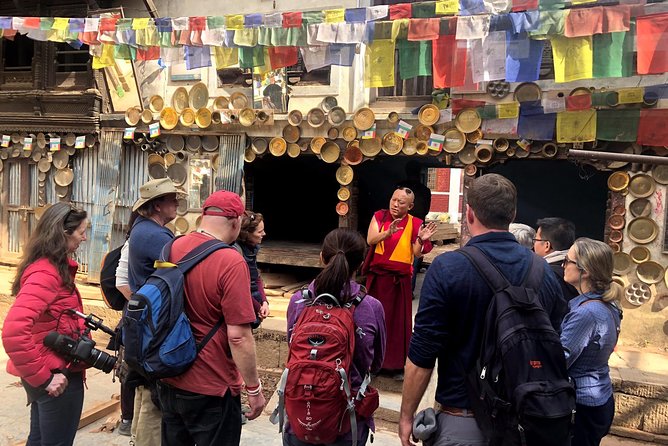
The first stop is Bikramshila Mahavihar, also called Thambahil. This old Buddhist monument belongs to the Newar people of Kathmandu and is rarely visited by tourists.
Its most useful detail is also a simple one: Thamel takes its name from this historic monument. That gives you an immediate connection between the modern tourist district and the much older city around it. The stop lasts about 15 minutes and has no separate admission charge.
Do not expect a giant monument or a long formal visit here. The value is in learning how old religious centers still shape the names and identity of present-day Kathmandu. It is a modest beginning, but a good one.
Asan Market, where daily Kathmandu happens
From the monastery, the route reaches Asan, described as the oldest living market in Kathmandu. This is one of the strongest parts of the morning because it connects history to daily use.
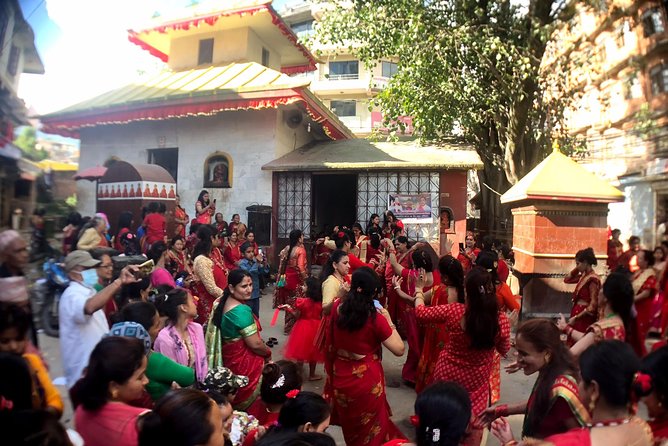
You can expect stalls and shops dealing in vegetables, clothing, metal goods, and spiritual items. The market is not arranged for sightseeing. It is a place where local people buy what they need, and that makes it more revealing than a polished cultural display.
Take your time here. Look up at the old buildings, watch the movement around the market, and listen to the guide explain how the area functions. A guide is useful because the visual details can be easy to miss when you are focused on crossing the street or keeping out of the way.
The planned stop is about 15 minutes, so this is an introduction rather than a full market visit. If you want time to shop, ask your guide early, but do not assume the schedule allows for extended browsing. The tour’s purpose is to connect Asan with the wider old-city route.
Janabaha Dyo and the many forms of compassion
Janabaha Dyo, also known as the Seto MachhindraNath Temple, introduces a local deity shared in different ways by Hindu and Buddhist traditions. Tibetan Buddhists know the figure as Avalokitesvara, the god of compassion.
The shrine contains 108 engraved images of Avalokitesvara, representing his major forms. That number gives the stop a sense of scale even though the visit itself lasts about 15 minutes.
This is a good place to pay attention to the guide’s explanation rather than treating the temple as a quick photo stop. Kathmandu’s religious life often does not fit neatly into separate categories, and this shrine helps explain that overlap.
The tour does not promise a formal ceremony or a private religious encounter at every stop. The experience is centered on seeing the site and understanding its place in local belief. Dress and behavior should be respectful at all religious locations, as they would be anywhere in Kathmandu.
More UNESCO Heritage Site Tours in Kathmandu:
- Private Kathmandu Sightseeing Tour | UNESCO World Heritage sites
★ 5.0 · 756 reviews - Kathmandu: Full Day 7 UNESCO Tour with Lunch – Private/Group
★ 5.0 · 415 reviews - Kathmandu: Full Day Top 4 UNESCO Tour with Lunch – Private/Group
★ 5.0 · 269 reviews - UNESCO Seven World Heritage Tour in Kathmandu
★ 5.0 · 253 reviews
Itum Bahal and the old monastic courtyard
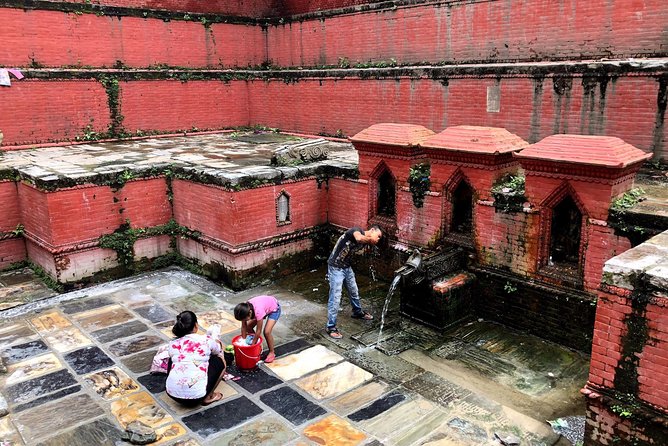
Itum Bahal is one of the more substantial stops, with about 30 minutes planned here. It was once one of the largest Buddhist monasteries in ancient Kathmandu, and the remaining section of the original 11th-century monastic complex gives you a feel for how religious life once organized the city.
The courtyard setting is important. Old Kathmandu is full of places that disappear behind ordinary-looking entrances. Once inside, you may find a quieter space with shrines and architectural details that are easy to miss from the street. The courtyard of the goddess Tara is one of the features connected with this complex.
This is where a local guide earns the fee. Without background, Itum Bahal may look like another old courtyard. With an explanation of its monastic role and its surviving structures, it becomes part of a larger story about Newar Buddhism and Kathmandu’s urban past.
The stop also gives the morning a useful pause before the more famous palace square. If you prefer grand monuments only, this section may feel understated. If you like old neighborhoods and places still connected to local worship, it should be one of the highlights.
Kathmandu Durbar Square and the royal city
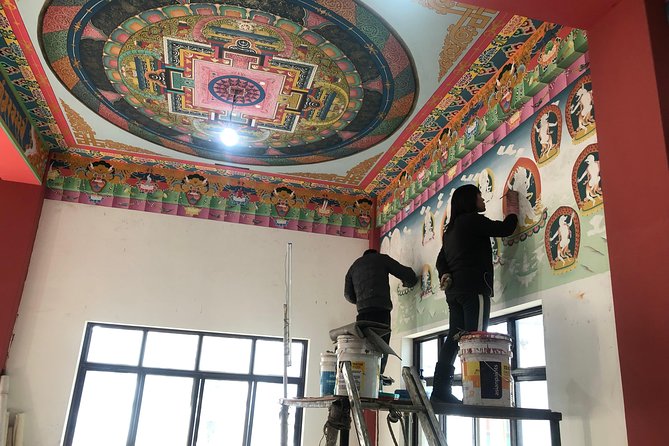
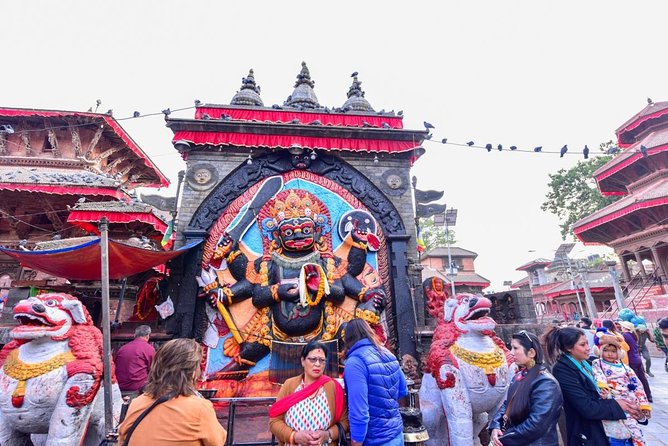
Kathmandu Durbar Square is the tour’s main landmark. The 17th-century palace area was once the seat of Nepal’s kings and is surrounded by temples and traditional Nepali buildings.
You get about 45 minutes in the square. That is enough for a guided overview and time to take in the major structures, but it is not enough for every museum, courtyard, and architectural detail in the entire complex. Keep your expectations realistic. This tour gives you a strong introduction, not an exhaustive study.
The square works best after the quieter stops. You have already seen Buddhist courtyards, a working market, and local shrines. The palace area then becomes part of the same old city instead of a detached monument.
The entry fee is not included. The same applies to the fee for the Swayambhu Stupa complex mentioned later in the route. Set aside extra cash for admissions, since the advertised $28 price covers the tour service but not these entrance charges.
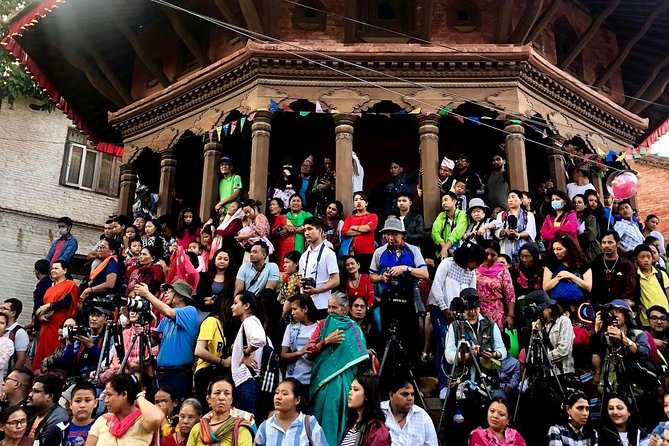
The square can also be busy and visually crowded. That is part of its appeal, but it can make photography and listening more difficult. Stay close to your guide and use the quieter moments to study the carved woodwork and temple forms.
Kumari Chowk and Kathmandu’s living goddess
Within Durbar Square, Kumari Chowk is a key stop. This roughly 300-year-old building is the home of Kumari, the living goddess, and it is known for its traditional architectural detail.
You spend about 20 minutes here. If timing and circumstances allow, you may see Kumari at the window. The possibility is a highlight, but it is not something you should treat as guaranteed. The visit is also valuable when the goddess does not appear, since the courtyard and building offer a close look at Nepal’s religious and artistic traditions.
This stop needs a respectful attitude. You are entering a sacred place associated with a living religious figure, not a stage-managed performance. Follow your guide’s instructions about where to stand and when photography is allowed.
For many people, Kumari Chowk is the most memorable part of the tour. It brings together architecture, living belief, and the particular character of Kathmandu in a way a standard palace visit may not.
Kathesimbu, the smaller stupa complex
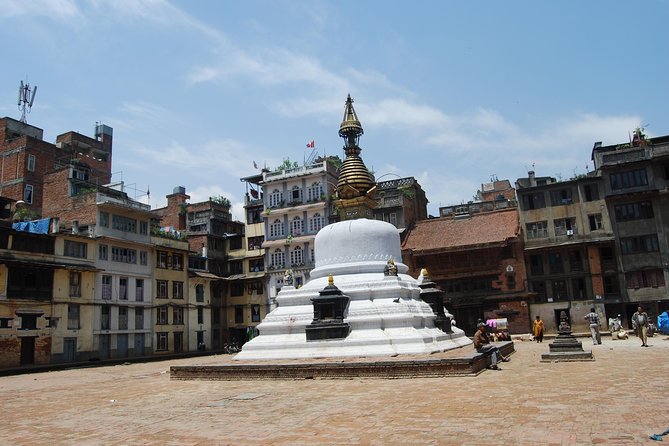
After Durbar Square, the walk continues through the old town to Kathesimbu, also known as Dharmakirti Vihara. The route description lists this Buddhist stupa complex between Kumari Chowk and the final cafe stop.
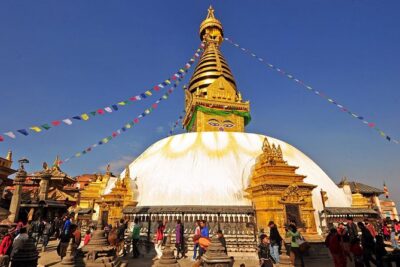
Kathesimbu contains a replica of Swayambhu Stupa, one of Nepal’s most important pilgrimage sites. The setting gives you another view of Kathmandu’s Buddhist traditions without requiring a trip far outside the center.
The timing for this stop is not clearly stated, so expect the guide to shape the visit according to the morning’s pace. An entry fee for the Swayambhu Stupa complex is not included. Confirm with the guide which fee applies to the exact section you are entering before you pay.
This section is also a reminder that the tour is not just a Durbar Square excursion. The walk keeps returning to smaller religious places, showing how closely worship and ordinary city life remain connected.
Tea at Cafe Mitra, a useful finish
The tour ends at Cafe Mitra on Thamel Marg, back in the tourist district. You receive a coffee or tea and have about 30 minutes for an informal conversation with the guide.
I like this ending because it gives you time to ask the questions that often come to mind only after a tour. You can clarify a religious custom, ask about a market item, or get advice about what to see next in Kathmandu.
The drink is included, and the end point is convenient if you are staying in Thamel. Participants can also be dropped at their hotels if they are within the stated service area. If your hotel lies outside that area, you should confirm the return arrangement before setting out.
This final conversation is especially useful with guides such as Mahesh Shreshtha or Modo, both of whom are named as guides associated with the experience. The guide can make a real difference on a route filled with small details, so use this time rather than rushing off.
What the $28 price really buys you
At $28 per person, the tour offers a private half-day outing with transportation, a local guide, and tea or coffee. For a solo visitor or couple, that is a reasonable price if you value explanation and a planned route through old Kathmandu.
The value is strongest when you want both major sights and lesser-known places. You would need to organize the route, locate the courtyards, understand the religious sites, and arrange transport yourself if you went alone. The tour bundles those tasks into one morning.
The price does not include admission to Kathmandu Durbar Square or the Swayambhu Stupa complex. That is the most important cost detail to remember. The tour is still fairly priced, but the final amount will be higher than $28 once entrance fees are added.
Group discounts are offered, and the activity is private, so the value improves when several people share the booking. It is less compelling for someone who only wants a quick walk around Durbar Square and does not care about the old neighborhoods between the landmarks.
Who should book this Kathmandu walk
I would choose this for a first morning in Kathmandu, especially if you are staying in Thamel and want to understand how the city fits together. The route gives you a broad introduction without taking a full day.
It suits you if you enjoy:
- Religious sites explained in their local setting
- Old courtyards and neighborhood streets
- Markets used by local people
- Architecture and history without a formal lecture
- A private pace with room for questions
- A mix of major sights and quieter corners
It may not suit you if you want a strenuous hike, extensive shopping time, or a detailed museum visit. The walk covers many stops, so the schedule is fairly full. You will see an overview of each place rather than spending hours at one monument.
The tour is also a good choice for people who find Kathmandu confusing at first. The guide, private transport, and fixed 9 a.m. start remove much of the early-day guesswork. Most people can participate, according to the activity information, but you should still be comfortable walking through old city streets for several hours.
Practical details before you go
The tour begins at 9 a.m. at Amrit Marg in Kathmandu. Hotel pickup is offered if you are in Thamel, and transportation to the start takes about 20 minutes when pickup is needed.
Plan on four to five hours from start to finish. Wear comfortable shoes and allow space in your schedule after the tour, since the exact pace at markets, shrines, and Durbar Square can vary.
Bring money for the two stated admission costs. Entry to Kathmandu Durbar Square and the Swayambhu Stupa complex is not included, while the listed stops such as Bikramshila Mahavihar, Asan, Janabaha Dyo, and Itum Bahal have no separate admission charge in the tour details.
The activity is private, meaning only your group takes part. Confirmation arrives when you book. Free cancellation is available up to 24 hours before the local start time. Changes or cancellations inside that window are not accepted for a refund, and the tour requires a minimum number of participants to operate.
Should you book the Old Kathmandu Walking Tour?
Book it if you want one well-organized morning that combines Kathmandu’s essential royal square with the smaller religious courtyards and market streets that give the city its character. The strongest features are the old-city route, the Buddhist and Hindu sites together, the chance to see Kumari Chowk, and the unhurried tea conversation at the end.
Skip it if you want to explore entirely on your own, spend most of the day shopping, or focus only on palace architecture. For everyone else, the $28 fee is a sensible way to get your bearings, understand the city’s religious mix, and see more than the obvious monuments.
FAQ
Where does the Old Kathmandu Walking Tour start?
The tour starts at Amrit Marg, Kathmandu 44600, Nepal, at 9 a.m.
Is hotel pickup available?
Yes. Pickup is offered from hotels in Thamel. Participants outside the meeting point area may be collected and taken to the starting point by private transportation.
How long does the tour last?
The experience lasts approximately four to five hours.
Is the tour private?
Yes. Only your group participates in the activity.
What is included in the price?
Private transportation and coffee or tea at the end of the tour are included.
Are Kathmandu Durbar Square entrance fees included?
No. The entry fee to Kathmandu Durbar Square is not included.
Is the Swayambhu Stupa entry fee included?
No. The stated details say that entry to the Swayambhu Stupa complex is not included.
Where does the tour end?
The tour ends at Cafe Mitra on Thamel Marg, Kathmandu 44600, Nepal.
Can I see Kumari, the living goddess?
You visit Kumari Chowk, the home of Kumari. Seeing Kumari at the window may be possible, but it depends on circumstances and is not guaranteed.
What is the cancellation policy?
You can cancel up to 24 hours before the experience start time for a full refund. Cancellations or changes made less than 24 hours before the start time are not accepted for a refund.
More Historical Tours in Kathmandu
- Kathmandu Private Sightseeing Tour | UNESCO World Heritage Sites
★ 5.0 · 109 reviews - Kathmandu: Full Day Private Top 4 UNESCO Heritage Tour W/Lunch.
★ 5.0 · 86 reviews - Kathmandu World Heritage Tour
★ 5.0 · 74 reviews - Nagarkot Sunrise & Bhaktapur UNESCO Heritage Private Tour
★ 5.0 · 66 reviews
More Durbar Square Tours in Kathmandu
- Bhaktapur & Patan Durbar Square Day Tours
★ 5.0 · 122 reviews - Kathmandu Sunset Tour by Rickshaw Including Durbar Square Visit
★ 5.0 · 73 reviews - City tour of Bhaktapur and Patan Durbar Square
★ 4.5 · 20 reviews - Bhaktapur Old City and Durbar Square Half-Day Tour
★ 5.0 · 15 reviews
Recently added around Kathmandu
- Kathmandu Airport Pickup and Drop-off Services★ 5.0 · 3 reviews
- Kathmandu Paragliding★ 5.0 · 3 reviews
- Explore The Beauty Of Langtang Valley In 8-Days Trek★ 5.0 · 3 reviews
- Kathmandu Chandragiri Cable Car and Swayambhunath Private Tour★ 5.0 · 3 reviews
- Kathmandu: Nightlife and Pub Crawl Tour★ 5.0 · 3 reviews
- Kathmandu: Momo Making Class with a Local Chef★ 5.0 · 3 reviews
- Mountain Flight Experience in Nepal★ 4.5 · 3 reviews
- Thangka Painting Workshop★ 5.0 · 3 reviews
Other UNESCO Heritage Site Tours worth a look
Private Kathmandu Sightseeing Tour | UNESCO World Heritage sites
Read our review →
Full Day 7 UNESCO Tour with Lunch – Private/Group
Read our review →
Full Day Top 4 UNESCO Tour with Lunch – Private/Group
Read our review →
Full-Day 7 UNESCO Tour with Lunch – Private/Group
Read our review →
Kathmandu Private Sightseeing Tour | UNESCO World Heritage Sites
Read our review →This tour also appears in