
REVIEW · ANNAPURNA BASE CAMP TREKS
12 Days Annapurna Base Camp Trek
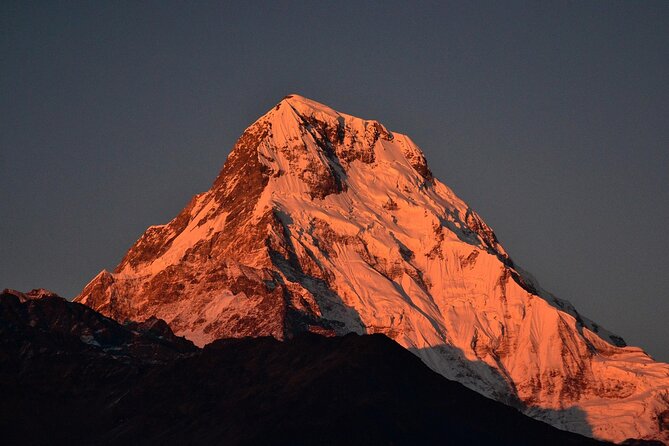
The best part of this 12-day Annapurna Base Camp Trek is the way it builds from village paths and terraced hillsides to a high mountain bowl surrounded by Annapurna I, Machapuchare, and other giant peaks. You get a sunrise at Poon Hill, nights in local teahouses, and a soak in natural hot springs, not just a quick photo at a viewpoint.
I like the clear progression of the route and the chance to see Gurung and Magar village life along the way. I also like that this is a private trip, so your group can work with the guide’s pace rather than follow a large crowd. The main consideration is physical effort: moderate fitness is required, and the thousands of stone steps near Ulleri, steep descents, and altitude above 4,000 meters are not minor details.
Key points at a glance
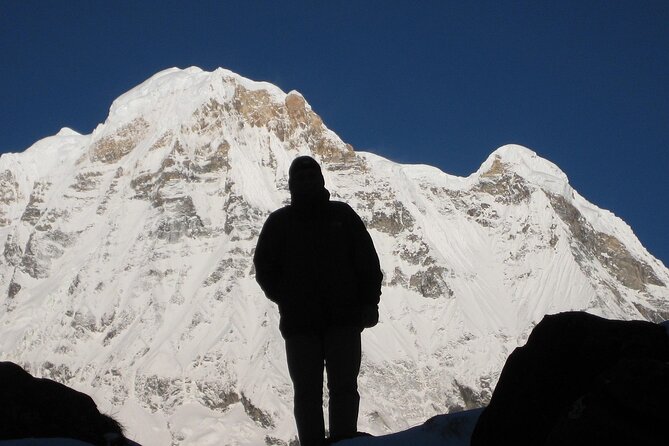
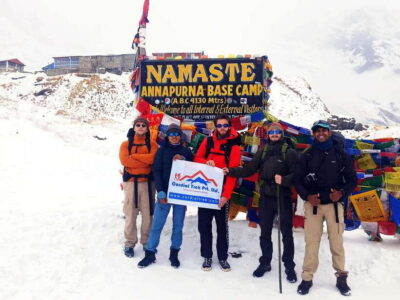
- Annapurna Base Camp at 4,130 meters: Reach a high mountain sanctuary surrounded by some of Nepal’s most famous peaks.
- Poon Hill sunrise: Start early for broad views of Dhaulagiri, Annapurna, and Machapuchare.
- Private group format: Only your party takes part, which can make the walking pace and support more personal.
- Village-to-alpine route: Move from rice terraces and Magar settlements through rhododendron forest into open high country.
- Jhinu Danda hot springs: Finish the hardest section with a riverside soak after the long return from base camp.
- $1,200 per person: The price includes meals, government and entrance fees, WiFi on board, and airport pickup, but transport needs careful checking.
Why this Annapurna route works so well
This trek gives you several different Nepal experiences in one trip. You begin in Kathmandu, spend time beside Phewa Lake in Pokhara, walk through mountain villages, and then enter the high Annapurna Sanctuary. The route is well established, with teahouses along the way, so you are not facing a wilderness expedition with no services.
The scenery changes at a satisfying pace. Lower sections bring forests, waterfalls, stone stairways, and cultivated hillsides. Higher up, trees thin out and the mountains take over. That gradual change helps you understand the region instead of simply being delivered to a viewpoint.
The route is described as moderate, but that label needs context. You should have a reasonable level of fitness and be comfortable walking uphill and downhill for several days. The ascent of more than 3,000 stone steps to Ulleri is an early warning. The descent from base camp is less demanding in terms of climbing, but it is long and can tire your knees.
This is also a private activity, which matters on a trek. You are not locked into the rhythm of a large group. If your party needs a slower morning or a longer rest, the private format may make the day easier to manage. The available feedback places strong emphasis on friendly, caring guides, including a guide called Mandip Ji, praised for his calm manner and steady help. If he is assigned to your group, that personal style could be a real advantage.
More Annapurna Base Camp Treks in Kathmandu
- Annapurna base camp trek 5 Days
★ 5.0 · 252 reviews - Annapurna Base Camp Trek
★ 5.0 · 111 reviews - Kathmandu to Annapurna Base Camp (ABC) 5-Day Trek
★ 5.0 · 102 reviews
Days 1 and 2: Kathmandu briefing, then Pokhara
Your first day begins at Tribhuvan International Airport, where pickup takes you to a hotel in the Thamel area. Thamel is a practical base for an arrival day, with plenty of activity close by, though the supplied plan does not list specific sightseeing.
The useful part of Day 1 is the trek briefing and permit preparation. Treat this as more than paperwork. It is your chance to confirm the walking plan, ask about meals and teahouse arrangements, and make sure you understand the transport plan for the next morning.
Day 2 moves you to Pokhara, the main gateway for this trek. You can choose between a six to eight-hour overland drive and a roughly 25-minute flight. That is a major practical choice. The flight saves time and road fatigue, while the drive gives you a longer look at the countryside. The supplied details do not say whether the flight cost is included, so confirm this before booking.
Pokhara gives you a softer transition into the mountains. Phewa Lake and the Annapurna views provide a calm evening before the trail starts. You will want to use this time sensibly: eat well, check your gear, and rest rather than trying to cram in extra activities.
Days 3 and 4: Ulleri steps and Ghorepani forest
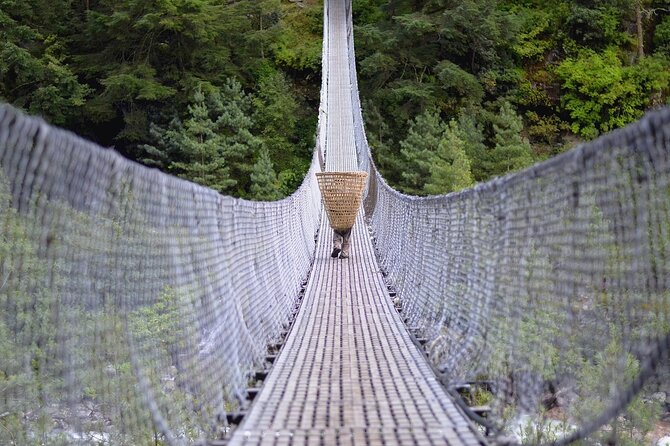
After breakfast on Day 3, you drive about 1.5 hours to Nayapul, where the walking begins. The first section passes through Birethanti and Tikhedhunga before the route turns sharply uphill toward Ulleri.
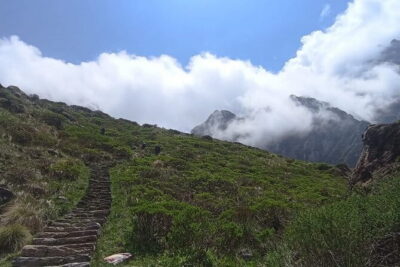
The climb of more than 3,000 stone steps is the day’s defining challenge. It is not technically difficult, but repeated steps can quickly test your legs. Walk slowly, drink regularly, and avoid treating the first big climb as a race. Ulleri brings the reward of a traditional mountain village setting and broader views than you had lower down.
Day 4 continues toward Ghorepani through rhododendron and oak forest. The route also passes waterfalls and Magar villages, giving the day a good mix of natural scenery and local life. Rhododendrons are especially notable in Nepal, and the forest sections offer shade when the trail is exposed elsewhere.
Ghorepani is a popular stop, so it may feel busier than smaller villages. Still, its cool alpine setting and mountain views make it an important part of the route. The overnight here also sets up the early start for Poon Hill, so do not expect a lazy morning.
Day 5: Poon Hill sunrise and the long walk toward Chhomrong
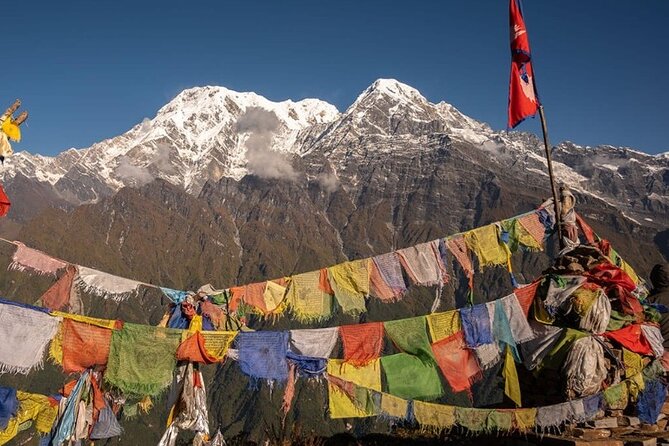
Poon Hill requires an early morning hike, but this is one of the trip’s strongest moments. From the viewpoint, you can watch sunlight reach Dhaulagiri, Annapurna, and Machapuchare. The exact visibility depends on weather, and mountain sunrises are never guaranteed, but the early effort is worthwhile when the peaks are clear.
You return to Ghorepani for breakfast before continuing through forest toward Chhomrong. This makes for a full day, not a short sunrise excursion. The trail shifts between wooded sections and mountain settlements, and the changing views keep the walking interesting.
Chhomrong is a large Gurung village with views toward Annapurna South and the sacred Machapuchare. It is one of the better places to appreciate how mountain communities fit into the route. You are not simply passing empty scenery. The village is part of the living culture of the Annapurna region.
There is also a physical price to this section. The route descends steeply to a stream and climbs again through terraces and forest. Downhill walking can feel easy at first, but the repeated climb afterward catches many people off guard.
More Hiking Tours in Kathmandu
- Everest Base Camp Trek – 14 Days
★ 5.0 · 1,499 reviews - Everest Base Camp Trekking
★ 5.0 · 485 reviews - Nagarkot Sunrise View and Day Hiking from Kathmandu
★ 5.0 · 471 reviews - Annapurna Circuit Trek with Tilicho Lake
★ 5.0 · 368 reviews
Days 6 and 7: Bamboo forests, Dovan, and Himalaya
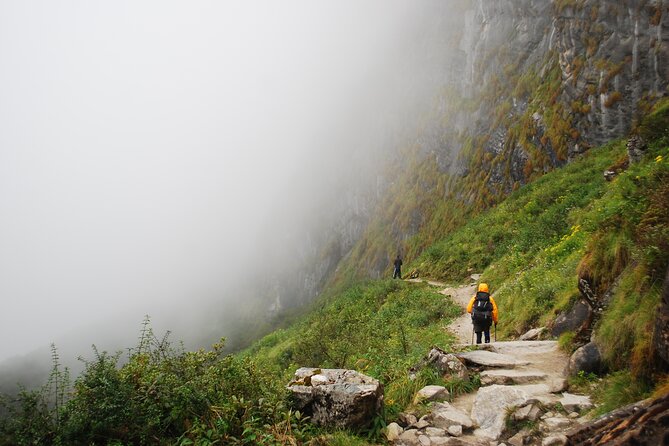
The itinerary’s Day 7 description is labeled Annapurna, but the actual route is the approach through Sinuwa, Bamboo, Dovan, and Himalaya. You begin by descending to the river, then climb back toward Sinuwa. From there, the trail enters thick bamboo forest.
This is a quieter section of the trek. The forest gives shade and a different mood from the open views around Poon Hill and Chhomrong. You pass Bamboo and Dovan before reaching Himalaya, a settlement set in a narrow gorge. The day is less about distant panoramas and more about the steady rhythm of the trail.
That variety is one reason I like this itinerary. It does not try to put a famous viewpoint in front of you every few hours. Some days are about waterfalls, forests, river crossings, and the sound of the trail under your boots. Those sections help make the high alpine arrival feel earned.
You should also pay attention to your body here. The route is gaining height, and fatigue accumulates after several days. A private guide can be helpful in spotting when your pace is too fast or when a longer rest is sensible. The available information confirms that the group is private, but it does not give a specific guide-to-client ratio or a detailed medical support plan, so ask about those points if they matter to you.
Day 8: The final climb to Annapurna Base Camp
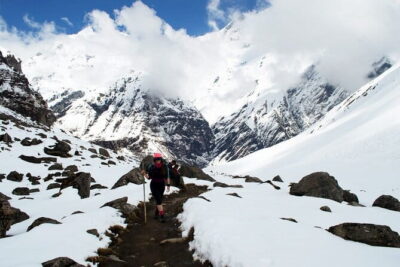
Day 8 is the emotional center of the trek. You climb past Deurali and Machapuchare Base Camp, commonly shortened to MBC, as the forest gives way to open alpine meadows. The route becomes more exposed and the peaks feel much closer.
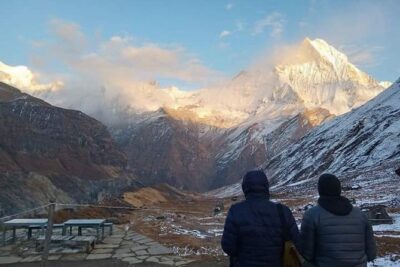
From MBC, the trail rises gradually toward Annapurna Base Camp at 4,130 meters. The reward is not one single mountain view. You are surrounded by towering peaks in the Annapurna range, with the base camp set in a dramatic mountain bowl.
The plan includes sunset at base camp, weather permitting. That timing can give the destination a special quality, as the light changes across the peaks. It also means you should be prepared for cold conditions and a long day at altitude. The provided details do not specify sleeping arrangements, heating, or gear rental, so those are worth confirming before departure.
Altitude is the most important concern on this day. The itinerary calls the trek moderate, but reaching 4,130 meters demands attention. Walk at a controlled pace and tell your guide if you feel unwell. The trip description does not provide a detailed acclimatization policy, so do not assume that every altitude concern is covered by the standard schedule.
Day 9: A long descent through MBC, Deurali, and Dovan
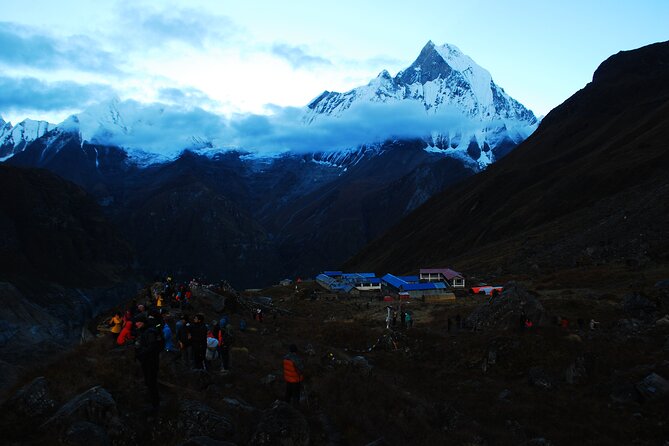
You get an early sunrise at Annapurna Base Camp before retracing the route. The morning light may offer a second chance at clear mountain views, especially if clouds affected the previous evening.
The descent passes MBC, Deurali, and Dovan before reaching the forested area around Bamboo. You lose height steadily, which usually feels easier on the lungs, but it remains a demanding day. Long descents put pressure on knees and ankles, so trekking poles can be useful if you already use them.
This is a good day to resist overconfidence. It is easy to think the hard work is finished once base camp is behind you. In practice, a long downhill walk can leave you just as tired as a climb. Take your time, use breaks well, and keep enough water and food within reach.
Day 10: Chhomrong and the hot springs at Jhinu Danda
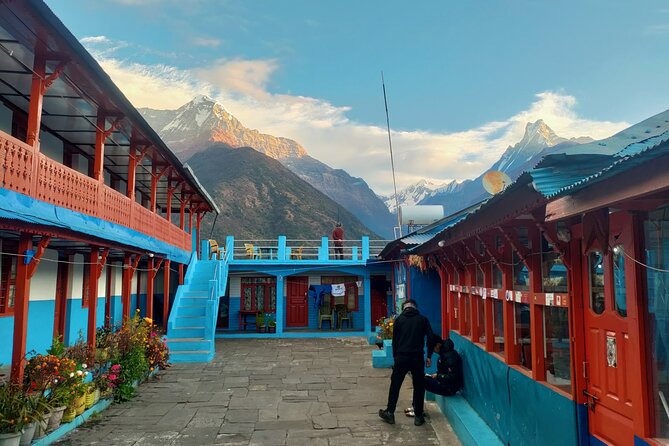
The route takes you uphill to Chhomrong and then sharply downhill to Jhinu Danda. That up-and-down pattern is typical of the Annapurna foothills and can be tougher than a steady descent.
Jhinu’s natural hot springs provide the trip’s best physical reward. From the village, you go down to the riverside for a soak. After several days on the trail, warm water can ease tired legs and give the day a clear sense of finish.
The springs are a natural setting, not a polished spa, and that is part of their appeal. The supplied information does not list changing facilities or what you should bring, so pack swimwear and keep your expectations simple. The hot spring stop is included in the route, but personal extras and transport costs should be clarified.
Days 11 and 12: Back to Pokhara, then Kathmandu
Day 11 starts with a short trek to Siwai or Nayapul, followed by a drive to Pokhara. The exact endpoint can affect how much walking and driving you do, so ask the operator to confirm the plan before you leave Jhinu.
Back in Pokhara, you have time to rest beside Phewa Lake. A lakeside dinner or massage is suggested, but those are optional personal expenses rather than listed inclusions. This pause is useful because it separates the physical trek from the final return to Kathmandu.
On Day 12, you either fly or drive back to Kathmandu. The schedule depends on your transport choice and flight timing. You may go straight to Tribhuvan International Airport or spend another night in the city. If you have an international flight the same day, allow plenty of margin for delays, since the plan does not guarantee a precise arrival time.
What $1,200 includes, and what needs checking
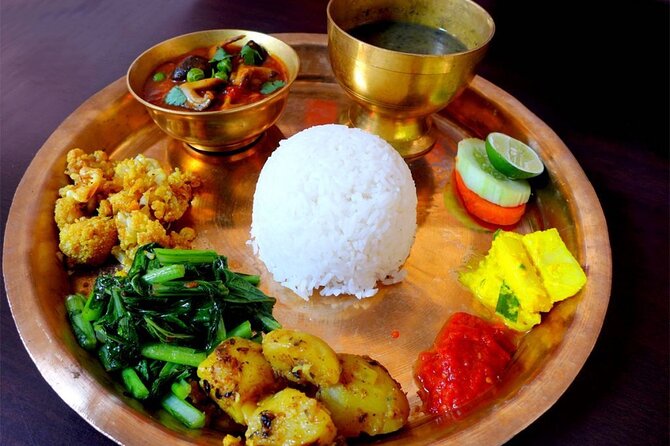
At $1,200 per person, this trek can offer fair value for a private 12-day route if the listed services are supplied as expected. Meals, government fees, entrance fees, and admission fees are included, along with WiFi on board, excess baggage, and airport pickup. Those inclusions reduce some of the small costs that can add up during a Nepal trip.
The important gap is transport. Public transportation is listed as not included, yet the itinerary requires drives between Kathmandu, Pokhara, Nayapul, Siwai or Nayapul, and Kathmandu. It also offers flights between Kathmandu and Pokhara. Ask for a written breakdown of which vehicle transfers are covered and which flights or road journeys you pay for separately.
Airport or departure tax is also excluded. The information does not list the exact meal plan, hotel category, teahouse standard, porter service, or trekking equipment. Those omissions do not make the trip poor value, but they make direct questions essential.
Confirmation is provided at booking, and pickup is offered from the Kathmandu meeting point. The activity ends back at that meeting point. Service animals are allowed, and the route is near public transportation, although this is primarily a guided private trek rather than a public transit tour.
Who should book this trek
I would recommend it to someone who wants a classic Himalayan trek with a strong mix of scenery and village life, but does not want to organize every permit, meal, transfer, and trail day alone. The private format suits couples, families with fit older children, and small groups who value a flexible pace.
You should be comfortable with repeated uphill and downhill walking. The route includes steep steps, long days, high altitude, and basic teahouse-style mountain travel. It is not the right choice if you want a relaxed sightseeing holiday with only brief walks.
The company’s strongest apparent quality is personal care from its guides. One guide, Mandip Ji, is described as calm, polite, helpful, and good company. That matters on a trek where small things, such as getting help when tired or confused, can shape the whole trip.
The cancellation terms are friendly if your plans change early: cancel at least 24 hours before the start for a full refund. Within 24 hours, there is no refund, and poor weather may lead to a different date or a full refund.
Should you book the Annapurna Base Camp Trek?
Book this trek if you want Poon Hill and Annapurna Base Camp in one connected journey, plus Gurung and Magar villages, rhododendron forest, and Jhinu’s hot springs. The route has a satisfying story, from low valleys to a high mountain sanctuary and back to warm water.
Before paying, confirm the transport costs, guide assignment, teahouse arrangements, meal details, porter service, and what the excess baggage inclusion means. If those points are clear, $1,200 can be a sensible price for a private, supported trek. If you want a short or easy holiday, choose something less demanding.
FAQ
How long is the Annapurna Base Camp Trek?
The experience lasts approximately 12 days, including time in Kathmandu and Pokhara, the trek to Annapurna Base Camp, and the return journey.
What is the highest point on the trek?
Annapurna Base Camp is the highest listed point, at 4,130 meters.
Is this trek suitable for beginners?
The trek is described as moderate and suitable for novice and experienced trekkers. You still need a moderate level of physical fitness because the route includes steep steps, climbs, descents, and high altitude.
Is airport pickup included?
Pickup is offered from Tribhuvan International Airport in Kathmandu, with transfer to a hotel in the Thamel area.
Is the trek private?
Yes. Only your group participates in this private tour or activity.
Can I fly from Kathmandu to Pokhara?
Yes. The itinerary offers a flight of about 25 minutes or an overland journey of approximately six to eight hours.
Is transportation included in the price?
Public transportation is listed as not included. Since the itinerary uses drives and offers flights, you should confirm exactly which transfers and flights require separate payment.
Are meals included?
Yes. Meals are listed among the inclusions, though the specific meal plan is not provided.
Are entrance and government fees included?
Yes. Government fees, entrance fees, and admission fees are listed as included.
What happens if bad weather cancels the trek?
If poor weather causes cancellation, you are offered a different date or a full refund. The experience requires good weather.
Recently added around Kathmandu
- Kathmandu Paragliding★ 5.0 · 3 reviews
- Kathmandu Airport Pickup and Drop-off Services★ 5.0 · 3 reviews
- Kathmandu Chandragiri Cable Car and Swayambhunath Private Tour★ 5.0 · 3 reviews
- Explore The Beauty Of Langtang Valley In 8-Days Trek★ 5.0 · 3 reviews
- Kathmandu: Nightlife and Pub Crawl Tour★ 5.0 · 3 reviews
- Mountain Flight Experience in Nepal★ 4.5 · 3 reviews
- Kathmandu: Momo Making Class with a Local Chef★ 5.0 · 3 reviews
- Everest Base Camp Trek★ 5.0 · 3 reviews
Other Annapurna Base Camp Treks worth a look
Kathmandu to Annapurna Base Camp (ABC) 5-Day Trek
Read our review →
This tour also appears in