
REVIEW · EVEREST BASE CAMP TREKS
Everest Base Camp trek with Helicopter return 9 days
The clever part of this nine-day Everest Base Camp trek comes at the end: after walking up to Gorak Shep and climbing Kala Patthar, you return by helicopter instead of retracing the same long trail. I like the efficient design, and I like that you still get the full mountain approach, with Namche Bazaar, Tengboche, the Khumbu Glacier, and Everest Base Camp along the way.
The main caution is altitude. This is called a moderate trek, but the trail becomes steeper and more remote above Dingboche, and the long eighth day reaches eight hours on foot. You need decent fitness, patience, and a willingness to accept mountain flight changes.
Key points at a glance
- Helicopter return from Gorak Shep: Finish the high-altitude section without walking back down the Khumbu Valley.
- Kala Patthar at 5,644 meters: The final climb gives you the trip’s main mountain viewpoint before the flight out.
- A real acclimatization day: You spend a full day around Namche and visit the Everest View Hotel area.
- Small private experience: Only your own group participates, with one porter assigned for every two people.
- Strong practical support: Airport transfers, permits, meals, guide costs, medical checks, and mountain transport are covered.
- Important extra costs: Drinks, hot showers, phone charging, tips, insurance, visas, and Kathmandu lunches and dinners are not included.
What the nine days are really like
This trip packs the classic Everest route into a short schedule. You spend seven full days in the mountains, then use the helicopter to cut out the return trek. That saves several walking days and suits you if you have limited holiday time but still want to reach Everest Base Camp on foot.
The route gains height gradually at first. You begin among forested hills and river crossings, then move through Namche Bazaar and Tengboche before entering the colder, more open upper Khumbu. The hardest walking comes late, when the air is thin and the trail turns rocky.
The price is $3,888 per person. That is a serious sum, but it covers more than a basic guided trek. Private ground transfers, Kathmandu to Lukla and return flights, the helicopter from Gorak Shep to Lukla, permits, government fees, guide expenses, a porter for every two people, meals in the mountains, and a first aid kit are included.
The helicopter is the feature that changes the value calculation. If you compare this with a longer standard Everest Base Camp trek, the higher cost pays for time saved and a much easier exit from the high valley. You are also paying for the possibility of helicopter coordination in a place where weather can disrupt plans.
More Hiking Tours in Kathmandu
- Everest Base Camp Trek – 14 Days
★ 5.0 · 1,499 reviews - Everest Base Camp Trekking
★ 5.0 · 485 reviews - Nagarkot Sunrise View and Day Hiking from Kathmandu
★ 5.0 · 471 reviews
Day 1: Kathmandu arrival and team briefing
An airport representative meets you at the international terminal, drives you to the hotel, and helps with your bags and check-in. After you rest, you meet the main team.
This first day is useful rather than decorative. It gives you time to settle into Kathmandu and prepare for an early departure to Lukla. Confirm what luggage goes with the porter, what you carry yourself, and how the final helicopter transfer will work.
Kathmandu lunches and dinners are not included, so budget separately for city meals. Your international airfare and Nepal visa are also your responsibility.
Day 2: Lukla flight and the first mountain walk
You leave early for the short flight from Kathmandu to Lukla. The flight itself is part of the adventure, with mountain views on the way to Tenzing Hillary Airport.
After landing, you meet the porters and begin walking. The first day on foot leads toward Phakding and takes about four hours. This is a sensible opening stage because it lets your body begin adjusting before the route climbs harder.
The lower trail passes through rhododendron and magnolia forest. You cross suspension bridges and follow the Dudh Koshi valley. The walking is not yet the most demanding part of the trip, but the early start, flight, and first hours at altitude can still leave you tired.
Flight timing is one practical concern. Mountain weather can affect Lukla flights, so keep your arrival and departure plans flexible. The trip includes the Kathmandu to Lukla and return flight, but the exact operating time depends on conditions.
Day 3: Phakding to Namche Bazaar
This is a longer walking day, about six hours, and the route begins to feel properly Himalayan. From Phakding, you pass Toktok at about 2,760 meters and continue through villages and wooded sections toward Monjo.
Near Bengkar, you cross two bridges before entering the Sagarmatha National Park area. The trail then rises toward Namche Bazaar, the largest settlement on this section of the route.
Namche sits at roughly 3,440 meters and is built into a steep bowl of land. It is a good place to notice the change in the trip. The path is no longer simply following a low valley. You are now climbing into the high country, and each uphill section asks more from your lungs.
The final approach to Namche is likely to be the day’s biggest effort. Walk steadily and avoid racing the group. Your guide can help set the pace, but you should speak up early if you feel unwell.
More Everest Base Camp Treks in Kathmandu:
- Everest Base Camp Helicopter Tour landing at Everest View Hotel
★ 5.0 · 668 reviews - Everest Base Camp Trekking – 13 Day
★ 5.0 · 365 reviews - Everest Base Camp Trek -14 Days
★ 5.0 · 321 reviews - Everest Base Camp Helicopter Tour landing at Hotel Everest View
★ 5.0 · 218 reviews
Day 4: Acclimatization around Namche and Khumjung
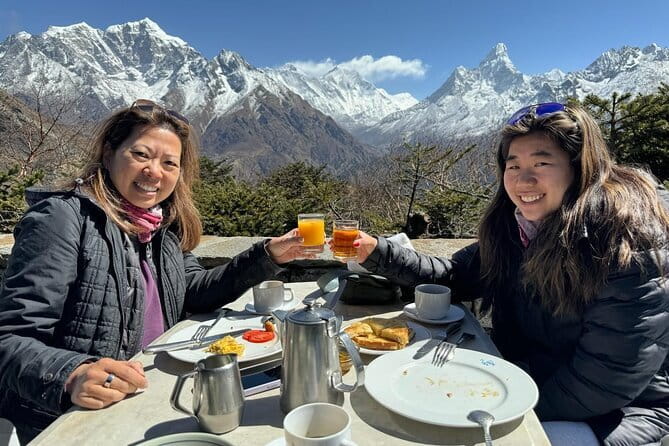
You do not simply spend the day in bed. The schedule uses an acclimatization walk toward Khumjung and the Everest View Hotel area, with about five hours of activity.
You use the Syangboche airstrip area above Namche to reach the Everest View Hotel. The point is not just the scenery. A gradual rise and return gives your body some exposure to higher altitude without forcing you to sleep much higher that night.
Khumjung is one of the most interesting places on the route because it feels like a working mountain village rather than a brief trail stop. The surrounding hills and high peaks give you your first broad sense of the Everest region.
This is a day to take seriously. Drink water, eat properly, and keep the pace easy. The oxygen check included with the trip is carried out twice daily, using an oximeter to check pulse, oxygen saturation, and heart rate. That does not replace medical judgment, but it gives the guide useful information.
Day 5: Namche to Kyangjuma
The trail climbs from Namche toward Kyangjuma at approximately 3,550 meters. The walk takes about five hours.
This section runs along green foothills with mountain views and a mix of gradual climbs and drops. It is not simply a straight uphill march. You gain height, lose some of it, then climb again, which can feel frustrating when you are watching your energy.
Kyangjuma is a useful overnight position before Tengboche. The distance is moderate, leaving you time to settle into the daily rhythm: breakfast, several hours on foot, a simple lodge meal, and an early night.
Tea houses along the route offer basic comforts. Hot showers and phone charging are available for about $2 to $5, but those costs are not included. Bring cash for these extras, drinks, snacks, and tips.
Day 6: Tengboche and the forested Khumbu
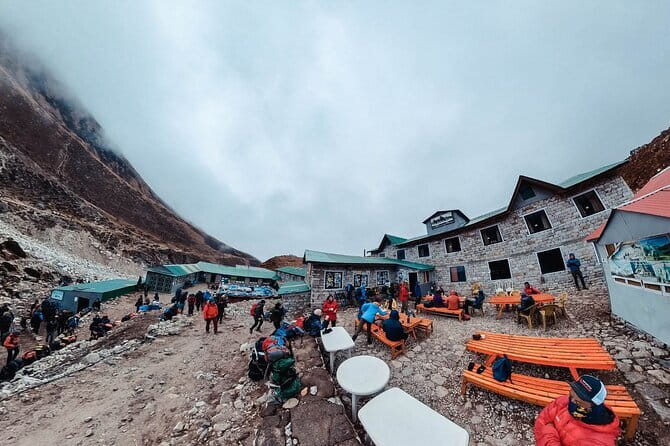
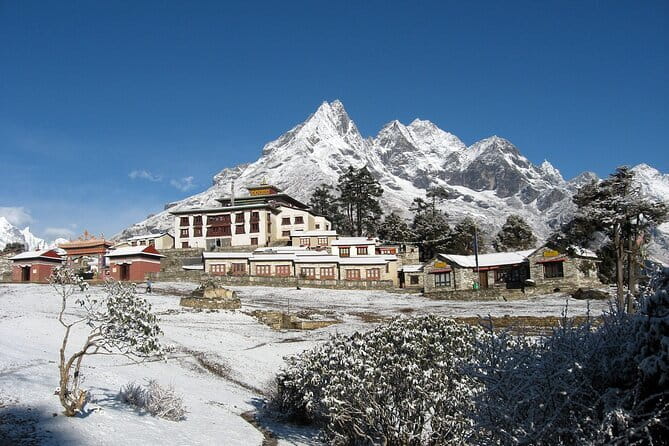
The walk to Tengboche takes about five hours and brings one of the most memorable settings on the route. The trail passes through rhododendron forest and reaches the famous Tengboche area, where the monastery and mountain views create a strong sense of place.
The schedule includes an early start for sunrise, followed by breakfast and a descent through the forest to Deboche at about 3,320 meters. You might see musk deer, blue sheep, or Himalayan birds, although wildlife sightings are never guaranteed.
Tengboche matters because it marks a clear shift in the route. The forest will gradually thin as you head higher, and the valley begins to feel more exposed. You are also approaching the point where the trek becomes physically harder, especially after Dingboche.
The descent to Deboche may feel easy compared with a climb, but do not waste energy. The repeated up-and-down shape of Himalayan trails can make a five-hour day feel longer than its distance suggests.
Day 7: Toward the Khumbu Glacier
This is a roughly six-hour day through the upper valley. After leaving Dingboche, the trail climbs along a ridge and continues toward the Khumbu Glacier area.
Dingboche sits at about 4,410 meters, and this is where the route becomes more remote and noticeably steeper. You see Cholatse and Tawache, with the trail moving through rougher ground and higher, colder surroundings.
The Khumbu Glacier is not a quick photo stop. Much of the day is spent walking beside or near it, and the uneven trail requires attention. Rocks, slopes, and thin air make a steady pace more important than speed.
Your guide’s role becomes especially valuable here. The included guide salary, food, lodging, transport, and insurance are covered by the operator, so you are not managing those arrangements yourself. The team also carries a first aid kit and monitors basic health readings twice daily.
Day 8: Lobuche to Gorak Shep and Everest Base Camp
This is the big walking day, lasting about eight hours. You leave Lobuche and follow the broad valley toward Gorak Shep, with the trail becoming steeper and rockier as you gain height.
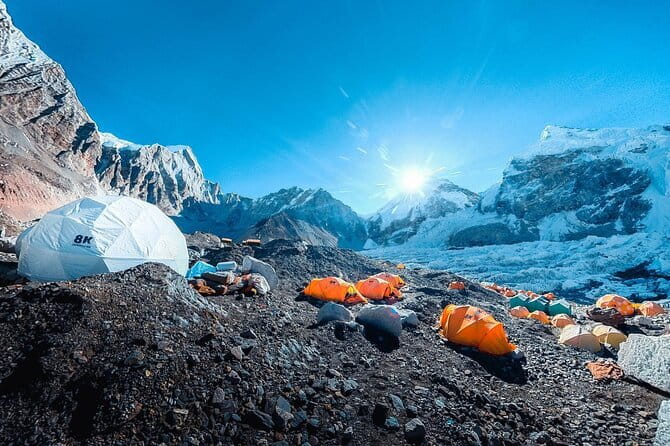
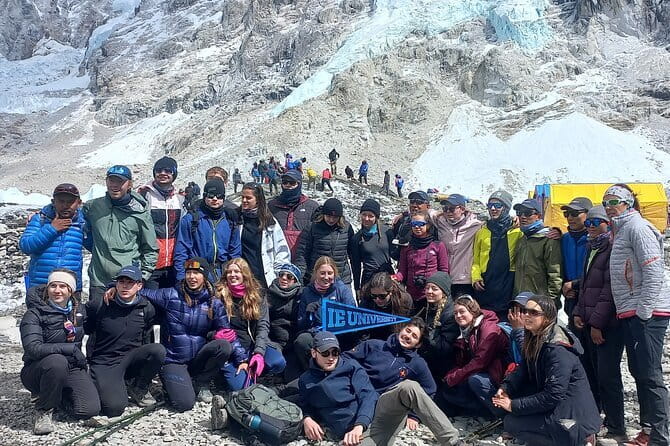
Gorak Shep is the final lodge settlement on the route. From there, you walk toward Everest Base Camp and return to Gorak Shep. The path near the Khumbu Glacier can be rough and slow, so allow yourself time rather than focusing on a fast arrival.
Everest Base Camp is a powerful destination, but the experience is not a simple viewpoint. It is a high, rocky area beside the glacier, and the appearance changes with the season and expedition activity. The achievement comes from reaching it on foot after days of gradual climbing.
You sleep at high altitude, which is why this day should not be underestimated. The schedule is tight, and the return to Gorak Shep still requires effort after reaching Base Camp. Keep your pack light and use the porter arrangement well.
Day 9: Kala Patthar and the helicopter to Lukla
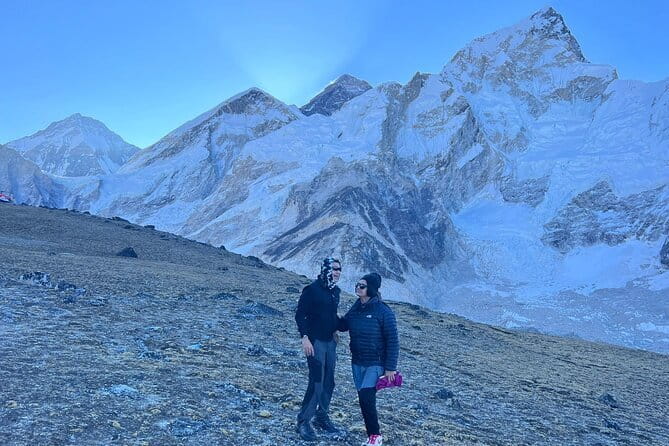
The final morning begins with Kala Patthar. The trail starts above Gorak Shep and is well used, though the climb still feels demanding at 5,644 meters.
The early light is the reason for starting before breakfast or early in the morning. The sun reaches the high peaks, and you get the broad mountain view that many people consider the visual highlight of the trip. Kala Patthar is also the highest point on the walking route.
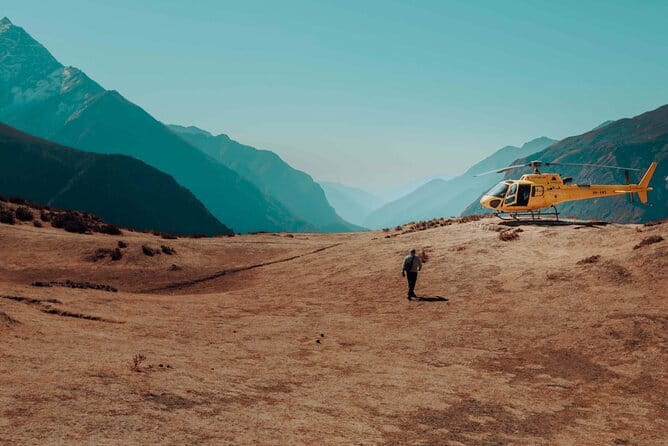
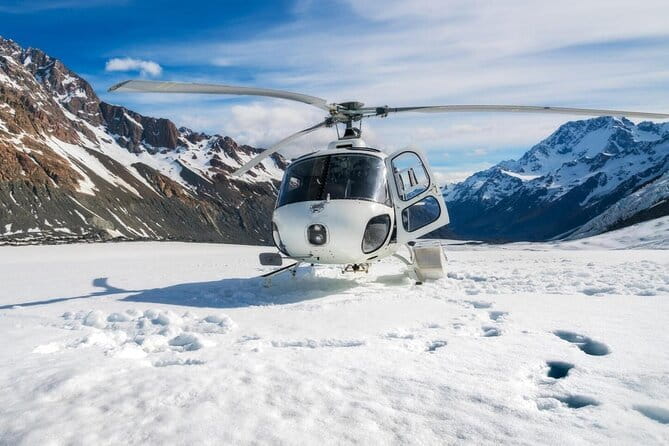
After returning from the viewpoint, the helicopter takes you from Gorak Shep to Lukla. The supplied schedule describes the return helicopter as flying to Lukla, while the package also includes the Lukla to Kathmandu return flight. Confirm the exact connection and timing with the operator before departure, since mountain aviation depends on weather and aircraft availability.
The helicopter return is not only a luxury. It removes the long descent through the same villages and lets you finish the high-altitude section without spending several more days walking downhill. For many people, that is the difference between fitting Everest into a short holiday and not going at all.
The guide and porter setup
You receive an experienced mountain guide, with guide expenses covered. One porter is assigned for every two people, which means you normally carry a daypack while the porter handles the heavier shared load.
Ask how much luggage the porter can carry and what weight limit applies before you pack. That specific limit is not provided here, so get the answer in writing.
The operator has worked with guides named Raj and Ramesh on Everest trips, while Sital and Ganesh have led other Nepal treks. Those names give you useful points of contact when discussing the team, but they do not confirm who will lead your departure. If a particular guide matters to you, request that person early.
The strongest praise attached to the company centers on organization, airport pickup, guide support, and calm handling of changing conditions. One account describes clever helicopter use during difficult weather on a longer Everest route. That is relevant here because flexibility matters in the Khumbu more than a perfectly fixed timetable.
What the $3,888 price covers
The package includes:
- Private airport and ground transfers
- Kathmandu to Lukla and return air travel
- Helicopter transport from Gorak Shep to Lukla
- Experienced guide costs
- One porter for every two people
- Breakfast, lunch, and dinner during the trek
- Trekking permits and required entry fees
- Government taxes and official charges
- First aid equipment and twice-daily oximeter checks
- A trip completion certificate
The package does not include Kathmandu lunches or dinners, visa costs, international flights, travel and medical insurance, personal purchases, alcoholic drinks, soft drinks, hot drinks, cold drinks, desserts, hot showers, phone charging, or tips.
Tipping is expected for the guide, porters, and driver. Set aside money for it rather than treating it as an unexpected charge. You should also carry funds for snacks and tea house extras, especially because the included meals do not cover every drink or treat.
Who should choose this trek
I would choose this trip if you want the classic Everest route but cannot spare the time for a long return trek. It suits someone with moderate physical fitness who can handle six to eight hours of walking on several days and a high point above 5,600 meters.
It is also a good fit for people who value support. Airport assistance, private transport, permits, meals, porters, health checks, and a guide reduce the number of details you must arrange yourself.
I would be more cautious if you dislike early starts, basic tea house conditions, rocky trails, or uncertain flight plans. The helicopter saves time, but it does not remove altitude, cold, fatigue, or the need for good insurance.
This is a private activity, so only your own group participates. That can make pacing and communication easier than joining a large mixed group. Service animals are allowed, and the starting point is near public transportation, though the mountain route itself is reached by air from Kathmandu.
Booking and cancellation points
Confirmation is provided when you book. Pickup is offered, and mobile tickets are available.
You can cancel for a full refund up to 24 hours before the experience starts. Cancellations made within 24 hours are not refunded, and changes made inside that period are not accepted. Cutoff times use local Nepal time.
Should you book the Everest Base Camp helicopter return trek?
Book it if your priority is the full upward trek with a fast exit. You get Namche, Tengboche, the Khumbu Glacier, Everest Base Camp, and Kala Patthar, then avoid the long walk back down. The cost is high, but the helicopter and broad range of included services explain much of it.
Do not book it simply because the nine-day length sounds easy. The final walking days are tough, and the altitude is serious. If you prepare well, accept basic mountain conditions, and keep your schedule flexible, this is one of the most practical ways to experience Everest on a short Nepal visit.
FAQ
How long is the Everest Base Camp helicopter return trek?
The experience lasts approximately nine days, including arrival arrangements, the trek from Lukla to Everest Base Camp, the Kala Patthar climb, and the helicopter return.
Where does the trip begin?
The trip begins in Kathmandu, Nepal, with airport pickup and transfer to the hotel. The walking section begins after the flight to Lukla.
Is the flight from Kathmandu to Lukla included?
Yes. The package includes the Kathmandu to Lukla flight and the return Lukla to Kathmandu flight.
Is the helicopter from Gorak Shep to Lukla included?
Yes. The helicopter flight from Gorak Shep to Lukla is included.
Does the trip include an acclimatization day?
Yes. Day four is used for acclimatization around Namche Bazaar and Khumjung, including the Everest View Hotel area.
How high is Kala Patthar?
Kala Patthar reaches 5,644 meters, or 18,519 feet.
How difficult is this trek?
The trek is described as moderate, but the route becomes steeper and more remote above Dingboche. One day lasts about eight hours, so you need a moderate level of physical fitness.
Are meals included?
Breakfast, lunch, and dinner are included during the trek. Eight breakfasts, eight lunches, and eight dinners are listed. Food in Kathmandu for lunch and dinner is not included.
Is a porter provided?
Yes. One porter is provided for every two people.
Are drinks and hot showers included?
No. Alcoholic and non-alcoholic drinks are not included. Hot showers and phone charging in tea houses cost about $2 to $5 and are paid separately.
More Helicopter Tours in Kathmandu
- Everest Base Camp Trek with Helicopter Return from Gorakshep to Lukla
★ 5.0 · 161 reviews - Everest Base Camp helicopter tour with landing
★ 5.0 · 61 reviews - Everest Base Camp Helicopter Tour with Hotel Everest View Landing
★ 5.0 · 52 reviews - Guaranteed Landing at Everest Base Camp Kalapathar by Helicopter
★ 5.0 · 38 reviews
Recently added around Kathmandu
- Kathmandu Airport Pickup and Drop-off Services★ 5.0 · 3 reviews
- Kathmandu Paragliding★ 5.0 · 3 reviews
- Kathmandu Chandragiri Cable Car and Swayambhunath Private Tour★ 5.0 · 3 reviews
- Explore The Beauty Of Langtang Valley In 8-Days Trek★ 5.0 · 3 reviews
- Kathmandu: Nightlife and Pub Crawl Tour★ 5.0 · 3 reviews
- Kathmandu: Momo Making Class with a Local Chef★ 5.0 · 3 reviews
- Mountain Flight Experience in Nepal★ 4.5 · 3 reviews
- Thangka Painting Workshop★ 5.0 · 3 reviews
Other Everest Base Camp Treks worth a look


Everest Base Camp Helicopter Tour landing at Everest View Hotel
Read our review →


Everest Base Camp Helicopter Tour landing at Hotel Everest View
Read our review →

This tour also appears in