
REVIEW · EVEREST BASE CAMP TREKS
Everest Base Camp Trek with Helicopter Return – 10 Days
The clever idea here is simple: walk up to Everest Base Camp, then fly home. Instead of retracing the same trail to Lukla, you finish with a helicopter ride from the high Khumbu region to Kathmandu, turning a 10-day trek into a focused mountain journey.
I like the carefully arranged support, especially the included Lukla flights, tea-house lodging, meals, porters, permits, sleeping bag, down jacket, and walking pole. I also like the small-group limit of 15, which should make it easier to stay connected with your guide. The main consideration is the pace: this is a serious high-altitude trek compressed into 10 days, and the helicopter flight depends on good weather.
Five things to know before you book
- The return flight saves several trekking days: You do not walk back from Gorakshep to Lukla, so the route stays focused on reaching Base Camp.
- Kala Patthar is the final mountain viewpoint: You climb it before the helicopter ride for broad views of Everest and the Khumbu peaks.
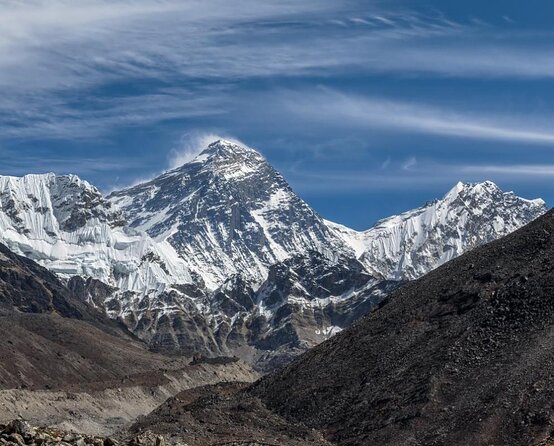
- Four huge Himalayan peaks shape the route: Everest, Lhotse, Makalu, and Cho Oyu are the headline mountains.
- Acclimatization is built in: Day 4 at Namche and the stop at Dingboche give your body time to adjust.
- The package covers most major costs: Guide, porter support, meals on trek, lodging, permits, equipment, transfers, and mountain flights are included.
What the 10-day route is really like
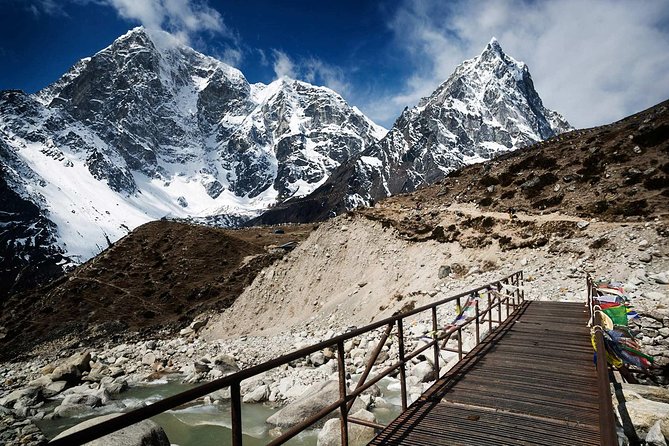
This is not a gentle sightseeing trip with a short mountain walk added on. You spend most of the itinerary moving uphill and sleeping in basic guest houses at increasing altitude. The reward is a steady change in scenery, from green hills near Lukla to rock, ice, and open mountain country near Gorakshep.
The route uses the classic approach through the Sherpa villages of the Khumbu. You cross suspension bridges, pass Buddhist chortens and mani walls, walk beside the Dudh Koshi River, and enter Sagarmatha National Park. The trail is famous, but it still asks plenty from your legs and lungs.
The stated tour price is $3,400 per person. That is a substantial sum, but it includes two costly pieces of transport: the flight from Kathmandu to Lukla and the group-sharing helicopter flight back from the Everest region. Add 10 nights of accommodation, trekking meals, a guide, porters, permits, gear, and airport transfers, and the price becomes easier to understand.
You will still pay for Nepal’s entry visa, Kathmandu lunches and dinners, drinks, internet, laundry, hot showers, phone calls, battery charging, and tips. Keep extra cash available for these items. The trip also asks for a moderate level of physical fitness, which is a polite way of saying that you should be comfortable walking for several hours on uneven mountain trails.
More Hiking Tours in Kathmandu
- Everest Base Camp Trek – 14 Days
★ 5.0 · 1,499 reviews - Everest Base Camp Trekking
★ 5.0 · 485 reviews - Nagarkot Sunrise View and Day Hiking from Kathmandu
★ 5.0 · 471 reviews
Days 1 and 2: Kathmandu to Lukla and Phakding
Day 1 is deliberately light. You are met at the airport and taken to your Kathmandu hotel, with time to rest or explore. That matters because the next morning begins early, with a 6:15 am start listed for the activity.
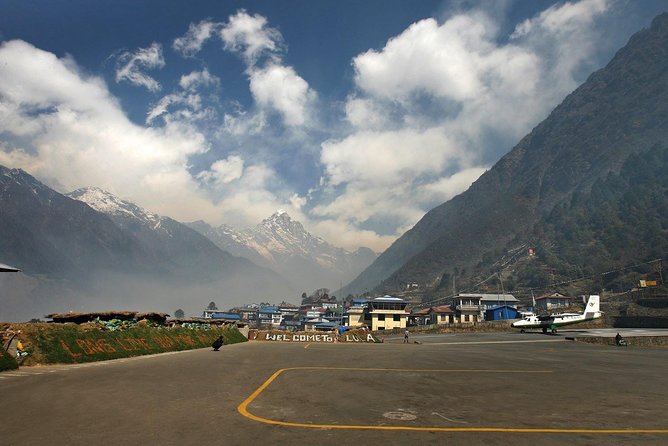
Day 2 brings the flight to Lukla. This short mountain flight is not just a transfer. Lukla is the gateway to the Everest region, and landing there marks the real beginning of the trek. You meet the trekking crew, then walk toward Phakding through green surroundings with views of Kusum Kanguru.
The first walking day is useful for getting your rhythm. You are not yet at the most difficult altitude, but you are already on a trail where river crossings, stone paths, and steady climbs replace city streets. The route enters the protected Sagarmatha National Park, a UNESCO World Heritage Site.
The Lukla flight is a practical point to watch. Mountain weather can affect flights, and the helicopter return is also weather dependent. The cancellation terms allow a different date or a full refund if poor weather cancels the experience, but a weather delay can still affect your wider Nepal plans.
Day 3: The long climb to Namche Bazaar
From Phakding, the trail follows the Dudh Koshi River and passes through pine forest. You cross the Hillary Suspension Bridge before reaching the park checkpoint and continuing toward Namche Bazaar.
Namche is the Sherpa capital and the main gateway to the Everest region. It is one of the most memorable stops because it feels like a real mountain town rather than a simple overnight camp. The settlement is also an important point for altitude adjustment.
The day is described as a stiff walk, and the long stated duration reflects the effort involved. You should not treat Namche as a quick stop on the way to bigger peaks. Give yourself time to settle in, eat, drink, and follow your guide’s advice.
The Sherpa Museum is included as a planned stop, though its admission fee is not included. It offers useful context on local culture and mountain traditions. I like this addition because the trek is not only about taking pictures of Everest. The villages, Buddhist symbols, and Sherpa communities give the route its character.
Day 4: Namche acclimatization and Everest View Hotel
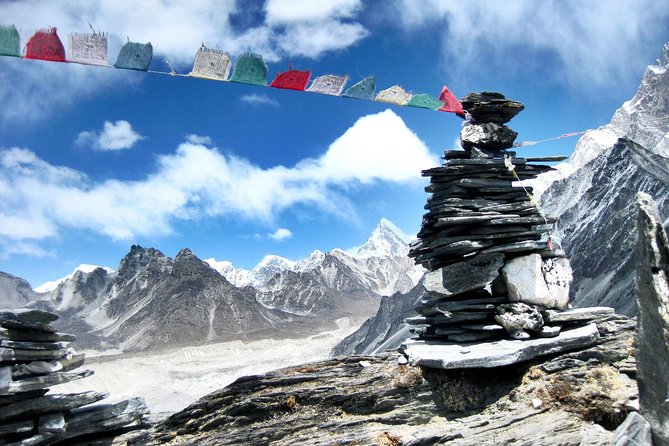
Day 4 is set aside for acclimatization, with a hike toward the Everest View Hotel in Syangboche. You gain height during the day and return to Namche, a pattern that helps your body adjust better than simply sleeping higher every night.
The viewpoint is an early chance to see Everest, along with other major peaks. The mountains begin to feel close, but the trail has not yet reached the stark high-altitude country around Base Camp.
This is also a day when the guide’s judgment matters. The itinerary gives you a planned hike, but pace and rest should be handled sensibly. A guide who watches how you are eating, sleeping, and walking can make a major difference on the higher sections.
Past departures have highlighted guides named Dipak, Ram, Ramesh, and Rabi, along with porter support. The company assigns one porter for every two trekkers, and porter transport, food, accommodation, salary, equipment, and insurance are included. That is good value, and it also means you should pack responsibly and keep your own day bag manageable.
More Everest Base Camp Treks in Kathmandu:
- Everest Base Camp Helicopter Tour landing at Everest View Hotel
★ 5.0 · 668 reviews - Everest Base Camp Trekking – 13 Day
★ 5.0 · 365 reviews - Everest Base Camp Trek -14 Days
★ 5.0 · 321 reviews - Everest Base Camp Helicopter Tour landing at Hotel Everest View
★ 5.0 · 218 reviews
Day 5: Tengboche and its important monastery
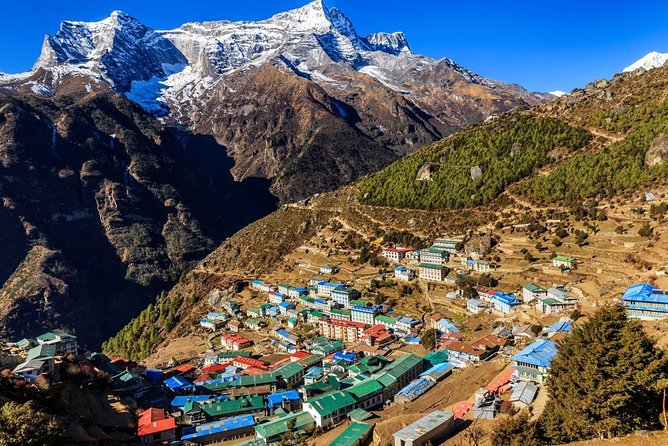
The trail leaves Namche and follows a route with moderate ups and downs through Kayangjuma and Sanasa. You cross the Dudh Koshi near Punki Tenga, then face a rougher climb toward Tengboche.
Tengboche is home to the largest monastery in the Khumbu region and is one of the route’s cultural highlights. The setting is also impressive, with mountain views opening around the settlement. This is a good place to slow down and notice the prayer flags, mani walls, and religious buildings rather than treating the village as only a lunch or sleep stop.
The walk is still demanding. The lower sections may feel manageable, but the repeated climbs begin to add up. Your guide will have pre-arranged lodging and meals, so you can focus on walking, recovery, and staying hydrated.
Tea-house accommodation is part of the package. Expect practical mountain lodging rather than hotel comfort. The included sleeping bag and down jacket are especially useful as nights become colder, but personal expenses such as hot showers, drinks, and battery charging are not included.
Day 6: Pangboche and Dingboche
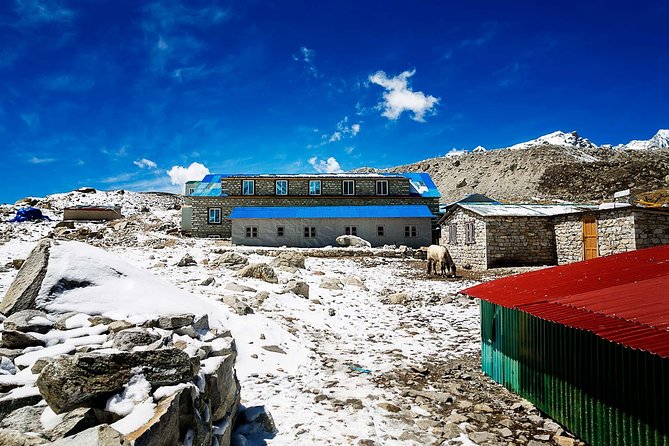
The route climbs through villages marked by chortens and mani walls, crosses the Imja Khola, and passes Pangboche at about 3,900 meters. From there, it enters the Imja Valley before continuing to Dingboche.
Dingboche is another acclimatization point. By now, the air is thinner and the pace needs to be measured. Even if you feel strong, do not race ahead. The purpose of the schedule is to reach Base Camp safely, not to win a walking contest.
The village is small and serves as a staging point for the upper trail. The shift in scenery is clear: trees become less dominant, open slopes and high ridges take over, and the mountains feel more severe.
Meals during the trek are included, breakfast, lunch, and dinner. That removes one major daily decision, though drinks are extra. Tea, coffee, hot chocolate, bottled water, boiled water, cola, beer, and other beverages must be paid for separately.
Day 7: Toward Lobuche and the Khumbu Glacier
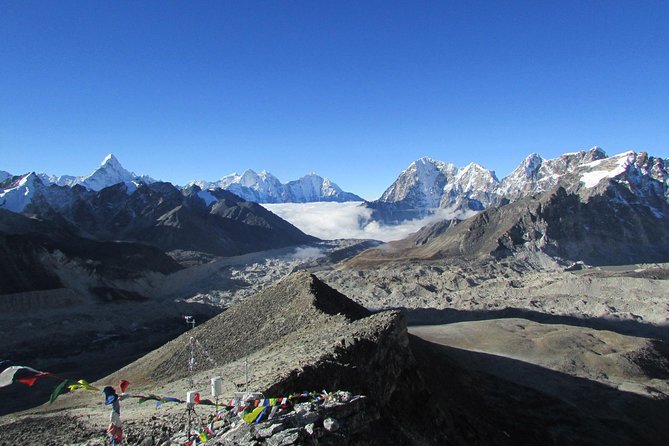
The trail climbs through the Khumbu Khola Valley toward Duglha. Along the way, you pass places such as Dusa and Phulung Karpo before continuing toward the higher settlements.
The approach to Lobuche is a clear step up in difficulty. The itinerary notes repeated climbs and descents, and the altitude makes each one feel longer. Lobuche Peak lies near the Khumbu Glacier, with east and west summits, adding a dramatic mountain backdrop even before Base Camp.
This is a day for patience. You may find that a short distance takes much longer than expected. Walk slowly, follow the guide’s pace, and use the included walking pole if it helps with balance on rough ground.
The route is not designed for a quick photo stop and a return to comfort. You spend the night in basic lodging and prepare for the main goal on Day 8. A duffle bag is provided, which is helpful because porters carry your main gear while you keep essential items with you during the day.
Day 8: Everest Base Camp and Gorakshep
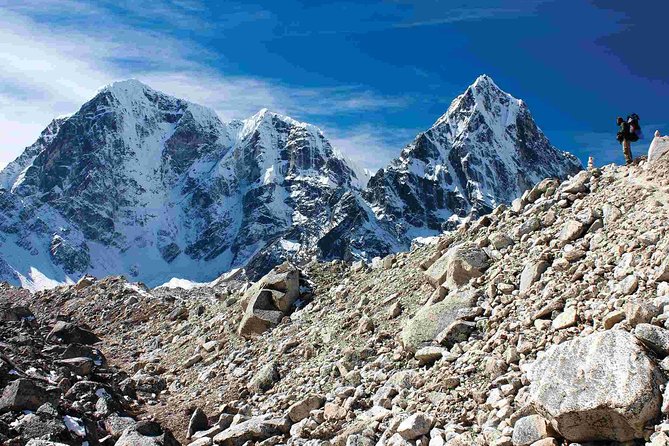
From Lobuche, you continue through high-altitude terrain toward Gorakshep. The trail has many ups and downs, and the final approach can feel slow after several days of walking.
After roughly three hours of steady hiking, you reach Everest Base Camp. The visit itself is listed as about 30 minutes, but the meaning of the stop is much bigger than the clock suggests. You can see the Khumbu Glacier and icefall, and you are standing at the starting point for expeditions up Mount Everest.
Base Camp is not the summit, and it does not provide the classic full view of Everest that many people expect. The next morning’s climb to Kala Patthar is designed to provide that wider mountain panorama. Knowing this helps you appreciate both stops for what they offer.
You return to Gorakshep, described as the final stop on the trek. The night is basic and high, so this is not the place to expect a full night of easy sleep. Your guide and porter team are particularly important here, as is paying attention to any symptoms of altitude trouble.
Day 9: Kala Patthar, then the helicopter home
The final trekking morning takes you to Kala Patthar. This is the high viewpoint many people picture when they imagine the Everest Base Camp route. The climb gives you panoramic views of Everest and the surrounding Khumbu mountains.
The early start is worthwhile because mountain visibility can change during the day. The itinerary allows about 30 minutes at the viewpoint, enough to take in the scene, photograph the peaks, and catch your breath before returning toward the helicopter pickup point.
After Kala Patthar, you fly back to Kathmandu by group-sharing helicopter. This is the trip’s defining feature. You avoid the long return walk through the same villages, which saves several days and gives you a new view of the valleys, glaciers, ridges, and high peaks from above.
The helicopter is not a minor add-on. It is a major part of the $3,400 price and a practical reason to choose this itinerary over a standard round-trip trek. The tradeoff is that group sharing means the flight is not private, and weather can prevent the aircraft from operating as planned.
Day 10: A simple finish in Kathmandu
After breakfast, you are transferred to the international airport for your flight home or onward journey. Airport pickup and drop-off by private vehicle are included according to the itinerary, along with Kathmandu accommodation and breakfast.
The schedule gives you little spare time at the end, so do not plan an important same-day connection without checking your flight details carefully. The tour finishes in Kathmandu, not at the mountain airstrip, which keeps the final transfer straightforward if the helicopter operates on schedule.
What the package includes, and what it does not
The included services make this a fairly organized way to handle a complex trek. You receive:
- Kathmandu accommodation with breakfast
- Airport transfers
- Kathmandu to Lukla flight
- Group-sharing helicopter flight from the Everest region to Kathmandu
- Guest-house or lodge accommodation during the trek
- Breakfast, lunch, and dinner during the trek
- An English-speaking trekking guide
- One porter for every two trekkers
- Everest trekking permit and TIMS card
- Duffle bag, down jacket, sleeping bag, and walking pole
- Trekking map and trip achievement certificate
- Government taxes, VAT, office charges, landing fees, and facility fees
The exclusions are worth reading closely. Kathmandu lunches and dinners are not covered, and no drinks are included during the trek. Personal costs for calls, internet, laundry, hot showers, battery charging, and bar bills also come out of your pocket.
Tips for guides and porters are expected, though not mandatory. Bring accurate US dollar cash for the Nepal entry visa and two passport photographs if you want to speed up the visa process.
Who should book this Everest trek?
I would choose this trip if you want the classic Base Camp route but do not want to spend additional days walking back to Lukla. The helicopter return adds comfort and a memorable aerial view, while the included gear and porters reduce the amount of planning you must handle yourself.
It suits someone with moderate physical fitness who is ready for long walking days and high altitude. It is not a good match if you want a relaxed holiday, private helicopter transport, luxury accommodation, or a flexible schedule with many spare days.
The group limit is 15 people. That is small enough to feel more personal than a large coach-style tour, but it is still a group trip. You should be comfortable sharing the pace, rooms, and helicopter arrangements with other people.
Should you book the 10-day Everest Base Camp Trek?
Book it if the return helicopter is central to your plans and you value an organized package. The strongest points are the efficient route, two planned acclimatization stops, included mountain logistics, and the mix of Himalayan scenery, Sherpa villages, Buddhist sites, Base Camp, Kala Patthar, and an aerial return.
Think twice if you need a slower acclimatization schedule or have no experience with demanding mountain walks. Before paying, confirm the expected helicopter departure point, the group-sharing arrangement, seasonal flight conditions, and any backup plan for delays.
You can cancel for a full refund up to 24 hours before the start time. Poor weather or failure to meet the minimum group size may lead to a new date, another experience, or a full refund. That protection is useful, but you should still leave some flexibility around international flights.
FAQ
How long is the Everest Base Camp trek with helicopter return?
The experience lasts approximately 10 days, including arrival and departure arrangements in Kathmandu.
Where does the trek begin?
The trek begins in Lukla after a flight from Kathmandu. From Lukla, you walk to Phakding and continue through the Everest region.
Is the helicopter flight included?
Yes. The package includes a group-sharing helicopter flight from the Everest region to Kathmandu after the Kala Patthar visit.
Are meals included?
Breakfast is included in Kathmandu accommodation. Breakfast, lunch, and dinner are included during the trek. Lunch and dinner in Kathmandu, plus all drinks, are not included.
What accommodation is provided?
You receive hotel accommodation in Kathmandu and guest-house or lodge accommodation during the trek.
How large is the group?
The activity has a maximum of 15 participants.
What level of fitness is required?
You should have a moderate level of physical fitness. The route includes several long walking days, steep sections, and high-altitude trekking.
More Helicopter Tours in Kathmandu
- Everest Base Camp Trek with Helicopter Return from Gorakshep to Lukla
★ 5.0 · 161 reviews - Everest Base Camp helicopter tour with landing
★ 5.0 · 61 reviews - Everest Base Camp Helicopter Tour with Hotel Everest View Landing
★ 5.0 · 52 reviews - Guaranteed Landing at Everest Base Camp Kalapathar by Helicopter
★ 5.0 · 38 reviews
Recently added around Kathmandu
- Kathmandu Airport Pickup and Drop-off Services★ 5.0 · 3 reviews
- Kathmandu Paragliding★ 5.0 · 3 reviews
- Explore The Beauty Of Langtang Valley In 8-Days Trek★ 5.0 · 3 reviews
- Kathmandu Chandragiri Cable Car and Swayambhunath Private Tour★ 5.0 · 3 reviews
- Kathmandu: Nightlife and Pub Crawl Tour★ 5.0 · 3 reviews
- Kathmandu: Momo Making Class with a Local Chef★ 5.0 · 3 reviews
- Mountain Flight Experience in Nepal★ 4.5 · 3 reviews
- Everest Base Camp Trek★ 5.0 · 3 reviews
Other Everest Base Camp Treks worth a look


Everest Base Camp Helicopter Tour landing at Everest View Hotel
Read our review →


Everest Base Camp Helicopter Tour landing at Hotel Everest View
Read our review →

This tour also appears in