
REVIEW · KATHMANDU TOURS
Thangka Painting Workshop
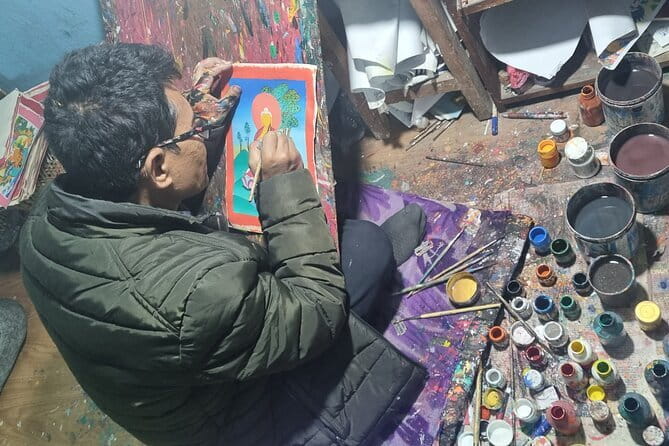
The best part of this Kathmandu experience is that you do not simply buy a thangka from a shop and hope it is handmade. You sit in a working studio, watch skilled artists and apprentices paint, and create your own piece with help from a master. You leave with a souvenir you made yourself, not just one selected from a shelf.
I like the patient, personal teaching and the choice of three designs, which gives you some control without making the class feel overwhelming. I also like the private format, flexible pickup, air-conditioned transport, and English-speaking guide. The main catch is time: five hours is enough for painting and coloring, but detailed work can take longer, especially if you already paint or want a highly finished result.
Key points to know before you book
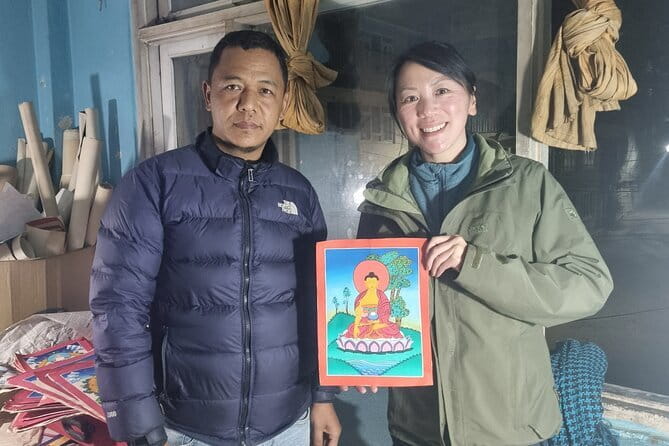
- You paint inside a working artist’s workshop, alongside master artists and apprentices rather than in a standard tourist classroom.
- An English-speaking guide assists throughout, with Aayam named as one of the people connected with the experience.
- You choose one design from three options, then work on coloring and painting it under direct guidance.
- The finished piece goes home with you, giving the activity lasting value beyond the afternoon itself.
- The class lasts about four to five hours, so this suits you if you enjoy slow, hands-on activities.
- Pickup and timing are flexible, though the listed start time is 12:45 pm.
Why painting your own thangka matters in Kathmandu
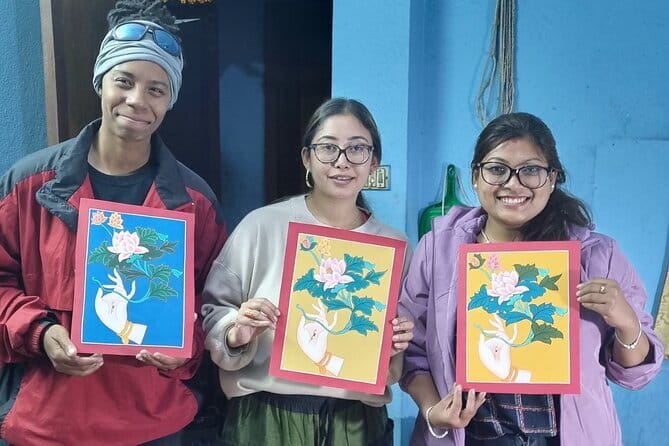
A thangka is not just a colorful wall decoration. It is a traditional Buddhist painting made with careful proportions, symbolic figures, and established artistic rules. For a first-time buyer, it can be hard to tell whether a piece is hand-painted, partly printed, or machine-made.
That uncertainty is one reason this workshop makes sense. You see artists working in front of you, ask questions as you go, and learn how the image is built. You are not expected to become a master in one afternoon, but you do gain a clearer idea of the patience and skill behind the finished art.
I like experiences that explain an object before asking you to buy it. Here, the souvenir comes with a story: you selected the design, handled the colors, received corrections, and spent time in the same setting where trained artists work. That personal connection is worth more than a quick purchase from a random shop corner.
The workshop also gives you a quieter change of pace. Kathmandu sightseeing can involve traffic, crowds, temples, and plenty of walking. A seated art class lets you slow down without giving up cultural content.
More hands-on workshops in Kathmandu:
- Half day cooking class in Thamel kathmandu
★ 5.0 · 607 reviews - Kathmandu: Local Women-Led Nepali Cooking & Momo Class
★ 4.9 · 360 reviews - Kathmandu: Local Lead Nepali Cooking & Momo-Making Class
★ 5.0 · 212 reviews
Arriving at the workshop and meeting the artists
Pickup is offered, and the transport is air-conditioned. You choose the pickup location when arranging the experience, which is helpful if you are staying in different parts of Kathmandu or have a busy sightseeing schedule.
The listed start time is 12:45 pm. Since the class lasts about four to five hours, you should expect much of your afternoon and possibly part of your evening to be occupied. This is not a quick one-hour craft stop that you can squeeze between two major sights.
The setting is a real thangka artist workshop. Several master artists and apprentices may be working around you, so you get to observe the art as a profession rather than as a staged demonstration. That detail matters. You can see the pace, focus, and repeated care involved in traditional painting.
Your English-speaking guide helps you throughout the activity. A guide connected with the experience is named Aayam, and the teaching is described as personal rather than a lecture delivered to a large class. You can ask questions about the art form, materials, designs, and the steps you are following.
The private format is another advantage. Only your own group takes part, so you are not placed in a large room where everyone must follow the same pace. It also means you can ask for help when you need it without feeling that you are holding up a busload of people.
Choosing one of three designs
You choose one design from three available options. The exact images are not specified, so you should not book expecting a particular deity, color scheme, or size unless the provider confirms it before the day.
Three choices strike a useful balance. Too many options can make a short class feel like a design consultation. No choice at all can make the finished piece feel less personal. Here, you have room to select an image that appeals to you while still receiving a clear plan for the session.
Ask about the designs and the expected level of detail at the beginning. This is especially important if you already paint or have a specific idea of what you want to create. One account of the activity points out that more than two hours may be needed for detailed work, because the workshop is mainly focused on coloring for the available class period.
That is a valuable warning. The word painting can suggest that you will complete every fine line and final detail of a museum-quality thangka in one sitting. The actual experience is better understood as guided painting and coloring, with the chance to make a finished souvenir within roughly four to five hours.
Learning from artists with decades of experience
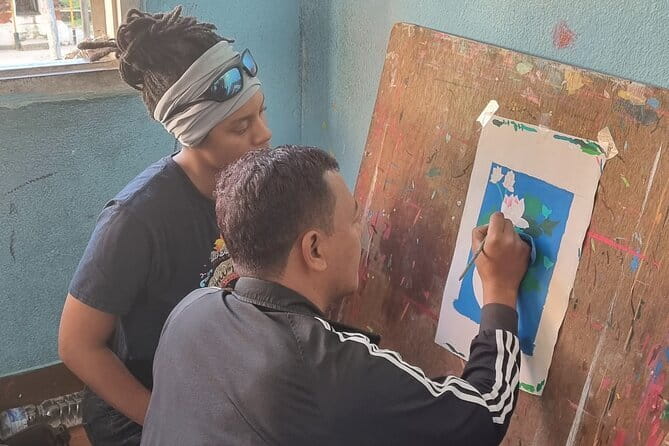
The artists leading the workshop are described as having about three decades of experience. That depth of practice changes the tone of the class. You are not left to copy a printed outline without explanation. The artist works beside you, watches your progress, and helps you correct mistakes.
That patient teaching is one of the strongest reasons to book. A beginner can enjoy the activity without needing formal art training. If your brush slips or a color goes in the wrong place, the artist can show you how to repair it instead of letting one mistake spoil the whole piece.
The guidance also helps you understand that traditional art is built step by step. You may begin with broad areas of color, then move toward smaller sections and more careful details. The process gives you a better sense of why a finished thangka requires far more time than a casual painting session.
If you are an experienced painter, adjust your expectations. You may find the basic coloring too simple at first, particularly during the early part of the class. Ask for additional instruction or more detailed work if time allows, but do not assume the five-hour session includes the full process used for a highly intricate professional thangka.
A few more Kathmandu days to weigh up
- Everest Base Camp Trek – 14 Days
★ 5.0 · 1,499 reviews - Private Kathmandu Sightseeing Tour | UNESCO World Heritage sites
★ 5.0 · 756 reviews - Everest Base Camp Helicopter Tour landing at Everest View Hotel
★ 5.0 · 668 reviews - Everest Base Camp Trekking
★ 5.0 · 485 reviews
What the four to five hours feel like
The class is long enough to feel substantial. You have time to settle in, choose a design, listen to explanations, paint, ask questions, and make corrections. The pace is likely to feel relaxed for a beginner, though your attention may tire if you are not used to sitting and concentrating for several hours.
The most useful way to approach the session is to treat it as a workshop, not a performance. You are not being graded. The goal is to learn the basic method, work under supervision, and produce something personal.
You should also be comfortable with a moderate level of physical fitness. The experience is not described as strenuous, but the general requirement suggests you should be able to manage the transport and several hours of activity without special assistance.
Snacks are not included. Plan accordingly, particularly if you are booking the afternoon start and expect the class to run into the evening. Food is a small detail, but it is easy to overlook when an activity lasts nearly half a day.
The souvenir you take home
The piece you make is included as part of the experience. This is the main practical benefit of the workshop. Instead of spending additional money on a thangka whose production method you cannot verify, you spend the afternoon creating one with artists present.
The result may not have the precision of a professional master’s work, and it should not be judged by that standard. Its value comes from the process and the memory attached to it. You know where it was made, who helped you, and which parts you painted yourself.
This also makes the experience a good choice if you want a meaningful gift. A handmade item connected to your own time in Kathmandu has a different feel from a mass-produced souvenir. You can explain the design and the workshop behind it, which gives the gift a personal story.
Take care when transporting it home. The information provided does not specify the final size, protective packaging, or shipping service, so ask the provider how the piece will be prepared for travel. That question is worth asking before you begin, especially if you have limited luggage space.
Is $72 a fair price?
At $72 per person, the cost is higher than buying a small decorative item from a street shop. But the price includes about five hours of instruction, an English-speaking guide, transport in an air-conditioned vehicle, all fees and taxes, and the painting you create.
I see the value in the combination of teaching and souvenir. You are paying for time with artists, not only for materials. You also avoid the uncertainty that comes with buying a thangka without knowing how it was produced.
The price makes less sense if you want only a quick introduction to Nepali art or a cheap keepsake. In that case, a workshop of up to five hours may feel too long. It makes more sense if you enjoy hands-on activities, want to ask questions, and care about seeing the work behind a traditional art form.
Because this is a private activity, the cost also buys a more personal setting. You are not sharing a large class with strangers, and the artist can respond to your level. For a couple, family, or small group with a shared interest in art, that privacy can justify the price.
Who will enjoy this workshop most
I would choose this for you if you like making things, prefer cultural activities with direct participation, or want a quieter afternoon in Kathmandu. It is also a good fit if you are cautious about buying traditional art and want to see how a genuine hand-painted piece is made.
Beginners should feel comfortable booking. The artist’s patience and willingness to correct mistakes are central to the experience, so you do not need to arrive with a strong art background.
Experienced painters may enjoy the access to working artists and the chance to ask technical questions, but they should clarify how much detailed work is possible in the allotted time. The session may focus more on guided coloring than on completing every stage of an elaborate thangka.
This is less suitable if your schedule is tight. With a 12:45 pm start and a four to five-hour duration, you should leave the afternoon open. It is also not the best choice if you dislike seated activities or want constant sightseeing and movement.
Booking, pickup, and cancellation details
Confirmation is provided when you book. Pickup is offered, and you can choose the pickup location and discuss timing, although 12:45 pm is the listed start time. The activity is near public transportation, giving you another way to reach it if pickup arrangements do not suit your plan.
The experience is private, with only your group participating. That is useful for families and small groups that want to work at their own pace.
Free cancellation is available up to 24 hours before the local start time. Canceling or changing the booking less than 24 hours ahead does not qualify for a refund, so keep that deadline in mind when planning around flights, trekking connections, or changing Kathmandu weather.
Should you book the Thangka Painting Workshop?
Book it if you want more than a photograph and a quick purchase. The best features are the working artist setting, patient one-to-one help, flexible pickup, and the chance to take home a piece you made yourself.
Go in with realistic expectations. You are learning the basics and completing a souvenir, not finishing a highly detailed professional thangka in a single afternoon. If that sounds enjoyable, $72 buys a personal cultural experience with a lasting result. If you only want to admire finished paintings, spend your time and money elsewhere.
FAQ
How long does the Thangka Painting Workshop last?
The workshop lasts approximately four to five hours.
What time does the workshop start?
The listed start time is 12:45 pm.
Can I choose the thangka design?
Yes. You can choose one design from three available options.
Is pickup available?
Yes. Pickup is offered, and you can choose your pickup location when arranging the experience.
Is transportation included?
Yes. An air-conditioned vehicle is included.
Is the workshop private?
Yes. This is a private activity, so only your own group participates.
Can I cancel for a full refund?
Yes, if you cancel at least 24 hours before the local start time. Cancellations or changes made less than 24 hours in advance are not refunded.
Recently added around Kathmandu
- Kathmandu Airport Pickup and Drop-off Services★ 5.0 · 3 reviews
- Kathmandu Paragliding★ 5.0 · 3 reviews
- Kathmandu Chandragiri Cable Car and Swayambhunath Private Tour★ 5.0 · 3 reviews
- Explore The Beauty Of Langtang Valley In 8-Days Trek★ 5.0 · 3 reviews
- Kathmandu: Nightlife and Pub Crawl Tour★ 5.0 · 3 reviews
- Kathmandu: Momo Making Class with a Local Chef★ 5.0 · 3 reviews
- Mountain Flight Experience in Nepal★ 4.5 · 3 reviews
- Everest Base Camp Trek★ 5.0 · 3 reviews
Other Kathmandu Tours worth a look


Private Kathmandu Sightseeing Tour | UNESCO World Heritage sites
Read our review →
Everest Base Camp Helicopter Tour landing at Everest View Hotel
Read our review →


Nagarkot Sunrise View and Day Hiking from Kathmandu
Read our review →
Full Day 7 UNESCO Tour with Lunch – Private/Group
Read our review →
This tour also appears in