
REVIEW · KATHMANDU TOURS
Kathmandu: Local Women-Led Nepali Cooking & Momo Class
Momos are the star here, but the best part is making a full Nepali meal from the ground up. You may visit a local market with Nish and Bikram, choose ingredients, prepare fillings and dough, then sit down to eat the food you made.
I like the market stop because it gives the class a local-food setting instead of treating Nepali cooking as a list of recipes. I also like the patient, hands-on teaching, especially for shaping momos, a skill several participants found easy to repeat at home. The main consideration is access: the cooking academy has stairs, and the route may involve a steep hill or a taxi.
Key points at a glance
- Market shopping in Thamel: Choose vegetables, spices, and other ingredients before cooking.
- Momo-making from start to finish: Prepare fillings, dough, dumplings, and dipping sauce with guidance.
- A full meal, not just a snack: Momo and dal bhat are central, with extra dishes available.
- Friendly local instructors: Nish, Nishma, Bikram, Vicky, and Jojo are named by participants as warm, patient teachers.
- Excellent value at $4: The price includes instruction, ingredients, equipment, masala tea, and the meal you prepare.
- Small-group format: The class is designed for personal help, though larger groups can mean shared tasks.
Why this Thamel cooking class works so well
This is a practical way to get to know Nepal through food. You are not simply shown a plate of momos and handed a recipe. You help decide what to cook, shop for key ingredients, prepare the meal, and eat it at the end.
The class takes place in Thamel, Kathmandu’s main visitor district, and lasts about three hours in the standard format. Depending on the option selected, the total duration may run from two to four hours. That makes it easy to fit into a free morning or afternoon, though you should allow extra time if you choose pickup and drop-off.
The advertised price is only $4 per person, which is unusually low for an experience that includes food, instruction, cooking equipment, a market visit, and masala tea. At that price, the value is excellent. Still, check the exact option and availability when booking, since pickup, the menu, and the starting time depend on the selection you make.
The strongest reason to book is the teaching style. Nish is repeatedly praised for clear explanations, patience, and a friendly manner. Bikram, Vicky, and Jojo also help lead sessions, and the group atmosphere is relaxed enough for you to ask questions without feeling rushed.
More Cooking Classes in Kathmandu
- Half day cooking class in Thamel kathmandu
★ 5.0 · 607 reviews - Kathmandu: Local Lead Nepali Cooking & Momo-Making Class
★ 5.0 · 212 reviews - Local Women Lead Nepali Cooking Class
★ 5.0 · 125 reviews
The Thamel market visit comes first
The class begins at a meeting point that varies by booking option. If you choose pickup, transport is available from locations within Kathmandu, but you need to provide your hotel details in advance. Otherwise, you may meet the team directly near the cooking academy in Thamel.
Arrive 15 minutes early. That small buffer matters in Kathmandu, where finding a doorway or walking through busy streets can take longer than expected. One participant found the academy easy to reach from a Thamel hotel but noted stairs and a steep approach when following a map route.
The market visit is not a sightseeing tour in the usual sense. Its purpose is to buy the vegetables, spices, meat, and other supplies needed for your chosen dishes. That makes it useful because you see the ingredients before they are chopped, seasoned, and cooked.
You may also get a better feel for the food than you would in a restaurant. Nepali cooking depends on combinations of lentils, spices, herbs, vegetables, meat, and grains. Buying the ingredients helps connect the finished dish with what you saw in the market.
The market explanation can vary. The cooking itself receives the most attention, so if you want detailed information about every spice or produce item, ask questions as you walk. One participant specifically wished for more explanation at the market. That is a fair point, but it is also easy to fix by being curious and speaking up.
Choosing between momos, dal bhat, and extra dishes
Momo and dal bhat are the main focus. You can usually choose chicken or vegetarian momos, with other meat choices available depending on the selected menu. Buffalo momo was prepared for one participant, but the available options can change, so tell the team your preference before the class begins.
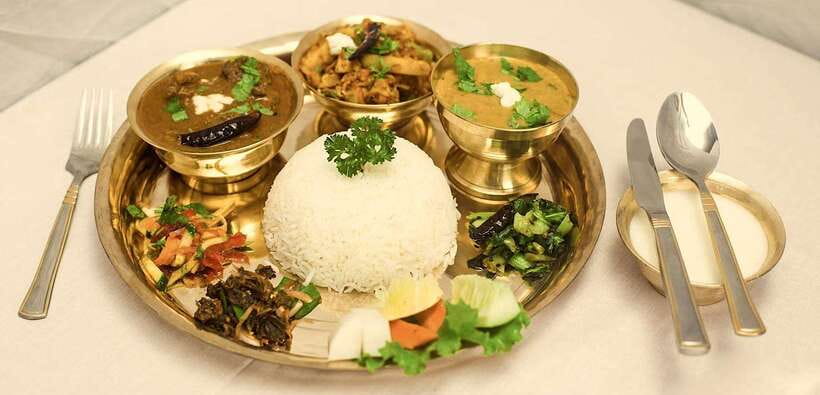
Dal bhat is the everyday Nepali meal many visitors want to understand. It combines rice with lentil soup and curry, often with additional sides. Learning it here gives you more than one dish to copy. You begin to see how a Nepali meal is assembled and why it is filling, flexible, and suited to home cooking.
The extra dishes make the experience more varied. Available choices may include:
- Chatamari, a Nepali flatbread sometimes compared with pizza
- Bara, a crisp-edged lentil patty
- Thukpa, a hearty noodle soup with Tibetan roots
- Nepali chicken curry with roti
- Mushroom choila, a spicy marinated mushroom dish
- Yomari, a sweet dumpling filled with jaggery and sesame seeds
- Carrot pudding
- Kheer, a sweet rice-based dish prepared in some classes
- Aloo chop, a potato snack mentioned by one participant
The menu is not necessarily all of these dishes in one session. The class focuses on momos and dal bhat, then lets you select additional Nepali foods according to the option and group. That flexibility is useful, but you should confirm the menu if one particular dish is your main reason for booking.
Making momos from dough to dipping sauce
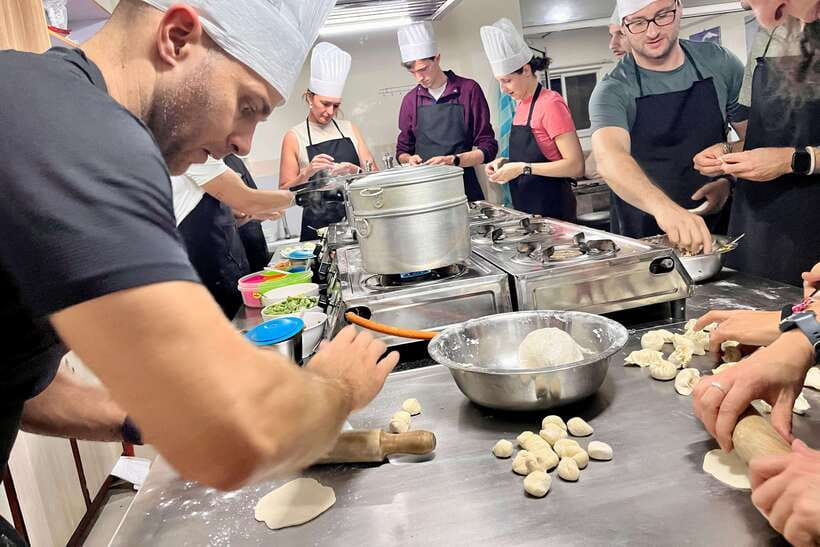
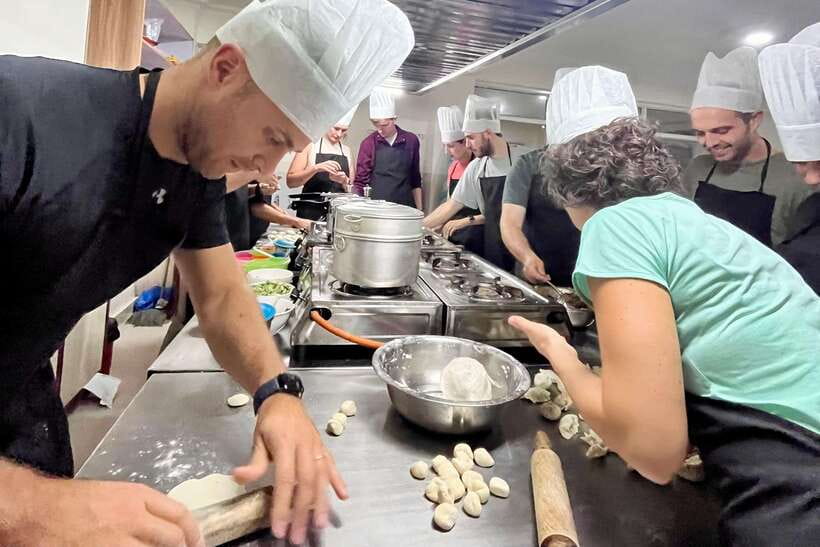
The momo lesson is the heart of the class. You work with the dough, prepare the filling, shape the dumplings, and make the sauce. This matters because folding is the part many people struggle with at home, and an instructor can correct your technique as you go.
The teaching is suitable for beginners. You do not need previous cooking experience, and the instructors break the process into manageable steps. Nishma is often praised for explaining each stage clearly without rushing the group. That patient pace is especially helpful when you are trying to form neat dumplings for the first time.
You may prepare vegetarian and chicken fillings, depending on your menu. The choice gives you a useful comparison of texture and seasoning. If you eat meat, you can try the chicken version. If you prefer plant-based food, the vegetarian filling gives you a proper main dish rather than a token side.
The class is hands-on, but the amount of individual work depends on the group. In a larger session, everyone may be given a task while the instructors handle some preparation. That can make the class social and efficient, though you may not personally complete every single step of every dish.
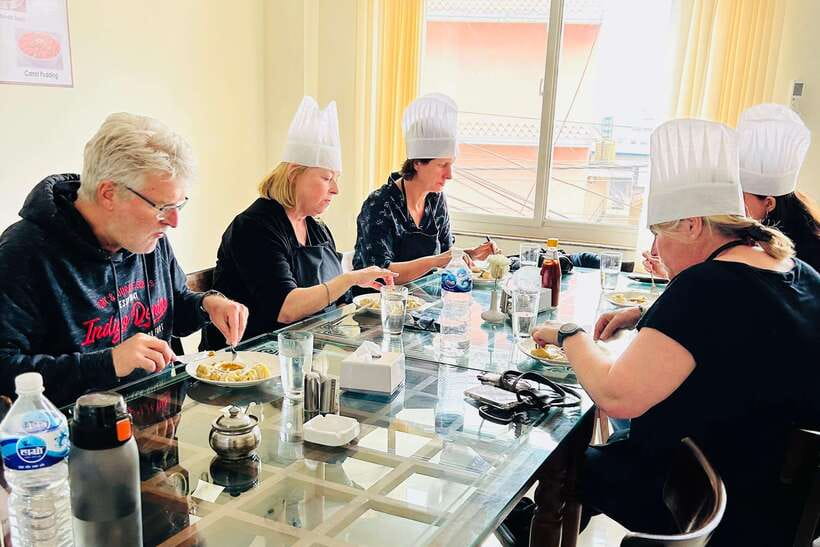
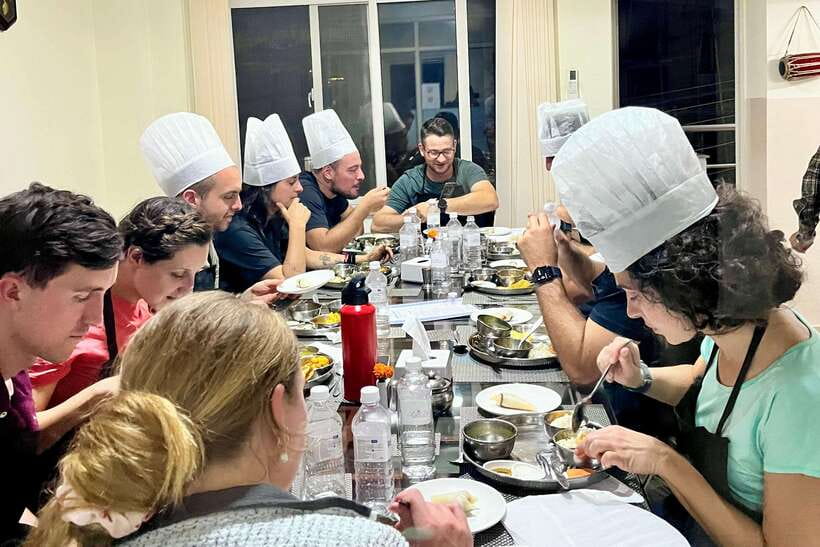
This is also where the group setting helps. There is time to chat with the teachers and other students, and the atmosphere is often described as easygoing and funny. If you are traveling alone, it offers a natural way to meet people without committing to a full day of organized sightseeing.
A different kind of day from the same base:
- Everest Base Camp Trek – 14 Days
★ 5.0 · 1,499 reviews - Private Kathmandu Sightseeing Tour | UNESCO World Heritage sites
★ 5.0 · 756 reviews - Everest Base Camp Helicopter Tour landing at Everest View Hotel
★ 5.0 · 668 reviews - Everest Base Camp Trekking
★ 5.0 · 485 reviews
Cooking a wider Nepali meal
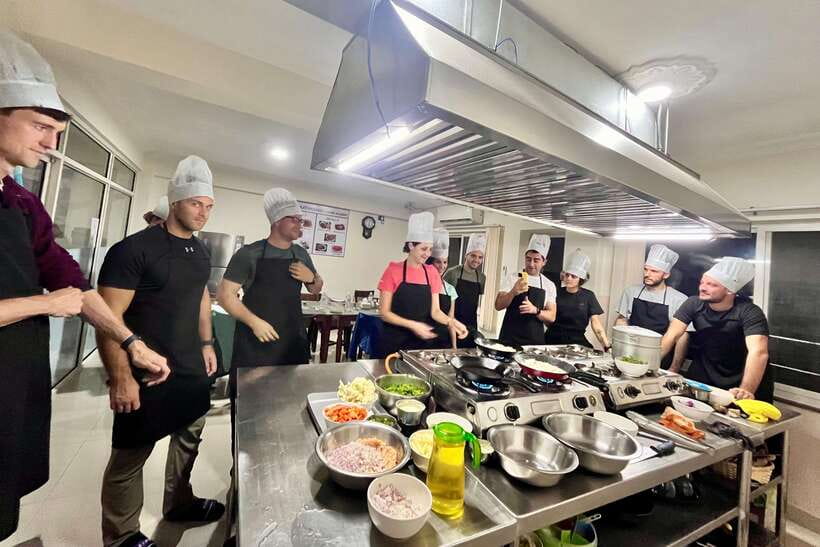
The class can go well beyond momos. Participants have prepared combinations such as chatamari, momo, and kheer; bara, momo, and yomari; or dal bhat, momo, and carrot pudding. Some sessions produce enough food for a complete lunch or dinner.
That variety gives you a broader view of Nepali food. Momos are familiar and approachable, but dishes such as bara, choila, thukpa, and chatamari show different cooking methods and flavor profiles.
Masala tea is served during the lesson. It is a small touch, but it helps break up the preparation and gives you a taste of a common Nepali drink. Some sessions also include local bites such as peanut sadeko or other complimentary foods, though these extras should not be treated as guaranteed menu items.
The food is generally plentiful. Several participants described leaving full, which is worth remembering when planning the rest of your day. Do not schedule a heavy restaurant meal immediately afterward unless you have a very large appetite.
What the instructors add to the experience
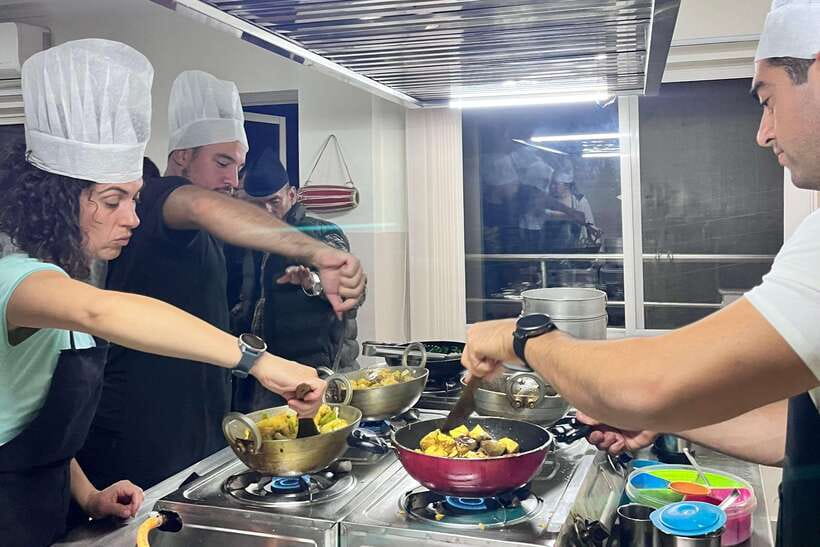
The women-led format is an important part of the class. The instructors are not distant demonstrators. They work beside you, answer questions, and create a welcoming kitchen atmosphere.
Nish is the name most often associated with the class. She is described as warm, funny, communicative, and careful to make sure no step feels rushed. Nishma is also praised for clear instructions and recipes that are realistic to repeat at home.
Bikram is frequently mentioned as a professional and friendly instructor. Vicky and Jojo have also helped teach sessions. The team may vary, but English is the stated teaching language, and communication is generally straightforward.
You should still speak up about what you want to learn. Ask about spice amounts, substitutions, folding methods, cooking temperatures, and how to adapt a recipe for your kitchen back home. The instructors appear willing to explain, but the class becomes more useful when you ask specific questions.
A recipe book is not automatically handed out as a physical copy. After the class, you can request a PDF through WhatsApp. Physical books are available for an additional cost. If you want a written record, arrange this before you leave or make careful notes during the lesson.
Dietary needs, comfort, and access
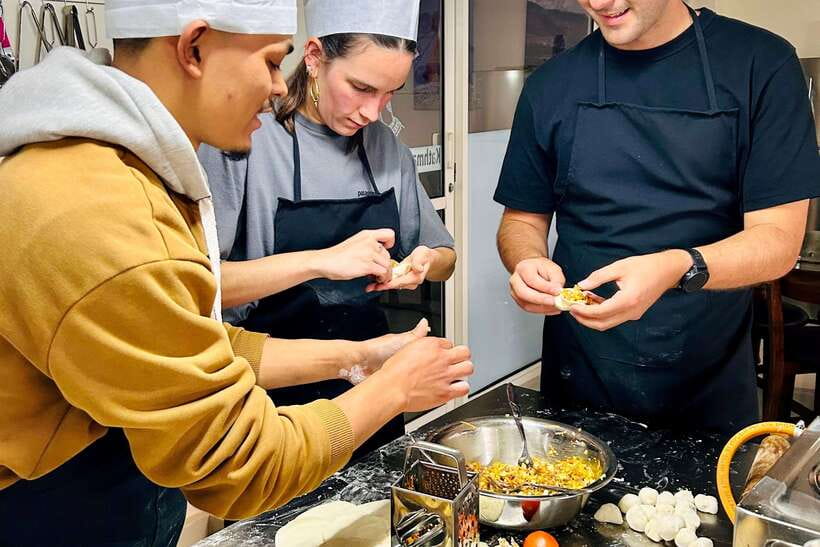
Tell the academy about dietary restrictions, allergies, or medical conditions before the class. Vegetarian choices are available, and one participant with both vegan and gluten-free needs received an adapted meal and learned to work with millet flour.
That is encouraging, but you should not wait until the cooking begins. Ingredient substitutions affect the menu, dough, sauces, and shared preparation. Early notice gives the instructors a fair chance to plan.
Wear comfortable clothing suitable for cooking. Aprons and equipment are provided, but loose or delicate clothing may be inconvenient around food preparation. Bring a camera if you want photos of the market, dishes, or your finished meal, but do not let photography replace the hands-on work.
The experience is not suitable for wheelchair users or people with visual impairments. Stairs are present at the academy, and the approach may be difficult depending on your route. If mobility is a concern, contact the provider before booking rather than assuming the optional pickup solves every access issue.
Specialty and alcoholic drinks are not included. Masala tea is included, so you have a warm local drink during the lesson, but plan to pay separately for anything beyond the stated menu.
Is $4 really good value?
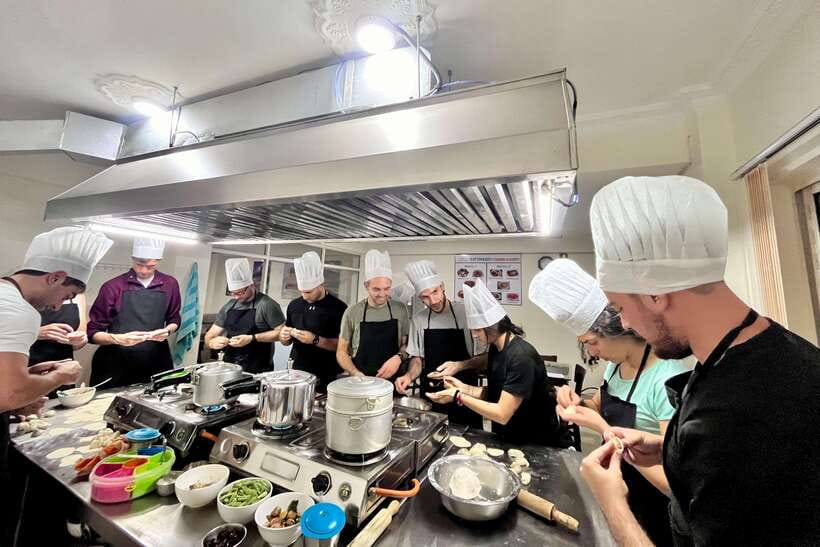
At $4, this is one of the least expensive food activities you are likely to find in Kathmandu. The fee covers the cooking class, chef and instructor, market or shop visit, ingredients, equipment, prepared food, tasting, and masala tea.
The value is strongest if you want to learn a skill rather than simply eat. You leave with techniques for dough, fillings, sauces, lentils, curry, or sweets, depending on your menu. The PDF recipe option adds practical value because you can try the dishes again at home.
The low price also means you should keep expectations sensible. This is a small cooking academy in Thamel, not a polished restaurant show or a private culinary school. Some preparation may be shared among the group, and the final menu depends on the selected option.
The high overall rating of 4.9 from 360 reviews points to strong consistency, especially in the teaching, friendliness, food, and relaxed atmosphere. The most praised qualities are the instructors’ patience, the delicious and generous meal, the fun of making momos, and the chance to recreate the recipes later.
Who should book this Kathmandu cooking class?
I would choose this class if you enjoy food, want a break from temple visits, or have a few spare hours in Thamel. It is also a good match for solo visitors, couples, families, and friends who like doing something together rather than sitting through a demonstration.
Beginners should feel comfortable booking. The instructors explain each stage, and the class is designed around hands-on guidance. Experienced home cooks may enjoy it too, especially if they ask about local spices, dough texture, and differences between Nepali and familiar dumpling methods.
It suits people who want cultural contact without a formal lecture. The market, shared kitchen, local recipes, and meal provide plenty of context in a natural way.
You may want to skip it if you dislike group activities, have strict access needs, or want a highly specialized menu guaranteed in advance. The standard focus is momos and dal bhat, so confirm before booking if you specifically need thukpa, yomari, buffalo momo, or another optional dish.
Booking and timing tips
Choose the pickup option if your accommodation is hard to find or far from Thamel. If you are staying nearby, walking may be simpler, but allow time for stairs and the possibility of a steep route.
Tell the provider your dietary needs and preferred menu before the day. Arrive 15 minutes early, wear comfortable clothes, and come hungry. The meal is one of the best parts of the experience, and the portions can be generous.
Cancellation is free up to 24 hours before the activity for a full refund. You can also reserve now and pay later, which helps if your Kathmandu schedule depends on weather, trekking plans, or transport.
Should you book it?
Yes, if you want an affordable, social, and genuinely hands-on introduction to Nepali food. The combination of a market visit, patient instruction, local women chefs, and a meal you prepare yourself gives the class more value than a standard restaurant stop.
Book with realistic expectations: the menu can vary, group tasks may be shared, and the academy has stairs. For most people who can manage those points, this is an easy recommendation, especially if learning to make momos at home is high on your Nepal wish list.
FAQ
Where does the cooking class take place?
The cooking session takes place in Thamel, Kathmandu. The exact meeting point may vary according to the booking option.
How long does the experience last?
The experience lasts between two and four hours, with the standard class taking around three hours. This includes the market visit, cooking session, and meal tasting.
What dishes will I learn to cook?
Momo and dal bhat are the main dishes. Depending on the selected menu, you may also prepare chatamari, bara, thukpa, chicken curry with roti, mushroom choila, yomari, carrot pudding, kheer, or other Nepali dishes.
Can I choose vegetarian food?
Yes. Vegetarian options are available, including vegetarian momos. Tell the provider about your dietary preferences before the class.
Can I request vegan or gluten-free food?
You can request dietary adaptations in advance. One participant with vegan and gluten-free requirements was accommodated, including instruction using millet flour.
Is hotel pickup available?
Optional pickup and drop-off are available from locations within Kathmandu. You need to provide your hotel details when booking if you select this option.
Who teaches the class?
The instructors include local chefs and teachers such as Nish, Nishma, Bikram, Vicky, and Jojo. The teaching language is English, though the specific team may vary.
Are ingredients and cooking equipment included?
Yes. The price includes the market or shop tour, important ingredients, cooking equipment, accessories, step-by-step instruction, and tasting of the food you prepare.
Are drinks included?
Nepali masala tea is included during the lesson. Specialty drinks and alcoholic drinks are not included.
Can I get the recipes after the class?
You can request a PDF recipe book through WhatsApp after the class. Physical recipe books are available for purchase at an additional cost.
More hands-on workshops in Kathmandu
- Knife (Khukuri) Making Workshop- Forge of the Gurkhas
★ 5.0 · 143 reviews - The best Private Nepali Cooking Class in Kathmandu
★ 5.0 · 83 reviews - Kathmandu: Traditional Momo Making Class & Pickup
★ 4.8 · 60 reviews - Traditional Nepali Momo Making Classes
★ 5.0 · 53 reviews
Recently added around Kathmandu
- Kathmandu Airport Pickup and Drop-off Services★ 5.0 · 3 reviews
- Kathmandu Paragliding★ 5.0 · 3 reviews
- Explore The Beauty Of Langtang Valley In 8-Days Trek★ 5.0 · 3 reviews
- Kathmandu Chandragiri Cable Car and Swayambhunath Private Tour★ 5.0 · 3 reviews
- Kathmandu: Nightlife and Pub Crawl Tour★ 5.0 · 3 reviews
- Kathmandu: Momo Making Class with a Local Chef★ 5.0 · 3 reviews
- Mountain Flight Experience in Nepal★ 4.5 · 3 reviews
- Everest Base Camp Trek★ 5.0 · 3 reviews
Other Kathmandu Tours worth a look


Private Kathmandu Sightseeing Tour | UNESCO World Heritage sites
Read our review →
Everest Base Camp Helicopter Tour landing at Everest View Hotel
Read our review →

Nagarkot Sunrise View and Day Hiking from Kathmandu
Read our review →
Full Day 7 UNESCO Tour with Lunch – Private/Group
Read our review →
This tour also appears in