
REVIEW · KATHMANDU TOURS
The best Private Nepali Cooking Class in Kathmandu
Kathmandu’s best food lesson may happen far from a restaurant table. In Kalpana’s family home, you choose ingredients, grind spices, prepare a full Nepali meal, and sit down to eat it with the people who cook it every day. The class offers a direct look at home life, not just a demonstration for cameras.
I like the garden-to-table approach, where seasonal vegetables and organic ingredients become part of your meal. I also like the warm family setting, with Kalpana guiding you and her son or daughter often helping answer questions and keep the cooking moving. The main consideration is time: traditional Nepali cooking is hands-on and labor-intensive, so four and a half hours can feel long if you only want a quick recipe lesson.
Key points at a glance
- Cook in Kalpana’s family home: This is a private class, so only your group takes part.
- Start with ingredients, not shortcuts: Visit a local market and private organic garden to select what you will use.
- Prepare a complete Nepali meal: Expect rice, dal, seasonal vegetables, spinach, chicken, pickle, and fried papad, with vegetarian choices available.
- Learn famous Nepali dishes: Depending on the class flow, you may also prepare momos, sel roti, or both.
- Hotel or homestay transfers are included: A private vehicle takes you there and back.
- Take the lesson home: PDF recipes are provided so you can recreate the dishes after Nepal.
A family kitchen instead of a restaurant table
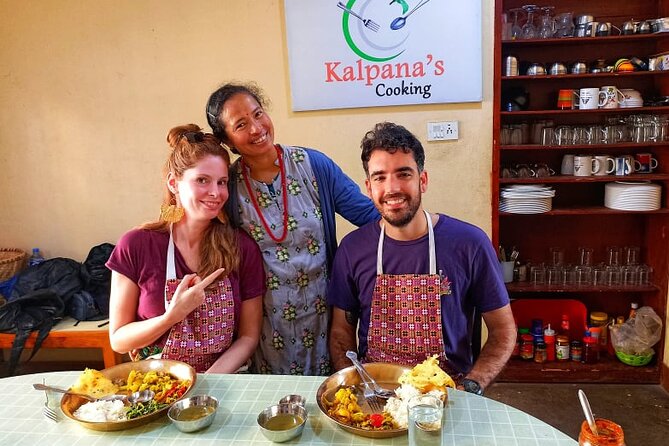
This experience is built around participation. You are not simply watching Kalpana cook while someone else handles the work. You chop vegetables, prepare masala, grind whole spices, pound ginger and garlic, shape dumplings, and help bring the meal together.
That difference matters. Nepali cooking often depends on small decisions that a printed recipe cannot explain well: how fine to chop an ingredient, how long to grind a spice mixture, when a dal has reached the right texture, and how much effort is needed for a smooth momo filling. Kalpana shows you the method, then has you repeat it.
The setting adds a second layer. You enter a local family home and spend time in the kitchen and garden, rather than staying in a formal cooking studio. The family atmosphere has been a major part of the experience for many people, especially those looking for contact with everyday Nepali life after trekking or temple visits.
Kalpana is the central host. Her family helps create the relaxed tone, and the class has been praised for making everyone feel included. Her son is known for encouraging participants to give the spice grinding a little bit more effort, which is a small but useful reminder that home cooking is not always quick.
More Cooking Classes in Kathmandu
- Half day cooking class in Thamel kathmandu
★ 5.0 · 607 reviews - Kathmandu: Local Women-Led Nepali Cooking & Momo Class
★ 4.9 · 360 reviews - Kathmandu: Local Lead Nepali Cooking & Momo-Making Class
★ 5.0 · 212 reviews
Hotel pickup leads you beyond central Kathmandu
Hotel pickup and drop-off are included, along with transport in a private vehicle. That makes the class easier to fit into a Kathmandu itinerary, since you do not need to arrange a taxi or work out the route to a suburban home yourself.
The drive also changes the feel of the day. You leave the city center and head toward a quieter area, where gardens and cultivated plots become part of the view. One important point is that the exact pickup time and route are not stated in the supplied details, so confirm those when you book.
The trip is not only a transfer. It helps explain the food you are about to cook. Ingredients do not appear magically in a Kathmandu restaurant kitchen. You see the connection between gardens, markets, family meals, and the work required to prepare a traditional plate of dal bhat.
The location can be especially useful at the start of a Nepal visit. The family can explain food customs and help you make better choices for later meals. You may also pick up basic cultural guidance that helps you avoid small mistakes during the rest of your stay.
Choosing vegetables from the garden and market
The experience begins with tea or coffee, including homemade masala tea, before you start working with ingredients. You then select crisp seasonal vegetables from the garden, with the wider plan also including a visit to a local market and private organic farm.
This is one of the class’s strongest features. You see what is available locally instead of receiving a fixed tray of ingredients with no explanation. Seasonal cooking also means the menu can change. The listed meal includes seasonal vegetables and spinach, so your plate may reflect what is growing at the time of your visit.
The garden visit is not a major sightseeing stop, and it should not be treated as one. Its value is practical. You learn where some of the food comes from and how much ordinary home cooking depends on fresh preparation.
That fresh preparation requires work. You may spend more time chopping, cleaning, grinding, and mixing than you expect. If you want a polished, fast-moving cooking demonstration, this could feel slow. If you want to understand how Nepali food gets its flavor, the extra effort is exactly the point.
Grinding masala and preparing a full meal
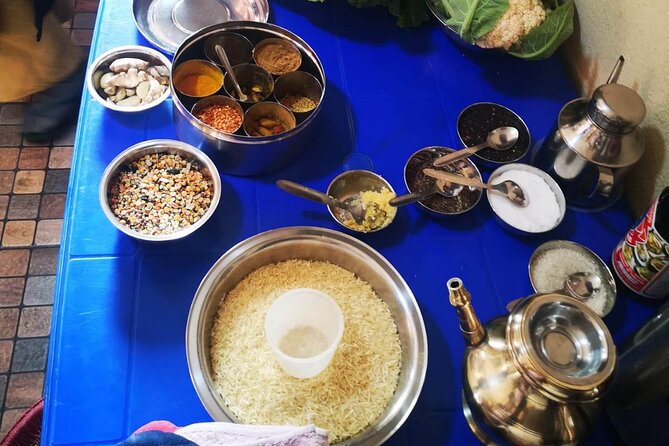
After choosing ingredients, you put on an apron and begin the cooking. The class teaches the preparation of masala using whole spices, fresh ginger, and garlic. Rather than relying only on ready-made spice powder, you work through the older kitchen techniques that give the food its aroma and texture.
The listed set meal includes plain rice, dal soup, seasonal vegetable, spinach, chicken, pickle, and fried papad. This is more than one signature dish. It gives you a useful picture of how a Nepali home meal comes together, with rice, lentils, vegetables, protein, crunchy sides, and sharp pickle on the same table.
Dal bhat deserves special attention. Rice and lentils are central to daily meals in Nepal, and the dish is filling, practical, and flexible. Learning it here gives you more than a restaurant version because you can ask how the family eats it and how the various parts work together.
The class can also include momos, Nepal’s much-loved steamed dumplings. You prepare the filling and shape the dumplings by hand, which is often the most playful part of the session. Momo-making can take time, particularly if you are new to folding them, so do not expect to produce perfect shapes on your first attempt.
Sel roti, a sweet fried rice bread, is also named among the dishes you may learn. The supplied details do not promise that every class prepares every dish, so ask about the day’s exact menu if momos or sel roti are your priority.
A different kind of day from the same base:
- Everest Base Camp Trek – 14 Days
★ 5.0 · 1,499 reviews - Private Kathmandu Sightseeing Tour | UNESCO World Heritage sites
★ 5.0 · 756 reviews - Everest Base Camp Helicopter Tour landing at Everest View Hotel
★ 5.0 · 668 reviews - Everest Base Camp Trekking
★ 5.0 · 485 reviews
Sitting down to eat what you made
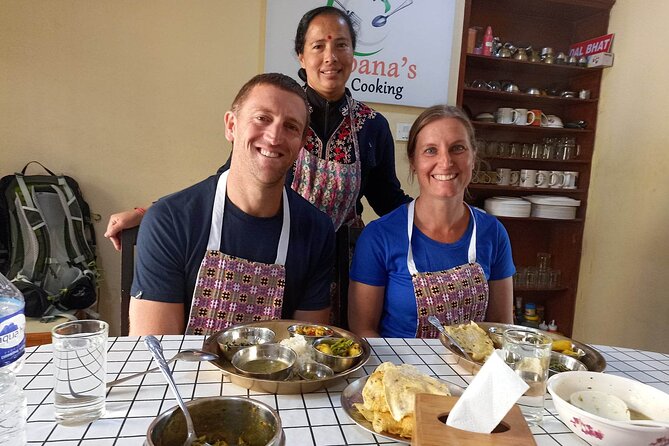
The meal is included, and you eat the food prepared during the class. This is an important finish because you can taste the effect of each step while the process is still fresh in your mind.
You may be served a generous amount of food. One useful planning tip is not to eat a large breakfast beforehand. The experience is described as including lunch, and the cooking itself produces a substantial meal. Arrive ready to eat, especially if you are taking the class in the morning.
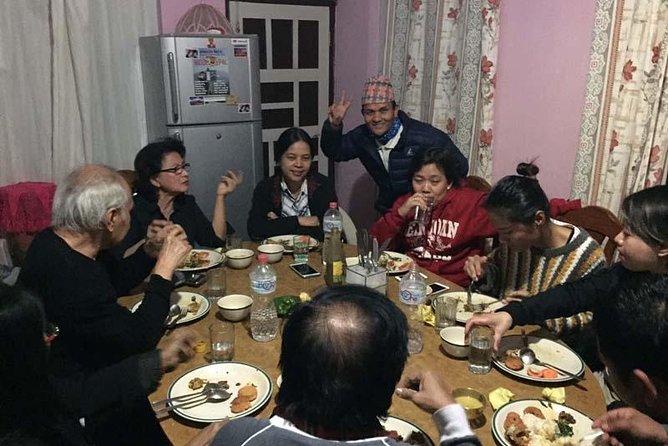
The meal also gives you time to ask questions. You can talk with Kalpana and her family about ingredients, cooking habits, and Nepali food customs while sitting in the home where the lesson took place. That conversation is a major reason to choose this experience over a standard class in a hotel kitchen.
The food is not presented as a tasting menu. It is a home-style meal made with your help. That means the result may be less polished than restaurant food, but it should feel more connected to the family and the place.
What the class does well
The warm hospitality is the clearest strength. Kalpana is repeatedly described as kind, patient, and attentive, and she adjusts the menu for dietary preferences when told in advance. Her family adds to the experience without taking attention away from the cooking.
The second strength is the amount of real participation. You are shown what to do, then asked to do it yourself. This works better than a class where the host completes each step and hands you a finished dish.
The third strength is the calm home and garden setting. Kathmandu can feel intense, and the short drive outward gives you a quieter half-day. You still get the city connection through pickup and the food itself, but the class takes place at a gentler pace.
The fourth strength is the cultural context. You learn that dal bhat is not just a dish on a menu. It is a regular part of life, with many households eating it often. You also learn how much preparation goes into food that may look simple when it reaches the table.
Finally, the recipe PDFs are useful. You do not have to rely on memory after returning home. You can try the dishes again, although you may need to adapt ingredients depending on what is available where you live.
What to consider before booking
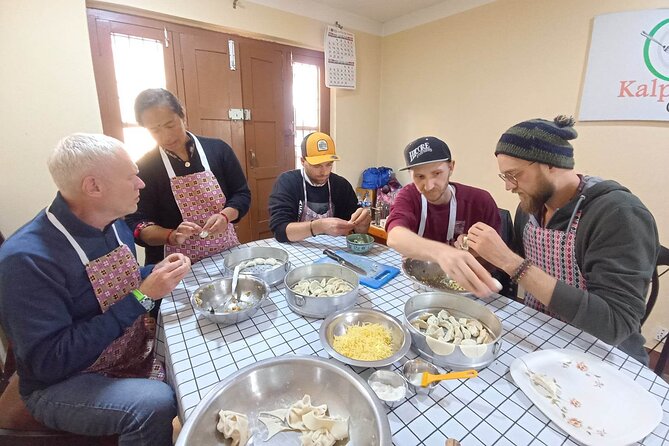
The class lasts about four hours and 30 minutes. That is a good length for a real meal and several dishes, but it is not a quick activity to squeeze between two tightly timed visits.
The cooking is labor-intensive. Grinding spices, pounding aromatics, chopping vegetables, preparing dal, filling momos, and assembling several side dishes all take time. People who enjoy hands-on work will appreciate this. People who want a short introduction may prefer a simpler class.
The menu is flexible, which is helpful for vegetarians and people with dietary restrictions, but you must advise the operator when booking. Do not wait until you arrive. Vegetarian options are available, and other specific needs can be discussed in advance.
The home setting also means the experience is less formal than a culinary school. Expect a personal family visit with cooking at its center, not a professionally staged performance. That informality is part of the appeal, but it may not suit someone seeking technical training with precise restaurant-style instruction.
Is $24 good value in Kathmandu?
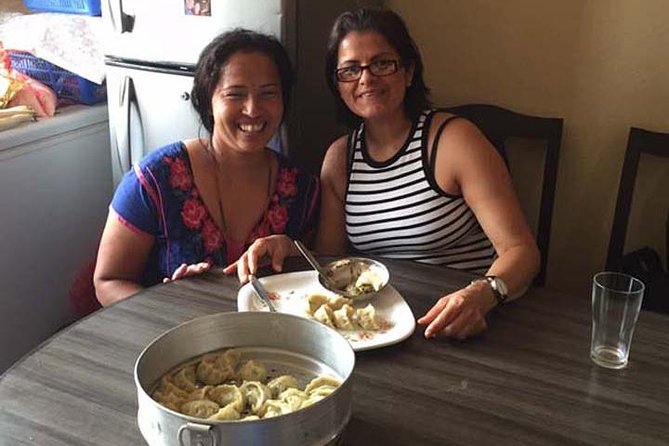
At $24 per person, this is a strong value for a private half-day experience. The price includes hotel or homestay pickup and drop-off, private-vehicle transport, morning tea or coffee, lunch, ingredients, the cooking lesson, and PDF recipes.
The food alone is not the main measure of value. You are also paying for the time Kalpana and her family spend hosting, teaching, answering questions, and preparing the setting. A private class normally costs more than a large group lesson, so the price is particularly appealing if you are traveling with family or a small group.
Group discounts are available, which can make the experience even more practical for companions. It is booked, on average, 18 days ahead, so you should not leave it until the last day of your Kathmandu stay if the schedule matters to you.
The private format is useful for families, couples, and small groups with different food preferences. It also lets the host focus on your pace instead of moving everyone through a fixed demonstration.
Who will enjoy this most?
I would choose this class if you want food to open a door into local life. It suits people who enjoy asking questions, working with their hands, and spending time with a family rather than ticking off another formal attraction.
It is also a good match for:
- Families with older children who can take part in chopping and shaping food
- Couples looking for a personal cultural activity
- First-time visitors who want practical guidance about Nepali food
- Vegetarians and people with dietary needs who arrange them in advance
- Trekkers with a free half-day after returning to Kathmandu
- Home cooks who want recipes they can try after the trip
It may be less suitable if you dislike long cooking tasks, have a very tight schedule, or want a class focused on one dish only. The range of food is a strength, but it also adds work.
Booking, timing, and cancellation details
Confirmation is provided when you book. Hotel and homestay pickup is included, but you should give accurate accommodation details and state dietary requirements at that time.
The activity requires good weather. If poor weather causes cancellation, you will be offered another date or a full refund. You can cancel for a full refund up to 24 hours before the local start time. Cancellations or changes made within 24 hours are not refunded or accepted.
FAQ
How long does the cooking class last?
The experience lasts approximately four hours and 30 minutes.
Is hotel transportation included?
Yes. Hotel or homestay pickup and drop-off are included, with transportation provided by a private vehicle.
Is this a private cooking class?
Yes. Only your own group participates in the activity.
What food will I learn to cook?
The set meal includes plain rice, dal soup, seasonal vegetables, spinach, chicken, pickle, and fried papad. The experience also features dishes such as dal bhat, momos, and sel roti. Ask about the exact menu if you want to prioritize a particular dish.
Is a vegetarian option available?
Yes. A vegetarian option is available. You should advise the provider when booking.
Can the class accommodate special dietary requirements?
Yes, the class can cater to specific dietary requirements, but you must provide the details at the time of booking.
Is lunch included?
Yes. Lunch and all food used during the experience are included, along with morning tea or coffee.
Can I cancel for a full refund?
Yes, if you cancel at least 24 hours before the experience start time. Cancellations within 24 hours are not refunded. If bad weather causes the provider to cancel, you will be offered a different date or a full refund.
Should you book Kalpana’s cooking class?
I would book this if you want a personal, food-centered look at Kathmandu and have half a day to spare. The garden, family kitchen, hands-on preparation, generous meal, and recipes create a fuller experience than a simple cooking demonstration.
The best reason to choose it is not one particular dish. It is the chance to understand how Nepali home food is selected, prepared, shared, and remembered. Just arrive hungry, allow the cooking to take its time, and tell Kalpana about dietary needs before the day begins.
More hands-on workshops in Kathmandu
- Knife (Khukuri) Making Workshop- Forge of the Gurkhas
★ 5.0 · 143 reviews - Local Women Lead Nepali Cooking Class
★ 5.0 · 125 reviews - Kathmandu: Traditional Momo Making Class & Pickup
★ 4.8 · 60 reviews - Traditional Nepali Momo Making Classes
★ 5.0 · 53 reviews
Recently added around Kathmandu
- Kathmandu Airport Pickup and Drop-off Services★ 5.0 · 3 reviews
- Kathmandu Paragliding★ 5.0 · 3 reviews
- Kathmandu Chandragiri Cable Car and Swayambhunath Private Tour★ 5.0 · 3 reviews
- Explore The Beauty Of Langtang Valley In 8-Days Trek★ 5.0 · 3 reviews
- Kathmandu: Nightlife and Pub Crawl Tour★ 5.0 · 3 reviews
- Mountain Flight Experience in Nepal★ 4.5 · 3 reviews
- Kathmandu: Momo Making Class with a Local Chef★ 5.0 · 3 reviews
- Everest Base Camp Trek★ 5.0 · 3 reviews
Other Kathmandu Tours worth a look

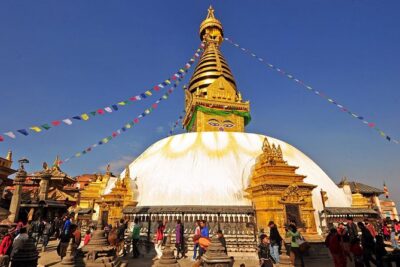
Private Kathmandu Sightseeing Tour | UNESCO World Heritage sites
Read our review →
Everest Base Camp Helicopter Tour landing at Everest View Hotel
Read our review →
Nagarkot Sunrise View and Day Hiking from Kathmandu
Read our review →
Full Day 7 UNESCO Tour with Lunch – Private/Group
Read our review →
This tour also appears in