
REVIEW · KATHMANDU TOURS
Kathmandu: Wood Carving Workshop with Local Artisan (Thamel)
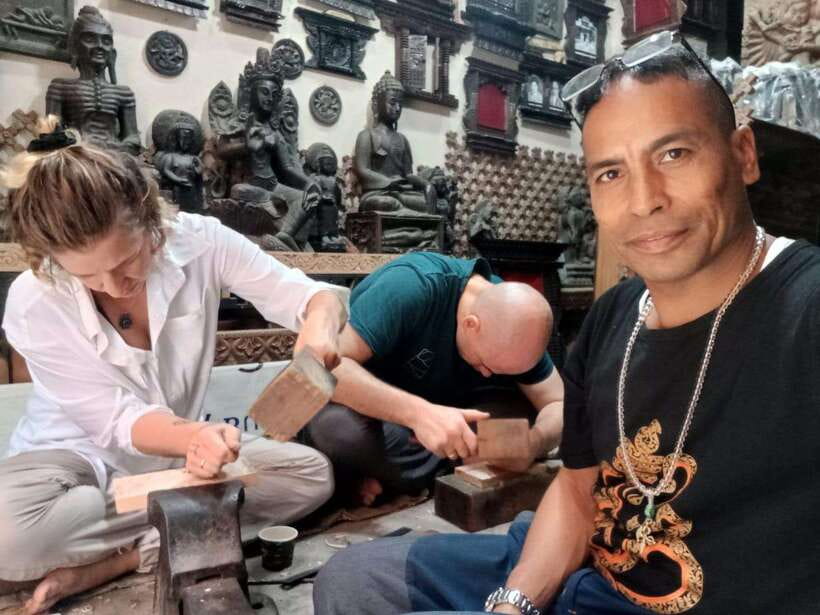
Kathmandu’s wood carving tradition is not something you only look at from behind a camera. In this small workshop, you pick up a chisel and work a design into wood yourself. Local artisan Hera guides the session, with his wife also helping create the warm, friendly setting noted by one participant.
I like two things right away: you leave with a personal souvenir, not a factory-made trinket, and the group is limited to four people, so you should receive plenty of individual help. The main consideration is that the historical and cultural explanation may be fairly brief, so book this for hands-on making first and detailed art history second.
Key points to know before booking
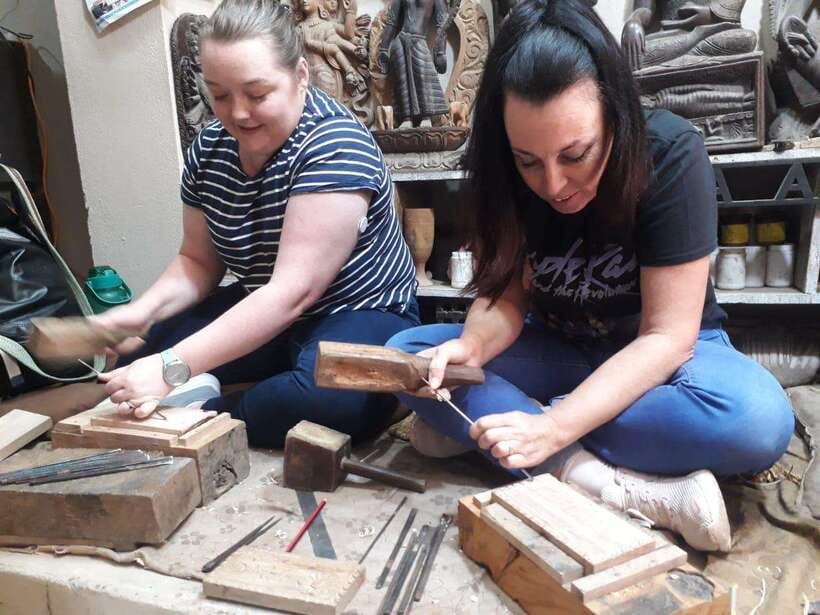
- Three hours with a real wooden block: You practice outlining, chiseling, and fine detailing rather than simply watching a demonstration.
- A very small group: With no more than four participants, the artisan can correct your hand position and help shape your design.
- A meaningful Kathmandu souvenir: Your finished piece is yours to take home, and it carries the marks of your own work.
- Newar craft traditions explained: You learn about motifs such as lotus flowers, mandalas, deities, and mythical creatures.
- Friendly for beginners and families: A ten-year-old participant completed the class with patient help.
- Good value at $42: The fee covers instruction, tools, materials, taxes, and the finished wooden artwork.
Why this workshop fits Kathmandu so well
Kathmandu Valley is filled with carved wood, but it can be hard to understand the craft when you only see finished temple windows and palace details. This class gives you a slower look at the work behind those designs. You learn how a simple block becomes a patterned object through repeated cuts, careful outlines, and small corrections.
Nepali wood carving reaches back to the Licchavi period, from the fourth to the ninth century. It grew during the Malla dynasty, from the twelfth to the eighteenth century, when artisans decorated temples, palaces, and traditional buildings with detailed wooden panels and windows.
The Newar community of the Kathmandu Valley has preserved and developed this art over generations. You may recognize the same visual language at Kasthamandap, the 55-Window Palace in Bhaktapur, or the Peacock Window. This workshop will not turn you into a master carver in three hours, but it helps you see those famous details with a more informed eye.
The designs also carry meaning. Lotus flowers can suggest purity, mandalas reflect sacred order, and figures from Hindu and Buddhist traditions connect decoration with spiritual ideas. Your own piece may be small, but it gives you a direct link to a craft that has shaped Kathmandu’s buildings for centuries.
More hands-on workshops in Kathmandu:
- Half day cooking class in Thamel kathmandu
★ 5.0 · 607 reviews - Kathmandu: Local Women-Led Nepali Cooking & Momo Class
★ 4.9 · 360 reviews - Kathmandu: Local Lead Nepali Cooking & Momo-Making Class
★ 5.0 · 212 reviews
A small Thamel workshop, not a stage show
The class takes place in a workshop setting in Thamel, Kathmandu. The exact meeting point is not clearly specified in the information provided, so confirm the location before setting out. The phrase Please meet us at your meeting is not enough practical detail for a first-time visitor, especially in Thamel’s busy lanes.
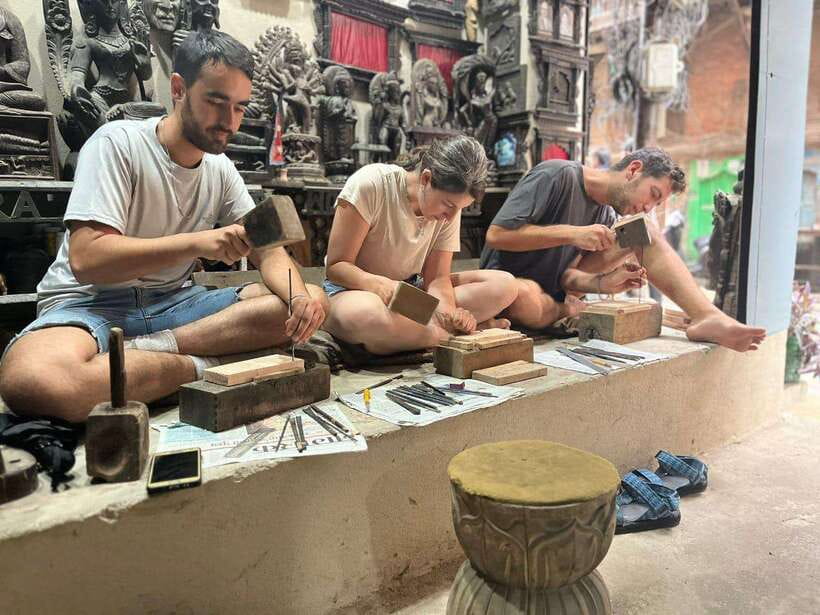
The group size is limited to four people. That matters here. Wood carving depends on small movements, and beginners benefit when an instructor can watch the angle of the chisel, the pressure of the hammer, and the direction of each cut. A large class would make that kind of help harder to provide.
The small setting also gives the lesson a personal feel. One participant booked during the off season and ended up with a one-to-one class. That is not guaranteed, but low demand at your chosen time could give you even more direct attention.
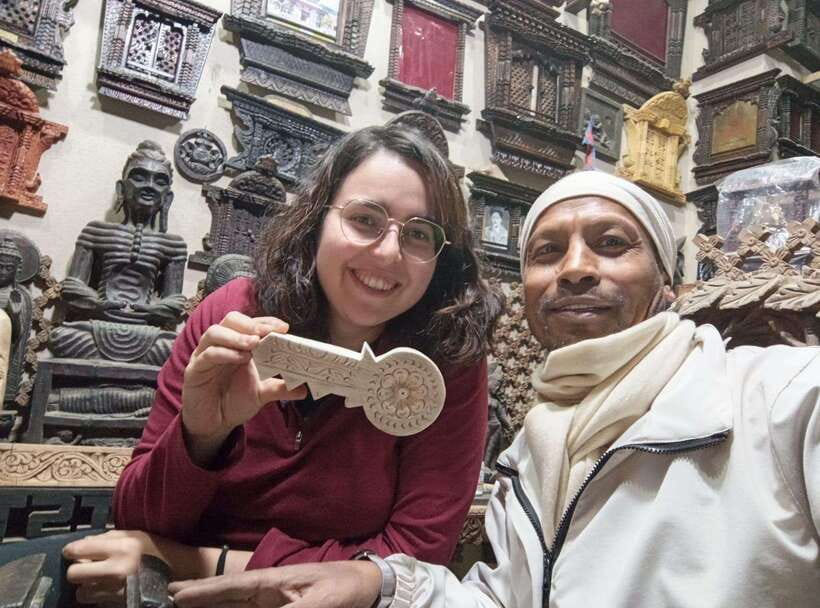
English is the listed teaching language. Hera is named in one account of the class, and his wife helped create a kind and humorous atmosphere. The tone seems friendly rather than formal, which should suit people who want to try a craft without feeling tested.
Your first look at chisels, wood, and motifs
The session begins with an introduction to the tools and materials. You learn about traditional chisels, hammers, and the kinds of wood commonly used, including sal and teak.
The tools are part of the lesson, not just equipment placed in front of you. A chisel can make a broad channel, a narrow line, or a small notch, depending on its shape and how you hold it. The instructor shows you how the tools work before you begin on your own block.
You also get an introduction to common Nepali patterns. Lotus flowers, mandalas, mythical creatures, and religious figures appear often in local woodwork. This part gives your design a cultural setting, so you are not simply scratching random lines into timber.
I would pay close attention here, even if you are eager to start cutting. The short explanation helps you understand why the patterns on Kathmandu’s buildings look so carefully ordered. It also helps you choose a design that feels connected to Nepal rather than like a generic craft project.
One point to keep in mind is that the depth of this explanation may vary. The class description promises insight into history, symbolism, and cultural importance, but one participant wanted more context about the craft. If you want a long lecture on Newar religious art, this may feel light. If you prefer a practical introduction with some cultural background, the balance should work better.
Outlining your design on a wooden block
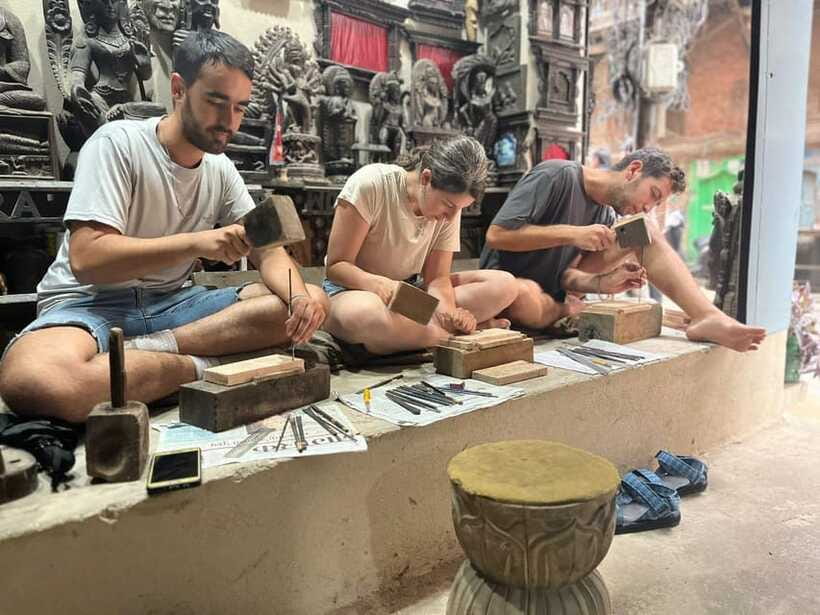
After the introduction, you begin with a pre-cut wooden block. Starting with prepared wood keeps the three-hour class focused on carving rather than sawing and shaping a raw plank.
The first working stage is outlining. You trace or cut the main lines of your chosen motif, creating a guide for later cuts. This is where patience helps. A small change in line direction can affect the whole pattern, and the marks you make at this point guide every later step.
For a beginner, the outline is also a useful lesson in scale. A design that looks simple on paper can become crowded on a small block. Your instructor can help you adjust the pattern and avoid placing details too close together.
The class is designed for people with no previous carving experience. You do not need to arrive knowing how to hold a chisel. The artisan demonstrates the process step by step, then offers corrections as you work.
Wear comfortable clothes. Wood dust and small chips are part of any carving session, and clothing that allows you to sit and work freely is more useful than anything formal. Smoking is not allowed during the activity.
A few more Kathmandu days to weigh up
- Everest Base Camp Trek – 14 Days
★ 5.0 · 1,499 reviews - Private Kathmandu Sightseeing Tour | UNESCO World Heritage sites
★ 5.0 · 756 reviews - Everest Base Camp Helicopter Tour landing at Everest View Hotel
★ 5.0 · 668 reviews - Everest Base Camp Trekking
★ 5.0 · 485 reviews
Chiseling and learning to control the cut
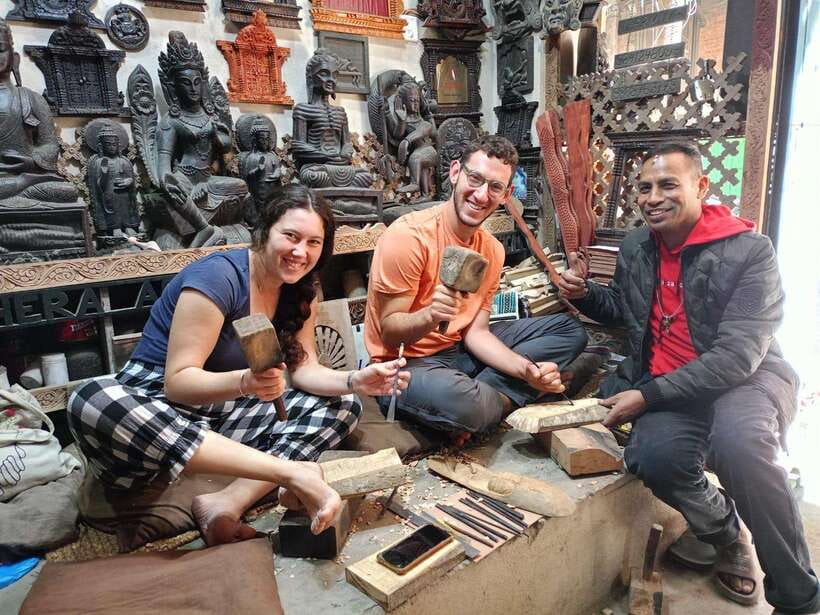
Once the outline is in place, you begin chiseling. This is the most physical part of the lesson, though the work is more about control than strength.
You learn how to remove wood along the marked lines and shape the surface without cutting away too much. The instructor can show you how to position the tool and how to use the hammer with care. Expect to work slowly at first. Beginners often want to make fast progress, but one extra strike can take away a piece of the design that cannot be put back.
This is where the small group earns its value. With only four participants, Hera can watch your technique and offer tips while you work. A one-to-one class, if available, gives you even more room to ask questions and repeat a movement until it feels natural.
The process is satisfying because the change is visible. At the beginning, the wooden block may look plain. After the outline and first cuts, the motif begins to appear through shadows and raised sections. You see how temple carvers create depth with a series of simple, deliberate actions.
Families can consider this class, too. A ten-year-old completed the activity with help from a patient and encouraging instructor. Younger children still need close supervision around chisels and hammers, but the lesson can work well for a parent and child who want to make something together.
Detailing the piece you take home
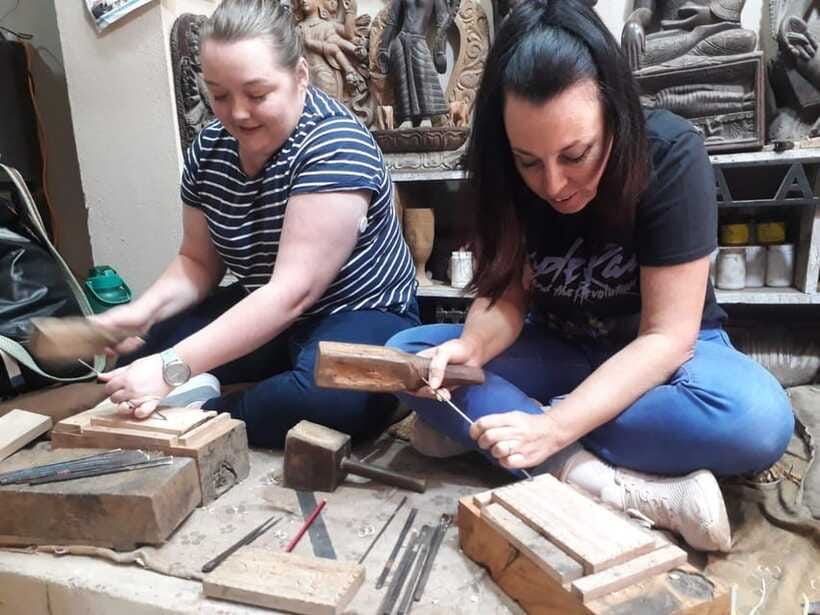
The final stage is detailing. You refine edges, sharpen the motif, and add smaller marks that give the artwork character.
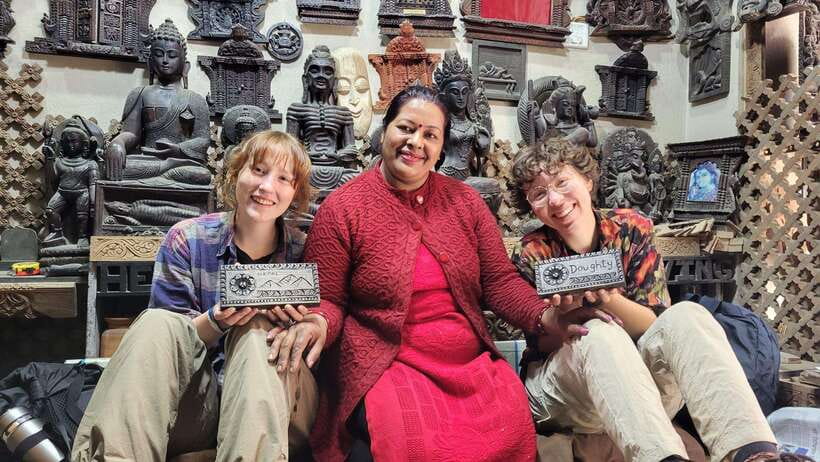
This is the point where your piece becomes personal. Two people may begin with similar wooden blocks and end with different results because their lines, pressure, and small imperfections are not the same. That is part of the appeal. You are not buying a polished object from a shop. You are taking home evidence of a few hours spent learning a Nepali craft.
The finished object may be a decorative panel, a small figurine, or a symbolic motif, depending on the design used in the class. The exact form is not specified in advance, so do not book expecting one particular souvenir.
You should also set your expectations about finish quality. A beginner’s carving will not have the precision of the pieces made by a professional Newar artisan. The value is in the process and the connection to the craft. Small uneven lines can make the keepsake more interesting because they show that you made it yourself.
If your itinerary includes visits to Kathmandu Valley’s historic buildings, keep the piece with your photographs or notes. After trying to cut even a basic pattern, you will have a better sense of the time and skill behind the carved windows and panels you see elsewhere.
What $42 gets you in practical terms
The price is $42 per person. For a three-hour activity, that is a fair mid-range cost if you value instruction and a finished object rather than a quick demonstration.
The fee includes the local artisan’s guidance, all necessary tools and materials, your completed wooden piece, government taxes, and VAT. You do not need to purchase carving equipment or wood separately.
The small group improves the value. You are paying for hands-on time with an artisan, not just entry to a workshop. If the group fills all four places, you still have a more personal lesson than a large craft class would offer. If you happen to book in a quiet period, you may receive individual attention, as one participant did.
The price makes less sense if you only want a cheap souvenir. Kathmandu’s markets offer many carved objects, and buying one takes far less time. This class is worth more to you if you want to understand a technique, ask questions, and bring home something shaped by your own hands.
It also works well as a break from monument visits. After several days of walking around temples and squares, three quiet hours at a workbench can change the pace of your trip. You still connect with local culture, but through making rather than sightseeing.
Who should book this class
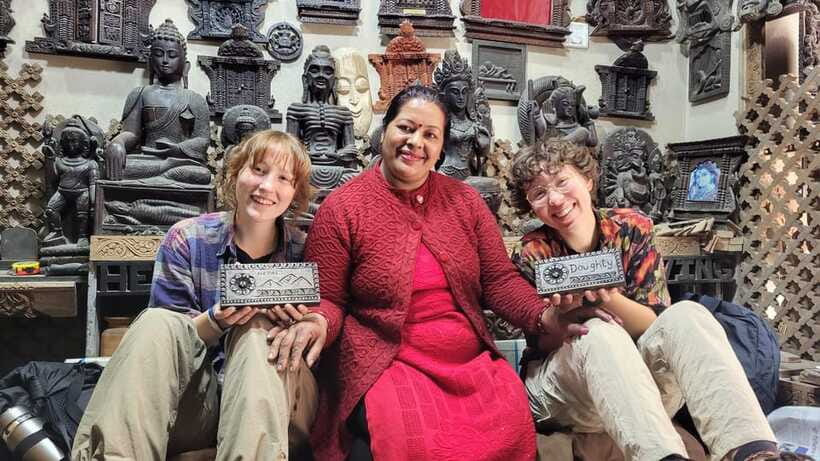
I would recommend it to art enthusiasts, curious first-time carvers, and people who prefer useful souvenirs over mass-produced purchases. It also suits couples, small groups of friends, and families with older children who can follow tool instructions.
The class is especially good for you if you enjoy learning by doing. You will spend much of the session practicing, not simply listening. Expect guidance, corrections, and time to work through your own piece.
It may be less suitable if you want a polished souvenir with no effort involved. It may also disappoint you if your main goal is a detailed academic talk about Newar architecture, Hindu and Buddhist symbolism, or the full development of Nepali woodwork. The cultural background is part of the session, but carving remains the main event.
You should also allow enough time around the booking. The duration is three hours, and you need to reach the meeting point in Thamel. Since the meeting instructions are vague, get the exact location from the provider before the day of the class.
Booking flexibility and simple preparation
You can cancel up to 24 hours in advance for a full refund. The reserve-now-and-pay-later option lets you hold a place without paying immediately, which is useful when your Kathmandu plans are still changing.
Starting times depend on availability, so check the schedule that appears for your date. The instructor speaks English, and the activity is offered as a small-group class with up to four participants.
Bring comfortable clothes and arrive ready to work with your hands. Smoking is not permitted. All tools and materials are supplied, so you do not need to pack anything special for the carving itself.
Because this is a hands-on craft, I would avoid scheduling it immediately before an important dinner or formal event. The supplied information does not specify how much dust or cleanup is involved, but practical clothing is the sensible choice.
How this compares with ordinary souvenir shopping
A carved window in a shop can show you the finished craft. This workshop lets you understand the motions behind it.
That difference matters in Kathmandu. The valley’s woodwork often seems impossibly detailed when viewed on a temple facade. Once you have struggled to keep a straight outline or remove a small section without damaging the pattern, you begin to notice the discipline in those older works.
You also get a story to go with your souvenir. Instead of saying you bought a wooden object in Nepal, you can explain which motif you worked on and how you learned the basic cuts. The piece may not be perfect, but it carries a memory that a shop purchase cannot provide.
The class also supports direct contact with a local artisan. The activity is run by Relax Getaways Pvt. Ltd., while the instruction is provided by a local craftsperson. That combination gives you the convenience of a bookable tour with the personal feel of a small workshop.
Should you book the Kathmandu wood carving workshop?
Book it if you want a relaxed, practical introduction to Nepali craft and like the idea of carrying home something you made yourself. The strongest reasons are the small group, patient instruction, named artisan Hera, and the chance to work through outlining, chiseling, and detailing in one session.
I would make this a particularly good choice for a family activity or a quiet afternoon in Thamel. The experience has already worked well for a child as young as ten, and one-to-one instruction may be possible during the off season.
Skip it if you want a long, detailed history lesson or a guaranteed museum-quality final product. Ask for the precise meeting point before booking, and keep your expectations focused on learning a new skill. At $42, it offers solid value when the hands-on process matters as much as the souvenir.
FAQ
How long does the wood carving workshop last?
The workshop lasts three hours. Starting times depend on availability for your chosen date.
How many people can join the class?
The group is limited to four participants, making it a small-group activity with room for individual guidance.
Is the class taught in English?
Yes. English is the listed language for the instructor.
Are tools and materials included?
Yes. The class provides all necessary tools and materials, along with the wooden piece you make and take home.
What should I wear or bring?
Bring comfortable clothes. No special tools or materials are listed as necessary. Smoking is not allowed.
Can I cancel or pay later?
You can cancel up to 24 hours in advance for a full refund. The reserve-now-and-pay-later option allows you to book without paying immediately.
Recently added around Kathmandu
- Kathmandu Paragliding★ 5.0 · 3 reviews
- Kathmandu Airport Pickup and Drop-off Services★ 5.0 · 3 reviews
- Kathmandu Chandragiri Cable Car and Swayambhunath Private Tour★ 5.0 · 3 reviews
- Explore The Beauty Of Langtang Valley In 8-Days Trek★ 5.0 · 3 reviews
- Kathmandu: Nightlife and Pub Crawl Tour★ 5.0 · 3 reviews
- Mountain Flight Experience in Nepal★ 4.5 · 3 reviews
- Kathmandu: Momo Making Class with a Local Chef★ 5.0 · 3 reviews
- Everest Base Camp Trek★ 5.0 · 3 reviews
Other Kathmandu Tours worth a look


Private Kathmandu Sightseeing Tour | UNESCO World Heritage sites
Read our review →
Everest Base Camp Helicopter Tour landing at Everest View Hotel
Read our review →


Nagarkot Sunrise View and Day Hiking from Kathmandu
Read our review →
Full Day 7 UNESCO Tour with Lunch – Private/Group
Read our review →
This tour also appears in