
REVIEW · ANNAPURNA BASE CAMP TREKS
Annapurna Base Camp Trek
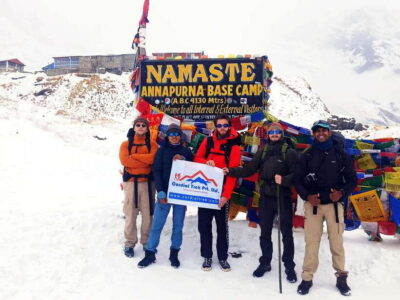
The payoff here is wonderfully clear: after days of stone steps, forest trails, waterfalls, and mountain villages, you reach Annapurna Base Camp at 4,130 meters. The peaks rise around you on every side, and the setting feels far removed from the streets of Kathmandu.
I like the way this trip mixes mountain scenery with daily life in Gurung villages. I also like the included hot-spring stop at Jhinu Danda, a welcome reward after long days on foot. The main consideration is the physical demand: this is an 11-day trek with steep steps, rough trails, and a high-altitude overnight stay.
The price of $906.67 per person covers much of what can make a Nepal trek expensive, including hotels, trekking meals, permits, transport, a guide, a porter arrangement, sleeping bags, and a down jacket. Still, you’ll need moderate fitness, travel insurance, and extra money for food and personal costs in Kathmandu and Pokhara.
Key points before you book
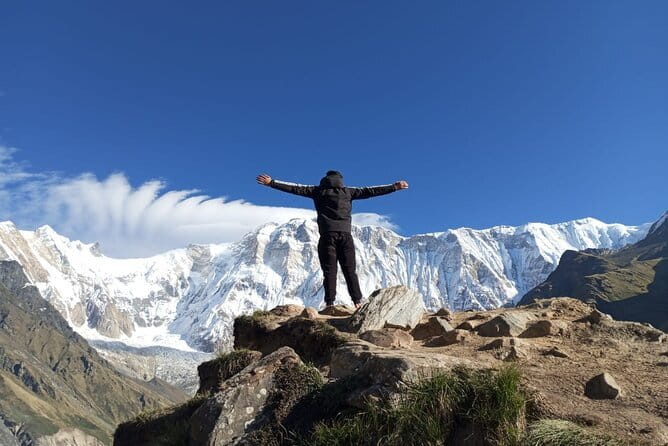
- 4,130-meter summit goal: The trek reaches Annapurna Base Camp after passing Machhapuchhre Base Camp, with views of Annapurna I, Annapurna South, Annapurna III, Hiunchuli, and Machhapuchhre.
- Gurung villages and forest trails: You’ll walk through settlements such as Landruk, Chhomrong, Jhinu Danda, Bamboo, and Deurali, with rhododendron and bamboo forests along the way.
- Two hot-spring opportunities: Jhinu Danda is visited on the way in and again on the return, giving you a chance to soak after demanding sections.
- Support included: An English-speaking guide, an assistant guide, and one porter for every two trekkers are part of the package, with a maximum porter load of 30 kilograms.
- Kathmandu and Pokhara stays: Three nights in Kathmandu and two nights in Pokhara give you time around the trek, though meals in both cities are extra.
- Small group size: The group can have up to 15 people, large enough for company but still manageable on narrow mountain paths.
Kathmandu arrival and the first night in Thamel
Your trip begins with airport pickup at Tribhuvan International Airport. After immigration, a representative drives you to Hotel Green Horizon in Thamel, Kathmandu’s main tourist district.
That first night is useful rather than decorative. You can rest after the international flight, sort your gear, and meet the trekking team. The airport transfer is included, which removes one common source of arrival-day hassle.
The next morning includes a briefing with your guide before you leave for Pokhara. The schedule describes a flight of about 30 minutes, while the day-by-day transport notes also describe a scenic overland journey. Since those are very different experiences, confirm the Kathmandu to Pokhara transport before departure.
If you travel by air, you save a long day on the road. If you go by road, you gain views of green hills, terraces, rivers, temples, and small settlements, but you should expect a much longer transfer. Either way, the move to Pokhara shifts the mood from city sightseeing to mountain preparation.
More Annapurna Base Camp Treks in Kathmandu
- Annapurna base camp trek 5 Days
★ 5.0 · 252 reviews - Annapurna Base Camp Trek
★ 5.0 · 111 reviews - Kathmandu to Annapurna Base Camp (ABC) 5-Day Trek
★ 5.0 · 102 reviews
Pokhara gives you a softer start
Pokhara is Nepal’s adventure center and the practical gateway to the Annapurna region. The plan gives you two hotel nights there, with time around Lakeside before and after the trek.
I like this pause in the schedule. Pokhara gives you a chance to buy or check supplies, meet the support crew, and enjoy a quieter setting beside the lakes. The city also has plenty of cafes, shops, and souvenir stalls, but meals here are not included.
The route description includes a picnic spot and a highly revered temple on the journey toward Pokhara. The names are not specified, so you should treat these as brief stops rather than guaranteed major sightseeing visits. The real focus is the trek itself.
Nayapul to Jhinu Danda, the first serious walking day
The walking begins after transport to Nayapul, the usual starting point for this part of the Annapurna region. The drive takes about an hour and a half and passes remote settlements, rivers, temples, and mountain views.
From Nayapul, you follow the Modi River toward Jhinu Danda. The route includes Chandrakot, Pritam Deurali, Tolga, Landruk, suspension bridges, stone steps, and smaller settlements. Expect a mixed day of climbs and descents rather than one steady uphill march.
Jhinu Danda is known for its natural hot springs at the base of the ridge. This is one of the smartest stops in the whole program because it gives your legs a break at the very start of the trek. You should not mistake the hot spring for an easy day, though. The full day is listed at about 12 hours, and the combination of steps, bridges, and repeated changes in height can feel tough.
Jhinu Danda to Bamboo through Chhomrong
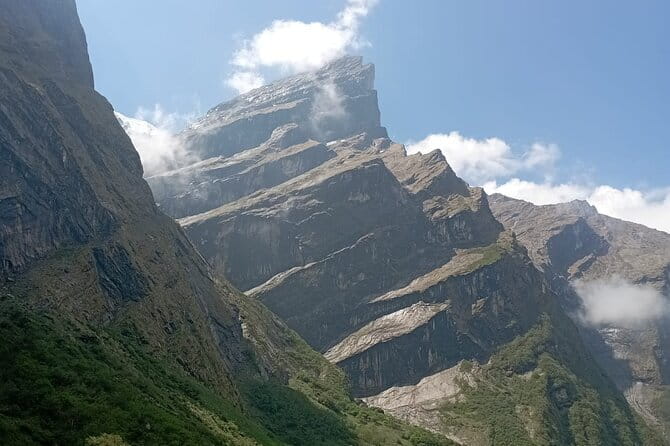
The next section climbs through terraces to Chhomrong, one of the best-known settlements on the route. You pass Nayagaon, cross the Chhomrong River, and handle long stone staircases before reaching the ridge above the Modi River.
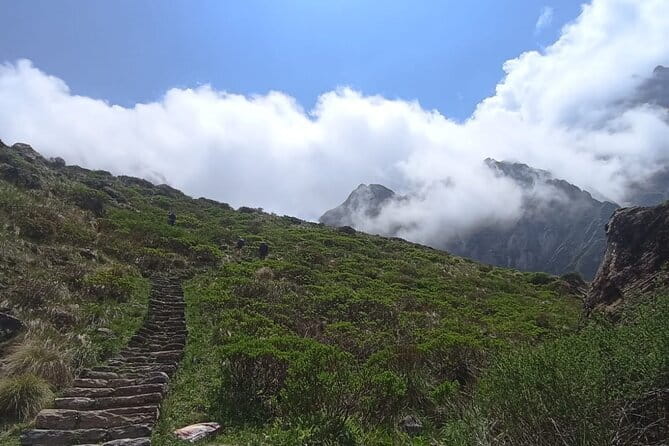
After Chhomrong, the trail continues through bamboo forest, terraced fields, and smaller settlements. The route reaches Kuldighar, then drops through rhododendron and bamboo forest toward Bamboo.
This is a good example of why you need moderate fitness. The distance may not look dramatic on a map, but the stairs and repeated uphill sections make the day demanding. The forest offers shade and a cooler setting, yet the rough trail and steep descent into Bamboo can test tired knees.
Overnight lodging is in a mountain lodge or teahouse setting. Lodging and trek meals are included, but you should expect simple accommodation rather than city-hotel comfort.
More Hiking Tours in Kathmandu
- Everest Base Camp Trek – 14 Days
★ 5.0 · 1,499 reviews - Everest Base Camp Trekking
★ 5.0 · 485 reviews - Nagarkot Sunrise View and Day Hiking from Kathmandu
★ 5.0 · 471 reviews - Annapurna Circuit Trek with Tilicho Lake
★ 5.0 · 368 reviews
Bamboo to Deurali, where the forest begins to thin
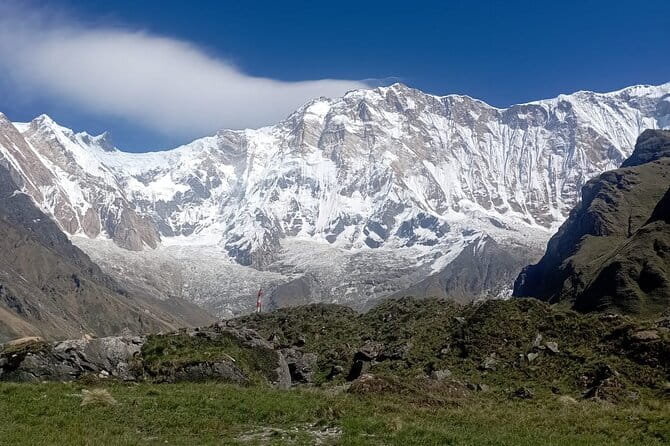
The walk from Bamboo to Deurali is shorter, designed to prepare you for the higher climb ahead. You cross a stream and climb through rhododendron and oak forest toward Dovan.
The route then becomes steeper. You pass waterfalls and the Himalaya Hotel area, with views toward the Modi River and the surrounding mountain country. Hinku Cave is another notable point before the trail reaches Deurali.
At this stage, the surroundings change. Vegetation becomes sparser, the ground turns rockier, and the air feels more exposed. That change is useful preparation for Base Camp, where you leave behind much of the dense forest.
The program lists this as a 12-hour day despite calling it a short trek. That wording is confusing, so ask your guide for the expected walking time and daily departure schedule. The important point is that Deurali is an acclimatization and preparation stop, not merely a place to sleep.
Machhapuchhre Base Camp and the climb to Annapurna Base Camp
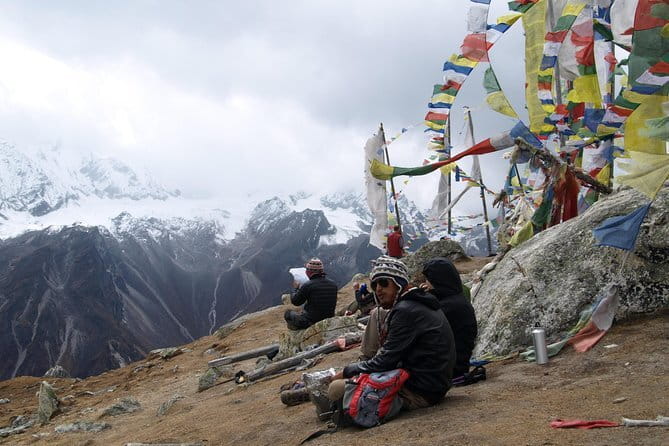
Day six is the central test and the main reason to choose this trek. From Deurali, the trail continues toward Bagar and then Machhapuchhre Base Camp, also called Fishtail Base Camp.
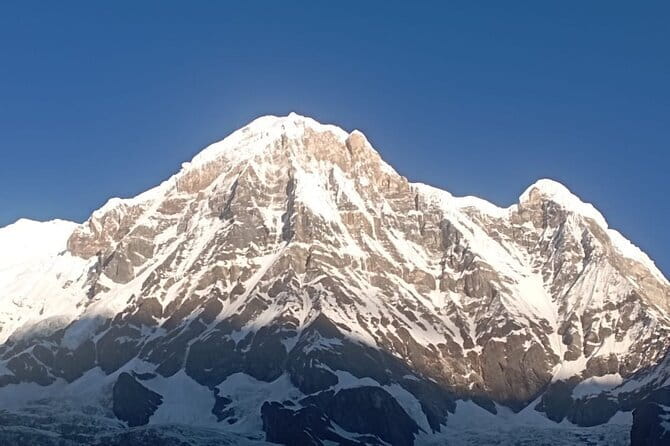
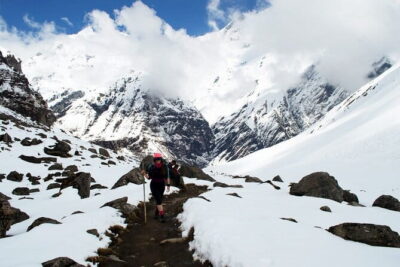
The climb becomes more strenuous as the vegetation fades. At Machhapuchhre Base Camp, you can see Machhapuchhre, Hiunchuli, Annapurna South, Annapurna I, Annapurna III, and other high peaks. The mountain views become larger and more immediate as the trail enters the high alpine zone.
From there, the path leaves the Modi River and turns toward Annapurna Base Camp. The route widens, the terrain is more open, and the sense of arrival builds with every step. At 4,130 meters, Base Camp sits inside a huge ring of Himalayan peaks.
This is a powerful setting, but altitude changes the experience. The provided information does not specify an acclimatization-day schedule, oxygen support, or medical evacuation arrangement. Travel insurance covering trekking and rescue is therefore important, and you should discuss altitude symptoms with your guide instead of trying to push through them quietly.
You spend the night at Base Camp. That overnight stay is a major advantage over a quick out-and-back visit because it allows you to see the mountain setting in changing light. The following morning includes an early sunrise over the Himalayas, one of the most memorable parts of the route.
Returning through Deurali and Bamboo
The return begins with a downhill route along the Modi River. The path passes avalanche-prone terrain, Deurali, Dovan, bridges, and forested sections before reaching Bamboo.
Downhill does not mean effortless. Long descents can be hard on your knees, especially after the high-altitude day. Trekking poles, if you use them, can be useful here, though the package details do not specifically say that poles are provided.
The return route also shows the dramatic changes in altitude more clearly. Above Deurali, the trail feels rocky and open. Lower down, bamboo and rhododendron return, and the river becomes a constant companion.
Jhinu Danda again, then the final walk to Nayapul
From Bamboo, you retrace the route toward Sinuwa, Khuldighar, Chhomrong, and Jhinu Danda. This includes another uphill section to Khuldighar, twisting trail through the forest, bridges, and steep stone steps near Chhomrong.
Jhinu Danda appears again as a welcome stop. You can visit the natural hot springs and relax before the final descent. I like the placement of this stop because it breaks up the return journey and gives you a physical reward near the end.
The last walking day follows the Modi Khola valley toward Nayapul. You pass New Bridge, farms, wooden bridges, suspension bridges, traditional houses, and wider fields as the valley opens.
The mountain views remain part of the day, but the feel changes as you descend. You move from high mountain paths to cultivated land and larger settlements. Nayapul marks the end of the physical trek, after which transport returns you to Pokhara Lakeside.
Back to Pokhara, then Kathmandu
The plan provides time in Pokhara after the trek, though the exact amount depends on the transport schedule. Meals in Pokhara are not included, so budget separately for them.
The next transfer to Kathmandu is described as a five to six-hour scenic drive through hills, terraces, valleys, and mountain country. This is another point to confirm, since the earlier route description refers to a flight from Kathmandu to Pokhara.
Back in Kathmandu, the program includes time at Kathmandu Durbar Square and around Thamel. The old palace square offers stone-paved courtyards and historic architecture, while Thamel is convenient for souvenirs and last-minute shopping.
The trip ends with airport transfer at least three hours before your onward flight. Your international airfare, Nepal visa, and extra baggage charges are not included.
What the $906.67 price really covers
At $906.67 per person, this is not a bare-bones trekking package. The price includes:
- Three nights in Kathmandu
- Two nights in Pokhara
- Lodge accommodation and meals during the trek
- Ground or scheduled transport connected with the program
- An English-speaking guide
- An assistant guide
- One porter for two trekkers, with a 30-kilogram maximum load
- TIMS and Annapurna Conservation Area permits
- First-aid medical box
- Sleeping bag and down jacket rental
- Airport pickup and drop-off
- VAT, company service charge, and a farewell dinner
That bundle has real value. Permits, support staff, gear rental, and trek meals can add up quickly if arranged separately. The porter ratio also matters: you carry your own daypack, while shared porter support handles larger bags.
The price does not cover travel insurance, rescue operations, visa fees, international flights, food in Kathmandu or Pokhara, tips, personal purchases, or extra nights caused by schedule changes. I would leave room in your budget for those items rather than treating the advertised price as the full cost of the trip.
Guides, porters, and group size
The support team is one of the strongest practical features. You receive a professionally trained English-speaking guide, an assistant guide, and porter support. The group limit is 15 people, which should keep the operation more personal than a large coach-style tour.
A published account of the experience specifically identifies guide Shiva and porter Bishal as key members of the team, with Suman handling the airport welcome. Those names may not be the crew assigned to every departure, so confirm your guide and porter names before you arrive.
The support structure matters on a trek like this. A guide helps with route decisions and daily pacing, while porters reduce the amount you need to carry over the stairs and rough trail. Tips are not included, so plan for that customary extra expense.
Who should book this trek?
I would choose this experience if you want a relatively short route to a major Himalayan base camp and prefer a supported trek rather than arranging permits, hotels, transport, and porters yourself.
It suits people with moderate physical fitness who can handle long walking days, steep stairs, uneven ground, and a night at 4,130 meters. You do not need to be an elite mountaineer, but you should be comfortable with sustained uphill and downhill walking.
I would think twice if you want a relaxed holiday, dislike basic mountain lodging, or need a fully fixed transport plan. The program has some conflicting timing and transport descriptions, and the high-altitude section requires sensible preparation.
The free cancellation rule is useful: you can cancel up to 24 hours before the start time for a full refund. Changes or cancellations inside that window are not accepted or refunded.
Should you book the Annapurna Base Camp Trek?
Book it if the idea of reaching a high Himalayan base camp matters more to you than polished comforts. The route gives you forest, villages, rivers, hot springs, and an extraordinary mountain amphitheater in one compact trip.
The best value comes from the included logistics and support. Before paying, confirm the Kathmandu to Pokhara transport, expected daily walking hours, assigned guide, lodge standards, and what rescue insurance must cover.
For a fit first-time Himalayan trekker, this offers a practical path to Annapurna Base Camp without arranging every detail alone. It is demanding, but the sunrise, mountain views, and hot springs give the effort a clear reward.
FAQ
How long does the Annapurna Base Camp Trek take?
The experience lasts approximately 11 days, including time in Kathmandu and Pokhara, the trek itself, and airport transfers.
What is the highest point reached?
The trek reaches Annapurna Base Camp at an altitude of 4,130 meters above sea level.
Is airport pickup included?
Yes. Airport pickup on arrival and airport drop-off at the end are included.
Where does the experience start and end?
The meeting point is Nepal Mountain Trekkers at Pyramid Galli in Kathmandu. The activity ends back at the meeting point after the trek and city transfers.
Are meals included?
Breakfast, lunch, and dinner are included during the trek. Food in Kathmandu and Pokhara is not included. A farewell dinner is included.
Is trekking equipment provided?
Sleeping bags and down jackets are available for rent as part of the included trekking support.
Are permits included?
Yes. The TIMS card and Annapurna Conservation Area fees are included.
What fitness level is required?
You should have a moderate level of physical fitness. The route includes steep stone steps, rough trails, forest sections, long descents, and a high-altitude overnight stay.
Recently added around Kathmandu
- Kathmandu Airport Pickup and Drop-off Services★ 5.0 · 3 reviews
- Kathmandu Paragliding★ 5.0 · 3 reviews
- Kathmandu Chandragiri Cable Car and Swayambhunath Private Tour★ 5.0 · 3 reviews
- Explore The Beauty Of Langtang Valley In 8-Days Trek★ 5.0 · 3 reviews
- Kathmandu: Nightlife and Pub Crawl Tour★ 5.0 · 3 reviews
- Mountain Flight Experience in Nepal★ 4.5 · 3 reviews
- Kathmandu: Momo Making Class with a Local Chef★ 5.0 · 3 reviews
- Everest Base Camp Trek★ 5.0 · 3 reviews
Other Annapurna Base Camp Treks worth a look
Kathmandu to Annapurna Base Camp (ABC) 5-Day Trek
Read our review →
This tour also appears in