
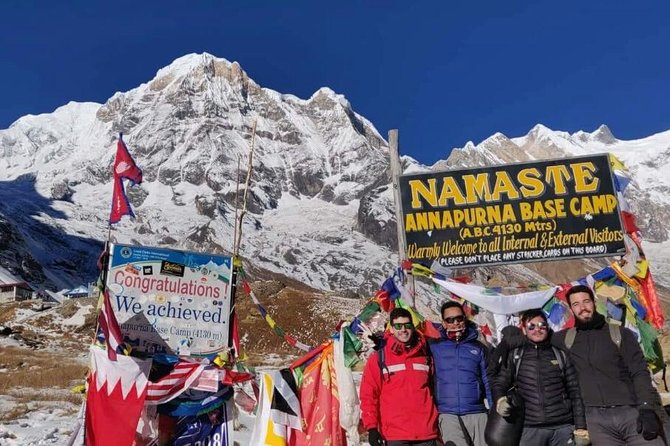
REVIEW · ANNAPURNA BASE CAMP TREKS
Annapurna base camp -9 days
The best part of this 9-day Annapurna Base Camp trek is the steady change in scenery. You begin among terraced hills and Gurung villages, pass through rhododendron and bamboo forests, then reach the stark mountain bowl of Annapurna Sanctuary. Along the way, you get close views of Himchuli, Annapurna South, and Machhapuchchhre, also called Fishtail.
I like the thoughtful practical package: meals, permits, guide costs, a sleeping bag, and a down jacket are included. I also like the village route, especially Dhampus, Landrung, Chhomrong, and Jhinu, where the trek feels like a journey through local communities rather than a simple march toward a viewpoint.
The main caution is that the days are active, with repeated descents and climbs on stone steps. The published schedule also needs clarification, since the first day refers to airport pickup and Poon Hill while the package is said to begin on the second day. Ask the operator to confirm the exact transport, overnight stops, and whether your departure date includes the Kathmandu arrival day.
Key points at a glance
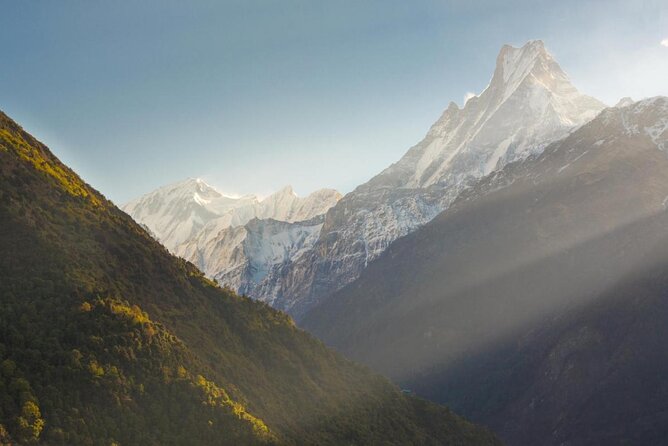
- Mountain views arrive in stages: Dhampus offers Himchuli, Annapurna South, and Fishtail, while the sanctuary provides the most enclosed high-mountain setting.
- The route has a strong cultural side: You pass through Gurung and Magar villages, terraced fields, forest paths, and small teahouse communities.
- Machhapuchhre Base Camp is a major turning point: Trees disappear and the trail enters the open Annapurna Sanctuary.
- Early morning at Annapurna Base Camp matters: The planned wake-up is designed for sunrise on the surrounding peaks.
- The price includes useful trekking basics: A licensed English-speaking guide, meals, accommodation, permits, guide insurance, a first-aid kit, a down jacket, and a sleeping bag are covered.
- A porter costs extra: The listed porter supplement is $220 per person, so add it to the advertised $693.34 price when comparing the total cost.
What the $693.34 price really covers
At $693.34 per person, this trek is not simply a guiding service. The package includes airport pickup and drop-off in a private vehicle, transport between Kathmandu and Pokhara by tourist bus, nine breakfasts, nine lunches, and nine dinners. It also covers accommodation, guide transport and insurance, required permits, paperwork, and a licensed English-speaking guide.
You receive a down jacket and sleeping bag for the trek, both returnable afterward. That can save you the trouble and cost of buying bulky cold-weather gear for one Himalayan trip.
The advertised price does not include a porter. The extra charge is listed as $220 per person. It also excludes international airfare, Nepal visa charges, personal insurance, Kathmandu food and accommodation, hot showers, laundry, phone calls, drinks, snacks, shopping, tips, and emergency costs such as a chartered helicopter.
I would compare the full cost, not just the headline number. Add the porter if you do not want to carry your own pack, then budget for Kathmandu, tips, personal purchases, insurance, and the bus or flight choice. Flights between Kathmandu and Pokhara cost extra, while the tourist bus is included.
The package lists nine nights of accommodation for a nine-day program. That may be correct if the arrival and departure arrangements are counted in a particular way, but the day-by-day description is not perfectly clear. Get the final night-by-night plan in writing before paying.
More Annapurna Base Camp Treks in Kathmandu
- Annapurna base camp trek 5 Days
★ 5.0 · 252 reviews - Annapurna Base Camp Trek
★ 5.0 · 111 reviews - Kathmandu to Annapurna Base Camp (ABC) 5-Day Trek
★ 5.0 · 102 reviews
Starting in Kathmandu and reaching the trail
Airport pickup begins at Tribhuvan International Airport in Kathmandu, with a stated start time of 6:30 a.m. A private vehicle takes you to your hotel. The package itself is described as beginning from the second day of arrival, so do not assume that the airport day includes trekking activities.
Kathmandu accommodation and food are not included. The package does include a complimentary welcome or farewell dinner at a cultural restaurant, which gives you one organized evening without adding another meal to your budget.
Transport to Pokhara is by tourist bus unless you choose a flight for an additional fee. The bus keeps the price down, while a flight may suit you if you value time more than savings. Since the exact departure timing is not stated here, confirm how the Pokhara transfer fits with the first walking day.
The first listed stop is Poon Hill, described with six hours and admission included, but the accompanying text focuses on airport pickup. Poon Hill is also not clearly integrated into the later route description. This is the single biggest planning point to settle with the operator. Ask if Poon Hill is part of your actual trek, a mistaken label, or an optional section.
Day 2: Phedi, Dhampus, and the first mountain views
From Pokhara, you drive to Phedi and begin walking toward Dhampus. The trek takes about four hours, making this a useful introduction to the rhythm of the route rather than a brutal first day.
Dhampus is a pleasant Gurung village with views of Himchuli, Annapurna South, and Machhapuchchhre. These are the first major peaks to frame the journey, and the village setting gives the views a human scale. You are not looking at distant summits from a city road. You are walking through a hillside community with terraced fields and mountain air.
The first day still includes a climb, and even four hours can feel demanding if you have just arrived in Nepal. Use it to judge your footwear, pack weight, and pace. If you hired a porter, keep the small daypack light enough that you can walk comfortably without rushing.
Day 3: Landrung, Jhinudanda, and the rhythm of stone steps
The route continues through oak forest and terraced fields toward Landrung. This village is associated with Gurung, Magar, and Brahmin communities, so the day offers more than mountain scenery.
From Landrung, the path moves down again to Jhinudanda and then toward Chhomrong. The walking time is listed at about five hours. The repeated descents are worth noting because downhill steps can be harder on knees than a steady climb.
Chhomrong is an important point on the approach to the sanctuary. It is also a place where a guide can make a real difference by managing the pace and helping with the practical details of the stay. Past arrangements on this route have included guides named Binod and Sona, with porters such as Rajendra, Bikash, and Rahul. Guide assignments can change, so treat those names as examples rather than a guarantee.
A different kind of day from the same base:
- Everest Base Camp Trek – 14 Days
★ 5.0 · 1,499 reviews - Private Kathmandu Sightseeing Tour | UNESCO World Heritage sites
★ 5.0 · 756 reviews - Everest Base Camp Helicopter Tour landing at Everest View Hotel
★ 5.0 · 668 reviews - Half day cooking class in Thamel kathmandu
★ 5.0 · 607 reviews
Day 4: Sinuwa, rhododendron forest, and the Seti River
The fourth day starts from Chhomrong, crosses a bridge, and climbs to Sinuwa Danda. From there, the trail enters thick rhododendron forest and continues toward Khuldighar.
The route then drops down a long, steep stone staircase. This is one of the days when the distance alone does not tell the full story. Five hours of walking with a major descent can test your legs, especially after the earlier ups and downs.
The trail reaches the Seti River area, where water, forest, and stone paths create a cooler change from the open terraced hills. You will want shoes with a dependable grip and walking poles if you normally use them on steep steps. The schedule is private, so your guide may be able to adjust the pace for your group, but you should not assume that every hard section can be shortened.
Day 5: Bamboo forest, the sacred valley, and Machhapuchhre Base Camp
The fifth day takes about six hours and follows the banks of the Madi River through a sacred valley. Meat and fish are not allowed in this section because of Buddhist and Hindu beliefs. That rule is a small but meaningful reminder that this is a living cultural route, not just a mountain trail.
You continue through bamboo and other forest before reaching Machhapuchhre Base Camp. The name refers to Fishtail, one of Nepal’s most recognizable peaks. At this point, the setting begins to feel more remote and more exposed.
The gradual ascent helps, but the increasing altitude makes pacing important. Keep water and warm layers close at hand. A down jacket and sleeping bag are supplied for the trek, but you still need suitable personal clothing, sturdy footwear, and a daypack.
Day 6: Leaving the trees for Annapurna Sanctuary
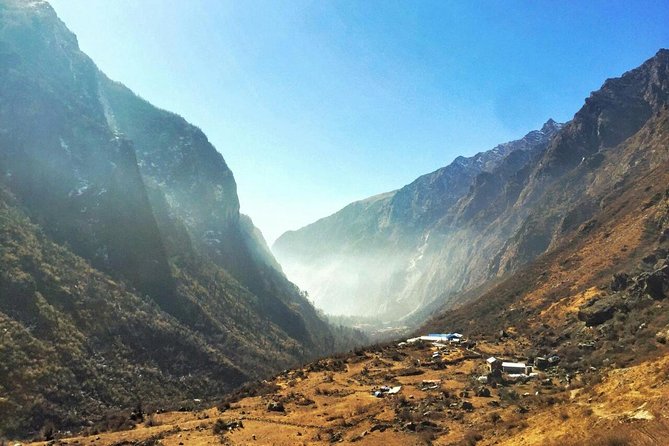
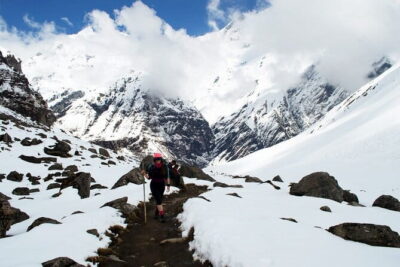
After Machhapuchhre Base Camp, vegetation and trees fall away. The route enters the open wilderness of Annapurna Sanctuary, a broad mountain bowl surrounded by high peaks.
This is the day many people picture when they think of Annapurna Base Camp. The forested approach gives way to bare, high-country ground and wide views of the peaks around you. Annapurna South, Himchuli, and the surrounding range take on a different scale here.
The walk is listed at about five hours, but the altitude and exposed conditions matter more than the clock. You should expect a slower pace, colder air, and fewer comforts than in the lower villages. The first-aid kit carried by the guide is useful support, but it does not replace personal travel and medical insurance. Emergency helicopter costs are not included.
Day 7: Sunrise at Annapurna Base Camp and the long descent
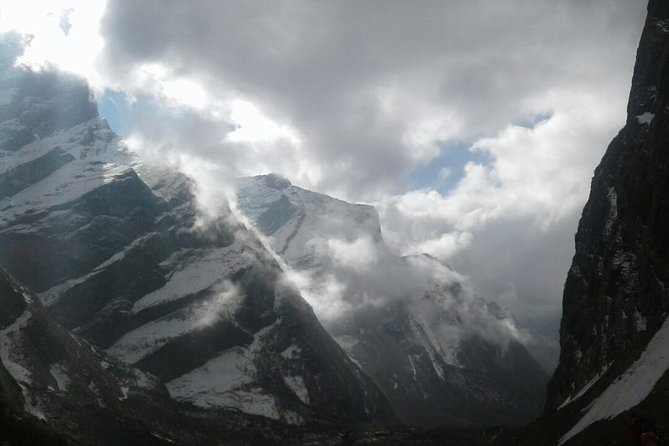
An early wake-up call is planned so you can watch sunrise in the Annapurna Sanctuary. This is a smart use of the morning. The changing light on the surrounding peaks is the main reason to sleep at the base camp rather than simply pass through during daylight.
After breakfast, the trail descends beside the Modi Khola River toward Bamboo Hut. The walking time is about six hours, so the day combines an early start with a substantial downhill stretch.
This is where good pacing pays off. Your knees may feel the descent more than the climb to base camp. Trekking poles, careful footing, and a small pack can make the difference between an enjoyable day and a tiring one.
Day 8: Chhomrong and the hot springs at Jhinu
The route begins with an uphill climb to Sinewa, followed by a descent to the Chomrong Khola River. You then climb again to Chhomrong before making the final descent toward Jhinu.
It is a classic Annapurna day: down, up, down, with a hot-spring stop at the end. The natural hot springs at Jhinu are not just a pleasant extra. They give your legs a chance to recover before the final walking day.
Some past arrangements have been adjusted to allow a night at the hot springs, including an eight-day version for people with tighter schedules. That flexibility is useful, but do not count on a change until the operator confirms it. The published plan lists six hours of walking, and the repeated climbs still require a moderate level of fitness.
Day 9: Nayapul, Pokhara, and the journey back
The last walking day is an easier descent to the banks of the Modi Khola and onward to Nayapul. The walking time is about five hours.
From Nayapul, a private car takes you on a stated one-and-a-half-hour drive back to Pokhara. You are then transferred onward according to the wider transport plan. Since the package includes transportation from Pokhara back to Kathmandu by tourist bus, confirm the timing carefully. You may need a night in Pokhara, or the return may connect directly depending on the operator’s final schedule.
The final day is less about dramatic new scenery and more about completing the route without rushing. Keep some clean clothes and a little patience available. The transition from a mountain trail to road transport can take time.
Why the village route adds value
The Annapurna region is popular for good reason, but the value of this route is not only the big peaks. You pass through villages linked with Gurung and Magar communities, walk beside cultivated terraces, and see how the route changes as it climbs from settled hills to forest and then open high country.
The area is also known for varied plant and animal life. The upper sub-alpine zone can support rare species such as snow leopards and blue sheep, while the wider region has birds including the colorful Impeyan and blood pheasant. Seeing any particular animal is never guaranteed, but the range of habitats gives the trek more depth than a simple mountain photo trip.
The forest sections are especially important. Oak, rhododendron, and bamboo create a gradual visual change before the trail reaches the bare sanctuary. I like this progression because you understand the mountain environment through your feet, not just from a lookout.
Guide support, private format, and personal pace
This is a private trek, meaning only your own group participates. That is useful if you want to walk at a pace that suits your fitness, pause for photographs, or discuss small changes with your guide.
The package provides a licensed English-speaking guide, guide insurance, guide accommodation, transport, and food. The guide also carries a first-aid medical kit. That combination covers several practical costs that can be easy to overlook when comparing trekking packages.
Past trips have included guides such as Binod, Sona, and Shiva’s team, with strong personal attention reported for solo participants and family groups. One solo trekker was paired with Binod and Rajendra, while another group described Binod as flexible when plans changed. This suggests that communication with the guide is likely to be one of the most important parts of your experience.
Still, ask who your assigned guide will be and how porter arrangements work. A porter is not included in the base cost, and the extra $220 per person should be included in your budget from the start.
Who should book this trek
I would recommend this experience to you if you want a classic Nepal trek with a clear goal, strong mountain views, village contact, and organized support. It suits people with moderate physical fitness who are comfortable walking for four to six hours and handling steep stone steps.
It is also a good fit for solo visitors who prefer private guiding rather than joining a large group. The supplied gear, meals, permits, airport transfers, and guide costs simplify planning.
I would be more cautious if you want a relaxed holiday with short walks and lots of spare time. The route has several demanding descents, a high-altitude section, early morning activity, and limited personal comforts. You should also reconsider the base price if carrying your own pack is not realistic and the added porter cost pushes the total beyond your budget.
Small details that make the trip easier
Bring personal travel and medical insurance, since neither is included. Keep money available for tips, hot showers, phone use, laundry, snacks, drinks, and other personal expenses.
Your passport name, number, expiry date, and country are required for every participant at booking. Confirmation is provided at booking, and service animals are allowed according to the supplied details.
The cancellation policy allows a full refund if you cancel at least 24 hours before the local start time. Cancellations or changes inside that window are not accepted for a refund.
Should you book the Annapurna Base Camp trek?
Book it if you want an organized route to Annapurna Base Camp with a private guide, included meals, permits, trekking gear, and a memorable mix of villages, forest, hot springs, and high peaks. The strongest parts are the sunrise in the sanctuary, the gradual change in scenery, and the personal support available through a private format.
Before booking, settle three points: the exact role of Poon Hill on Day 1, the nine-night accommodation plan, and the final transport schedule between Kathmandu and Pokhara. Then add the $220 porter charge and your Kathmandu expenses to the advertised price. If those numbers work and you are ready for real uphill and downhill walking, this is a well-rounded way to reach one of Nepal’s best-known base camps.
FAQ
How long is the Annapurna Base Camp trek?
The advertised trek lasts approximately nine days. The package also lists nine nights of accommodation, so you should confirm the exact overnight schedule before booking.
Where does the experience begin?
The meeting point is Tribhuvan International Airport in Kathmandu, Nepal. Airport pickup is listed for 6:30 a.m.
Is airport pickup included?
Yes. Airport pickup and drop-off in a private vehicle are included.
Is transportation between Kathmandu and Pokhara included?
Yes. Transportation between Kathmandu and Pokhara by tourist bus is included. An optional flight is available at an additional cost.
Is a guide included?
Yes. The package includes a licensed English-speaking trekking guide, along with the guide’s food, accommodation, transportation, and insurance.
Is a porter included?
No. A porter costs $220 per person.
Are meals included?
Yes. The package includes nine breakfasts, nine lunches, and nine dinners.
What equipment is supplied?
A returnable down jacket and sleeping bag are supplied for the trek. The guide also carries a first-aid medical kit.
What level of fitness is required?
A moderate level of physical fitness is required. The route includes walking days of about four to six hours, steep stone steps, repeated climbs and descents, and high-altitude trekking near Annapurna Base Camp.
Recently added around Kathmandu
- Kathmandu Airport Pickup and Drop-off Services★ 5.0 · 3 reviews
- Kathmandu Paragliding★ 5.0 · 3 reviews
- Explore The Beauty Of Langtang Valley In 8-Days Trek★ 5.0 · 3 reviews
- Kathmandu Chandragiri Cable Car and Swayambhunath Private Tour★ 5.0 · 3 reviews
- Kathmandu: Nightlife and Pub Crawl Tour★ 5.0 · 3 reviews
- Kathmandu: Momo Making Class with a Local Chef★ 5.0 · 3 reviews
- Mountain Flight Experience in Nepal★ 4.5 · 3 reviews
- Everest Base Camp Trek★ 5.0 · 3 reviews
Other Annapurna Base Camp Treks worth a look
Kathmandu to Annapurna Base Camp (ABC) 5-Day Trek
Read our review →
This tour also appears in