
REVIEW · KATHMANDU TOURS
Evening Photography Tour of Kathmandu
Kathmandu becomes a different city after sunset. At Boudhanath, butter lamps flicker around a white Buddhist stupa as devotees walk in prayer. Later, at Pashupatinath, chanting, fire, and movement fill the Bagmati River area during the evening aarti ceremony. This private tour gives you access to both moments with a guide who knows where to position you.
I like the small private format, since your guide can spend time on your photography rather than following a fixed crowd. I also like the strong contrast between Buddhist and Hindu worship in one evening. The main consideration is that this is a short, focused outing, not a broad Kathmandu sightseeing tour, and one visitor found the images used to describe it slightly misleading.
Key points for your Kathmandu photo evening
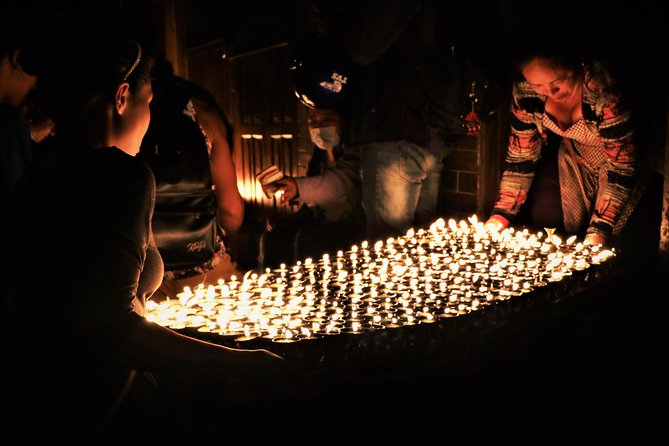
- Boudhanath after dark: Photograph devotees making a clockwise parikrama around the lit stupa while monks and pilgrims place butter lamps.
- Pashupatinath aarti: Watch chanting, hymns, fire rituals, and devotional movement beside the sacred Bagmati River.
- Private transport included: Pickup and travel from central Kathmandu are arranged as part of the experience.
- English-speaking city guide: Guides such as Bikash and Deepa add background on Kathmandu, Nepal, and the religious sites.
- Three to four hours: The evening is compact, with about an hour listed at each main stop and travel time between them.
- $102 per person: The price makes more sense for photographers who value private transport, local guidance, and access to two major sites in one outing.
Why this evening works for photographers
This tour is built around moments rather than monuments. You are not simply ticking off two famous places in daylight. You are going out when religious activity, artificial light, smoke, fire, and human movement give your pictures more atmosphere.
Boudhanath and Pashupatinath also offer two very different subjects. The first is a Tibetan Buddhist pilgrimage center, centered on a large white dome and the steady movement of people walking around it. The second is one of the most important Hindu shrines dedicated to Lord Shiva, where the evening aarti uses chanting, singing, and flames as part of worship.
I like that the guide is expected to help you find worthwhile settings instead of leaving you to wander with a camera and hope for the best. That matters in Kathmandu, where the most meaningful activity may happen in one part of a square while the obvious viewpoint offers a less interesting picture.
The private setup helps here. You can ask why people are walking in a certain direction, what the lamps mean, or where you can stand without getting in the way. You can also spend a little more time on a scene if the light is working well.
This is not described as a technical photography workshop. You should not book it expecting a formal lesson in exposure, composition, or camera settings. It is better understood as a guided cultural outing designed to put you in the right places at the right time.
A few more Kathmandu days to weigh up
- Pokhara: Adventure Paragliding Trip with Photos and Videos
★ 4.6 · 50 reviews - Pokhara: Paragliding Adventure with Photos and Video
★ 4.7 · 44 reviews - Paragliding Tandem Flight from Pokhara with Photos and Video
★ 5.0 · 11 reviews
Boudhanath Stupa and the circle of butter lamps
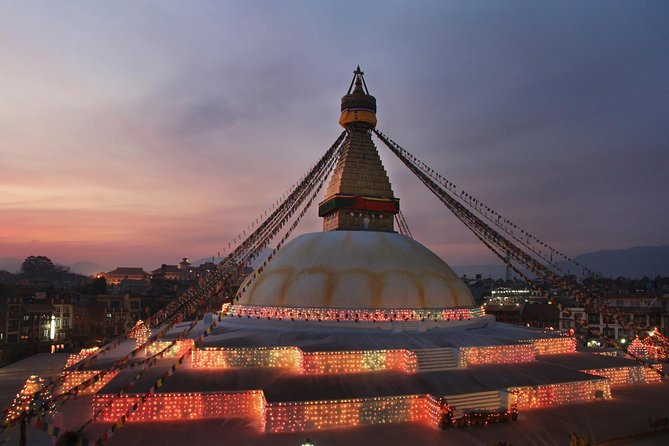
The first stop lasts about an hour, with admission included. Boudhanath is an important pilgrimage center for followers of Tibetan Buddhism, and the evening setting gives the stupa a strong visual presence.
The white dome is lit and decorated. Around it, devotees make a parikrama, or circumambulation, walking around the stupa as part of their religious practice. Monks and other worshippers light butter lamps and pray for the well-being of all sentient beings and for world peace.
For photography, the interest comes from layers. You have the broad shape of the stupa, the repeated movement of people circling it, the small flames of the lamps, and the changing expressions of worshippers. A guide can help you look beyond the standard postcard view and notice details that show how the site is used.
You should treat this as an active religious place, not a staged photo set. Your best pictures may come from observing patiently and keeping your camera work discreet. The tour gives you access and context, but it does not turn private worship into a performance.
One hour is enough for an introduction and a focused set of photographs. It may feel brief if you want to work slowly, try several compositions, or wait for a particular moment. Still, the limited time keeps the evening moving and leaves room for Pashupatinath, which is the more time-sensitive stop.
The lighting is part of the appeal, but it also brings practical limits. Evening images can require steady hands, a higher ISO, or a lens that performs well in low light. The tour includes transport and guiding, not camera equipment, so bring the camera and accessories you normally use. The supplied description says all you need is your camera, but it does not list a tripod or other gear as included.
Pashupatinath and the fire of evening aarti
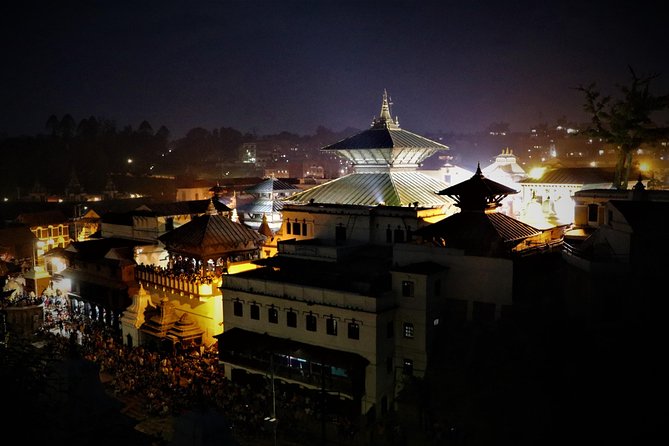
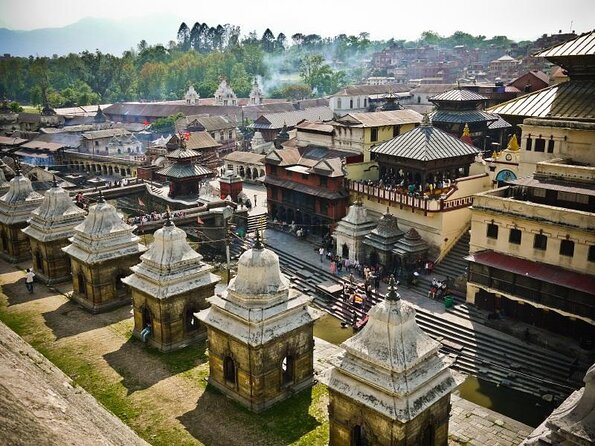
The second main stop is Pashupatinath Temple, another visit of about an hour with admission included. Pashupatinath is a major Hindu shrine dedicated to Lord Shiva. The name is explained as protector of all living beings, a fitting title for a place with such an important role in Hindu worship.
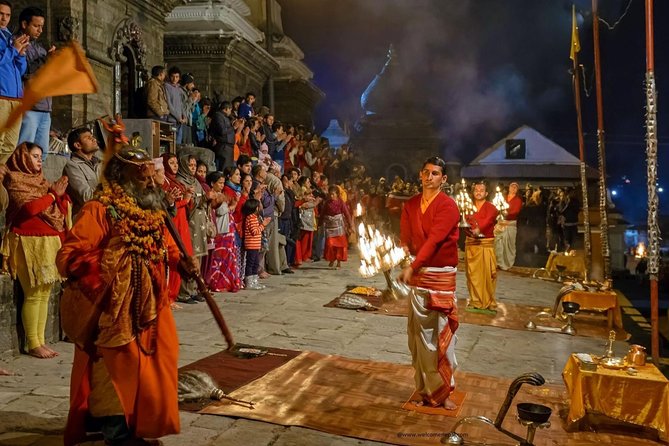
The evening atmosphere changes as the aarti begins. Priests offer light from flames to the gods while sacred Vedic shlokas and hymns are chanted. Singing, fire, and devotional movement create the strongest visual and emotional sequence of the tour.
The aarti is held near the Bagmati River, and the fire ceremony gives you a chance to photograph gestures and patterns rather than only architecture. You might find the most striking frames in the raised lamps, the priests moving in unison, or the response of devotees gathered nearby.
This is also the point where cultural awareness matters most. The ceremony is a living act of worship. Your guide can help explain what is happening and where it is appropriate to stand, but you remain responsible for photographing with care. A good approach is to watch first, then make a few deliberate images rather than firing continuously.
The description says devotees may dance in a trance during the ritual. It also connects the movement of the ceremony with Shiva’s Tandav, a celestial dance associated with Lord Pashupatinath. These details give the ritual more meaning than a simple fire show, and they are exactly the sort of background that can change how you frame a photograph.
The timing of this stop is important. Unlike a monument you can visit at any hour, aarti is an evening ritual. The tour is useful because it takes you there as the ceremony is happening, rather than asking you to figure out the timing alone.
What the private guide adds between the two sites
The guide is more than a driver who opens a vehicle door. The experience includes an English-speaking licensed city guide, and the time in the car can add useful context about Kathmandu and Nepal.
One published account singled out Bikash for his professional manner and broad knowledge of Kathmandu and its heritage sites. Another described Deepa as providing well-informed help during the night experience. Guide assignments can vary, but these names give you an idea of the kind of local support associated with the tour.
The guide’s practical value is greatest in three areas:
- Finding a useful position for photographs
- Explaining the religious activity you are seeing
- Helping you understand the city between the two stops
That second point is easy to underestimate. Without context, Boudhanath can look like a beautiful white dome surrounded by people walking in circles. Pashupatinath can look like priests raising flames beside a river. With explanation, you understand that the movement, lamps, chanting, and fire are part of distinct traditions.
A private guide can also adjust the conversation to your interests. If you already know the basic history, you can ask about photography locations or present-day religious practice. If these sites are new to you, you can use the drive to get a clearer introduction to Kathmandu.
The car journey is not dead time. One person who had already seen the sites during the day still found the evening outing worthwhile because the guide offered additional information while driving between locations. That is useful if you have visited Boudhanath or Pashupatinath before but want to see them under different conditions.
More things to do after dark in Kathmandu:
- Kathmandu Sunset Tour by Rickshaw Including Durbar Square Visit
★ 5.0 · 73 reviews - 3 Nights 4 Days Chitwan National Park with Tower Night Stay
★ 5.0 · 41 reviews - 3 night 4 Day Yoga & Ayurveda Retreat to Detox the Body & Mind, Nepal
★ 5.0 · 37 reviews - Kathmandu: Pashupatinath Temple Evening Aarati Tour
★ 5.0 · 36 reviews
How much value do you get for $102?
At $102 per person, this is not the cheapest way to spend an evening in Kathmandu. The value depends on what you would otherwise have to arrange yourself.
The price includes private transportation, entrance fees, taxes, and an English-speaking licensed city guide. You are paying for a compact evening with two major religious sites, transport between them, and help finding the right moments for photography.
For a solo photographer or a small group, the private format can make the cost reasonable. You are not paying only to be driven to famous landmarks. You are also buying time efficiency. In three to four hours, the tour links two places that might be awkward to combine independently at night, especially if you do not know the city or the ceremony schedule.
Group discounts are offered, though the exact discount is not specified. If you are traveling with friends or family members who also want the cultural experience, ask about the group rate before booking. The cost may feel easier to justify when divided among several people, provided everyone understands that the tour is centered on religious sites and photography.
The price does not include dinner, bottled water, or alcoholic drinks. Plan around that. The experience is short enough that you may prefer to eat before or after, but no meal is built into the evening.
I would compare this tour with the cost and effort of arranging a private car, site admissions, and a guide separately. If you only want a quick look at the two landmarks, $102 may feel high. If you care about low-light photography and want a guide to handle the evening movement between sites, the package offers a clearer return.
Timing, comfort, and what to bring
The total duration is approximately three to four hours. Each named stop is allocated about one hour, with the remaining time used for transport and the guide’s commentary.
Pickup is offered, and private transportation from central Kathmandu is included. The exact pickup area should be confirmed when you book, since the information specifies central Kathmandu rather than every hotel or neighborhood.
Bring your camera, spare memory capacity, and a charged battery. The tour description does not specify a particular camera type, lens, or tripod, so choose equipment you can manage comfortably in evening conditions. A simple camera is enough to participate, but your results will depend on how well it handles low light and movement.
You should also carry water, since bottled water is not included. Dinner is not included either. The experience is near public transportation, and most people can participate, but the available information does not provide detailed accessibility notes. If you have specific mobility needs, ask the provider before booking.
Dress and behave as you would for a religious site. The tour is about observing worship, not directing it. A quiet, patient approach will serve you better than chasing dramatic pictures.
Who should book this Kathmandu evening?
I would recommend this experience to photographers who want a purposeful night outing rather than a general city tour. It suits you especially well if you want help locating good viewpoints and prefer private transport over working out the route alone.
It is also a good fit if you are curious about both Buddhist and Hindu traditions. The pairing of Boudhanath and Pashupatinath gives the evening a clear shape, with one stop focused on circumambulation and butter lamps, and the other on aarti, chanting, and fire.
You may also appreciate it if you have already seen one or both sites by day. The evening light and ceremonies create a different experience, and the guide’s commentary can add value even when the landmarks themselves are familiar.
I would hesitate if you want a full photography course. There is no stated promise of instruction in camera technique, editing, or composition. I would also hesitate if you prefer a relaxed meal-based evening, since food and drinks are not provided.
The compact schedule may not suit someone who wants to spend several hours at one site. You get about an hour at Boudhanath and about an hour at Pashupatinath, so the tour favors variety over extended, patient shooting.
Should you book the Evening Photography Tour of Kathmandu?
Book it if you want to photograph two major religious sites at their most active evening moments and you value a private guide who can explain what you are seeing. The combination of Boudhanath’s butter lamps and Pashupatinath’s fire ceremony gives you genuine cultural subject matter, not just nighttime views of buildings.
The 4.9 out of 5 rating from nine published ratings supports the impression that the guide service is a major strength. Names such as Bikash and Deepa are associated with helpful, professional guiding, although your assigned guide may be different.
Skip it if your main goal is a broad introduction to Kathmandu, a dedicated technical workshop, or a food experience. For the right photographer, though, the $102 price buys an efficient, well-focused evening with transport, admission, and local interpretation included.
Free cancellation is available if you cancel at least 24 hours before the start time. The experience can also be moved or refunded if poor weather or an insufficient number of participants causes cancellation.
FAQ
How long does the Evening Photography Tour of Kathmandu last?
The tour lasts approximately three to four hours, including transportation between the two main stops.
Where does the tour go?
It visits Boudhanath Stupa and Pashupatinath Temple in Kathmandu.
Is transportation included?
Yes. Private transportation is included, and pickup is offered from central Kathmandu.
Is this a private tour?
Yes. Only your group participates in the private activity.
Is a guide included?
Yes. An English-speaking licensed city guide is included.
What happens at Boudhanath?
You can see devotees making a parikrama around the stupa, while monks and worshippers light butter lamps and pray.
What happens at Pashupatinath?
You can watch the evening aarti, which includes chanting, hymns, singing, and priests offering light from flames during a sacred Hindu ritual.
Are entrance fees included?
Yes. Admission tickets for both listed stops are included.
Is food included?
No. Dinner, bottled water, and alcoholic beverages are not included.
Can I cancel for a refund?
Yes. You can cancel at least 24 hours before the experience start time for a full refund. Changes or cancellations made less than 24 hours in advance are not accepted for a refund.
Recently added around Kathmandu
- Kathmandu Paragliding★ 5.0 · 3 reviews
- Kathmandu Airport Pickup and Drop-off Services★ 5.0 · 3 reviews
- Explore The Beauty Of Langtang Valley In 8-Days Trek★ 5.0 · 3 reviews
- Kathmandu Chandragiri Cable Car and Swayambhunath Private Tour★ 5.0 · 3 reviews
- Kathmandu: Nightlife and Pub Crawl Tour★ 5.0 · 3 reviews
- Mountain Flight Experience in Nepal★ 4.5 · 3 reviews
- Kathmandu: Momo Making Class with a Local Chef★ 5.0 · 3 reviews
- Everest Base Camp Trek★ 5.0 · 3 reviews
Other Kathmandu Tours worth a look


Private Kathmandu Sightseeing Tour | UNESCO World Heritage sites
Read our review →
Everest Base Camp Helicopter Tour landing at Everest View Hotel
Read our review →


Nagarkot Sunrise View and Day Hiking from Kathmandu
Read our review →
Full Day 7 UNESCO Tour with Lunch – Private/Group
Read our review →
This tour also appears in