
REVIEW · ANNAPURNA BASE CAMP TREKS
Annapurna Base Camp, Nepal 10 days
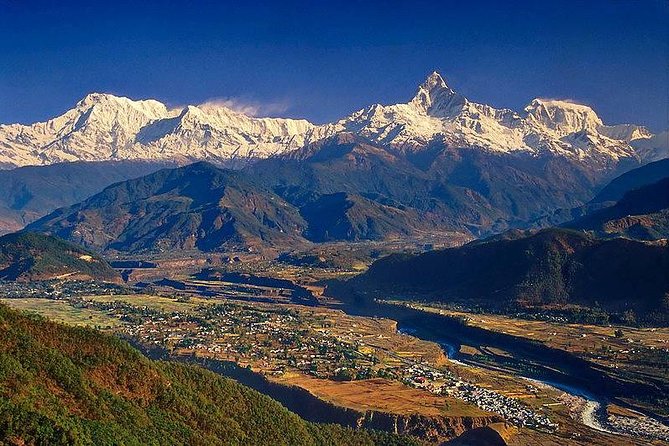
Annapurna Base Camp gives you a close look at the high Himalaya without asking you to spend weeks on the trail. You travel from Kathmandu to Pokhara, walk through Gurung villages and cool bamboo forests, then reach the mountain sanctuary beneath Annapurna and Machhapuchhre.
I like the private format, which lets you slow down when the stone steps bite or keep moving when your legs feel good. I also like the steady change in scenery, from village paths and suspension bridges to high, cold valleys and huge snowy peaks. The main consideration is fitness: three to eight hours of walking each day, with steep climbs, long descents, and altitude to manage.
Key points before you book
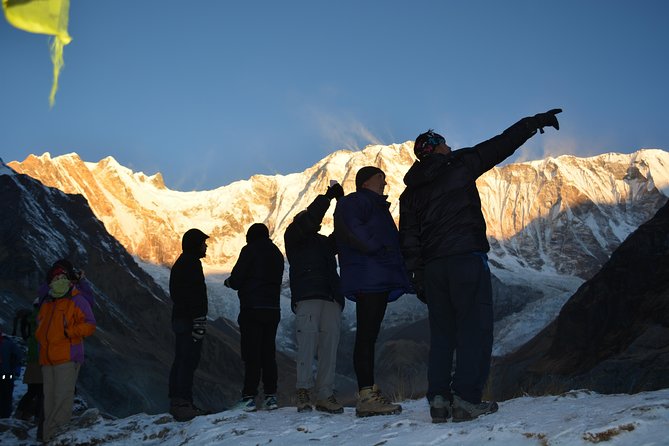
- A 10-day route to Annapurna Base Camp: Reach the base camp after passing through Ghandruk, Chhomrong, Bamboo, Deurali, and Machhapuchhre Base Camp.
- Private pacing: Your guide can adjust the walk to suit your group rather than keeping you to a large group timetable.
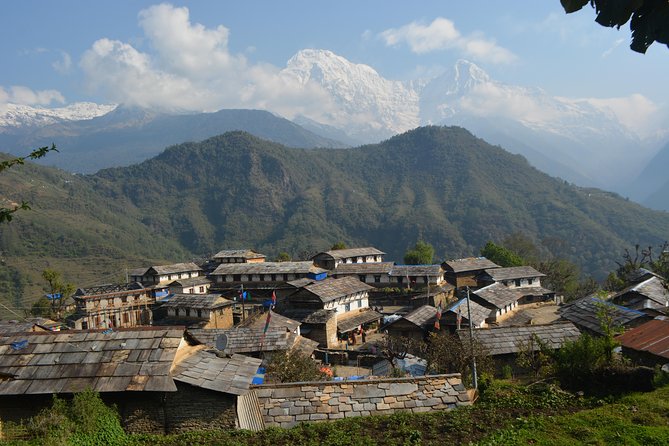
- Gurung culture on the trail: Ghandruk offers time in a village largely inhabited by the Gurung community, with a possible visit to its Gurung museum.
- Simple mountain lodging: Nights are split between hotels and teahouses, with hot water, hot showers, Wi-Fi, and battery charging costing extra during the trek.
- Most food is covered: The package includes 10 breakfasts, 8 lunches, and 7 dinners, so you mainly budget for drinks, services, and personal extras.
- Strong guide reputation: Guides including Sandip, Resham GC, Nitesh, and Raju are praised for care, support, and help on the trail.
The route begins with a long ride to Pokhara
Your first day is mostly about getting into position. You leave Kathmandu at about 6:15 am and ride an air-conditioned tourist bus to Pokhara, roughly 200 kilometers away. The scheduled drive takes about seven hours.
This is not a scenic transfer you should treat as a quick hop. A seven-hour road journey can feel long, especially after an early start, but it moves you from the capital to the main gateway for this trek without adding a separate flight cost. The bus also keeps the first day simple.
Pokhara is your base before the walking begins. The route then heads toward Siwai, so confirm the exact pickup plan and road timing with the operator before departure. The supplied price is $848 per person, and that figure includes transport in an air-conditioned vehicle, but the itinerary does not spell out every road transfer detail.
More Annapurna Base Camp Treks in Kathmandu
- Annapurna base camp trek 5 Days
★ 5.0 · 252 reviews - Annapurna Base Camp Trek
★ 5.0 · 111 reviews - Kathmandu to Annapurna Base Camp (ABC) 5-Day Trek
★ 5.0 · 102 reviews
Day 2 brings you to Gurung country in Ghandruk
After breakfast, you drive about two and a half hours to Siwai. From there, the trek starts on foot, with around four hours of walking to Ghandruk.
Ghandruk is one of the most appealing early stops because it gives the trek a human setting before the higher mountain sections take over. The village is largely Gurung, and if time allows, you may visit the Gurung museum. That cultural element matters. This is not just a fitness route from one bed to another. You get a look at the communities that live along the Annapurna trail.
The day is manageable for a fit hiker, but it is still your first real test. Use it to learn your guide’s pace, adjust your pack, and avoid the common mistake of walking too fast at the start. Your overnight accommodation is in a teahouse, part of the basic mountain lodging included in the package.
Day 3 offers big views before Chhomrong
The next section takes about six hours and includes a climb of roughly one hour to Kimrungdanda. Along the way, you can see Annapurna South, Hiunchuli, Machhapuchhre, also called Fishtail Mountain, and Gangapurna.
This is one of the most rewarding stretches for anyone who likes mountain walking with frequent changes in scenery. You move through hill country, gain height, and begin to see why the Annapurna Sanctuary is such a popular destination. The peaks are not distant background decoration here. They become part of the route itself.
Chhomrong is an important trail junction and a practical overnight area. The approach involves real climbing, so do not judge the day by distance alone. A private guide is useful here because your party can pause for water and photographs without feeling that it is holding up a larger group.
The Chhomrong steps are short on mercy
Day 4 is about five hours, but the route is not easy simply because the clock says five. Leaving Chhomrong means descending around 2,500 stone steps, crossing the Chhomrong Khola on a swaying suspension bridge, then climbing toward Sinuwa.
This is the kind of day that rewards trekking poles and patient knees. Descending first may sound gentle, but long stone stairways can be harder on your legs than a steady uphill trail. After Sinuwa, the path continues through forest toward Kuldighar and the Bamboo area.
The forest provides shade and a cooler feel, though damp conditions can make the trail slick. You should expect simple teahouse facilities and should not assume that every comfort at your city hotel will be available in the mountains.
A different kind of day from the same base:
- Everest Base Camp Trek – 14 Days
★ 5.0 · 1,499 reviews - Private Kathmandu Sightseeing Tour | UNESCO World Heritage sites
★ 5.0 · 756 reviews - Everest Base Camp Helicopter Tour landing at Everest View Hotel
★ 5.0 · 668 reviews - Half day cooking class in Thamel kathmandu
★ 5.0 · 607 reviews
Bamboo and Deurali mark the higher route
On Day 5, you walk from Bamboo to Deurali at about 3,230 meters, or 10,595 feet. The walking time is listed at four to five hours.
The bamboo forest is described as damp and cold, and the trail climbs steadily with fewer sharp sections. After Himalaya Hotel, the route becomes more open as you continue toward Deurali. This is a useful transition day. The trees begin to thin, the air feels more like a high mountain environment, and the next day’s base camp push comes into view.
Altitude now deserves your full attention. The itinerary identifies this as a high-altitude trek and recommends moderate physical fitness. Walk at a pace that allows you to talk, drink regularly, and tell your guide early if you feel unwell. The private setup helps because the day can be handled at your group’s pace, but it does not remove the physical demands.
Day 6 reaches Machhapuchhre Base Camp and Annapurna Base Camp
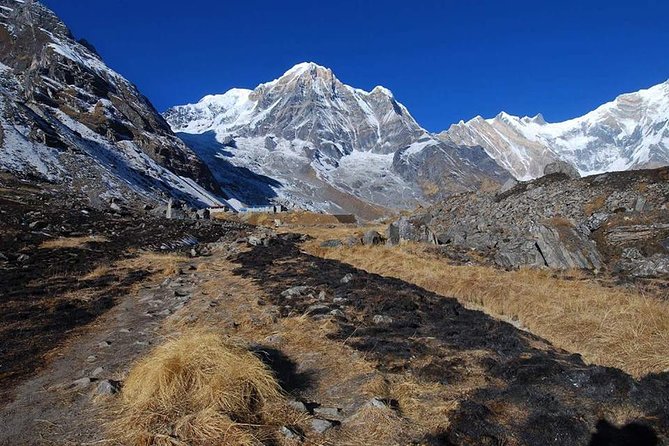
The sixth day is the central challenge. The trail climbs through a river bed and then follows a steep mountainside. The stretch from Bagar to Machhapuchhre Base Camp is described as somewhat strenuous.
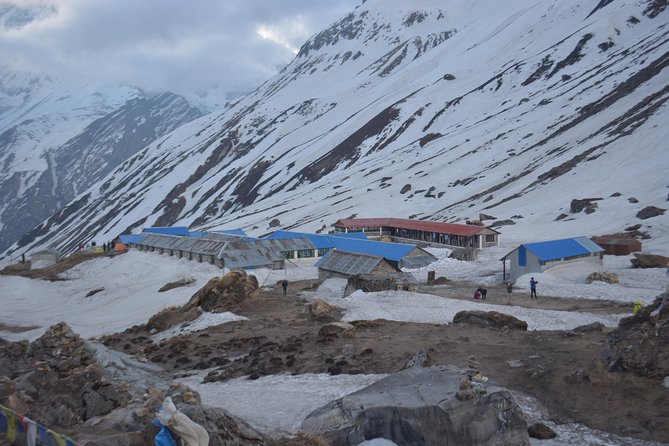
At Machhapuchhre Base Camp, you get an important pause before continuing toward Annapurna Base Camp. The route places you inside the mountain sanctuary, with high peaks enclosing the valley. The final approach is the reason most people choose this trek, and the setting changes from forest walking to exposed alpine terrain.
The day is scheduled for about six hours, though conditions and pace can affect that. Do not treat the time estimate as a guarantee. Snow, weather, trail conditions, or a slower pace can change the feel of the walk. Your guide should help you judge the final push sensibly.
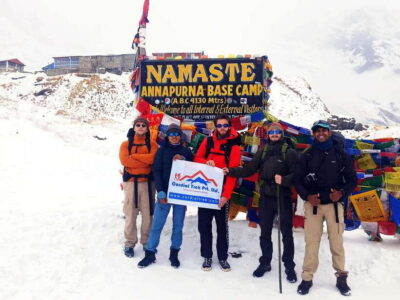
Reaching Annapurna Base Camp is less about checking a point on a map than about seeing the mountains from close range. You stand beneath one of the world’s tallest mountains, surrounded by the dramatic peaks of the Annapurna area. Keep your expectations practical: this is a trekking destination with teahouse accommodation, not a polished resort.
The return route has its own demands
Day 7 retraces the route from Annapurna Base Camp to Bamboo. The schedule allows about eight hours, making it the longest walking day in the trip plan.
Although most of the route is downhill, that does not make it effortless. Descending for hours can punish your knees and toes, especially after the base camp climb. The reward is that you already know the route and can focus more on the changing mountain views rather than route-finding.
Your guide’s role remains important on this day. A good pace should protect your energy for the final sections, not simply get you to Bamboo as early as possible. The operator’s associated guides, including Sandip, Resham GC, Nitesh, and Raju, receive repeated praise for being caring, cheerful, and helpful. You should confirm who will lead your own departure, since guide assignment is not fixed in the information provided.
Jhinu Danda adds a different kind of stop
From Bamboo, Day 8 climbs to Kuldighar, descends to Chhomrong Khola, climbs the stone steps to Chhomrong, and then drops to Jhinu Danda. The walking time is about six hours.
This is another up-and-down day, so the route may feel more demanding than the distance suggests. Jhinu Danda is a useful change of pace after the high point of the trek. The itinerary identifies it as the resting stop, giving you a chance to recover before leaving the trail.
Do not expect a relaxed final day simply because you are descending in altitude. The repeated steps and uneven trail still require care. Pack your day bag so essentials are easy to reach, and keep some energy in reserve.
Day 9 returns you to the road and Pokhara
The final walking day takes about six hours from Jhinu Danda toward Siwai. Along the way, you can see the western hills of Nepal and wild beehives under a cliff. Lunch is taken on the route, and the trek ends at Siwai, where you board a vehicle.
This is a satisfying finish because the route shifts back from high mountain walking to road access and lower hills. The beehives are a small but memorable detail, and they help keep the final day from feeling like a mere exit.
You then return to Pokhara. The schedule can make this a long day, especially after several hours on foot, so keep your expectations modest. You will likely value a shower, a proper bed, and a slower evening more than an ambitious extra activity.
Day 10 is a road day back to Kathmandu
After breakfast, you drive back to Kathmandu, with the trip plan allowing about seven hours. The schedule also notes that you can take a flight instead for an additional $100.
The bus is the better value if you can tolerate the longer ride. The flight is worth considering if time matters more than cost, but the additional price is not included in the $848 package. Once back in Kathmandu, you have time to rest, look around shops, and buy souvenirs.
Because the return day is long, avoid booking an important international connection too tightly against it. The supplied information does not give a guaranteed arrival time, so leave breathing room.
What the $848 price really covers
At $848 per person, this trip offers solid value for a private 10-day trek, especially because it combines transport, lodging, guiding, and most meals. You receive 10 breakfasts, 8 lunches, and 7 dinners, along with hotel and teahouse accommodation.
That does not mean the trip is all-inclusive. During the trek, you pay separately for hot water, hot showers, Wi-Fi, and battery charging. Tips for the crew are also not included. You should plan for these extras rather than treating the advertised price as your final spending total.
The private format adds value if you care about flexibility or need a slower pace. It may be less important if you prefer meeting a larger group or want the lowest possible trekking cost. The best comparison is not simply price against price. Compare what each operator includes for guide support, transfers, meals, and accommodation.
The teahouse setup is part of the experience
The accommodation mixes hotels and teahouses. In the lower towns, you get a more familiar hotel setting. Higher on the route, the teahouses keep the focus on shelter, food, and recovery.
Past trekkers associated with this operator describe the rooms as comfortable and clean, and one account specifically highlights good sleep and good food. Still, the extra charges for hot showers, hot water, Wi-Fi, and charging tell you what to expect: mountain basics, with certain comforts sold separately.
Bring a power bank, use charging opportunities wisely, and carry a small amount of cash for personal services. The exact facilities can vary by stop, so ask the company for current details before departure.
How the private guiding affects your day
This is a private activity, so only your group participates. That is useful on a route with large variations in walking ability. You can stop for views, take a slower pace on the stone steps, or move more efficiently when conditions are good.
Guide quality matters greatly on a high-altitude trek. Sandip is repeatedly singled out for cheerful support and practical help. Resham GC is described as caring and welcoming, while Nitesh and Raju are also associated with strong trail support. Ganesh Neupane, the company owner, is noted for professional service and trip arrangements.
These names give you useful reference points, but they do not confirm who will guide your booking. Ask for the assigned guide’s name and experience before you leave Kathmandu. You should also make sure the guide understands your fitness level and any need for a slower schedule.
Who should book this Annapurna trek?
I would recommend this route to a fit person who wants a serious mountain walk with a clear 10-day structure. It suits you if you like changing scenery, simple lodging, village contact, and long days on foot more than luxury or a relaxed sightseeing schedule.
It can also work well for a solo person who wants private support rather than tackling the route alone. The operator has arranged solo ABC hikes and group treks, but this specific booking is private, so confirm how solo pricing and guide arrangements apply to you.
I would hesitate if you dislike long road transfers, shared teahouse-style facilities, steep steps, or uncertain mountain weather. The route requires moderate fitness, and the altitude means you should not book it as a casual walking holiday.
The cancellation terms are generous if you plan ahead. You can receive a full refund when cancelling at least 24 hours before the local start time. Poor weather or failure to meet the minimum number of participants can lead to a new date, an alternative experience, or a full refund.
Should you book it?
Book this Annapurna Base Camp trek if you want a private, guided route with most meals and accommodation handled for you. The best parts are the progression from Ghandruk’s Gurung culture to the high sanctuary, the close mountain views, and the chance to set your own walking rhythm.
Before paying, confirm the guide, the exact hotel and teahouse plan, the transfer schedule, and the expected extra costs for hot showers, Wi-Fi, charging, and tips. If you are fit and comfortable with basic mountain conditions, the $848 price is appealing. If you want easy transport and hotel comfort every night, choose a different kind of Nepal trip.
FAQ
How long is the Annapurna Base Camp experience?
The experience lasts approximately 10 days, including road travel between Kathmandu and Pokhara, the trek to Annapurna Base Camp, the return to Pokhara, and the drive back to Kathmandu.
Where does the trek begin?
The trip starts in Kathmandu. You take a tourist bus to Pokhara on Day 1, then drive to Siwai on Day 2 before beginning the trek on foot.
How many hours do you walk each day?
The itinerary describes walking days of roughly three to eight hours. The longest listed trekking day is Day 7, from Annapurna Base Camp to Bamboo, at about eight hours.
What meals are included?
The package includes 10 breakfasts, 8 lunches, and 7 dinners. Other food and personal drinks are not specified as included.
Is accommodation included?
Yes. Accommodation in hotels and teahouses is included. Hot water, hot showers, Wi-Fi, and battery charging during the trek are not included.
Is this a private tour?
Yes. Only your group participates, and the private format can be customized to suit your needs.
What happens if the weather cancels the trek?
If poor weather causes cancellation, you will be offered a different date or a full refund. You can also cancel for a full refund if you do so at least 24 hours before the experience start time.
Recently added around Kathmandu
- Kathmandu Paragliding★ 5.0 · 3 reviews
- Kathmandu Airport Pickup and Drop-off Services★ 5.0 · 3 reviews
- Explore The Beauty Of Langtang Valley In 8-Days Trek★ 5.0 · 3 reviews
- Kathmandu Chandragiri Cable Car and Swayambhunath Private Tour★ 5.0 · 3 reviews
- Kathmandu: Nightlife and Pub Crawl Tour★ 5.0 · 3 reviews
- Mountain Flight Experience in Nepal★ 4.5 · 3 reviews
- Kathmandu: Momo Making Class with a Local Chef★ 5.0 · 3 reviews
- Everest Base Camp Trek★ 5.0 · 3 reviews
Other Annapurna Base Camp Treks worth a look
Kathmandu to Annapurna Base Camp (ABC) 5-Day Trek
Read our review →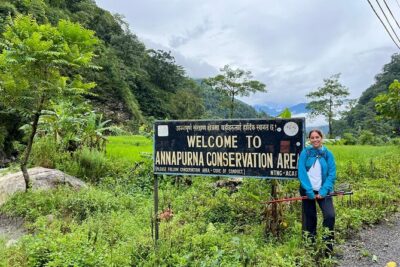
This tour also appears in