
REVIEW · ANNAPURNA BASE CAMP TREKS
Annapurna Base Camp Trek – 10 Days
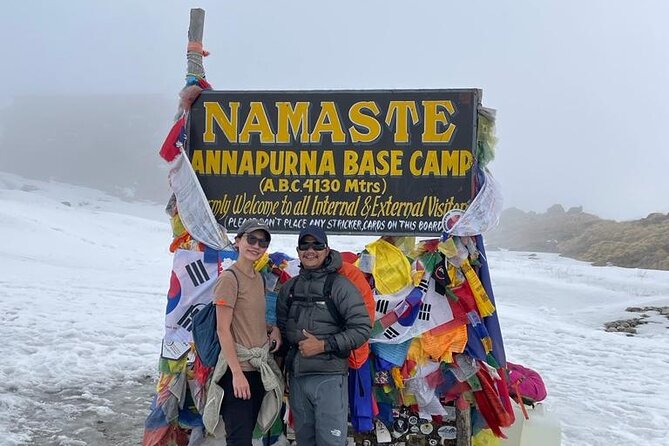
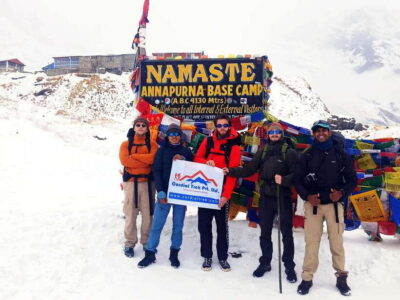
The prize here is Annapurna Base Camp at 4,130 meters, reached by a trail that moves from Nepali villages and rice farms into rhododendron forests and a high mountain sanctuary. You get village life, Himalayan views, and a real base-camp finish without signing up for a long expedition.
I like the practical setup: airport transfers, Kathmandu and Pokhara hotels, tea-house nights, transport, guide costs, and a first-aid kit are included. I also like the small private-group format, capped at 12 people, with guides such as Santosh, Raju Simkhada, and Asok praised for friendly support and careful attention.
The main caution is the pace. A 10-day schedule is tight for a trek reaching 4,130 meters, especially with road journeys between Kathmandu and Pokhara. You need decent fitness, proper insurance, and a willingness to accept changing weather, basic mountain lodging, and long days on stone steps.
Key details before you book
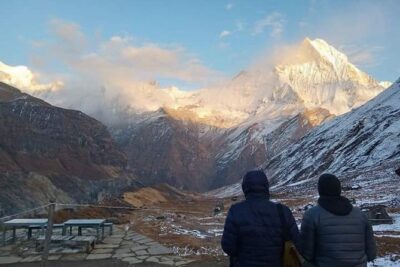
- Base Camp at 4,130 meters: The trek ends inside the Annapurna Sanctuary, below the giant peaks of the Annapurna range.
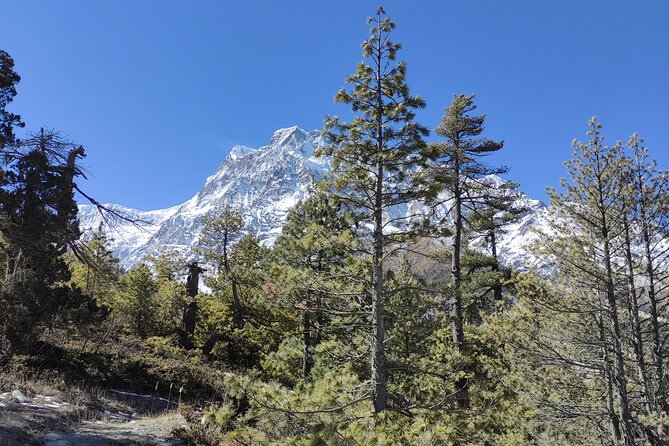
- Village-to-mountain route: You pass through Ghandruk, Chhomrong, Sinuwa, Bamboo, Jhinu Danda, and other traditional settlements.
- Six tea-house nights: Mountain lodging is part of the price, giving you a simpler and more local stay than a standard hotel.
- Private group of up to 12: Your party travels together rather than joining a large public departure.
- Transport is arranged: Tourist buses connect Kathmandu and Pokhara, while private car transfers cover the Pokhara trailhead section.
- Budget around $899 before personal extras: The listed price is $699, with about $150 suggested for excluded meals and $50 for gratuities.
What the $699 price really covers
At $699 per person, this trek offers a useful amount of coverage. You receive airport transfers, two nights in Kathmandu, two nights in Pokhara, six nights in tea houses, breakfast, tourist-bus transport between Kathmandu and Pokhara, and a private car between Pokhara and Nayapul.
The guide package is also broad. It includes the government-licensed trekking guide’s food, drinks, accommodation, insurance, salary, equipment, transportation, and local taxes. First-aid supplies, government taxes, VAT, service charges, a farewell meal with cultural entertainment, and a tour T-shirt are included too.
You should not treat $699 as the final personal budget. Lunch and dinner in Kathmandu and Pokhara are excluded, with an estimated cost of $150 per person. Gratuities are listed at $50 per person. That brings the practical expected total to about $899, before personal shopping, gear, drinks beyond the stated inclusions, or other individual expenses.
For a private 10-day trek with accommodation, transport, and guide support included, the price is attractive. The tradeoff is that the itinerary leaves little spare time. A slower schedule would usually give you more room to rest, but this package is built around fitting the trek into 10 days.
More Annapurna Base Camp Treks in Kathmandu
- Annapurna base camp trek 5 Days
★ 5.0 · 252 reviews - Annapurna Base Camp Trek
★ 5.0 · 111 reviews - Kathmandu to Annapurna Base Camp (ABC) 5-Day Trek
★ 5.0 · 102 reviews
Day 1: Kathmandu arrival and Thamel
Your first day begins with a welcome at Tribhuvan International Airport. A staff member takes you to your Kathmandu hotel, where you meet the guide and settle in.
Thamel is listed as a stop, and the plan also names Kathmandu Durbar Square and Pashupatinath Temple. The schedule gives the day to Kathmandu, but it does not spell out exact visiting times for each place. Think of this as an arrival and orientation day rather than a full sightseeing tour.
That distinction matters. If your flight arrives late, you may have little time beyond the hotel and Thamel. You can also expect airport traffic and a busy first impression of the capital. Send your arrival details in advance so the pickup can be arranged.
Day 2: The road to Pokhara
The route then shifts west to Pokhara. The published plan refers to an early departure, a bus-park transfer, and a tourist bus toward Nayapul and Pokhara. It also names Swayambhunath and Chandragiri Hills in the Kathmandu section, which suggests the schedule may contain extra sightseeing notes or a compressed version of the wider program.
You should clarify this day with the operator before departure. The important practical point is that Kathmandu to Pokhara is a road transfer, not a flight, and road time can take much of the day. The bus follows river valleys and offers broad views along the route, but this is transport rather than a trekking day.
Pokhara is a pleasant change of pace, with Lakeside as the base. The package includes two nights in Pokhara in a three-star hotel with breakfast. That gives you a more comfortable start and finish around the harder mountain section.
Day 3: Ghandruk to Chhomrong
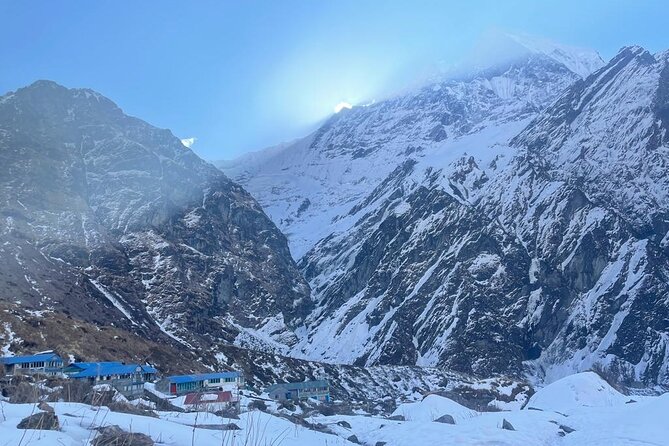
The walking section moves through Ghandruk and toward Chhomrong. The route passes woodlands and rhododendron-lined paths, with repeated uphill and downhill sections on uneven ground.
Chhomrong is one of the important settlements on this route, and reaching it gives you a clear sense that the trek is becoming more serious. The day is described as tough, and that warning deserves attention. Even at lower elevations, constant steps and uneven trails can tire your legs quickly.
Poon Hill is also listed on this day. The schedule does not explain whether it is a formal stop, an optional detour, or a leftover itinerary note. Ask for the exact walking plan before booking if Poon Hill is important to you. A visit there can affect both timing and effort.
More Hiking Tours in Kathmandu
- Everest Base Camp Trek – 14 Days
★ 5.0 · 1,499 reviews - Everest Base Camp Trekking
★ 5.0 · 485 reviews - Nagarkot Sunrise View and Day Hiking from Kathmandu
★ 5.0 · 471 reviews - Annapurna Circuit Trek with Tilicho Lake
★ 5.0 · 368 reviews
Day 4: The stone steps to Sinuwa
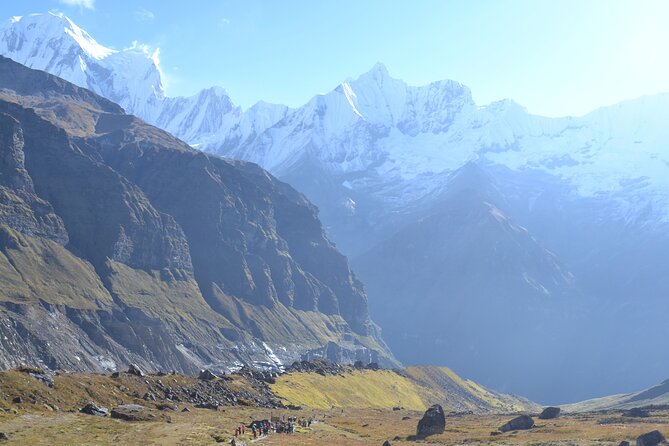
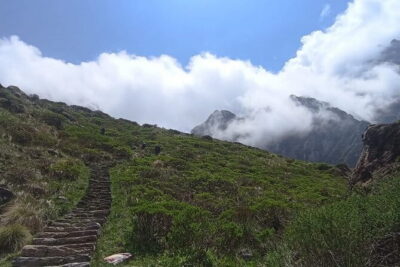
From Chhomrong, the trail heads toward the Chhomrong Khola. After crossing the river, you climb roughly 2,500 stone steps toward Sinuwa.
This is one of the trek’s defining physical tests. The distance alone does not tell you how hard the day will feel. A long staircase, repeated climbs, and mountain weather can make this section demanding even for people who exercise regularly.
The reward is a changing setting, with forest and mountain views along the way. You will spend the night in a tea house, where the accommodation is functional rather than luxurious. Six nights of this type of lodging are included, so pack with basic facilities and simple rooms in mind.
Day 5: Through the Annapurna Sanctuary to Base Camp
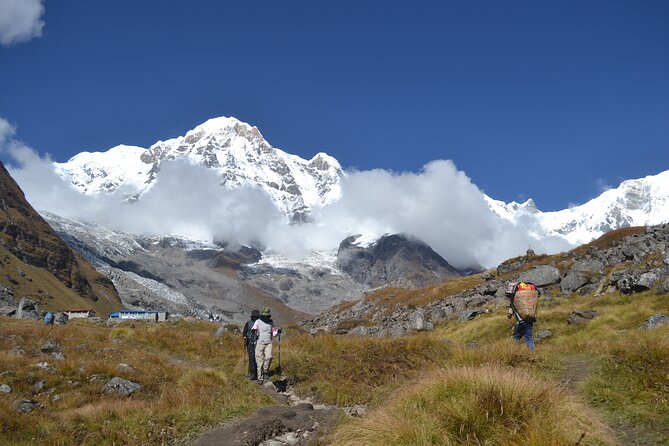
The route continues beside the river toward Bagar, then climbs toward Machhapuchhre Base Camp. From there, the trail leads farther into the high mountain area and onward to Annapurna Base Camp.
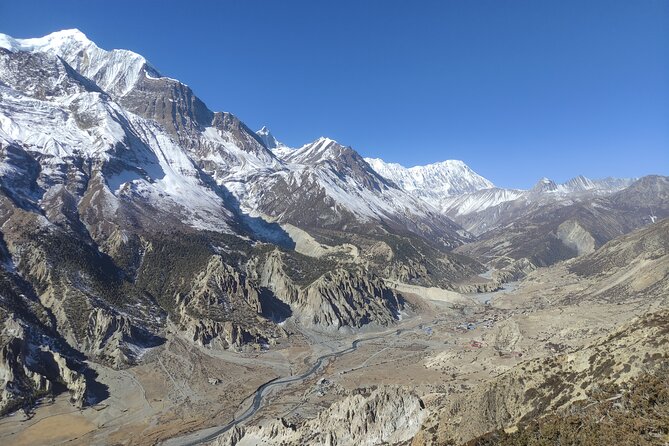
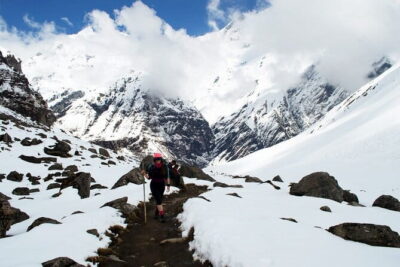
This is the central day of the trip. The terrain becomes more exposed and strenuous, and the altitude reaches its highest point at approximately 4,130 meters. The Annapurna range surrounds the sanctuary, giving you the kind of close mountain setting that makes the long approach worthwhile.
The schedule lists time in the Annapurna Region and beside the Annapurna Mountain Range, but these are not separate attractions with ticketed entries. They describe the places you pass through on foot. The value is in the gradual change from villages and forest to high rock, snow, and enormous peaks.
You should take the altitude warning seriously. The operator notes that adverse health effects can happen regardless of age, gender, or fitness. Discuss the trek with your doctor before departure, and make sure your travel insurance covers medical care and emergency repatriation.
Day 6: Retracing the route from Base Camp
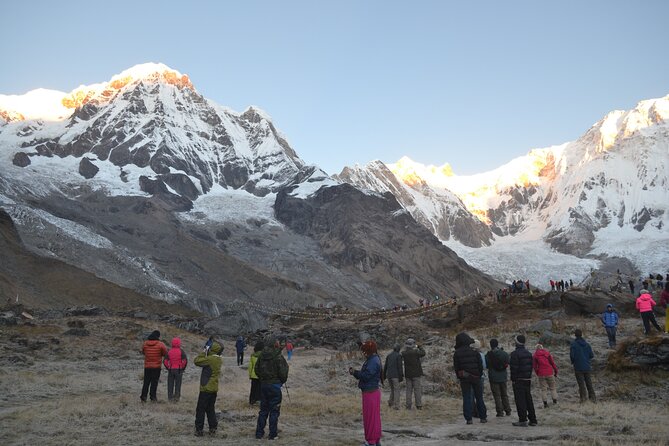
After the base-camp night, you retrace your steps toward Bamboo and Sinuwa. The return path passes back through the sanctuary, with wetter forest conditions and small bridges along the trail.
Going downhill is not automatically easy. The repeated stone steps can be hard on knees, particularly after the high-altitude day. Trekking poles may be useful, though the supplied information does not confirm that they are included. Gear can be bought or rented in Kathmandu, and the guide can help arrange it.
This return day also gives you a second look at places that passed quickly on the way up. Weather can change the views completely, so do not assume the return will feel like a repeat performance.
Day 7: Chhomrong and Jhinu Danda
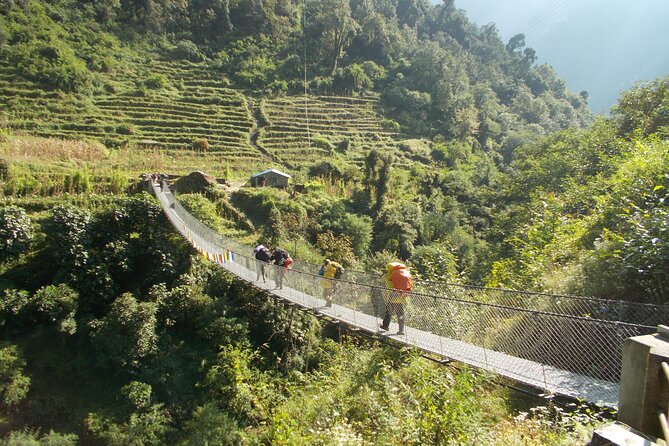
From Bamboo, you climb toward Kuldighar, descend toward the Chhomrong Khola, and then tackle the steps back toward Chhomrong before continuing to Jhinu Danda.
This is another day of alternating climbs and descents. The route is not a simple downhill walk, and the schedule’s wording about retracing your steps makes the physical pattern clear. You should keep water, snacks, and rain protection close at hand.
Jhinu Danda is a welcome overnight point on the lower route. The supplied information does not promise a particular activity there, so do not book this trek solely for a guaranteed hot-spring visit or another unlisted feature. The confirmed benefit is a lower-altitude village stop after the harder sanctuary section.
Day 8: Back to Pokhara and Phewa Tal
From Jhinu Danda, you continue through the countryside toward Nayapul. Rice-growing farms and distant Annapurna views provide a gentler close to the walking portion.
A private car connects Pokhara and Nayapul, which is more comfortable than relying on a public transfer at the trailhead. Once back in Pokhara, the itinerary names Phewa Tal and Sarangkot. Phewa Tal is the city’s scenic lake, while Sarangkot is associated with broad views around Pokhara.
The schedule does not state the exact timing for these stops, so your available free time may depend on road conditions and the pace of the trek. Still, two nights in Pokhara give you a useful buffer after the mountains and before returning to Kathmandu.
Day 9: Return to Kathmandu
The plan sends you back to Kathmandu by tourist bus. It also mentions Patan Durbar Square, a historic area in the Kathmandu Valley, as a possible stop.
There is a scheduling inconsistency in the supplied plan: this section refers to an 11th day even though the trip is advertised as 10 days. You should ask the company to confirm the exact departure date, return time, and hotel night before paying.
This day may be tiring after the trek. If you want time for Patan or last-minute shopping, ask whether the stop is included in the transfer or depends on your departure plans. The package includes two Kathmandu hotel nights, but the precise placement of those nights should also be confirmed.
Day 10: Airport departure
On the final day, staff assist with last-minute arrangements and transfer you to Tribhuvan International Airport. The plan also lists the Garden of Dreams and Narayanhiti Palace Museum, but no sightseeing time is guaranteed on departure day.
Treat the airport transfer as the confirmed service. If your flight is late, you might have time for one of those Kathmandu sights, but you should not build a full sightseeing plan around them without checking your flight and transfer schedule.
The farewell dinner and cultural show are included in the package. The timing is not specified, so confirm when this takes place, especially if your departure is early on Day 10.
Guides, group size, and support
The tour is private, with only your group taking part, and bookings are limited to 12 people. That is a good middle ground: small enough for personal attention, but potentially large enough to share the walking experience if you book with family or friends.
Guide names connected with the service include Santosh, Raju Simkhada, Asok, Dibo, and Varat. Direct accounts describe Santosh as friendly and helpful, while Raju and Santosh are credited with keeping spirits high through conversation, shared food, singing, and dancing. Those details matter on a long trek, where patience and steady encouragement can be as useful as route knowledge.
All leaders have basic first-aid training and know the closest medical facilities. That is reassuring, but it is not a substitute for insurance or sensible pacing. The tour requires proof of insurance covering medical expenses and emergency repatriation on the first day.
If you want a guide who speaks a language other than English, an additional $200 per group is listed. The minimum age is seven, but the high altitude and demanding trail mean that age alone says little about suitability. A doctor’s advice and realistic fitness assessment are more useful.
What to pack and arrange before leaving
You need a clear color passport scan, a passport valid for at least six months, two passport photographs, your occupation, and your home address details for permits.
Trekking gear can be purchased or rented in Kathmandu, with help from the guide. Extra luggage may be left at the company office or hotel and collected after the trek, which lets you carry only what you need into the mountains.
At minimum, plan around the facts supplied: high altitude, changing weather, tea-house accommodation, uneven trails, and long stone staircases. Confirm exactly which meals and drinks are covered, since breakfast is included but lunch and dinner in Kathmandu and Pokhara are not.
Who should book this trek?
I would recommend it to you if you want a compact route to a famous Himalayan base camp, prefer having transport and lodging organized, and are comfortable with a demanding walking schedule.
It suits couples especially well because the route combines quiet village nights, dramatic mountain views, and a shared physical challenge. It can also work for solo participants because the tour is private and guide support is built in.
I would be more cautious if you need a slow acclimatization schedule, dislike basic lodging, or want a carefully timed sightseeing holiday in Kathmandu and Pokhara. The package gives you the main mountain route, but some city stops are listed without exact timing.
Should you book the Annapurna Base Camp Trek?
Book it if your priority is reaching Annapurna Base Camp with a guide, arranged transfers, tea houses, and a clear package price. The combination of mountain scenery, ethnic villages, forest trails, and a private group makes this a strong value at $699, provided you budget for the listed meals and gratuity.
Before booking, confirm the day-two transport details, the Poon Hill reference, the day-nine date error, and the exact sightseeing schedule. If you are medically cleared, properly insured, and ready for altitude and steep steps, this trek offers a direct and memorable route into the Annapurna mountains. Free cancellation is available up to 24 hours before the start time, with no refund for cancellations inside that window.
FAQ
How long is the Annapurna Base Camp Trek?
The tour is advertised as approximately 10 days, including arrival and departure services, Kathmandu and Pokhara stays, transport, and six nights in tea houses.
What is the highest altitude reached?
Annapurna Base Camp is approximately 4,130 meters, or 13,550 feet, above sea level.
Is airport pickup included?
Yes. Airport transfers to and from Tribhuvan International Airport are included.
Is the tour private?
Yes. Only your group participates, with a maximum of 12 people per booking.
What accommodation is included?
The package includes two nights in Kathmandu, two nights in Pokhara in a three-star hotel with breakfast, and six nights in tea houses during the trek.
Is transport between Kathmandu and Pokhara included?
Yes. Tourist-bus transport between Kathmandu and Pokhara is included. The Pokhara to Nayapul and return sections use a private car.
Are meals included?
Breakfast is included, with nine breakfasts listed. Lunch and dinner in Kathmandu and Pokhara are excluded, with an estimated additional cost of $150 per person.
Is travel insurance required?
Yes. You must have insurance covering medical expenses and emergency repatriation, and proof must be shown to the tour leader on the first day.
What is the minimum age?
The minimum age is seven years. The tour also requires a moderate fitness level and involves demanding high-altitude walking.
What is the cancellation policy?
You receive a full refund if you cancel at least 24 hours before the experience start time. Cancellations made within 24 hours are not refunded, and changes inside that period are not accepted.
Recently added around Kathmandu
- Kathmandu Paragliding★ 5.0 · 3 reviews
- Kathmandu Airport Pickup and Drop-off Services★ 5.0 · 3 reviews
- Kathmandu Chandragiri Cable Car and Swayambhunath Private Tour★ 5.0 · 3 reviews
- Explore The Beauty Of Langtang Valley In 8-Days Trek★ 5.0 · 3 reviews
- Kathmandu: Nightlife and Pub Crawl Tour★ 5.0 · 3 reviews
- Mountain Flight Experience in Nepal★ 4.5 · 3 reviews
- Kathmandu: Momo Making Class with a Local Chef★ 5.0 · 3 reviews
- Everest Base Camp Trek★ 5.0 · 3 reviews
Other Annapurna Base Camp Treks worth a look
Kathmandu to Annapurna Base Camp (ABC) 5-Day Trek
Read our review →
This tour also appears in