
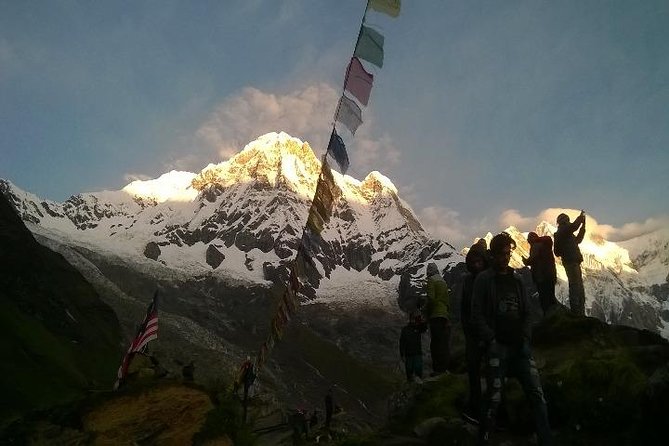
REVIEW · ANNAPURNA BASE CAMP TREKS
Annapurna Base Camp Trek – 11 Days
Annapurna Base Camp gives you a lot in 11 days: a long Himalayan bus ride, rhododendron forests, mountain villages, a Poon Hill sunrise, and the high, snowy bowl of base camp itself. I especially like the mix of scenery and local life, plus the welcome relief of Jhinu Danda’s hot spring. The price also covers a guide, permits, lodging, meals, a sleeping bag, down jacket, and staff support.
This is not a gentle sightseeing holiday. You will spend several days on stone stairs, with steep climbs and descents at altitude. The itinerary also repeats some place names and appears to describe the return route in more than one way, so I would ask the operator to confirm your exact overnight stops before paying.
Key details that shape the trek
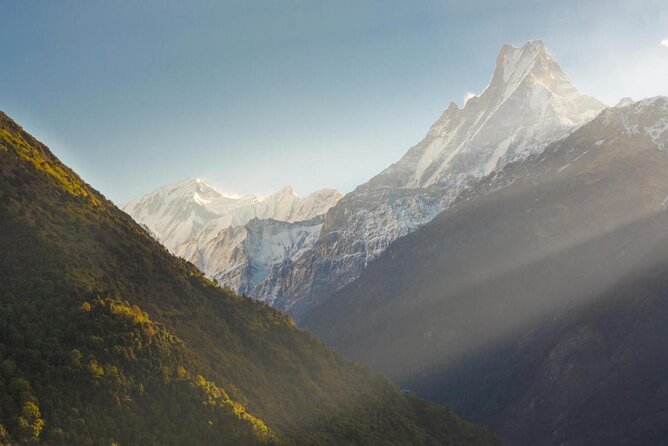
- Poon Hill at sunrise: The early climb from Ghorepani brings wide views toward Annapurna, Dhaulagiri, Nilgiri, and Lamjung Himal.
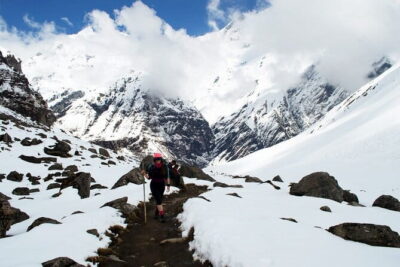
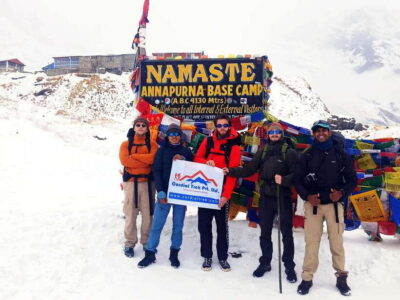
- Annapurna Base Camp at about 4,130 meters: The final high point sits beyond Machhapuchhre Base Camp, among snowy peaks and glacial moraine.
- Private group format: Only your group takes part, which gives you more control over pace and rest stops than a large shared departure.
- Useful equipment included: A down jacket, sleeping bag, duffel bag, route map, first-aid kit, and oxygen saturation monitor are supplied.
- Village and forest scenery: You pass Birethanti, Ghorepani, Chhomrong, Sinuwa, Deurali, and other mountain settlements, with rhododendron, fir, orchids, and ferns along the way.
- Guide quality matters: Past bookings have included guides named Prakash, Shiva, Naba, and Saroj Dhakal. Ask who is assigned to your group and what level of English support you can expect.
Why the Annapurna route earns its reputation
The appeal of this trek is its variety. In a single trip, you move from Kathmandu and Pokhara traffic to terraced farms, river valleys, stone stairways, forest trails, and high mountain terrain. You are not simply walking toward a viewpoint. You are passing through inhabited hills where local villages remain part of the journey.
The route also gives you two different mountain payoffs. Poon Hill offers the classic sunrise panorama early in the trek. Annapurna Base Camp comes later, after more demanding walking, and feels like a proper high-altitude destination rather than a quick lookout.
The stated price is $986 per person. For an 11-day private trip, that is useful value if you need equipment and staff arrangements handled for you. The package includes accommodation, nine lunches, eight dinners, ten breakfasts, trekking permits, entry fees, transport from and back to Kathmandu, and the costs connected with trekking staff.
You still need to budget for drinks, laundry, insurance, personal equipment, international flights, airport tax, and tips. Alcoholic drinks, hot drinks, and cold drinks are not included, so do not treat the advertised price as your complete Nepal budget.
More Annapurna Base Camp Treks in Kathmandu
- Annapurna base camp trek 5 Days
★ 5.0 · 252 reviews - Annapurna Base Camp Trek
★ 5.0 · 111 reviews - Kathmandu to Annapurna Base Camp (ABC) 5-Day Trek
★ 5.0 · 102 reviews
Kathmandu to Pokhara: a long first day on the road
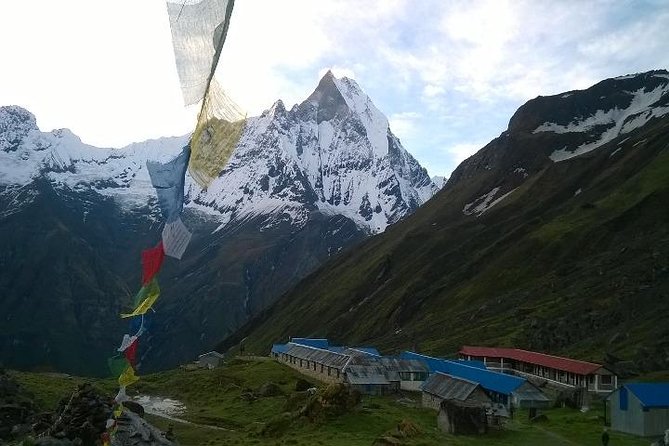
The trip begins at 6:15 in the morning from Kathmandu. After breakfast, you take a tourist bus along the Prithvi Highway toward Pokhara.
This is not a quick transfer. The road follows rivers and passes terraced farmland, villages, and small towns. I like this first day because it lets you see how quickly Nepal changes outside the capital. You get an introduction to rural life before your boots hit the trail.
The drawback is simple: a full road day can be tiring before the trek even starts. Road conditions and traffic can affect the timing, so keep your plans in Kathmandu and Pokhara flexible. The tour includes surface transport, but it does not promise a private vehicle for this section.
Nayapul, Birethanti, and the first stone stairs
From Pokhara, the route continues by road to Nayapul, a journey described as about two hours. The walk begins by crossing a suspension bridge over the Modi River and continuing toward Birethanti.
This opening section helps you settle into the rhythm of the trek. The route passes through villages and along river country before the more serious climbs arrive. You will see terraced hillsides and local settlements rather than a sudden leap into high alpine scenery.
The walk then continues toward Ulleri and Banthanti, with stone steps becoming a major feature. Stone stairs are useful underfoot, but they are hard on knees and calves. Trekking poles are not listed among the included items, so bring your own if you use them.
Ghorepani and the early climb to Poon Hill
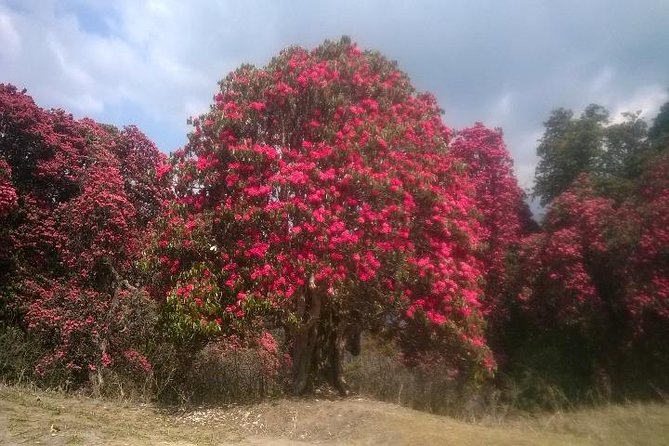
Day three takes you through thick rhododendron forest, with stops or passages through Banthanti and Nangethanti before reaching Ghorepani. The forest is one of the route’s pleasures, especially when orchids and ferns appear along the trail.
The next morning begins early with an ascent to Poon Hill. The path may be snowy, and the reward is sunrise over the Annapurna and Dhaulagiri ranges. Nilgiri, listed at 7,061 meters, and Lamjung Himal, listed at 6,983 meters, add to the view.
Poon Hill is an excellent design choice in this itinerary. You get a major mountain panorama before reaching base camp, so the trek has an early highlight rather than making you wait until the final days.
The early start is also the catch. You will be walking before daylight, and cold conditions are possible. The included down jacket and sleeping bag help, but you should still bring warm personal layers and gloves. Personal trekking equipment remains your responsibility.
More Hiking Tours in Kathmandu
- Everest Base Camp Trek – 14 Days
★ 5.0 · 1,499 reviews - Everest Base Camp Trekking
★ 5.0 · 485 reviews - Nagarkot Sunrise View and Day Hiking from Kathmandu
★ 5.0 · 471 reviews - Annapurna Circuit Trek with Tilicho Lake
★ 5.0 · 368 reviews
Jhinu Danda and the hot-spring pause
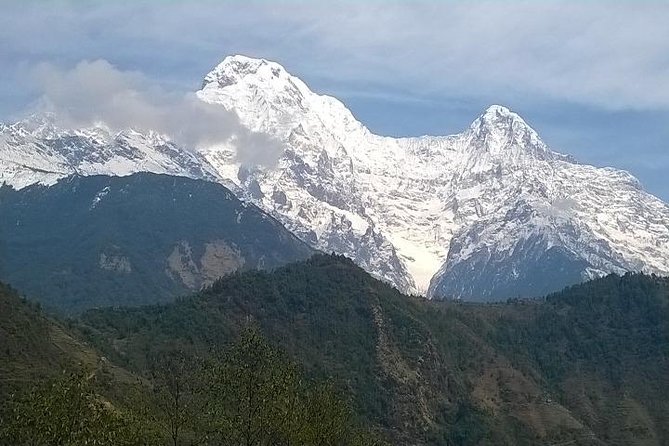
After Poon Hill, the route rises and falls through forest before crossing the suspension bridge over Kimrong Khola. The destination is Jhinu Danda, known here for its hot spring.
This is exactly the kind of stop that makes a demanding trek more pleasant. A warm soak can ease tired legs after repeated climbs and descents. It also breaks up the mountain routine with something completely different from a viewpoint or lodge meal.
The route description places Jhinu Danda more than once, including during the return section. Because the published schedule also names Sinuwa and Chhomrong on both sides of the high-altitude portion, ask the company to clarify which nights are spent at each village. This is not a reason to reject the trip, but it is a reason to request a day-by-day confirmation.
Sinuwa, Deurali, and the road to base camp
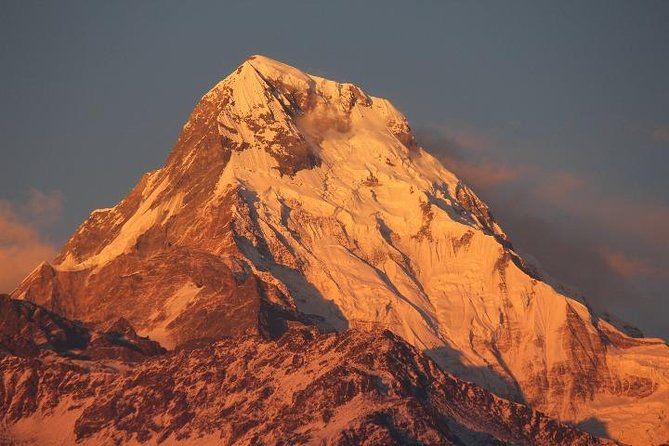
The route continues through rhododendron forest and down stone stairs before crossing Chhomrong Khola and climbing to Sinuwa. From there, the terrain becomes more serious as you head toward Deurali.
You then follow stone steps and mountain paths toward Machhapuchhre Base Camp at about 3,700 meters. The route offers snowy mountain views, and the trail follows the Modi Khola through rhododendron and fir forest before reaching higher, more exposed ground.
Machhapuchhre Base Camp is not Annapurna Base Camp. It is a staging point on the way to the main destination. The final section follows moraine terrain toward Annapurna Base Camp, where the surrounding peaks create the enclosed mountain setting that gives the trek its name.
This is the day to take your guide’s advice seriously. The package includes an oximeter to check pulse, oxygen saturation, and heart rate, along with first-aid medical kits. Those tools are useful, but they do not replace honest communication. Tell your guide if you feel unwell, unusually breathless, dizzy, or unable to keep walking at a safe pace.
The tour asks for moderate physical fitness. That phrase understates the stair work for some people. You should be comfortable walking for several hours on uneven trails and managing repeated uphill and downhill sections.
The return route and why the schedule needs checking
After reaching base camp, the route descends through the moraine area and follows the Modi Khola. Forest returns as you move through rhododendron and fir, then you head back toward Sinuwa, Chhomrong, and Jhinu Danda.
The supplied day plan describes a descent to Sinuwa, a return through Chhomrong Khola, an ascent to upper Chhomrong, and another descent to Jhinu Danda with time at the hot spring. Day ten then describes the final descent to Nayapul and a drive to Pokhara.
That sequence may reflect a detailed return plan, but the repeated villages make the published schedule hard to read. I would ask three practical questions before departure:
- Which villages are the overnight stops on days five through nine?
- Is the hot spring visited once or twice?
- How many walking hours are expected on each day?
You should also ask how the group returns from Nayapul to Pokhara and what time it reaches the city. The information allows for evening rest or personal plans in Pokhara, but it does not set a firm arrival time.
Pokhara back to Kathmandu
The final day begins early with a tourist bus back to Kathmandu. You follow the highway through green hills, villages, farmland, and river scenery.
This last road trip is practical rather than glamorous. After several days of walking, it gives you time to sit, look out the window, and let the trip settle. It can also be another long day, so avoid scheduling an international flight immediately afterward.
The activity ends back at the Kathmandu meeting point. Airport transfers and international airfare are not included. You will need to arrange those separately.
Lodges, meals, and what the price covers
Accommodation is in the best available guest houses along the route, mainly in twin-sharing rooms. That wording is important. These are trekking lodges, not city hotels, and room standards can vary.
The package includes ten breakfasts, nine lunches, and eight dinners. Drinks are extra, including alcoholic, hot, and cold beverages. Carry enough personal spending money for those purchases, laundry, and any other costs not listed in the inclusions.
The supplied down jacket, sleeping bag, and duffel bag are practical benefits, especially if you do not want to buy or carry every bulky item from home. Personal trekking equipment is not included, so check what the company means by the supplied gear and what you must bring yourself.
A licensed English-speaking local guide leads the trek. Previous groups have been guided by Prakash, Shiva, Naba, and Saroj Dhakal, with several travelers praising Prakash’s patience and organization and describing Shiva and Naba as helpful on the route. Names are not a guarantee of assignment, so request your guide’s name before you arrive.
Staff costs, food, accommodation, insurance, equipment, medicine, and transport for trekking staff are included. Tips are not. Plan to tip your guide and porters separately if their service meets your expectations.
Who should choose this trek
I would choose this trip if you want a classic Nepal trek with a private group, a named local guide, and many major costs bundled together. It suits someone who wants both cultural contact in villages and dramatic Himalayan scenery without arranging every permit, lodge, and staff detail independently.
It also works well for a first substantial trek if you have moderate fitness and prepare properly. The guide, first-aid kit, oximeter, and included sleeping bag provide useful support, but you still need to manage your pace and tell the guide when something feels wrong.
I would hesitate if you dislike long bus rides, basic guest houses, steep stone stairs, or shared rooms. I would also think twice if your schedule cannot tolerate weather delays. The trip requires good weather, and a cancellation caused by poor conditions may be moved to another date or refunded.
The private format is a strong point for couples, families, or friends who want to walk together. Solo bookers can also join privately, but confirm whether the quoted price changes for one person and ask who will guide the trip.
Booking and cancellation details
Confirmation is provided at booking. The starting point is in Kathmandu at 6:15 in the morning, and the activity returns to that meeting point at the end.
You can cancel for a full refund up to 24 hours before the local start time. Cancellations or changes made inside that 24-hour window are not accepted for a refund. If poor weather forces cancellation, you are offered another date or a full refund.
Should you book the Annapurna Base Camp Trek?
Book it if you want a well-supported, classic Himalayan route with Poon Hill, Annapurna Base Camp, village lodges, forest walking, and a hot-spring break. At $986, the inclusion of transport, permits, meals, guide, staff costs, sleeping bag, down jacket, and first-aid support gives the package a solid practical value.
Before booking, get the overnight schedule in writing. Confirm your assigned guide, ask exactly what personal gear you need, and make sure your insurance covers trekking at the route’s highest elevations. If you accept the physical demands and the long bus transfers, this is a strong choice for a first Annapurna adventure.
FAQ
Where does the Annapurna Base Camp Trek begin?
The trek begins in Kathmandu, Nepal, at the stated meeting point. The start time is 6:15 in the morning.
How long is the experience?
The experience lasts approximately 11 days.
Is the tour private?
Yes. This is a private activity, so only your group participates.
What transport is included?
Surface transport from and back to Kathmandu is included. The itinerary uses tourist buses between Kathmandu and Pokhara, and road transport between Pokhara and Nayapul.
Is accommodation included?
Yes. Accommodation is provided in the best available guest houses during the trek, mainly in twin-sharing rooms.
Are meals included?
Yes. The package includes ten breakfasts, nine lunches, and eight dinners.
Is a trekking guide included?
Yes. A local government licensed, English-speaking trekking guide is included for the trek.
Is trekking equipment supplied?
A down jacket, sleeping bag, and duffel bag are included. Personal trekking equipment is not included.
Are permits and entry fees included?
Yes. Necessary trekking permits and entry fees are included.
What fitness level do I need?
The activity requires a moderate level of physical fitness. Expect uphill and downhill walking, stone stairs, forest trails, and high-altitude walking toward Annapurna Base Camp.
Can I cancel for a refund?
You can cancel up to 24 hours before the experience start time for a full refund. Changes or cancellations made less than 24 hours before the start are not accepted for a refund.
Recently added around Kathmandu
- Kathmandu Airport Pickup and Drop-off Services★ 5.0 · 3 reviews
- Kathmandu Paragliding★ 5.0 · 3 reviews
- Kathmandu Chandragiri Cable Car and Swayambhunath Private Tour★ 5.0 · 3 reviews
- Explore The Beauty Of Langtang Valley In 8-Days Trek★ 5.0 · 3 reviews
- Kathmandu: Nightlife and Pub Crawl Tour★ 5.0 · 3 reviews
- Mountain Flight Experience in Nepal★ 4.5 · 3 reviews
- Kathmandu: Momo Making Class with a Local Chef★ 5.0 · 3 reviews
- Everest Base Camp Trek★ 5.0 · 3 reviews
Other Annapurna Base Camp Treks worth a look
Kathmandu to Annapurna Base Camp (ABC) 5-Day Trek
Read our review →
This tour also appears in