
REVIEW · ANNAPURNA BASE CAMP TREKS
Annapurna Base Camp Trek
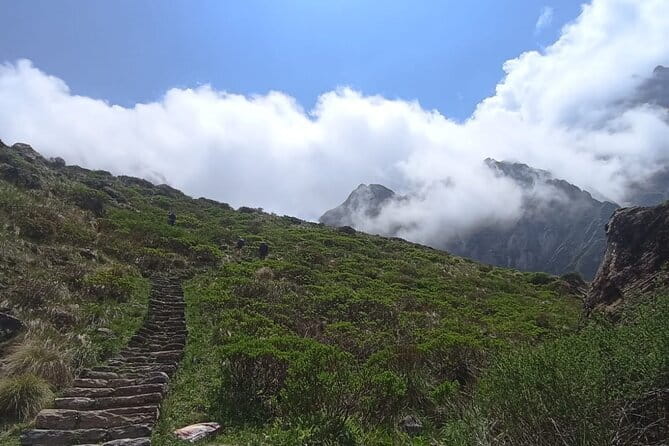
The best part of this trek is the changing scenery: rhododendron forest, Gurung villages, bamboo trails, and high Himalayan views all arrive on one route. You start with city comforts in Kathmandu and Pokhara, then walk steadily upward to Annapurna Base Camp at 4,130 meters.
I like the practical package, especially the included ACAP permit, TIMS card, guide, porter, meals, sleeping bag, and duffel bag. I also like the descent through Jhinu Danda, which gives the trip a calmer finish after the high point. The main consideration is that the word luxury may set your expectations too high: the details specify 3-star hotels and twin-sharing teahouses, not a fully upscale mountain lodge trip.
Key points to know before booking
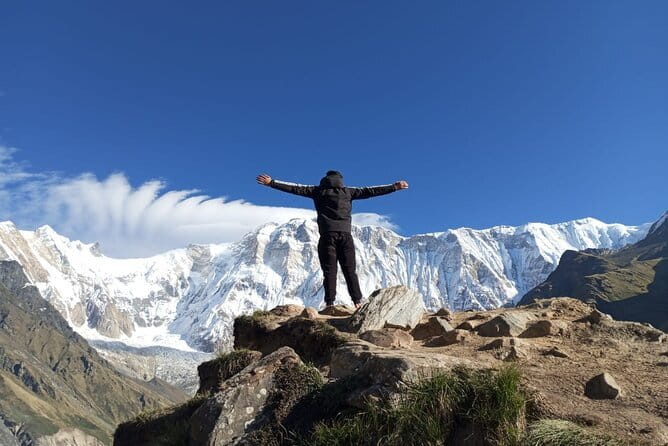
- Annapurna Base Camp reaches 4,130 meters: The highest day brings big mountain views but also cold, thin air and a real physical challenge.
- The route uses both road and trail: A 7 to 8-hour tourist-bus ride connects Kathmandu and Pokhara, while the walking sections last up to 6 or 7 hours.
- Your guide and porter are included: You receive an English-speaking, government-licensed guide and one porter for every two people.
- Meals are covered during the trek: Breakfast, lunch, dinner, and tea or coffee are included on the main trekking days.
- Comfort is practical rather than lavish: Kathmandu and Pokhara use 3-star hotels; the mountain nights are in the best available twin-sharing teahouses.
- The final reward is more than the base camp sign: Ghandruk, Machhapuchhre Base Camp, Buddhist sites, forests, and Jhinu Danda make the entire route worthwhile.
What this 11-day Annapurna route is really like
This is a private trekking experience for your own group, starting at Tribhuvan International Airport in Kathmandu. The schedule runs for about 11 days, although the overview describes it as a 12-day luxury program, so I would confirm the exact calendar before paying.
The route is designed as a gradual approach to Annapurna Base Camp rather than a quick dash to the high point. You pass through villages and forest before entering the more exposed mountain zone. That change gives the trip variety, and it also lets you adjust to increasing altitude over several days.
The package costs $240 per person. That is a low price for a trip including airport transfers, transport between Kathmandu and Pokhara, permits, a guide, porter support, accommodation, most meals, a sleeping bag, and a duffel bag. It can be good value, but I would read the comfort promise carefully. The included accommodation is described as 3-star hotels in the cities and best available twin-sharing teahouses during the walk.
International airfare, visa fees, insurance, bottled water, hot showers, drinks, tips, personal expenses, and some city meals are extra. The total cost will therefore be higher than the headline price, particularly if you need insurance and pay for showers, laundry, snacks, or phone use on the trail.
More Annapurna Base Camp Treks in Kathmandu
- Annapurna base camp trek 5 Days
★ 5.0 · 252 reviews - Annapurna Base Camp Trek
★ 5.0 · 111 reviews - Kathmandu to Annapurna Base Camp (ABC) 5-Day Trek
★ 5.0 · 102 reviews
Kathmandu arrival and the first practical details
Day 1 is deliberately easy. A representative meets you at Tribhuvan International Airport and transfers you to your Kathmandu hotel in about 30 to 45 minutes. Breakfast is listed for the day, and your highest point is still Kathmandu at about 1,400 meters.
This opening night matters because it gives you a chance to settle in before the long road to Pokhara. Airport pickup is included, which is useful after an international flight. You should still keep your booking confirmation and arrival details handy, since the meeting point is the airport.
The package includes a 3-star hotel in Kathmandu with breakfast. Lunch and dinner in Kathmandu are not covered, so budget for those separately. The same applies to Pokhara.
The long road to Pokhara on Day 2
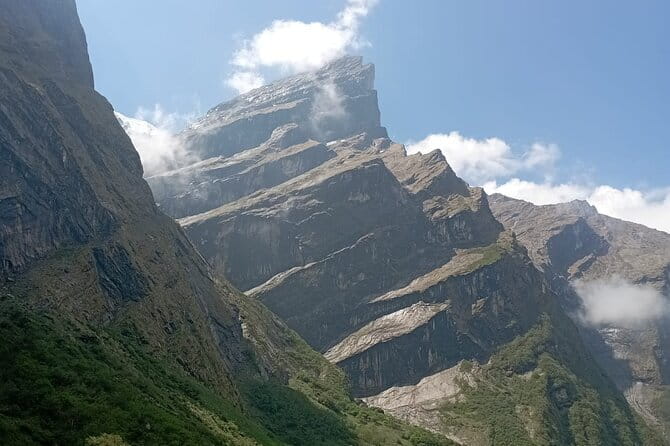
After breakfast, you travel roughly 200 kilometers to Pokhara by tourist bus. The ride takes 7 to 8 hours, so this is a full transport day, not a quick transfer.
Pokhara sits at about 822 meters and provides a useful contrast with Kathmandu. It is known as Nepal’s lake city, and this overnight stop breaks up the journey before you reach the trailhead. You should not expect a major trek on this day, but the road trip helps the walking section begin from a more manageable altitude.
The distance and timing are the main drawback. Roads and traffic can make a 7-hour estimate feel long, and anyone who dislikes extended bus rides should prepare for a slow day. The upside is that the transport is already arranged and included, rather than left for you to organize.
Ghandruk brings the first real mountain village
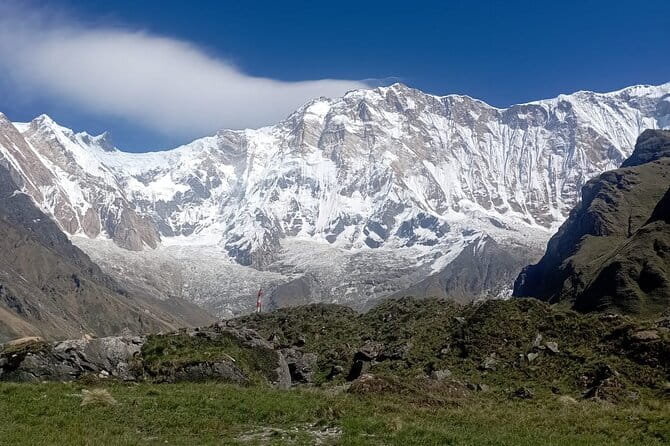
Day 3 combines a drive and a short opening trek. You travel about 41 kilometers to Nayapul, then walk roughly 5 kilometers for 3 to 4 hours to Ghandruk, which sits at 1,940 meters.
Ghandruk is one of the most appealing stops on the route. It is a traditional Gurung village with mountain character, and the surrounding hills introduce you to the cultural side of the Annapurna region. The trip description also points to Buddhist monasteries along the way, adding a quieter spiritual note to the forest and village scenery.
Breakfast, lunch, and dinner are included from this point. Accommodation is in a twin-sharing teahouse, using the best available room. That usually means a simple mountain stay with a bed and basic facilities, not city-hotel comfort. The private format is helpful here because your guide can set the walking pace for your group.
More Hiking Tours in Kathmandu
- Everest Base Camp Trek – 14 Days
★ 5.0 · 1,499 reviews - Everest Base Camp Trekking
★ 5.0 · 485 reviews - Nagarkot Sunrise View and Day Hiking from Kathmandu
★ 5.0 · 471 reviews - Annapurna Circuit Trek with Tilicho Lake
★ 5.0 · 368 reviews
Ghandruk to Sinuwa tests your legs
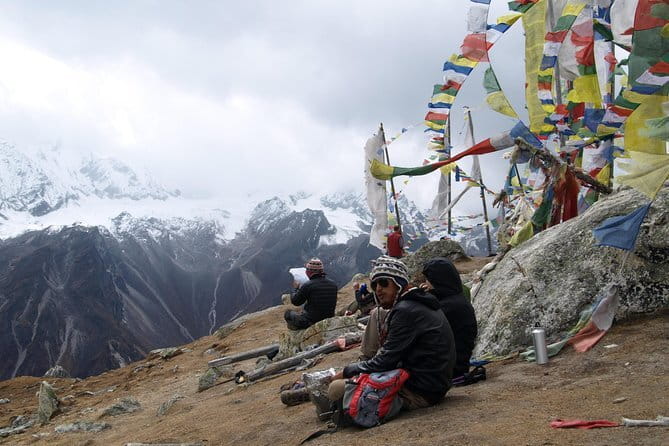
The fourth day covers about 12 kilometers in 6 to 7 hours. You descend toward the Kimrong Khola and then climb toward Sinuwa at 2,340 meters.
This is a classic Himalayan walking day: a descent is followed by a climb, so the distance alone does not tell the full story. The forest helps keep the route pleasant, but repeated uphill and downhill sections can be tiring. You should be comfortable walking for most of a day and handling uneven trail surfaces.
Sinuwa marks a clear step upward in altitude. The included full-board meals are valuable on days like this, since you do not need to spend energy arranging food after arrival. Tea and coffee are included during the trek, while bottled water and other drinks are not.
Bamboo forest and Deurali at 3,200 meters
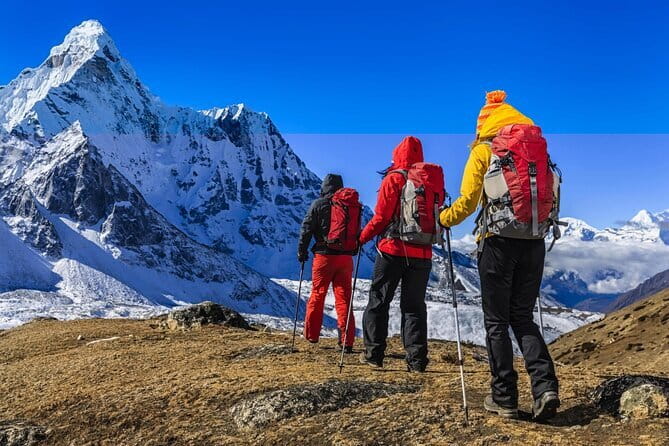
On Day 5, you walk about 10 kilometers for 6 to 7 hours toward Deurali. The trail passes through lush bamboo forest and climbs to about 3,200 meters.
This is where the trek begins to feel more serious. The forest is attractive, but the steady gain in height can affect your pace. A good guide should help you avoid rushing, and the included first-aid kit provides basic support, though it is not a substitute for travel and rescue insurance.
The package includes an English-speaking, government-licensed trekking guide. It also includes one porter for every two people. That arrangement can make a major difference, because you can carry a lighter daypack while the porter handles shared luggage. Pack with restraint and remember that tips for the guide, porter, and driver are not included.
The high point at Annapurna Base Camp
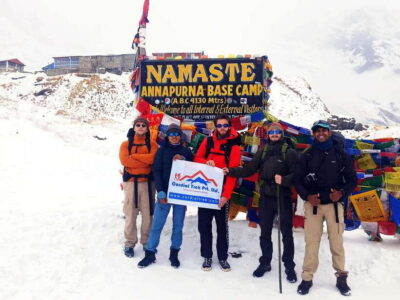
Day 6 is the central achievement of the trip. You walk approximately 9 kilometers for 6 to 7 hours and reach Annapurna Base Camp at 4,130 meters.
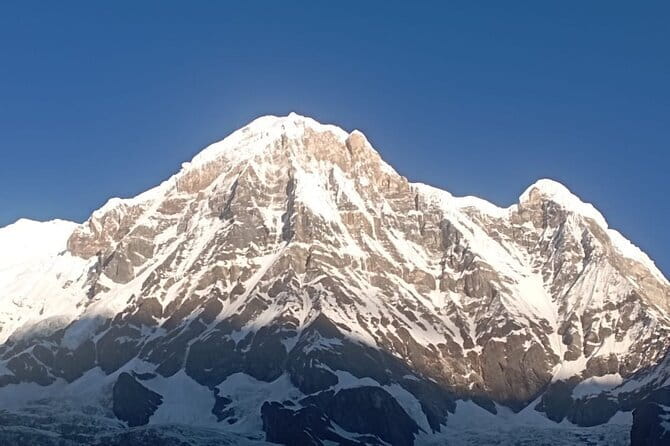
The route passes through the high mountain zone, including Machhapuchhre Base Camp. The setting changes from forest to open Himalayan views, with Annapurna and Machhapuchhre forming the main visual reward. This is the moment to slow down and take in the scale of the peaks rather than treat the base camp marker as the only goal.
The altitude is the serious issue. The schedule gives you several days of ascent, but you still need to watch how you feel. The supplied information calls for moderate physical fitness, and that should be taken literally. You do not need to be an elite climber, but you should be ready for repeated 6 to 7-hour walking days and an altitude of 4,130 meters.
The overnight at base camp is likely to be the most basic and coldest part of the trip. The listing includes teahouse accommodation and a sleeping bag, but not hot showers. Bring warm layers and understand that the comfort level here is practical, even under a luxury-themed package.
The long descent to Bamboo
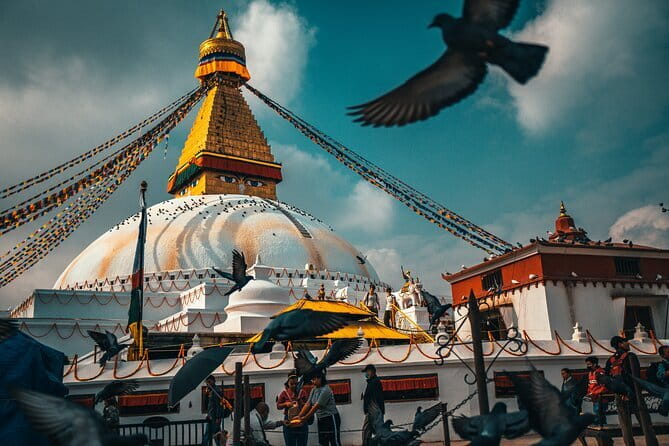
After the base camp morning, Day 7 begins the return journey. The route covers about 13 kilometers in 6 to 7 hours and ends at Bamboo, at roughly 2,310 meters.
The descent gives your lungs a break from the highest altitude, but it can be hard on knees and thighs. Trekking poles, if you use them, would be sensible, though they are not listed as included. Breakfast, lunch, dinner, and tea or coffee remain covered during the trekking portion.
This day also shows why the trip is not simply a sightseeing excursion. You spend many hours on foot, and the return is not a short transfer. If you want a quick visit to Annapurna Base Camp with minimal walking, this is the wrong product. If you want the full approach and a more connected sense of the region, the long descent is part of the value.
Jhinu Danda gives the trek a softer finish
Day 8 covers around 11 kilometers in 5 to 6 hours to Jhinu Danda, at 1,780 meters. The trail passes through forest again, and the lower altitude makes the day feel more relaxed after the base camp section.
Jhinu Danda is a useful stop because it breaks up the return and gives the route a different mood. The itinerary describes it as a pleasant walk through lush forest, and it is a better ending than racing straight back to the road. You still have a full walking day, but the distance and altitude are less demanding than the high section.
The trip includes dinner and overnight accommodation in the trekking area. Hot showers are specifically excluded, so ask about the local facilities and cost if that matters to you.
A short final walk and back to Pokhara
Day 9 is the easiest walking stage, with about 6 kilometers before a 2 to 3-hour drive back to Pokhara. The route may bring you to Siwa or Ghandruk Phedi, according to the schedule, so confirm the exact endpoint with the operator.
Breakfast and lunch are included, while dinner in Pokhara is not. The return to Pokhara gives you a welcome change from teahouse life. The city hotel is listed as 3-star accommodation with breakfast, and the lower altitude provides a comfortable pause before the final drive.
This is also a sensible place to check your belongings. The duffel bag and sleeping bag supplied for the trek must be returned after the trip, so do not pack either item as a souvenir.
The return to Kathmandu is another full day
Day 10 repeats the 200-kilometer road journey to Kathmandu, taking about 7 to 8 hours by tourist bus. Breakfast and dinner are included on this day, but the schedule still leaves lunch outside the package.
The drive may feel long after several days of walking, but it keeps the package cost down compared with domestic flights. It also means you should avoid scheduling an important international connection on the same day. The itinerary provides a final Kathmandu night, which is helpful for a next-day departure.
Day 11 includes breakfast and an airport transfer of about 30 to 45 minutes. Depending on your flight time, you may have some free time before leaving, but the supplied schedule does not promise a sightseeing program.
What the $240 price covers, and what it does not
At $240 per person, the package offers strong practical value if all listed services operate as described. You receive:
- Airport transfers in Kathmandu
- Tourist-bus transport between Kathmandu and Pokhara
- ACAP and TIMS permits
- City hotels with breakfast
- Twin-sharing teahouse accommodation
- Trekking guide and porter service
- Full-board trekking meals with tea and coffee
- First-aid kit, duffel bag, and sleeping bag
- Government taxes and service charges
- Farewell dinner
The exclusions matter. You pay for international flights, Nepal entry visa, travel and rescue insurance, personal expenses, alcoholic drinks, bottled water, beverages, hot showers, tips, and lunch or dinner in Kathmandu and Pokhara.
The package description uses phrases such as premium lodges and gourmet meals, but the detailed inclusions use more modest terms: 3-star hotels and best available teahouses. I would ask the operator exactly what accommodation and meals are planned before booking. That simple check will prevent a mismatch between a luxury expectation and a standard trekking experience.
Who will get the most from this trek
I would recommend this trip to someone with moderate fitness who wants a guided route and does not want to carry all their own equipment. The guide, porter, permits, transfers, and meals remove much of the planning work.
It also suits a private group that values flexibility. Only your group participates, so the pace and daily rhythm may be easier to manage than on a large shared departure. Group discounts are offered, which could improve the value for friends or family booking together.
I would be cautious if you dislike long bus rides, basic mountain accommodation, or full walking days. The route includes several 6 to 7-hour stages, altitude up to 4,130 meters, and no included hot shower. You should also arrange travel and rescue insurance, since neither is part of the price.
The strongest feedback about the operator centers on organization, warm support, guides, and porters. One detailed account praised the careful planning, smooth running of the trip, food, and company. Another highlighted professional guidance and hospitality, while a Polish-language review singled out the organization and the willingness of guides and porters to help and offer advice. Those are exactly the qualities you want on a high-altitude trek.
Booking advice and cancellation terms
The experience offers free cancellation if you cancel at least 24 hours before the local start time. Changes or cancellations inside that window are not accepted for a refund.
Weather can affect the departure. If poor weather causes cancellation, you are offered another date or a full refund. The operator also requires a minimum number of participants for the experience to run, although this is a private activity for your own group, so confirm how that condition applies to your booking.
Should you book the Annapurna Base Camp Trek?
Book it if you want a clearly structured Himalayan trek with guide and porter support, included permits, meals, and transport, and you are comfortable with teahouse accommodation. The combination of Ghandruk, forest trails, Machhapuchhre Base Camp, Annapurna Base Camp, and Jhinu Danda gives you more than a single mountain viewpoint.
Treat the word luxury with care. At this price, the real attraction is convenience and organization, not high-end facilities. Confirm the 11-day versus 12-day wording, the exact teahouses, what gourmet meals mean in practice, and the handling of the airport transfer before you commit.
For a fit hiker who wants the route without arranging every permit, vehicle, meal, and porter, this looks like a worthwhile, budget-conscious choice. For someone seeking polished lodges and hotel-style comfort throughout, I would choose a different package or ask for a paid upgrade.
FAQ
How long does the Annapurna Base Camp Trek last?
The tour summary and day-by-day plan describe an approximate 11-day experience. The overview refers to 12 days, so confirm the exact duration with Mount Elegance Treks and Expedition before booking.
Where does the trek begin?
The experience begins with pickup at Tribhuvan International Airport in Kathmandu, Nepal.
Is airport pickup included?
Yes. Airport transfers in Kathmandu are included, with the first transfer listed as about 30 to 45 minutes from Tribhuvan International Airport to the hotel.
Is transport between Kathmandu and Pokhara included?
Yes. The package includes tourist-bus transport from Kathmandu to Pokhara and back. Each journey is listed as about 200 kilometers and 7 to 8 hours.
What is the highest altitude on the route?
Annapurna Base Camp is the highest point, at 4,130 meters, or about 13,550 feet.
What accommodation is included?
The package includes 3-star hotels in Kathmandu and Pokhara, including breakfast. During the trek, you stay in the best available twin-sharing teahouse accommodation.
Are meals included?
Breakfast is included in Kathmandu and Pokhara. During the trek, breakfast, lunch, dinner, and tea or coffee are included. Lunch and dinner in Kathmandu and Pokhara are not included.
Is a guide and porter included?
Yes. You receive an experienced, English-speaking, government-licensed trekking guide and one porter for every two people. Tips for trekking staff and the driver are not included.
Recently added around Kathmandu
- Kathmandu Airport Pickup and Drop-off Services★ 5.0 · 3 reviews
- Kathmandu Paragliding★ 5.0 · 3 reviews
- Kathmandu Chandragiri Cable Car and Swayambhunath Private Tour★ 5.0 · 3 reviews
- Explore The Beauty Of Langtang Valley In 8-Days Trek★ 5.0 · 3 reviews
- Kathmandu: Nightlife and Pub Crawl Tour★ 5.0 · 3 reviews
- Mountain Flight Experience in Nepal★ 4.5 · 3 reviews
- Kathmandu: Momo Making Class with a Local Chef★ 5.0 · 3 reviews
- Everest Base Camp Trek★ 5.0 · 3 reviews
Other Annapurna Base Camp Treks worth a look
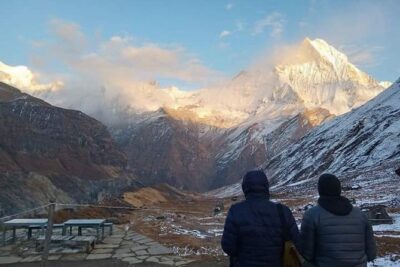
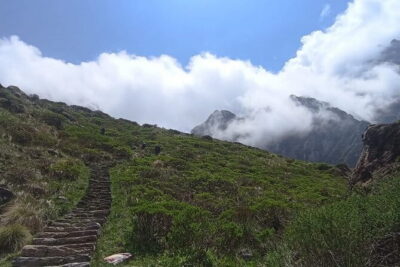
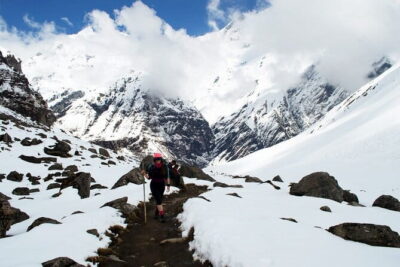
Kathmandu to Annapurna Base Camp (ABC) 5-Day Trek
Read our review →
This tour also appears in