
REVIEW · POKHARA TOURS
Entire Day Pokhara Complete Tour
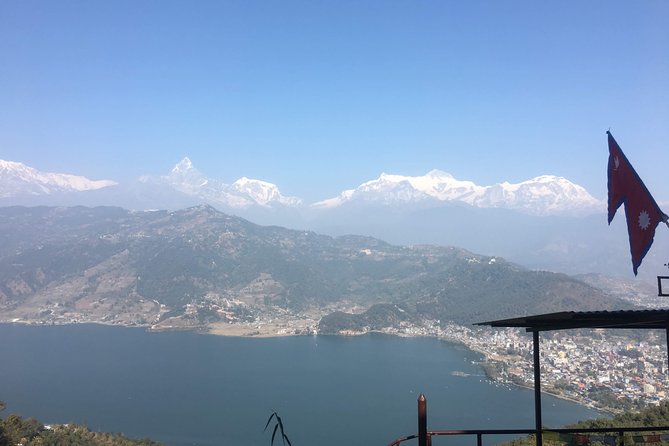
Pokhara packs an impressive amount into one day: Himalayan views at Sarangkot, a boat-lined lake, a waterfall that vanishes underground, sacred caves, museums, temples, and a Tibetan settlement. This private car tour gives you a guide and driver for your own group, so you can see far more than you would on foot.
I like the mix of nature and culture, especially the International Mountain Museum and Gupteswar Gupha. I also like having an air-conditioned vehicle for the long hops between sights. The main catch is timing: 11 stops in 6 to 7 hours makes for a brisk day, and clouds can hide the sunrise, as happened during one outing with guide Gobinda.
Key points to know
- Sarangkot sunrise begins the day: You get a high view over Pokhara and a chance to see the Annapurna range in early light.
- The route covers both famous sights and local culture: Phewa Tal, Devi’s Fall, temples, museums, a Tibetan camp, and the Seti River all appear in one outing.
- You ride in a private air-conditioned vehicle: Only your group participates, which makes the day easier to manage than a large coach tour.
- The schedule is ambitious: Several stops last only 15 to 30 minutes, so expect highlights and orientation rather than long visits.
- Gobinda receives specific praise for his care: He checked that the tour was going well and kept an eye on personal satisfaction.
- The $114.53 price is strongest for small groups: It includes the vehicle, guide service, fees, and taxes, but not food or drinks.
Why this Pokhara day works
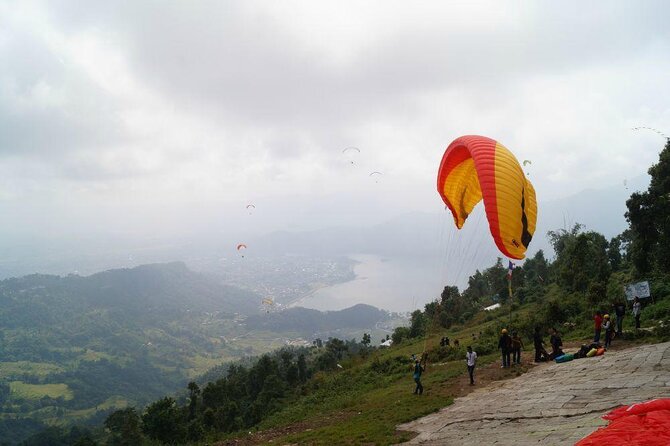
Pokhara is easy to like, but its sights are spread around the city and nearby hills. Sarangkot is north of town, the lake sits at the center of the popular visitor area, and Devi’s Fall, Gupteswar Gupha, and the museums require more driving. A private vehicle saves you the trouble of arranging separate rides.
You also get a licensed guide to explain the religious customs, mountain culture, and local history. That matters at places such as Bindhyabasini Temple and Gupteswar Gupha, where the setting means more when you understand what you are seeing.
The format suits you if this is your first day in Pokhara or if you have limited time. It is less suited to slow exploration. You will stop, look, listen, take photographs, and move on. That is a fair trade for seeing so much in one day, but you should not expect a relaxed visit at every stop.
A few more Pokhara days to weigh up
- Full-Day Tibetan Cultural Tour to Tibetan Settlements Pokhara
★ 5.0 · 184 reviews - Pokhara: Full-Day Sharing Bus Tour on 7 Iconic Destination
★ 4.1 · 179 reviews - Pokhara: Full-Day Private Tour on 7 Iconic Destination
★ 4.8 · 108 reviews
Sarangkot at sunrise, the day’s big gamble
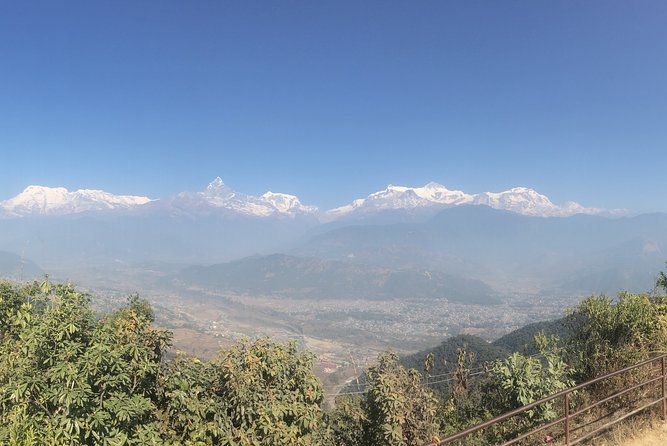
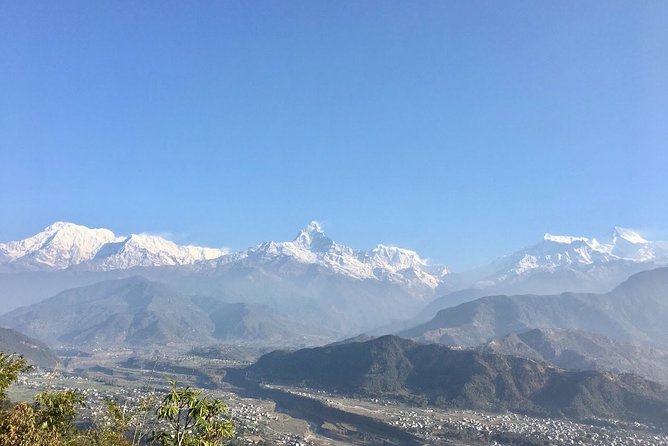
The early trip to Sarangkot is built around sunrise over the Annapurna Himalayan range. From this hilltop area, you also get a broad view of Pokhara city. On a clear morning, this can be the visual high point of the day.
Weather is the gamble. One outing had cloudy conditions, so sunrise could not be seen. No guide can fix a covered mountain range, and you should treat the view as a possibility rather than a promise. The early start is still useful for seeing Pokhara from above, but bring realistic expectations.
The scheduled visit lasts about an hour, including the viewing time. Wear something suitable for an early start, though the tour information does not specify temperatures or clothing requirements. If mountain views matter most to you, this is the stop that deserves your attention before booking.
Phewa Tal and Barahi Temple
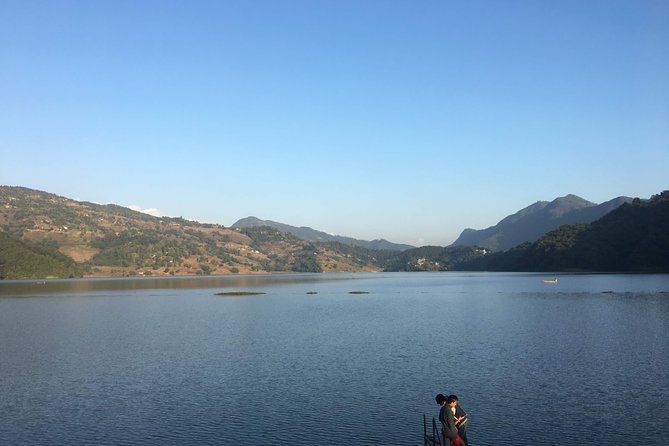
The tour then turns to Phewa Tal, Pokhara’s famous lake. You visit Barahi Temple and explore the lake’s outer area for about 30 minutes.
This is a short introduction rather than a full lake outing. The plan does not include a separate boat ride, and food and drinks are not included. Still, Phewa Tal gives you a useful sense of Pokhara’s setting after the high view from Sarangkot.
Barahi Temple adds a religious layer to the lake visit. You can see how a sacred site fits into one of the city’s best-known natural settings. With only half an hour, keep your visit focused on the temple and the lake edge rather than trying to cover every corner.
Devi’s Fall and the water below the city
At Devi’s Fall, water drops into an underground cave system beneath Pokhara. The attraction is interesting because the action is not only in front of you. Part of the water disappears below ground, giving the site a stronger sense of mystery than an ordinary roadside waterfall.
You have about 25 minutes here. That is enough for a look and photographs, but not a long stay. The name in the supplied details alternates between Devi’s Fall and Devi’s Lake, so expect the waterfall attraction and its underground flow rather than a separate lake visit.
The stop works well alongside Gupteswar Gupha, which comes next. Together, they show the connection between surface water, caves, and the rock below Pokhara.
A different kind of day from the same base:
- ZipFlyer Nepal – The World’s Steepest Zip-line
★ 5.0 · 608 reviews - Bungee Pokhara by HighGround Adventures
★ 5.0 · 366 reviews - From Pokhara: Sarangkot Sunrise Himalayas Tour
★ 4.7 · 218 reviews - ATV Adventure Tour in Pokhara, Nepal
★ 5.0 · 194 reviews
Gupteswar Gupha, a cave with a sacred purpose
Gupteswar Gupha is both a cave and an ancient Shiva temple. Inside, you can see naturally formed stalagmites. During the fall, the route may allow you to go farther into the cave and see the waterfall from inside as it continues toward the river.
You get roughly 30 minutes here. That is enough to see the main features, but cave visits can feel rushed if you want to study the formations or spend time in prayer. The temple also means this is not simply a geological stop. You are seeing a sacred place as well as a natural one.
This is one of the more distinctive stops on the day. The combination of underground water, rock formations, and Hindu worship gives you something that a standard city sightseeing circuit often misses.
Two museums, two different sides of Nepal
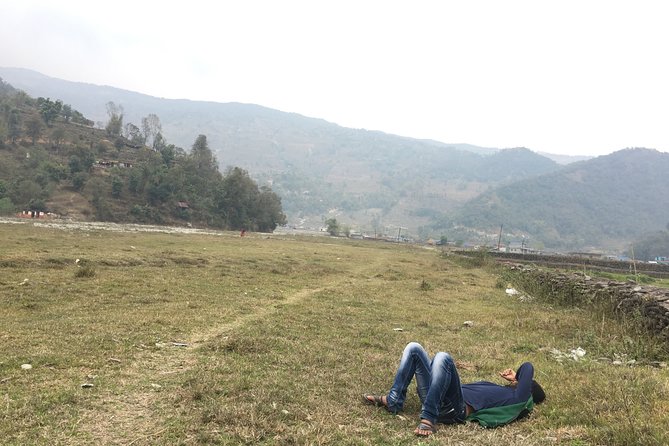
The International Mountain Museum receives about 30 minutes. Its displays focus on the Himalayas, the people connected with them, and the way the mountains continue to inspire people around the world.
I see this as one of the tour’s best choices for context. Mountain views are wonderful, but the museum helps connect those peaks with the people and stories behind them. The guest who rated the outing four out of five specifically singled out this museum as a favorite, which fits the stop’s value for anyone who wants more than photographs.
The 20-minute visit to the Gorkha Museum shifts the focus to the famous Gorkhas and their reputation for bravery around the world. It is a short visit, but it adds another important part of Nepal’s identity.
The two museums are close in schedule but different in subject. One explains the Himalayas and their influence. The other focuses on Gorkha courage and military tradition. If you enjoy museums, you may wish the schedule allowed more time. If museums are not your priority, the brief format keeps the day moving.
The Seti River in two quick views
The Seti River appears twice, first at the Seti River Gorge and then at a high hanging bridge over the Seti Gandaki.
At the gorge, you have about 15 minutes to see how the river cuts through the rock and helped shape Pokhara’s setting. It is a quick stop, but it gives you a useful change from temples and museums. The river is not just scenery here. Its narrow course and depth help explain some of the city’s unusual natural features.
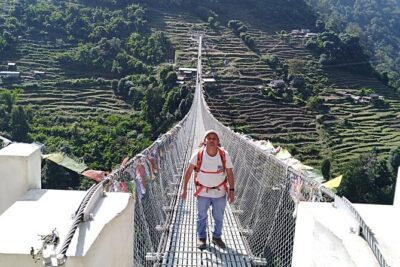
The second stop lasts about 20 minutes and uses a high hanging bridge as a viewing point. These bridges are common in Nepal, and this visit offers a small taste of that part of everyday travel infrastructure.
The tour does not describe a long bridge crossing or a dedicated walk, so plan on a viewpoint stop. If heights trouble you, this may be the moment to take things slowly. If you like seeing how people move through mountainous places, it is a worthwhile addition.
World Peace Stupa and the late-day view
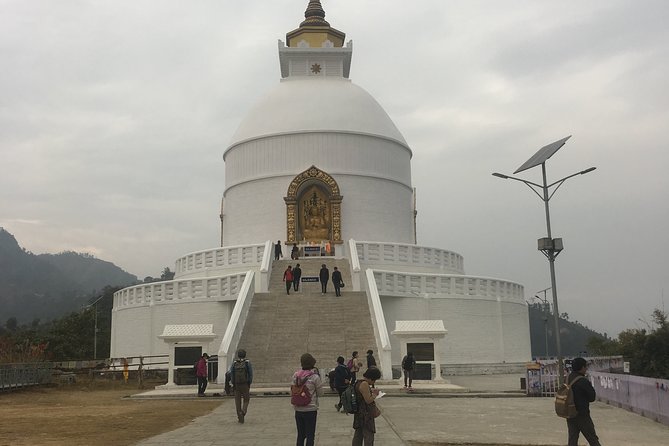
The World Peace Stupa access road leads to a hilltop view over Pokhara Valley and Phewa Lake. The setting is tied to a temple dedicated to Buddha, and the visit is planned around sunset. You have about 45 minutes here, the longest single stop after Sarangkot.
This is a smart contrast to the morning view. Sarangkot looks across Pokhara toward the mountains at sunrise, while the Peace Stupa offers a later view across the valley and lake. The quality of the sunset will depend on weather, just as the morning view does.
The stop is free of admission charges, but that does not make it a throwaway visit. The hilltop position gives you a chance to pause after a busy day and take in the city from another angle. Since the route includes both sunrise and sunset, the tour tries to frame the entire day with views.
There is a practical concern here: fitting both ends of the day into a 6 to 7 hour tour may depend on the starting time and driving conditions. The supplied schedule includes both, but you should confirm the exact pickup and return timing before you book.
Bindhyabasini Temple and living Hindu custom
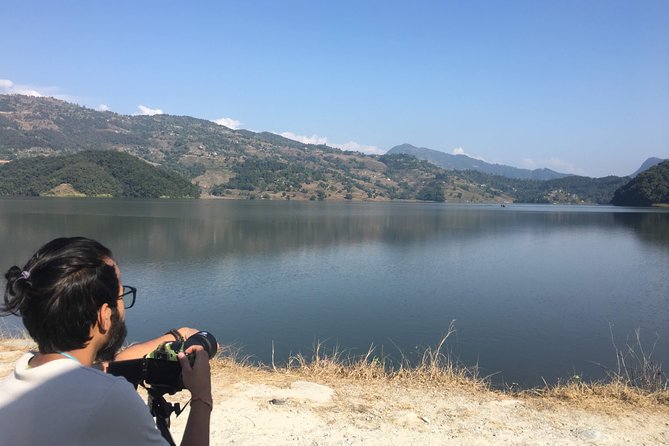
Bindhyabasini is a hilltop temple dedicated to the sacred feminine in Hindu culture. You have about 20 minutes to see the site and observe customs and rituals.
This visit is best approached with respect and attention. It is not presented as a museum display. You are visiting a working religious place, where the meaning comes from worship and custom. Your guide can help explain what you are seeing, though the experience may vary with the timing of religious activity.
The stop is free of admission charges. As with the other short visits, 20 minutes gives you an introduction, not a full study of the temple complex. Keep your expectations practical and allow the setting to speak for itself.
The Tibetan Refugee Camp
The final listed stop is a Tibetan Refugee Camp, where Tibetan people exiled from their country have built a distinct community in Pokhara. The visit lasts about 30 minutes.
This adds a human and political dimension to the day. After seeing mountains, rivers, temples, and museums, you encounter a community shaped by displacement and adaptation. The description does not specify particular workshops, shops, or demonstrations, so you should expect a cultural stop rather than assume a set activity.
For many people, this may be one of the most meaningful parts of the route because it puts a face on the wider Himalayan region. You are not only looking at the mountains. You are also considering the people and cultures connected to them.
Is $114.53 a fair price?
At $114.53 per person, this is not a budget walk through central Pokhara. The value depends heavily on how many people are in your private group and how much you value convenience.
The price includes an air-conditioned vehicle plus all fees and taxes. You also get a licensed guide, and only your group participates. That combination can be useful in Pokhara, where the attractions are spread out and the day starts early.
The cost is easier to justify for a small group that would otherwise need to arrange several taxis and hire separate guidance. Group discounts may also improve the calculation. For one person or a couple on a tight budget, the price deserves closer thought, especially since food and drinks are extra.
I would judge the value this way:
- Good value for a small private group: You share the vehicle and guide while keeping the day flexible within the planned route.
- Good value for a first visit: You cover the city’s major sights without having to plan transport between them.
- Less compelling for slow sightseers: The 15 to 30 minute stops may leave you wanting more time.
- Less compelling if views are your only goal: Clouds can block sunrise or sunset, and much of the price pays for the broader cultural circuit.
The tour is booked an average of 38 days ahead, which suggests that planning early may be sensible during busy periods. Confirmation arrives at booking, and mobile tickets are offered.
What the 6 to 7 hour schedule feels like
This is a full half-day to long half-day outing, not a leisurely single-neighborhood walk. The route moves from hilltop views to lake, waterfall, cave, museums, river sights, a stupa, a temple, and a Tibetan community.
The private format helps. You do not need to wait for a large group at each stop, and the guide can check that the day is working for you. Gobinda receives particular credit for keeping an eye on personal satisfaction throughout the outing, a useful quality when the pace is fast.
Still, the schedule has very little spare room. Sarangkot, Phewa Tal, Devi’s Fall, and the Peace Stupa each need driving time, while the museums and cultural sites need at least a little attention to make sense. I would treat the tour as a well-packed overview.
Food and drinks are not included, so plan for your own needs. The provided details do not state whether a meal break is built in, so ask the operator about that before departure if you need a set eating time.
Pickup is offered, and the vehicle is air-conditioned. Service animals are allowed, public transportation is nearby, and most people can participate. The tour is private, but the supplied information does not give a vehicle size or specific pickup area, so confirm those details when booking.
Who should book this Pokhara tour?
I would recommend it to you if:
- You have only one day to see Pokhara’s main sights.
- You want a private vehicle instead of arranging several rides.
- You enjoy a blend of scenery, religion, museums, and local culture.
- You want a guide to explain places such as Bindhyabasini and Gupteswar Gupha.
- You are comfortable with brief stops and a brisk pace.
- You are traveling with friends or family and can share the private-tour cost.
I would hesitate if you want long walks, extended museum visits, or plenty of time beside Phewa Tal. You may also prefer a later start if sunrise is not important to you, though the supplied schedule is built around early Sarangkot and a later Peace Stupa view.
The four-out-of-five rating and the positive note about Gobinda point to a solid experience with attentive guiding. The missed sunrise shows the fair limitation: weather controls the most dramatic views.
Final call: book it for coverage, not lingering
Book the Entire Day Pokhara Complete Tour if you want one organized day that connects the city’s major sights. The private car, air conditioning, licensed guide, included fees, and wide range of stops make it a practical choice for a first visit.
Skip it if your ideal day means lingering at one temple, taking a long lake outing, or spending hours in a museum. For everyone else, this is a useful Pokhara overview, with the strongest moments likely to be Sarangkot in clear weather, Gupteswar Gupha, the International Mountain Museum, and the sunset view from the World Peace Stupa.
Free cancellation is available if you cancel at least 24 hours before the local start time. Within 24 hours, refunds are not provided and changes are not accepted.
FAQ
How long does the Entire Day Pokhara Complete Tour last?
The tour lasts approximately 6 to 7 hours.
Is this a private tour?
Yes. Only your group participates in the activity.
What is included in the price?
The price includes an air-conditioned vehicle, all fees, and taxes.
Are food and drinks included?
No. All food and drinks are excluded.
Is a guide included?
Yes. The tour includes a licensed guide. Gobinda is one guide specifically associated with the experience.
Can I cancel for a full refund?
Yes. You can receive a full refund if you cancel at least 24 hours before the experience start time. Cancellations or changes within 24 hours are not accepted and are not refunded.
Recently added around Pokhara
- Paragliding in Pokhara★ 5.0 · 3 reviews
- Pokhara: 5-Day Annapurna Base Camp Trek with Hot Spring★ 5.0 · 3 reviews
- Pokhara: 7-Day Annapurna Base Camp Trek via Ghandruk★ 4.3 · 3 reviews
- Pokhara:4-Day Ghorepani Poon Hill Guided Trek via Ghandruk★ 5.0 · 3 reviews
- Peace & Panorama: Stupa and Pumdikot Scenic Drive Tour★ 3.6 · 3 reviews
- Beautiful Sarankot Sunrise with Full Day Sightseeing in Pokhara★ 4.5 · 3 reviews
- 3 Day Australian Camp Dhampus Ghandruk Easy Trek in Pokhara★ 3.5 · 3 reviews
- Overnight Dhampus Australian Camp Easy Hiking from Pokhara★ 5.0 · 3 reviews
Other Pokhara Tours worth a look
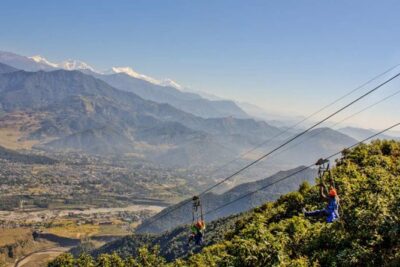
ZipFlyer Nepal – The World’s Steepest Zip-line
Read our review →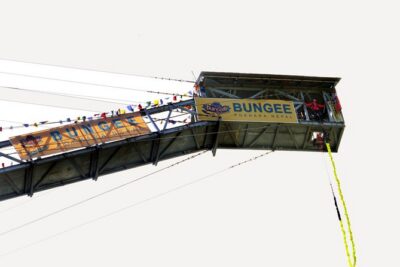
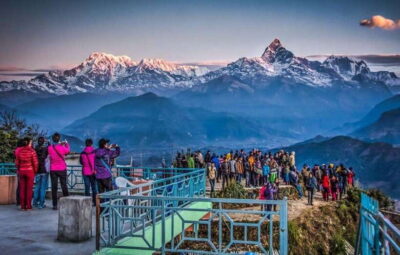

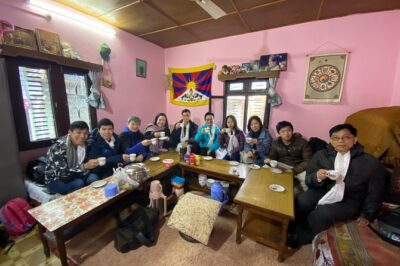
Full-Day Tibetan Cultural Tour to Tibetan Settlements Pokhara
Read our review →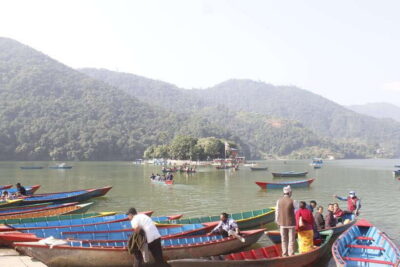
Full-Day Sharing Bus Tour on 7 Iconic Destination
Read our review →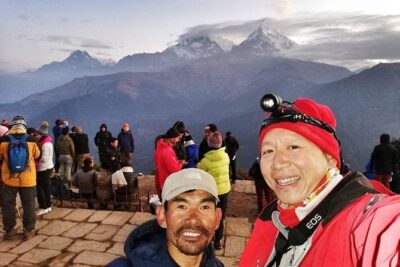
Trekking in Annapurna/Langtang/Everest/Upper Mustang regions
Read our review →This tour also appears in