
REVIEW · POON HILL TREKS
From Pokhara: 3-Day Ghorepani Poonhill Short Trek
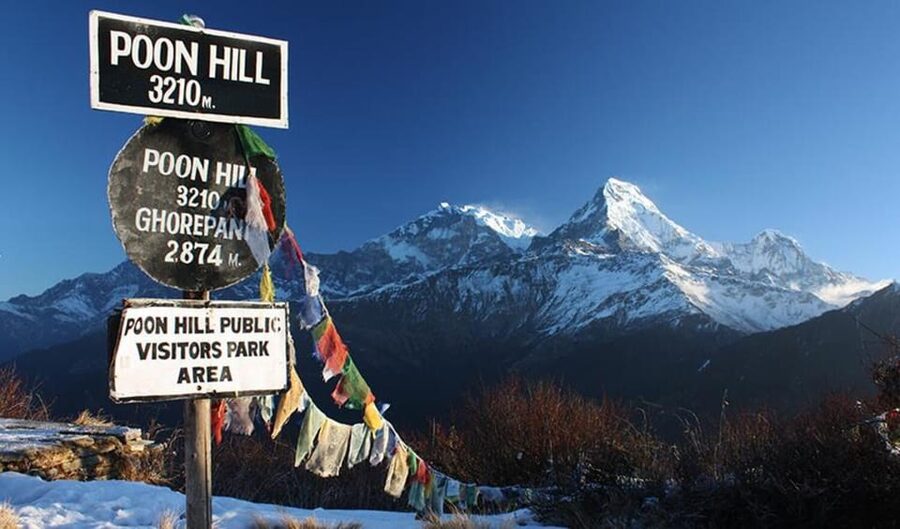
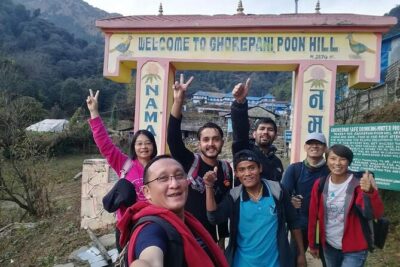
Poon Hill gives you one of Nepal’s finest mountain sunrises without asking you to commit to a long expedition. In three days, you walk from Pokhara through river valleys, Magar villages, farmland, and forest before reaching the 3,210-meter viewpoint above Ghorepani.
I like the compact route, which fits a major Himalayan viewpoint into a long weekend. I also like the practical package: guide, lodging, Pokhara pickup, shared transport, TIMS card, and Annapurna Conservation Area entry are included. The tradeoff is real: the trek is short, but the stone steps to Ulleri and the early-morning climb to Poon Hill can feel tough.
Key points
- Sunrise at 3,210 meters: Reach Poon Hill before dawn for views toward Annapurna, Dhaulagiri, Nilgiri, Himchuli, and Machhapuchchhre.
- A genuine village-to-village walk: Follow the Modi Khola river, pass Birethanti and Tikedhunga, then sleep in Ulleri and Ghorepani.
- A demanding first day: The five to six hours from Nayapul to Ulleri include a long uphill section and many stone steps.
- Forest and mountain scenery: Day two passes through oak and rhododendron forest on the way to Nangathanti and Ghorepani.
- Useful guide support: Guides named in trip reports include Bidur, Kshitiz, and Paras, with help reported for illness, route finding, and difficult sections.
- Good value for a short trek: At $160 per person, the price covers transport, two nights of lodging, guide services, and required permits, but not meals or personal costs.
Why Poon Hill works in only three days
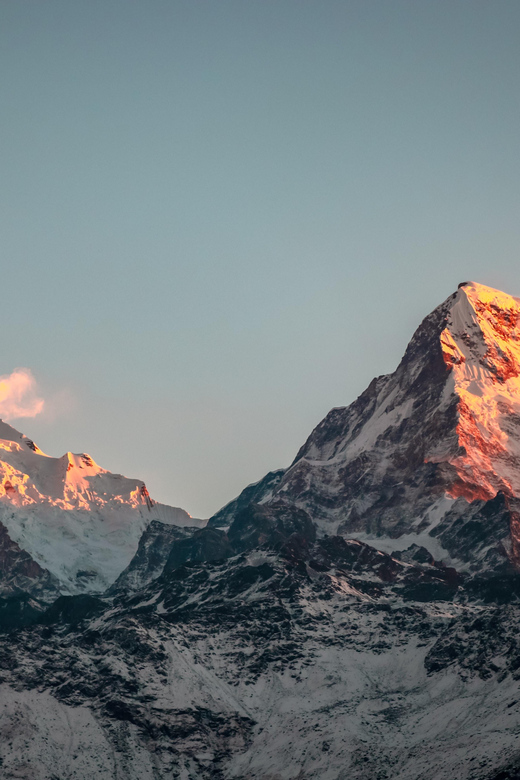
Poon Hill is a smart choice if you want a taste of trekking in Nepal but do not have a week or more to spare. The route begins near Pokhara, a popular base in western Nepal, and reaches the Annapurna Conservation Area quickly.
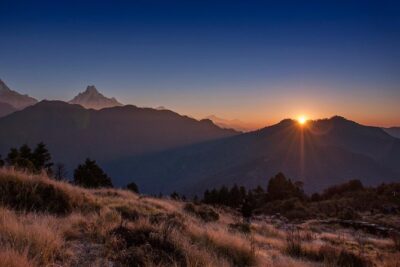
The reward comes early on day three. From Ghorepani, you climb for about an hour to Poon Hill, arriving in time for sunrise. From the viewpoint, the mountain panorama includes Annapurna, Dhaulagiri, Nilgiri, Himchuli, and the distinctive Machhapuchchhre, also known as Fishtail.
The route is short on paper, but it is not a gentle stroll. You spend the first two days gaining height, and the final return to Nayapul is long enough to test tired legs. I would call it suitable for people with ordinary walking fitness, but not effortless for every age or ability.
The description calls it suitable for all skill levels. Treat that as a sign that you do not need technical climbing experience, not as a promise of an easy walk. You should be ready for uphill paths, uneven ground, several hours of walking, and a pre-dawn start.
More Hiking Tours in Pokhara
- Poon hill Trek 3 days
★ 5.0 · 176 reviews - Trekking in Annapurna/Langtang/Everest/Upper Mustang regions
★ 5.0 · 161 reviews - Pokhara: 4-Day Ghorepani, Poonhill & Ghandruk Mountain Trek
★ 5.0 · 132 reviews
Day one, from Pokhara to Ulleri by way of the river
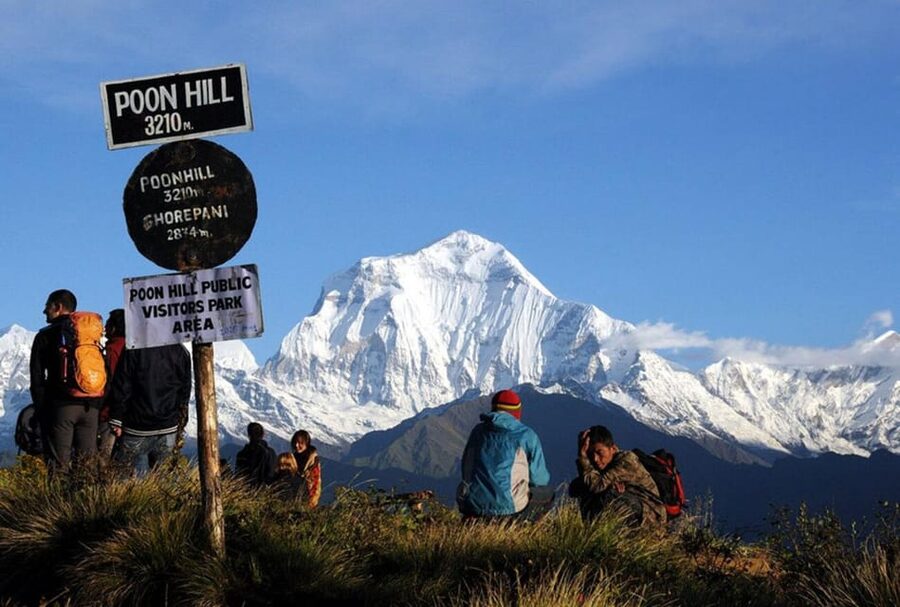
Your guide and car pick you up at your hotel in Pokhara. The shared bus service then takes you from Pokhara to Nayapul, where the walking begins. Transport is included, but the bus is shared, so you should expect a practical transfer rather than a private luxury ride.
The first section follows the Modi Khola river. This is a pleasant way to start because you are not thrown straight into a high mountain trail. The path passes through Birethanti, a small village with a close view of daily life in the foothills.
You then continue toward Tikedhunga. The route moves through villages and cultivated land, giving you more than a series of mountain photo stops. You see the settlements and farmland that make the lower part of the trek feel lived in.
The hard work comes as you climb toward Ulleri. The village sits at about 1,940 meters and is a Magar settlement. The five to six-hour walking time includes the approach from Nayapul and the uphill finish, so your pace, rest stops, and trail conditions will affect the exact timing.
Ulleri is an important overnight stop because it breaks up the height gain. You sleep in a guest house or lodge, rather than returning to Pokhara after a tiring day. The accommodation is described as cozy and suitable for an overnight stay. One useful detail from the trip reports is that some lodges have heating and serve good food, though meals are not part of the $160 price.
The day’s main drawback is the climb. If your legs are not used to sustained uphill walking, Ulleri may feel like the toughest part of the trip. A guide can help manage the pace, and one guide, Kshitiz, was praised for making bamboo walking sticks when a trekker needed extra support.
Day two, oak and rhododendron forest to Ghorepani
After breakfast, you leave Ulleri and continue toward Banthali at about 2,250 meters. The trail enters oak and rhododendron forest, a welcome change from the more open village sections of day one.
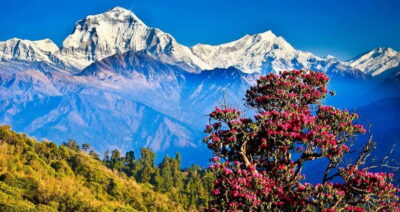
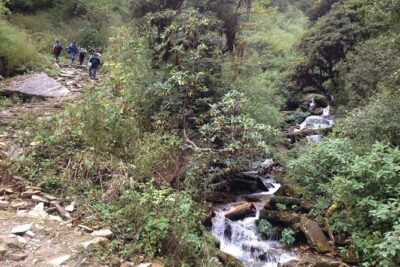
The forest is one of the best reasons to choose this route. You get shade, changing plant life, and a sense of moving deeper into the hills. During the rhododendron season, the trees can add strong color to the walk, although the exact conditions depend on the time of year.
From Banthali, the route continues to Nangathanti, at roughly 2,460 meters. You keep gaining height, and the final approach to Ghorepani includes about an hour of uphill walking.
Ghorepani sits at approximately 2,870 meters. It is a high Himalayan settlement and the base for the Poon Hill sunrise climb. The village has lodges where you spend the night, giving you a chance to eat, rest, and prepare clothing and shoes before the early start.
The four to five-hour walking time makes day two shorter than day one, but the altitude gain matters. You may feel the thinner air, particularly near Ghorepani. The route does not involve technical climbing, yet the combination of uphill walking and height can still make the day tiring.
Plan your evening around the morning climb. Keep your warm layers, water, headlamp if you have one, and walking shoes ready. The information provided does not specify an exact departure time for Poon Hill, so your guide will set the morning schedule based on sunrise and local conditions.
Day three, sunrise from Poon Hill
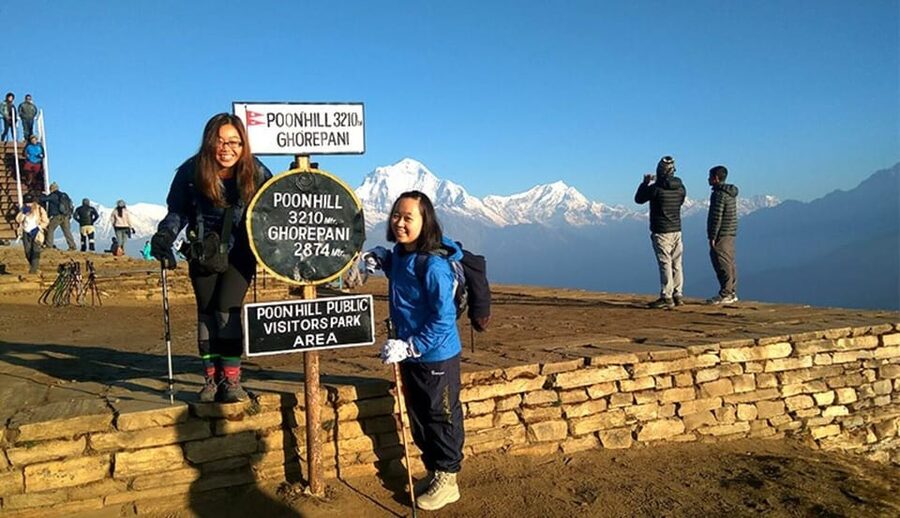
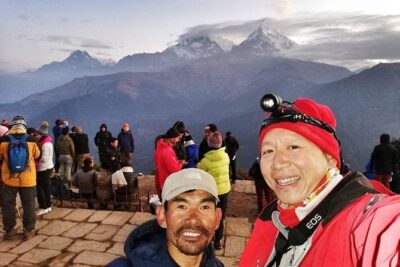
The final morning begins before dawn with a one-hour climb from Ghorepani to Poon Hill. You walk in darkness or low light, then wait for the sun to reach the peaks.
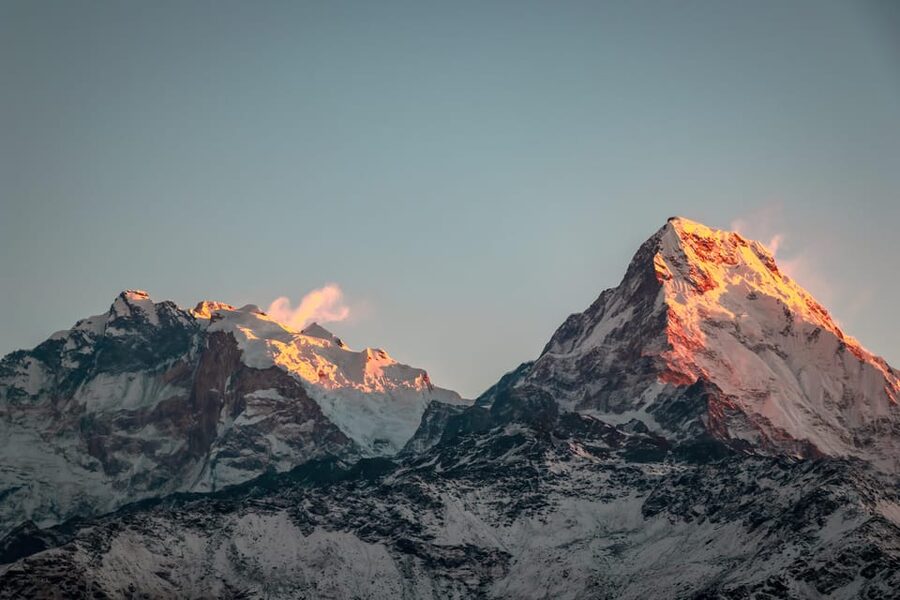
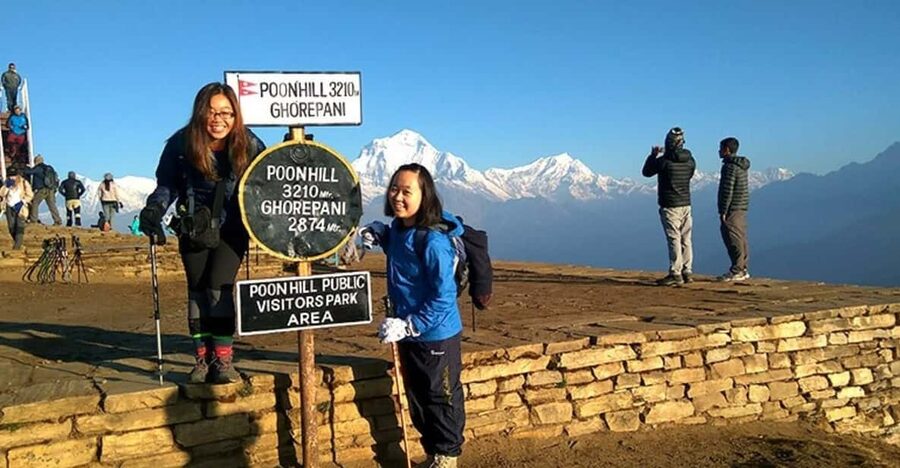
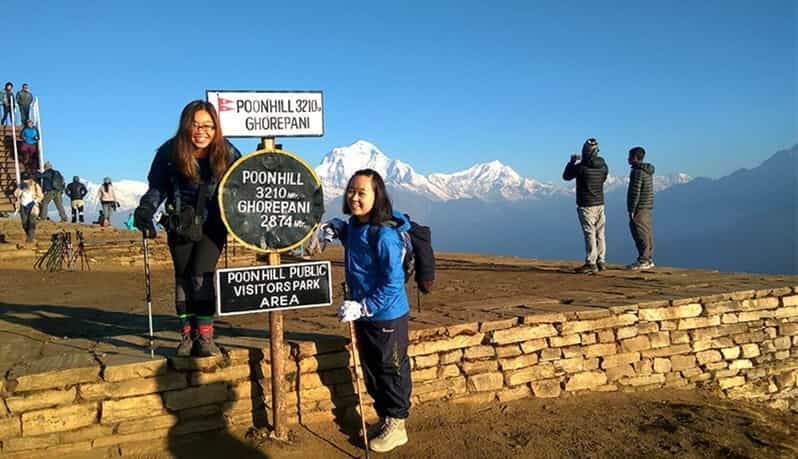
At 3,210 meters, Poon Hill is famous for its broad mountain view. The stated panorama includes Annapurna, Dhaulagiri, Nilgiri, Himchuli, and Machhapuchchhre. The appeal is not only the number of peaks. It is the changing light, as the first sun touches the high summits while the valleys remain in shadow.
This is the moment that gives the trek its strong value. You do not spend a week reaching an isolated base camp, but you still get a memorable high-altitude viewpoint and a clear sense of Nepal’s Himalayan scale.
The climb can be cold and tiring, especially after two walking days. It is also the one part of the trip that depends heavily on visibility. Mountain weather can change, and the provided information does not promise clear skies. You should book this trek for the route and experience as a whole, not only for a guaranteed photograph.
After sunrise, you return to the lodge for breakfast. The day is not finished. You then walk back toward Nayapul before taking a roughly two-hour drive to Pokhara. This return section can feel long, since you have already been walking for two days and have started the morning early.
The operator drops you at your Pokhara hotel. That door-to-door finish is useful, particularly if you have onward plans or do not want to arrange a separate transfer after the trek.
More Poon Hill Treks in Pokhara
- Ghorepani – Poon Hill Trek 3N-4D
★ 5.0 · 125 reviews - From Pokhara: 3-Day Ghorepani Poon Hill Trek with Guide
★ 4.9 · 68 reviews - 4-Day Private Poon Hill Trekking Tour
★ 5.0 · 58 reviews - Pokhara: 3-Day Ghorephani and Poon Hill Private Trek
★ 5.0 · 58 reviews
What the guide adds to the walk
A guide is more than someone who points toward the next village. On this route, the guide helps you keep a workable pace, find the right path, organize lodge arrangements, and handle small problems.
Guides named in the supplied trip details include Bidur, Kshitiz, and Paras. You may not receive one specific guide, but these names give you an idea of the personal service associated with the operation. Bidur was described as organized and helpful, while Paras was praised for route support and for helping the group reach the destination without problems.
Kshitiz’s response to a sick trekker is especially useful to know about. The guide helped when someone became ill on the first day, and also produced bamboo walking sticks for a difficult section. That does not remove the need for your own preparation, but it shows why a local guide matters on a short trek with a tight schedule.
The group is described as private, although the Pokhara to Nayapul transport is shared. That combination gives you more personal attention on the trail while keeping the road transfer less expensive.
Lodges, meals, and cash on the trail
Accommodation at guest houses and lodges is included for the two nights in Ulleri and Ghorepani. The rooms are described as comfortable for an overnight stay, with heating reported at some sleeping places.
Do not expect city-hotel standards. Lodge accommodation is part of the mountain experience, and the key benefit is having a place to sleep along the route. The available details do not specify private bathrooms, room layouts, or exact facilities, so ask the operator if those points matter to you.
Meals are not included. You can buy food along the way, but prices are higher than in Pokhara. Carry enough cash for meals and personal purchases, since the supplied details specifically warn that costs rise on the trail.
The $160 price therefore covers the basic structure of the trek rather than every expense. Your likely extra costs are meals and personal items. Budget for these before leaving Pokhara so you are not forced to cut corners after a long day of walking.
What the $160 price really covers
For a three-day guided trek, $160 per person is attractive because several costly or necessary pieces are bundled together. You receive:
- Hotel pickup and drop-off in Pokhara
- Shared transport between Pokhara and Nayapul
- Two nights of guest house or lodge accommodation
- An English-speaking trekking guide
- TIMS card fees
- Annapurna Conservation Area entry fees
The permits matter. You do not have to arrange the TIMS card or conservation-area entrance separately, and the guide helps keep the trip organized.
The price is less all-inclusive than it may first sound because food and personal expenses are excluded. It is also worth noting that the return drive to Pokhara is included as part of the arranged transport, while the morning and trail logistics are handled by the guide.
I see the strongest value for someone who wants a simple, short booking from Pokhara. You are paying for the route, permits, guide, lodging, and transport in one package. If you prefer to plan every lodge and transfer yourself, you might spend less, but you would also take on more organization.
Who should choose this short trek
This route suits you if you have limited time in Nepal and want a clear introduction to Himalayan trekking. It also works well if you want a private group rather than a large shared walking party.
You should be comfortable walking for five to six hours on the first day and four to five hours on the second. The trail includes uphill sections, and the final return walk on day three adds more effort after the sunrise climb.
The trek may suit first-time trekkers who have reasonable fitness and a guide for support. It is less suitable if you want a relaxed holiday with little exertion, or if you dislike early mornings, simple lodges, and paying separately for meals.
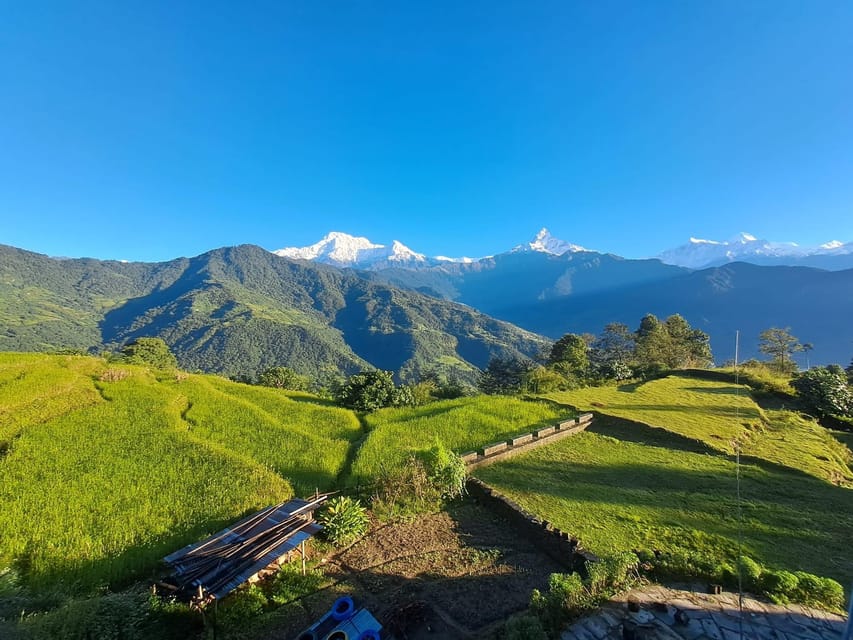
The route also gives you a useful mix of scenery. You walk beside the Modi Khola river, pass villages and farmland, enter oak and rhododendron forest, stay in Ulleri and Ghorepani, then reach a high viewpoint. That variety makes the short duration feel worthwhile.
Practical planning before you leave Pokhara
Wear shoes with a firm grip. The route includes village paths, forest trail, and stone steps, and the supplied trip details specifically advise bringing suitable equipment for difficult conditions.
Bring layers for the early Poon Hill climb. The viewpoint is at 3,210 meters, and the start is before sunrise. You can remove layers as the day warms, but you cannot replace a warm jacket you left at the hotel.
Carry cash for meals and personal expenses. Food along the route costs more than in Pokhara, and the price does not include meals.
Walking sticks can help on the steep sections. A guide may be able to provide or make simple support, as Kshitiz did with bamboo, but it is better to bring equipment you already trust.
Keep your schedule flexible after returning to Pokhara. The planned drive from Nayapul takes about two hours, but the overall return depends on your walking pace and road conditions. The booking allows cancellation up to 24 hours before departure for a full refund, and you can reserve now and pay later, which helps if your plans are still moving.
Should you book the Ghorepani Poon Hill trek?
Book it if you want a short, guided Himalayan trek from Pokhara with permits, lodging, and transport handled for you. The sunrise viewpoint is a strong payoff, and the route gives you villages, forest, river scenery, and mountain views rather than one isolated attraction.
Think twice if you want every meal included, dislike steep uphill walking, or need hotel-style accommodation. The first day is demanding, day three starts early, and the return walk is longer than the sunrise hike alone might suggest.
For a three-day schedule, the $160 package offers solid practical value. I would choose it when time is limited and I wanted a local guide, a private group, and a well-defined route without arranging every detail myself.
FAQ
How long is the Ghorepani Poon Hill trek?
The experience lasts three days. Walking takes about five to six hours on day one, four to five hours on day two, and about one hour to reach Poon Hill on the final morning before the return walk and drive.
Where does the trek start?
The walking portion starts at Nayapul, reached by shared bus from Pokhara. Pickup from your Pokhara hotel is included.
How high is Poon Hill?
Poon Hill is at approximately 3,210 meters. Ghorepani, where you spend the second night, is at about 2,870 meters.
What mountains can you see from Poon Hill?
The stated views include Annapurna, Dhaulagiri, Nilgiri, Himchuli, and Machhapuchchhre.
Are meals included?
No. Meals are available for purchase along the route, and prices are higher than in Pokhara.
Is accommodation included?
Yes. Accommodation at guest houses or lodges is included for the overnight stays in Ulleri and Ghorepani.
What is included in the $160 price?
The price includes hotel pickup and drop-off, shared transport between Pokhara and Nayapul, lodge accommodation, an English-speaking guide, TIMS card fees, and Annapurna Conservation Area entrance fees. Personal expenses and meals are not included.
More 3-Day Experiences in Pokhara
- 3-Day Poon Hill Trek from Pokhara.
★ 5.0 · 45 reviews - From Kathmandu/Pokhara: Private 3-Day Chitwan Safari Tour
★ 4.7 · 34 reviews - From Pokhara: Budget 2 Night 3 days Poon hill trek
★ 5.0 · 20 reviews - 3 Days 2 Nights Poon Hill Trekking
★ 5.0 · 17 reviews
Recently added around Pokhara
- Paragliding in Pokhara★ 5.0 · 3 reviews
- Pokhara: 5-Day Annapurna Base Camp Trek with Hot Spring★ 5.0 · 3 reviews
- Pokhara:4-Day Ghorepani Poon Hill Guided Trek via Ghandruk★ 5.0 · 3 reviews
- Pokhara: 7-Day Annapurna Base Camp Trek via Ghandruk★ 4.3 · 3 reviews
- Peace & Panorama: Stupa and Pumdikot Scenic Drive Tour★ 3.6 · 3 reviews
- Beautiful Sarankot Sunrise with Full Day Sightseeing in Pokhara★ 4.5 · 3 reviews
- 3 Day Australian Camp Dhampus Ghandruk Easy Trek in Pokhara★ 3.5 · 3 reviews
- Overnight Dhampus Australian Camp Easy Hiking from Pokhara★ 5.0 · 3 reviews
Other Poon Hill Treks worth a look
4-Day Ghorepani, Poonhill & Ghandruk Mountain Trek
Read our review →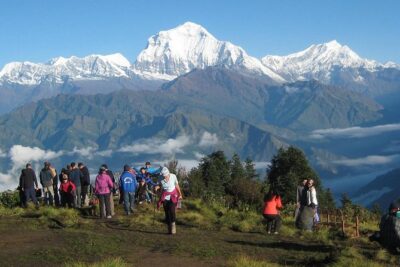
This tour also appears in