
REVIEW · KATHMANDU TOURS
Knife Khukuri Making Workshop
A glowing piece of steel, a heavy hammer, and a blacksmith named Indra with more than 40 years at the forge make this khukuri workshop far more personal than buying a knife in a shop. You will help shape a six-inch blade, learn why the khukuri matters in Nepal, and take the finished knife home.
I like the honest hands-on balance: you hammer the iron and help with the first grinding, while the expert handles the dangerous sharpening and final shaping. I also like the warm family setting, with tea, water, and snacks rather than a polished tourist factory. The main consideration is that you will not make every part yourself, since the sharp grinding and skilled work must be handled by the host.
Key points at a glance
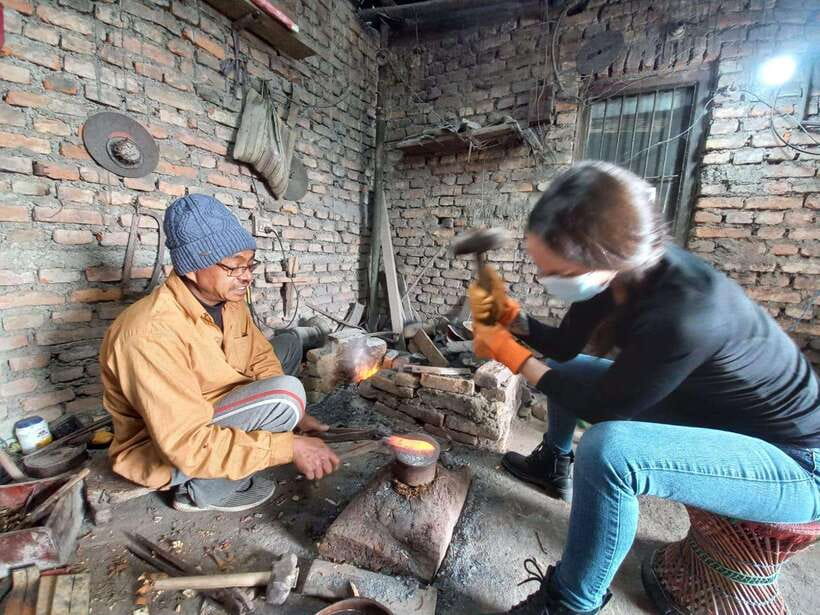
- A master blacksmith named Indra: Learn beside a craftsman who has spent more than four decades making khukuris.
- Real participation: Hammer the raw iron and take part in the first grinding, with the professional completing the risky work.
- A six-inch souvenir: Leave with a usable handmade knife and its standard cover.
- A small local visit: Groups are limited to five, and hotel pickup and drop-off are included.
- More than metalwork: Guides such as Namrata, Sajeena, and Swayam explain the khukuri’s place in Nepali life and tradition.
- A practical price: At $73 per person for four hours, the cost covers transport, tools, refreshments, and the finished knife.
Why the khukuri matters before the hammer falls
The khukuri is not just a curved blade sold to visitors. It is tied to the loyalty and courage associated with Gurkha warriors and is traditional among Nepal’s hill communities. Its practical uses range from shaping timber to cutting meat and vegetables, so this is a working tool as well as a cultural symbol.
The blade is made from tempered steel and has a strong curve. A wooden or buffalo-horn handle fits into the hand, while the blade is carried in a wood-and-leather scabbard. Near the handle, you will see a small notch. It is said to help stop blood from reaching the handle, and it also carries a religious meaning linked with Brahma, Vishnu, and Shiva.
That background gives the workshop some weight. You are not simply making a souvenir with a Nepal-shaped label. You are handling a form that has practical use, cultural meaning, and a long connection with local craft.
The workshop focuses on a small six-inch blade. That is a sensible size for a visitor activity. It is large enough to show the curved form of the khukuri, yet compact enough to finish during a four-hour visit.
More hands-on workshops in Kathmandu:
- Half day cooking class in Thamel kathmandu
★ 5.0 · 607 reviews - Kathmandu: Local Women-Led Nepali Cooking & Momo Class
★ 4.9 · 360 reviews - Kathmandu: Local Lead Nepali Cooking & Momo-Making Class
★ 5.0 · 212 reviews
Hotel pickup and the trip to the smith’s home
Your experience begins with pickup from your hotel lobby. The transport takes you to the blacksmith’s home in the Bagmati Zone, where the work takes place in a personal setting rather than a large commercial workshop.
That change of setting matters. You are seeing the craft where it is practiced, and you have a chance to meet the maker and the family around him. Several guides have helped make this visit easy to follow, including Namrata, Sajeena, and Swayam. English and Hindi are available, and the guide explains the process as it unfolds.
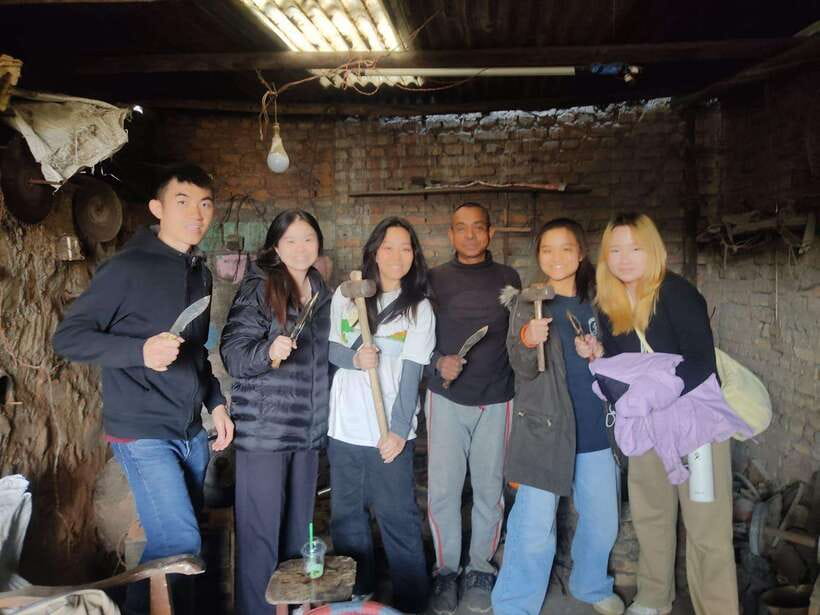
The group is limited to five people. I like that number for an activity involving a hot forge and a heavy hammer. You should have a better view of the work, more room to take part, and a fair chance to ask questions without competing with a busload of people.
The timing is listed as four hours, though some of the knife-making process can move faster depending on the work being done. One account describes the transformation from raw metal to finished knife in under three hours, leaving time for conversation, explanations, refreshments, and the final handover.
Meeting Indra and seeing the raw metal
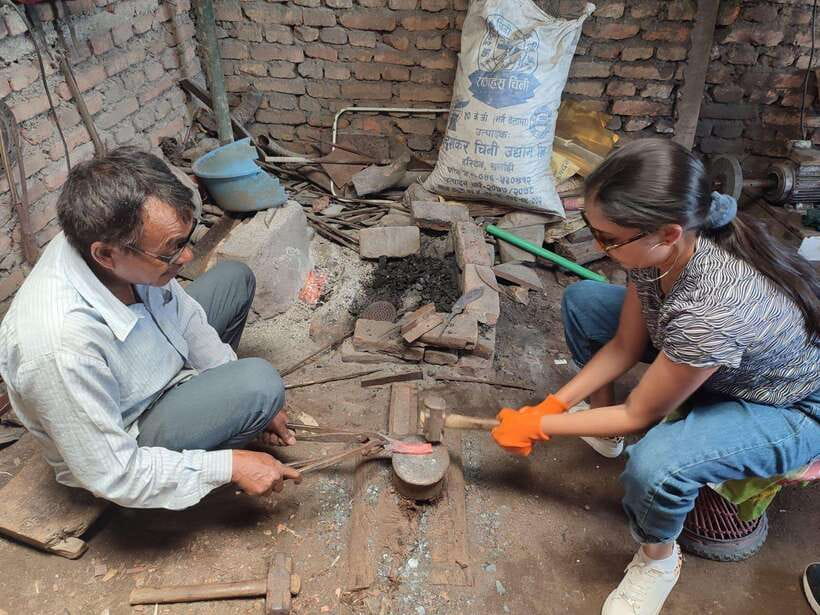
The blacksmith is identified as Indra, and he has been making knives for more than 40 years. One account gives his experience as about 45 years, so the safe point is simple: you are working beside someone with several decades at the forge.
The first lesson is visual. A plain piece of iron does not look much like a khukuri. Under the blacksmith’s direction, it begins to take on the familiar curved shape through heat, force, and repeated correction.
This is where the workshop earns its keep. A shop purchase lets you admire the finished blade, but here you see how much judgment sits behind its shape. The curve, thickness, handle, and edge are not casual details. The blacksmith decides how the metal needs to move and when it is ready for the next step.
Your guide can also explain the traditions behind the blade. Guides named in the supplied details include Namrata, Sajeena, and Swayam. Namrata is specifically noted for her warmth and attentiveness, while Sajeena is described as providing clear information in excellent English. That kind of language help is useful because the workshop is as much about understanding the object as making it.
Hammering the iron yourself
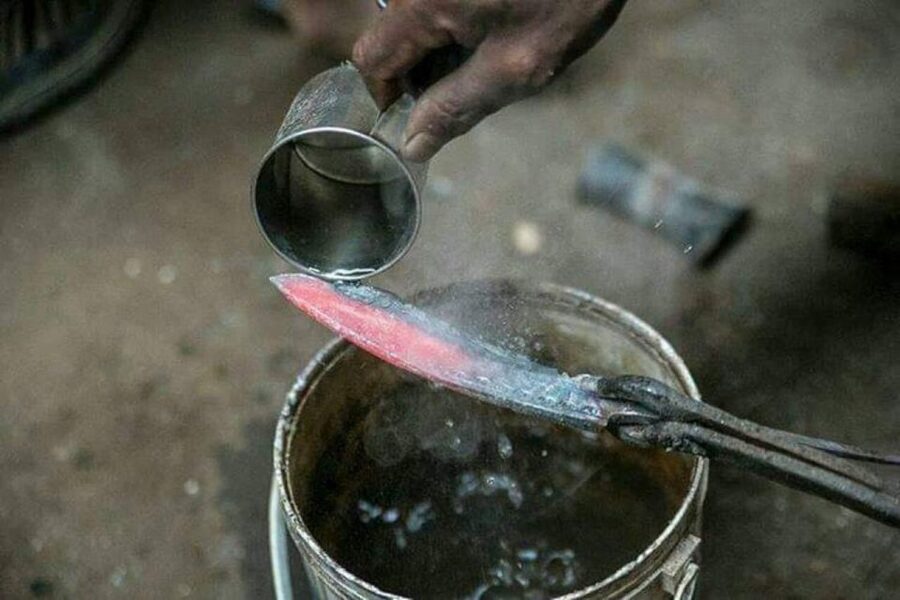
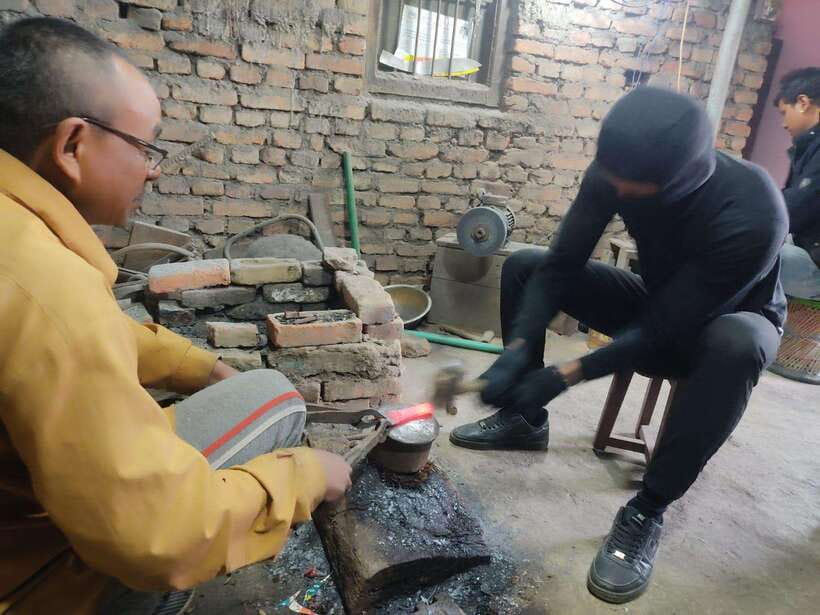
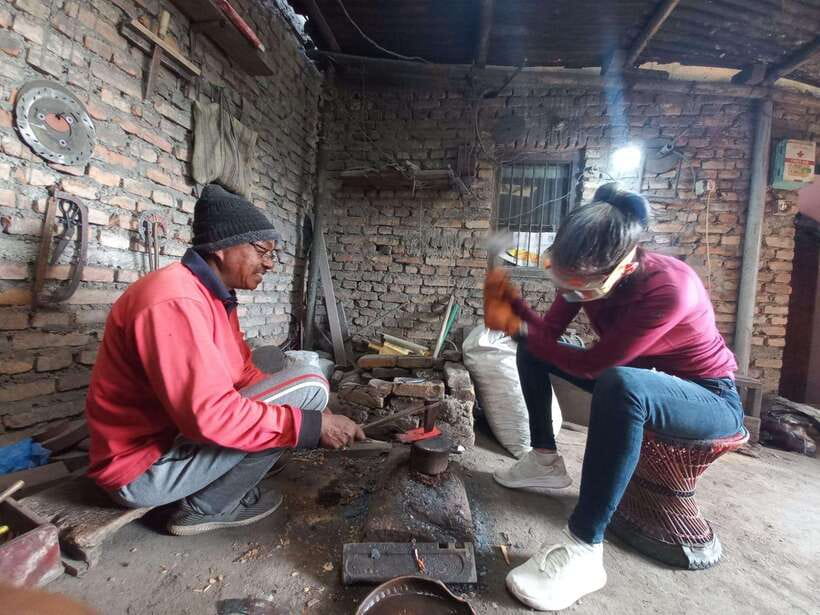
Hammering is the main hands-on part of the visit. You will help shape the raw iron under the blacksmith’s direction. Expect this to be physical work, but do not mistake it for a do-it-yourself forge where you control every movement.
The craft requires timing and strength. The professional decides where the hammer should land and how the blade should develop. Your role is to take part in the safer sections, feel the force needed to move the metal, and see how repeated blows produce a recognizable blade.
This is the part I would value most. The hammer gives you a direct connection to the work. You are not standing behind a rope while someone makes a knife for you. At the same time, the expert remains in control, which keeps the activity sensible and protects the quality of the finished piece.
Families can also take part at a level that suits them, according to the supplied details. One family was able to include older children with help from the host. Still, the activity is not suitable for children under 10, and the hammering area involves hot metal and tools. Follow the guide’s instructions closely.
Wear long pants. That is the only clothing requirement given, but it is a sound one for a working forge. Avoid treating the visit like a neat craft class. It is a real metalworking environment, and practical clothing makes sense.
A few more Kathmandu days to weigh up
- Everest Base Camp Trek – 14 Days
★ 5.0 · 1,499 reviews - Private Kathmandu Sightseeing Tour | UNESCO World Heritage sites
★ 5.0 · 756 reviews - Everest Base Camp Helicopter Tour landing at Everest View Hotel
★ 5.0 · 668 reviews - Everest Base Camp Trekking
★ 5.0 · 485 reviews
Grinding, sparks, and the limits of your role
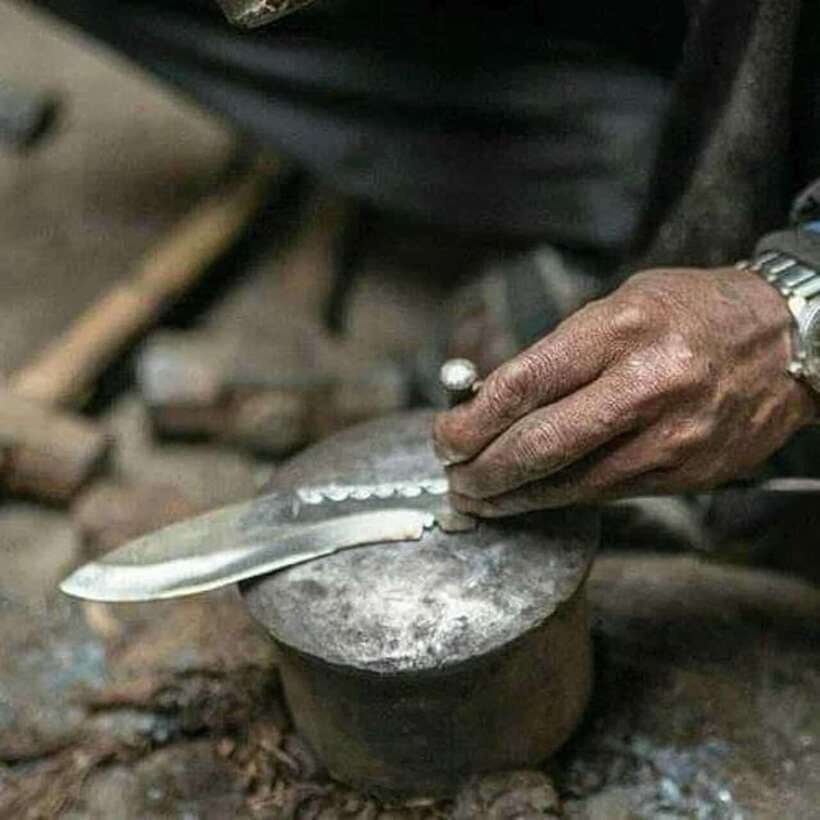
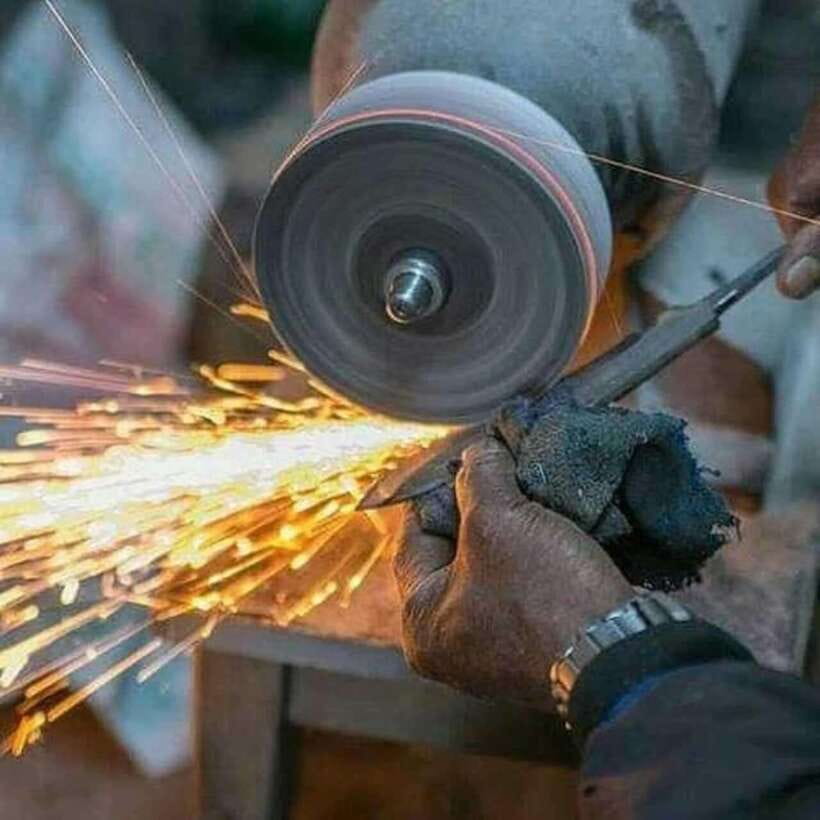
After hammering, you will take part in the first grinding. This lets you see the rough surface begin to become a cleaner blade.
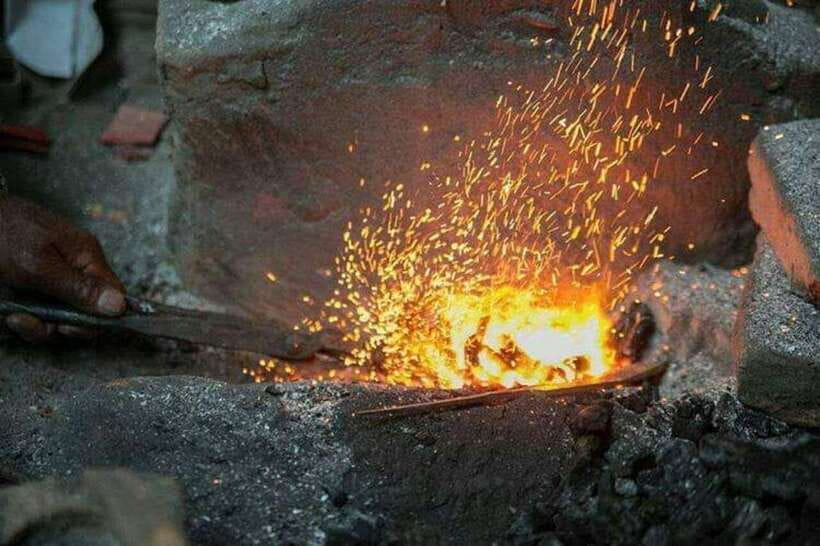
The host, not you, handles the blade grinding that creates sparks and the more dangerous sharpening work. You are specifically advised to stay clear during this process. That limit is important. Some people may arrive expecting to perform every stage, but a khukuri requires skill, control, and safe handling. The professional work is not a shortcoming. It is the reason you can take home a well-formed knife rather than a rough piece of metal.
The supplied experience details identify hammering and the first grinding as the main steps in which you participate. The blacksmith handles the difficult formation of the distinctive khukuri shape and the final sharpening. You should think of this as guided blacksmithing, not a complete apprenticeship.
You will still see the most interesting transformation. The dull metal becomes a curved blade, and the edge gains its purpose. The process makes it easier to understand why a handmade khukuri can be admired for both its appearance and its usefulness.
Tea, snacks, and a family welcome
Tea, water, and snacks are included. One account specifically describes tea and guava from the family’s garden. These small touches help slow the pace and make the visit feel like a meeting with local people rather than a timed production line.
The refreshments also provide a natural pause between stages. Four hours around a forge can be tiring, and the break gives you time to talk with the guide and the blacksmith. You can ask about the knife, local customs, and the meaning of the khukuri.
The family setting is one of the strongest reasons to choose this activity over a standard shopping stop. The craft remains the focus, but the human contact gives it context. You see the person behind the work and learn about a family-run business whose skill has been passed through years of practice.
The setting may not suit someone looking for a polished, museum-style demonstration. A home workshop can be more basic and less predictable than a visitor center. That is also its appeal. You get a closer look at the working conditions and the people who make the knife.
The handle, cover, and finished knife
The process includes making the handle, but the supplied details do not promise that every visitor will personally complete this stage. The blacksmith handles the skilled work needed to finish the knife safely and properly.
The standard package includes a knife cover, or scabbard. The traditional scabbard uses wood and leather. A horn or bone cover can be made for an extra cost, so ask about that option if the presentation of the souvenir matters to you.
The finished blade is a small six-inch khukuri. It is described as sturdy, high quality, and made with hard steel in the workshop. That makes it different from simply picking up a soft-steel decorative version at a market, though the final result will depend on the blacksmith’s work and the chosen materials.
I would treat the knife as a useful keepsake with cultural meaning, not as a claim to expert knife-making skill. You have helped with key stages, but Indra’s experience is responsible for the final shape, edge, and finish. That division is clear and fair.
Is $73 good value?
The price is $73 per person for four hours. That includes hotel pickup and drop-off, all tools, the finished knife, a standard cover, tea or water, and snacks.
Compared with a short demonstration, this costs more because you are paying for time, transport, instruction, materials, and a handmade object. The knife alone is not the only measure of value. You are also paying for access to a skilled blacksmith, a small group, translation, and the chance to participate in a traditional craft.
The price looks strongest if you already want a meaningful Nepali souvenir. A market knife may cost less, but it will not give you the same connection to the maker or the process. If you have no interest in knives, metalwork, or cultural craft, $73 may feel high for a four-hour activity whose dangerous stages you only watch.
The included hotel transport adds practical value. You do not have to arrange your own way to the home workshop, and the return trip is included. Transport received a perfect score from 86 percent of the supplied ratings, which supports choosing this as an easy half-day addition to a Nepal itinerary.
Free cancellation up to 24 hours before the activity and reserve-now, pay-later booking also reduce the risk when your plans are still shifting. Check the available starting times when booking, since the duration is fixed at four hours but the start time is not listed.
Who will enjoy this workshop most?
I would choose this for you if you want a souvenir with a story and prefer meeting a local craftsperson to browsing a row of shops. It suits adults, couples, families with children over 10, and anyone curious about how steel becomes a working blade.
It is also a good choice for repeat visitors who have already seen major cultural sights and want something more personal. The workshop gives you a close look at a family-run craft and lets you ask questions through an English- or Hindi-speaking host.
You should think twice if you dislike sparks, heat, noise, or hands-on work. The host manages the hazardous parts, but you will still be near a forge and handling tools. Long pants are required, and the activity is not suitable for children under 10.
The experience can work for families, but it is not a free-form children’s craft session. The adults and older children can participate where it is safe, while the blacksmith takes over the technical stages.
Practical advice before you book
Reserve enough space in your day for the full four hours, including pickup, drop-off, conversation, and refreshments. The small group limit of five is useful, especially if you want time with the blacksmith or need explanations translated.
Tell your guide what level of participation you want. The supplied details show that the host can let people do as much as their ability allows, within safe limits. You can hammer more, watch more, or take a quieter role while still following the full process.
Wear long pants and sensible clothing. Keep clear of the sparks during grinding, and listen when the host tells you where to stand. The activity involves a real blade, so this is a place for careful attention rather than casual wandering around the work area.
If you want a horn or bone cover, budget for the extra charge. The standard knife cover is included, but those upgraded materials are not.
The overall rating is 4.9 from 38 ratings, and the most praised features are consistent: the warmth of the guides, the skill of Indra, the personal home setting, the quality of the knife, and the chance to hammer the metal yourself. Those are the points that matter most when deciding if the workshop fits your trip.
Should you book the Knife Khukuri Making Workshop?
Book it if you want to understand a famous Nepali object by helping create one. The combination of Indra’s long experience, a small group, hotel transport, guide support, and a finished six-inch khukuri gives the $73 price solid value for the right person.
I would especially recommend it to anyone who values local contact over a quick purchase. You will not perform every stage, and the workshop is not suitable for young children, but those limits keep the activity safe and protect the quality of the knife.
Skip it if you only want a cheap souvenir or dislike forge work. For everyone else, this is a focused, memorable half-day experience with a practical result: a knife you helped shape and a better understanding of why the khukuri matters in Nepal.
FAQ
Where does the Knife Khukuri Making Workshop take place?
The workshop takes place in the Bagmati Zone of Nepal, at the blacksmith’s home workshop.
How long does the activity last?
The experience lasts four hours.
How much does the workshop cost?
The price is $73 per person.
Is hotel transportation included?
Yes. Pickup from your hotel lobby and drop-off afterward are included.
How many people can join the group?
The activity is limited to five participants.
Which parts of the knife-making process can I do?
You can take part in hammering the iron and the first grinding.
Do I sharpen the blade myself?
No. For safety, the host handles the blade grinding that creates sparks and the more difficult sharpening work. You should stay clear during that stage.
What size knife will I make?
You will make a small khukuri with a six-inch blade.
Is a knife cover included?
Yes. A standard knife cover is included. A horn or bone cover is available at an extra cost.
What should I wear, and can young children participate?
You should bring or wear long pants. The activity is not suitable for children under 10.
Recently added around Kathmandu
- Kathmandu Airport Pickup and Drop-off Services★ 5.0 · 3 reviews
- Kathmandu Paragliding★ 5.0 · 3 reviews
- Explore The Beauty Of Langtang Valley In 8-Days Trek★ 5.0 · 3 reviews
- Kathmandu Chandragiri Cable Car and Swayambhunath Private Tour★ 5.0 · 3 reviews
- Kathmandu: Nightlife and Pub Crawl Tour★ 5.0 · 3 reviews
- Kathmandu: Momo Making Class with a Local Chef★ 5.0 · 3 reviews
- Mountain Flight Experience in Nepal★ 4.5 · 3 reviews
- Everest Base Camp Trek★ 5.0 · 3 reviews
Other Kathmandu Tours worth a look

Private Kathmandu Sightseeing Tour | UNESCO World Heritage sites
Read our review →
Everest Base Camp Helicopter Tour landing at Everest View Hotel
Read our review →
Nagarkot Sunrise View and Day Hiking from Kathmandu
Read our review →
Full Day 7 UNESCO Tour with Lunch – Private/Group
Read our review →
This tour also appears in