
REVIEW · POKHARA TOURS
Pokhara: Full-Day Guided Sightseeing Tour
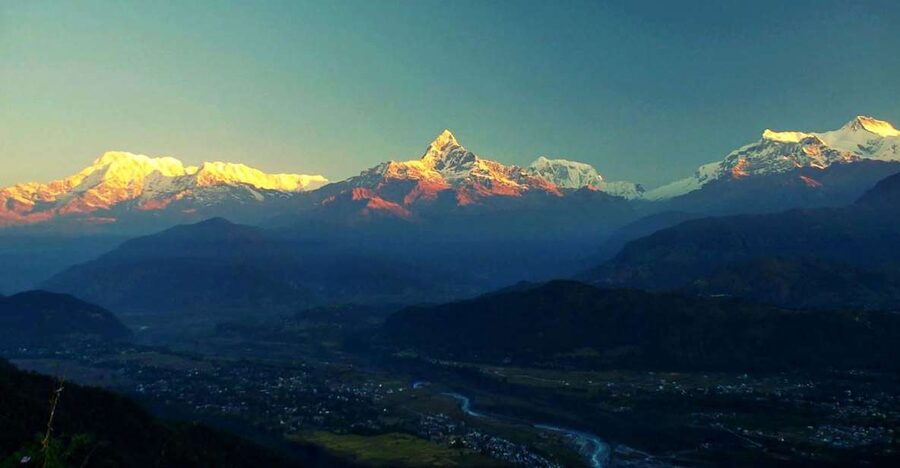
Pokhara’s best views arrive before breakfast. This eight-hour tour starts with sunrise at Sarangkot, where the first light reaches the Annapurna range and Machhapuchhre. You return to your hotel for breakfast, then head out again for caves, waterfalls, temples, a pagoda, and a suspension bridge.
I like the efficient route and the hotel pickup and drop-off, especially if you have only one full day in Pokhara. I also like the human touch: guide Moti is praised for being talkative, attentive, and happy to answer questions about both the sights and Nepal.
The catch is the price. At $95 per person, this makes better sense for two or more people than for a solo visitor. You should also be ready for steep walking, uneven ground, and an early start.
Key points to know before booking
- Sarangkot comes first: You leave early for sunrise, then return to the hotel for breakfast.
- Seven worthwhile stops fit into one day: The route covers Davis Fall, Gupteshwor Cave, Lord Shiva’s temple, Pokhara City, World Peace Pagoda, and a suspension bridge.
- Mountain views depend on conditions: Sarangkot and the Peace Pagoda can offer grand views of Annapurna and Machhapuchhre, but clear skies matter.
- An English-speaking guide leads the day: Moti is one guide associated with the experience, and past bookings praise his conversation and local insight.
- The day involves walking: Expect steep terrain at some points, not just vehicle sightseeing.
- Entrance fees are extra: Your $95 covers transport, guide services, taxes, and hotel transfers, but not monument tickets, drinks, or optional flights and adventure activities.
Why Sarangkot sunrise is the right beginning
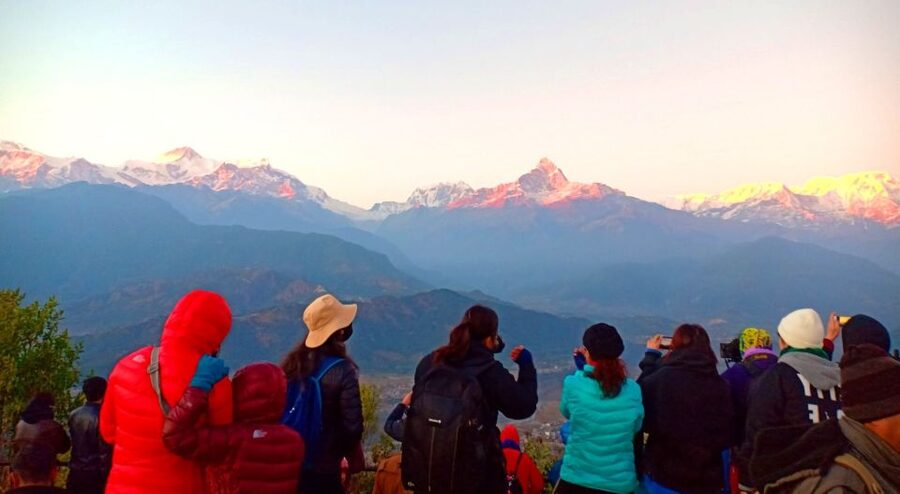
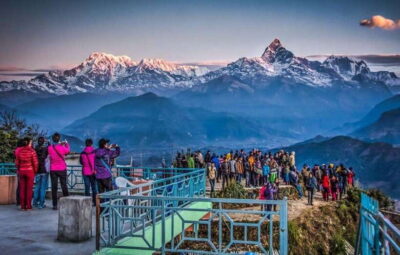
The tour begins before breakfast with a drive to Sarangkot Hill. This is the headline moment, and sensibly so. From the hill, you look toward the Himalayas as morning light reaches the mountains, with Annapurna and Machhapuchhre among the key peaks you may see.
I like starting here because the view is the one part of the day that cannot be recreated later. By midmorning, cloud and haze can change the scene, so the early visit gives you the best chance at clear mountain views. It also gives the day a strong sense of place before you move into Pokhara’s urban and cultural sights.
Do not treat this as a late breakfast outing. You need to be ready for an early pickup, and the exact departure time changes with the season. The supplied details ask you to check availability for the starting time, so confirm it when booking and set out your clothes and passport or ID the night before.
Sarangkot is a viewpoint, not a long mountain trek in this experience. Still, the day includes walking in steep areas, so shoes with a firm grip are a better choice than smooth-soled sandals. Bring a light layer as well, since early morning at a hill viewpoint can feel cooler than Pokhara.
A few more Pokhara days to weigh up
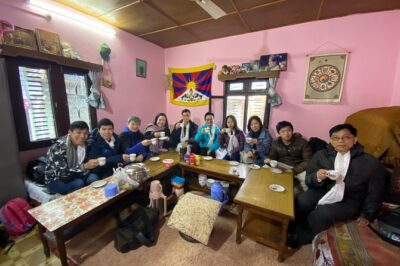
- Full-Day Tibetan Cultural Tour to Tibetan Settlements Pokhara
★ 5.0 · 184 reviews - Pokhara: Full-Day Sharing Bus Tour on 7 Iconic Destination
★ 4.1 · 179 reviews - Pokhara: Full-Day Private Tour on 7 Iconic Destination
★ 4.8 · 108 reviews
Breakfast break, then back into Pokhara
After Sarangkot, you drive back to your hotel for breakfast. This pause is practical. It breaks up the early start and lets you eat before the main sightseeing portion begins.
It also means you should not assume breakfast is served during the tour itself. Your hotel breakfast is the planned break, while beverages are not included in the price. Carrying water is sensible, though the tour details do not promise refreshments.
From here, the vehicle becomes your base for a circuit around Pokhara. A private vehicle is included, and the group is limited to 15 participants. That combination should make the day easier than trying to connect all these places on your own, though the exact feel depends on how many people are assigned to your vehicle.
Davis Fall and the water below Pokhara
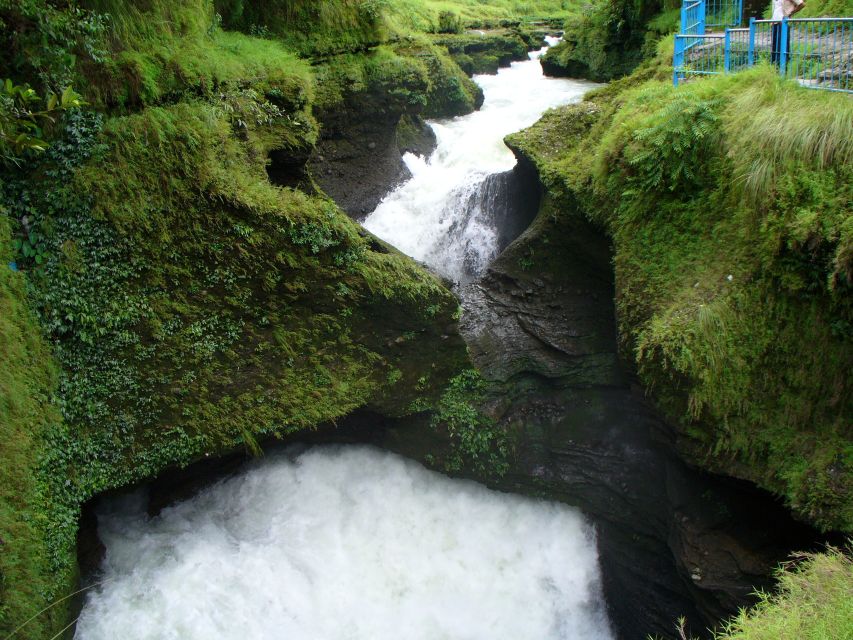
The first major stop after breakfast is Davis Fall, one of Pokhara’s best-known sights. Water runs through a channel and disappears underground, giving the waterfall more drama than a simple roadside cascade.
The stop is brief enough to fit into a busy sightseeing day, but it is not merely a photo halt. Look at how the water moves toward the opening below, and pay attention to the sound and force of the flow. Conditions can affect the appearance, so the spectacle may be stronger at some times than others.
You should plan for walking around the site rather than viewing everything from the vehicle. The tour does not list entrance fees as included, so keep some local cash available for the places that charge admission. The exact fee is not provided here, and it can change.
Gupteshwor Cave adds a close-up experience
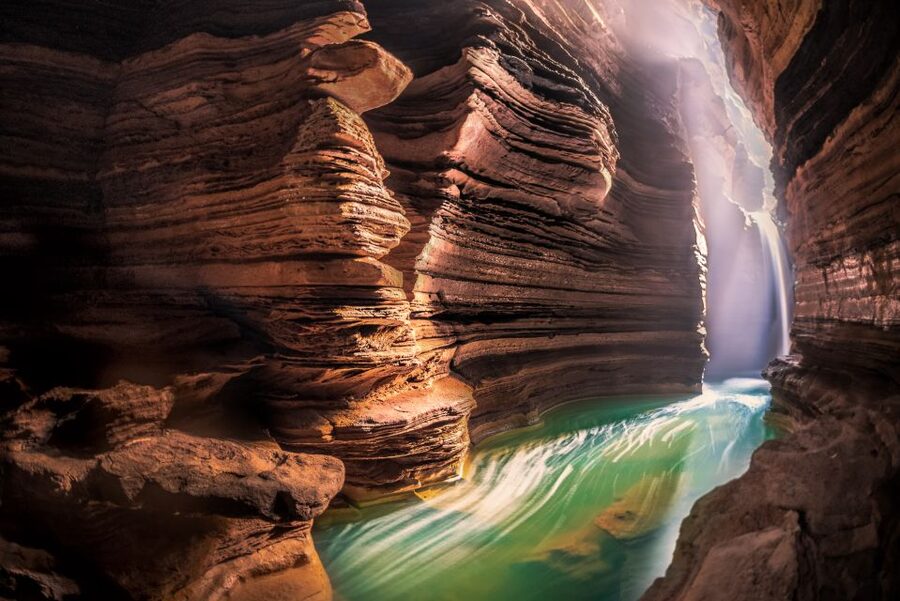
Gupteshwor Cave follows Davis Fall. The cave is closely connected to the underground water system, making this pairing more interesting than visiting a waterfall and cave at random. At the cave, you trade wide mountain views for a darker, tighter setting.
This is where practical footwear matters most. The tour warns of steep terrain and a good amount of walking, and a cave visit usually requires more care than a flat city stop. You may find damp or uneven surfaces, so move at your own pace and listen to the guide’s instructions.
The cave also changes the rhythm of the day. Sarangkot gives you open views and morning light. Davis Fall gives you rushing water. Gupteshwor Cave takes you below ground, where the focus is on rock, passageways, and the force of water beneath the city.
A different kind of day from the same base:
- ZipFlyer Nepal – The World’s Steepest Zip-line
★ 5.0 · 608 reviews - Bungee Pokhara by HighGround Adventures
★ 5.0 · 366 reviews - From Pokhara: Sarangkot Sunrise Himalayas Tour
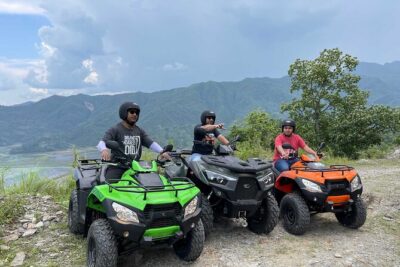
★ 4.7 · 218 reviews - ATV Adventure Tour in Pokhara, Nepal
★ 5.0 · 194 reviews
A stop at Lord Shiva’s temple
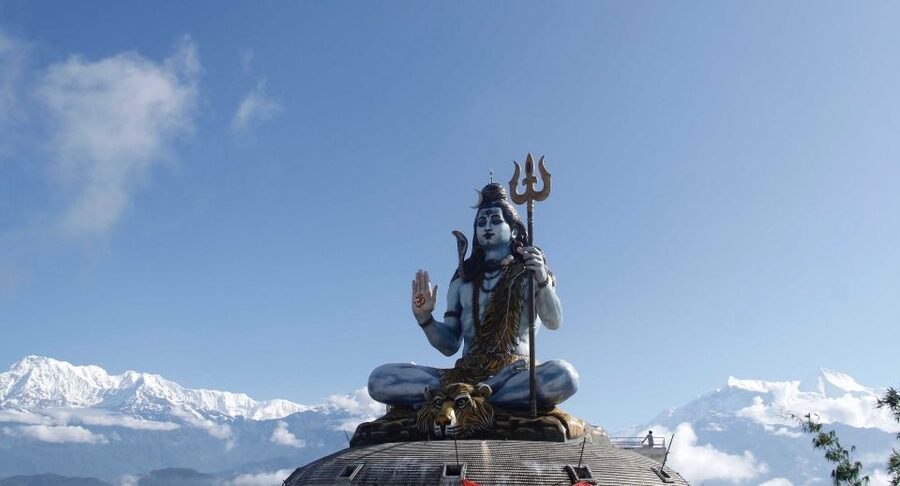
The next visit is Lord Shiva’s temple. The supplied details do not give the temple’s formal name or specific architectural features, so I would think of this stop mainly as a chance to see a religious site within Pokhara’s sightseeing circuit.
Dress and behave respectfully at the temple. You should follow any local rules about footwear, photography, and where you may walk. The guide is useful here, especially if you want context about the site rather than a quick look and a return to the vehicle.
This is also a good point to ask questions. Moti, one of the named guides, is described as attentive and talkative, with a willingness to answer questions about the sights and Nepal more broadly. That kind of conversation can turn a temple stop into a more useful encounter with local culture.
The World Peace Pagoda and the big mountain view
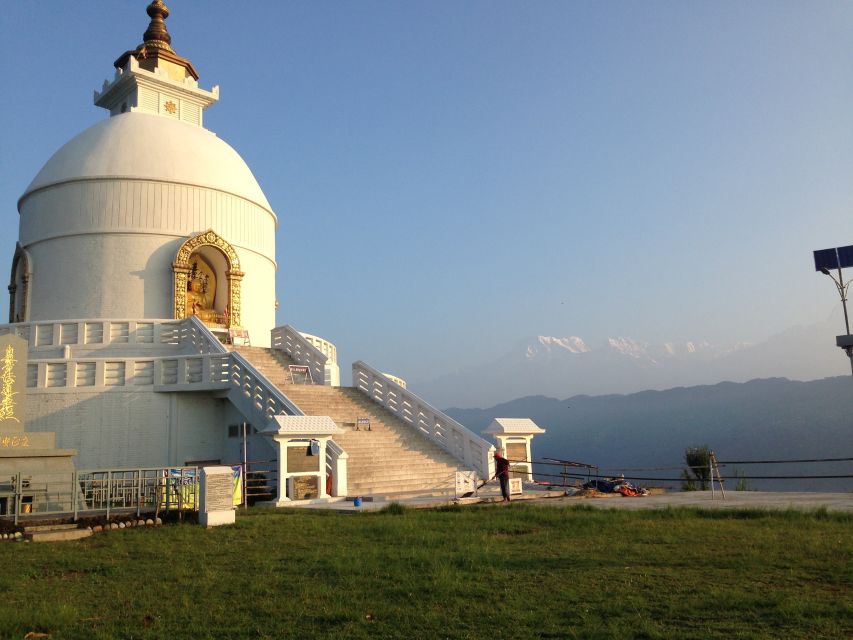
The World Peace Pagoda is the second major viewpoint of the day. From here, you can look across Pokhara toward the mountain range, including Annapurna and Machhapuchhre when visibility is good.
I like having both Sarangkot and the Peace Pagoda in the same day because they offer different viewing moments. Sarangkot is about first light and the Himalayan skyline. The pagoda comes later, after you have seen several city sights, and gives you a broader sense of Pokhara’s setting.
Clouds are the main variable. No guide can guarantee a clear mountain view, and the tour details do not promise one. If the sky is open, this may be one of the day’s finest stops. If it is hazy, the pagoda still offers a peaceful hilltop visit, but the famous Annapurna view may be limited.
Expect more walking here, including slopes and possibly uneven ground. Take your time rather than rushing for photographs. The day is full, and a careful pace will leave you in better shape for the final stop.
The suspension bridge closes the sightseeing circuit
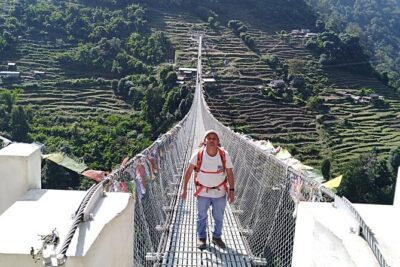
The final listed stop is a suspension bridge. The information does not specify its name, length, or height, so you should not book this expecting a particular famous bridge or a major adrenaline activity.
Still, a bridge visit gives the day a different finish. After the cave, temple, waterfall, and hilltop pagoda, you get a change of scale and movement. It is a useful final stop before returning to your hotel, especially if you enjoy looking at the surroundings from a raised crossing.
If heights make you uneasy, ask the guide what to expect before crossing. The experience is described as sightseeing, not bungee jumping or another optional activity. Ziplining, paragliding, ultra-light flights, and hot-air balloon rides are not part of the package.
What $95 per person really buys
The price is $95 per person. That is not the cheapest way to see Pokhara, but it covers a lot in a single day: hotel pickup and drop-off, a vehicle, an English-speaking guide, city sightseeing, government taxes, and service charges.
The value comes from the route and the time saved. You do not have to arrange separate transport for Sarangkot, Davis Fall, Gupteshwor Cave, the temple, the Peace Pagoda, and the bridge. You also get help with the order of the day, which matters when sunrise fixes the first appointment.
The price is harder to justify for one person. A solo booking was specifically criticized as too expensive, while the same service can work out at nearly half the per-person cost for two people. That is the clearest value warning here.
For a couple, family, or small party, the cost can make more sense, particularly if you want a guide and door-to-door transport. For a solo visitor on a tight budget, compare the price with hiring local transport and paying entrance fees separately. The convenience is real, but you pay for it.
Monument entrance fees are extra. Drinks are extra. Optional activities are also extra, so do not expect the $95 price to cover paragliding, an ultra-light flight, a hot-air balloon ride, or a zipline.
The guide and group size
The tour is conducted in English, and the group is limited to 15 participants. That is small enough for a more personal experience than a large coach outing, though it is not necessarily a private tour.
The included vehicle is described as private, and one booking had a car and driver assigned to one person. That suggests the arrangement can vary by booking or group size. Ask for clarification if having a fully private vehicle is important to you.
The strongest personal praise centers on Moti. He is described as friendly, attentive, and willing to explain both the sites and wider questions about Nepal. One booking compared spending time with him to having a friend show you his own hometown. That is exactly the quality I would hope for on a city tour: not just directions, but conversation.
A guide also helps at places where the setting alone may not explain much. At the temple and Peace Pagoda, ask about local meaning. At Davis Fall and Gupteshwor Cave, ask how the two sites connect. You will get more from the day if you treat the guide as a resource rather than simply following from stop to stop.
Walking, clothing, and what to bring
Bring your passport or ID card, as requested for the activity. Wear sturdy walking shoes, since one clear warning is the amount of walking on steep terrain.
A practical day bag should include water, sun protection, and a light layer. Water and beverages are not included, so plan for your own drinks. The exact facilities and weather conditions are not specified, so simple preparation is better than relying on the vehicle for everything.
You should also keep your schedule flexible. An eight-hour tour with an early sunrise stop and six further sightseeing targets is tightly planned. Traffic, time spent at each site, and mountain visibility can affect the pace.
This is not the best choice if you want long, quiet visits at one or two places. It is designed for coverage. You see many of Pokhara’s main sights in one day, but each stop gets a limited share of your time.
Who will get the most from this day
I would recommend this tour to a first-time Pokhara visitor who wants an organized introduction and has only one full day available. It is also a good fit if you prefer not to negotiate separate rides or work out the order of distant sights yourself.
It suits couples and small groups particularly well because the per-person cost becomes more reasonable when shared. It also suits people who value a guide’s explanations and enjoy asking questions along the way.
I would be more cautious about booking it if you are traveling alone on a strict budget, dislike early mornings, or have trouble with steep walking. You may also prefer a slower plan if your main goal is mountain photography, since cloud and timing can limit the views and the route includes many stops.
The experience has an overall rating of 4.4 from 11 bookings, with especially strong praise for organization, the sunrise, the range of sights, and the guide service. The less favorable points are practical rather than dramatic: the solo price and the demanding walking.
Should you book this Pokhara tour?
Book it if you want one organized day covering Pokhara’s main sights, with Sarangkot sunrise as the anchor. The combination of hotel transfers, an English-speaking guide, a vehicle, and a compact group removes much of the day’s planning work.
I would book as a pair or small group rather than alone. Confirm the pickup time, ask how the private vehicle applies to your party, and budget separately for entrance fees and drinks.
If you want the broadest first look at Pokhara and can handle an early start, this is a practical choice. If you want low-cost transport, a slow pace, or a single focused mountain excursion, spend your money elsewhere.
FAQ
How long does the Pokhara sightseeing tour last?
The tour lasts eight hours, including the early Sarangkot visit and the later sightseeing stops around Pokhara.
What places are included?
The route includes Sarangkot Hill for sunrise, Davis Fall, Gupteshwor Cave, Lord Shiva’s temple, Pokhara City, the World Peace Pagoda, and a suspension bridge.
Is hotel pickup included?
Yes. Pickup and drop-off at your hotel in Pokhara are included.
Is a guide provided?
Yes. The experience includes a professional English-speaking guide. Moti is one guide named in past bookings.
Are entrance fees included in the $95 price?
No. Monument entrance fees are not included. Beverages and optional activities also cost extra.
Can I cancel the booking?
You can cancel up to 24 hours in advance for a full refund. The tour also offers a reserve-now, pay-later option.
Recently added around Pokhara
- Paragliding in Pokhara★ 5.0 · 3 reviews
- Pokhara: 5-Day Annapurna Base Camp Trek with Hot Spring★ 5.0 · 3 reviews
- Pokhara:4-Day Ghorepani Poon Hill Guided Trek via Ghandruk★ 5.0 · 3 reviews
- Pokhara: 7-Day Annapurna Base Camp Trek via Ghandruk★ 4.3 · 3 reviews
- Peace & Panorama: Stupa and Pumdikot Scenic Drive Tour★ 3.6 · 3 reviews
- Beautiful Sarankot Sunrise with Full Day Sightseeing in Pokhara★ 4.5 · 3 reviews
- 3 Day Australian Camp Dhampus Ghandruk Easy Trek in Pokhara★ 3.5 · 3 reviews
- Overnight Dhampus Australian Camp Easy Hiking from Pokhara★ 5.0 · 3 reviews
Other Pokhara Tours worth a look
ZipFlyer Nepal – The World’s Steepest Zip-line
Read our review →
Full-Day Tibetan Cultural Tour to Tibetan Settlements Pokhara
Read our review →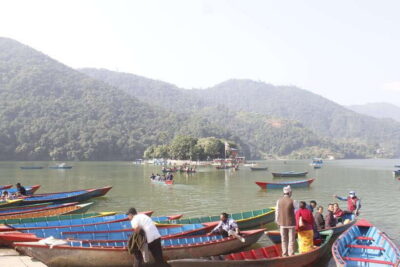
Full-Day Sharing Bus Tour on 7 Iconic Destination
Read our review →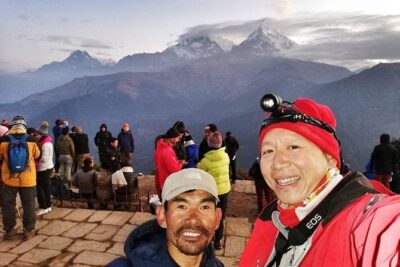
Trekking in Annapurna/Langtang/Everest/Upper Mustang regions
Read our review →This tour also appears in