
REVIEW · KATHMANDU TOURS
Traditional Momo Making Class
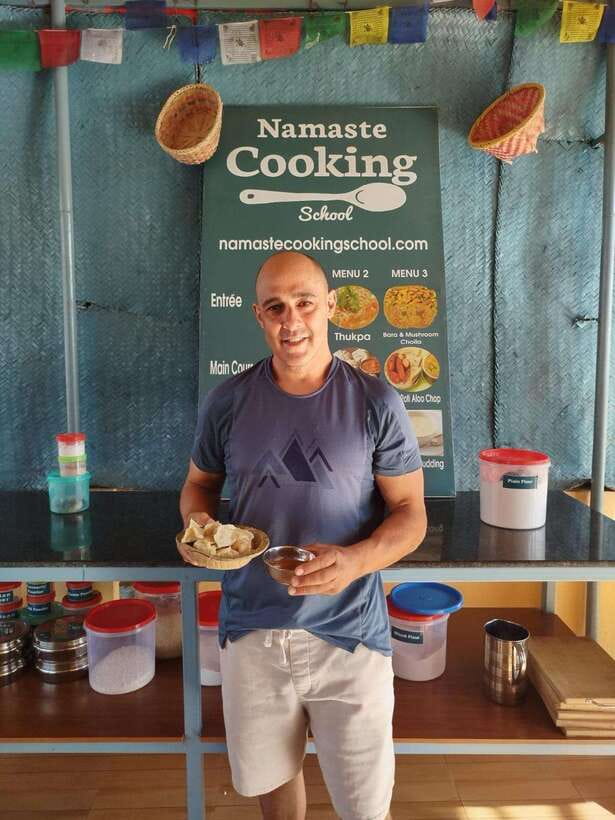
Momos are Nepal’s great edible lesson in patience: soft dough, a well-seasoned filling, and a careful fold that turns a small dumpling into lunch. At the Women Led Namaste Cooking School in Thamel, local women chefs guide you through each stage, from kneading to tasting. The class uses fresh ingredients and Nepali spices, with lead trainer Sushi helping English-speaking cooks find their rhythm.
I like the hands-on format, since you do not just watch a chef work. I also like the friendly setting, a clean, bright kitchen with a rooftop feel noted by several participants, plus a welcome masala chai before the cooking begins. The main thing to plan around is the timing: it is sold as a 1.5-hour class, but a sociable group may stay longer.
Key points to know before you book
- You make every part of the momo: Knead the dough, prepare the filling, and shape the dumplings yourself.
- Sushi leads the English-language instruction: She works with a local women’s cooking team and lets you do the practical work.
- The class takes place in Thamel: You can pair it with a walk through Kathmandu’s busy central district before or after cooking.
- Your food is the final course: The momos you shape are cooked for you to taste at the end.
- Masala chai is included: It gives the class a pleasant Nepali welcome before the main work starts.
- Allow extra time: The listed duration is 1.5 hours, but the session can run longer when conversation and group fun take over.
Why a momo class works so well in Kathmandu
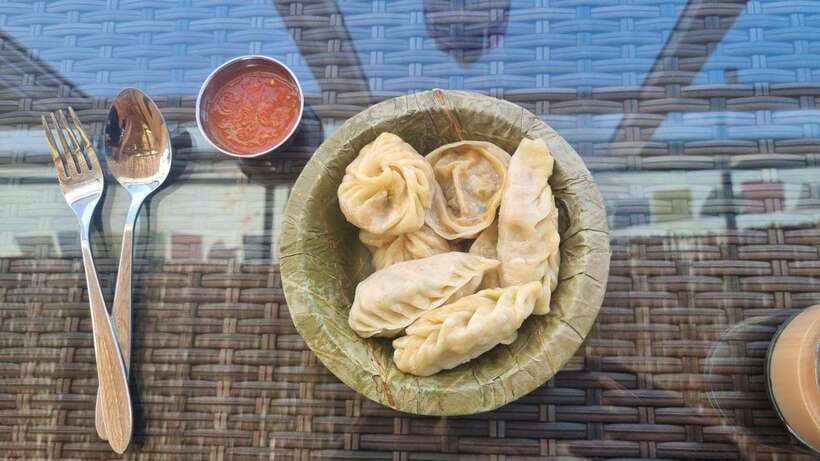
You can eat momos all over Nepal, from simple street stalls to polished restaurants. A cooking class gives you the useful part that a restaurant cannot: you learn what goes into the dumpling and why the folding matters.
Momos are not just a convenient snack. They are part of everyday Nepali food and appear at celebrations, gatherings, and family meals. The class connects the recipe to that wider role, so you leave with more than a full stomach. You understand why a small dumpling carries so much importance in Nepalese cooking.
The format is also more social than a standard sightseeing stop. You sit with the cooking team, work with the ingredients, and learn through repetition. If you are the kind of person who remembers a place through food, this is a good way to connect Kathmandu with something you can make at home.
More hands-on workshops in Kathmandu:
- Half day cooking class in Thamel kathmandu
★ 5.0 · 607 reviews - Kathmandu: Local Women-Led Nepali Cooking & Momo Class
★ 4.9 · 360 reviews - Kathmandu: Local Lead Nepali Cooking & Momo-Making Class
★ 5.0 · 212 reviews
Arriving at the Women Led Namaste Cooking School in Thamel
The class is held at the Women Led Namaste Cooking School in Thamel, Kathmandu. Hotel pickup and drop-off are not included, so you need to make your own way there. Build in enough time to arrive 10 minutes before the start, especially if you are still finding your way around Thamel.
Thamel is a useful location for this kind of activity. You can walk around the district before class, then finish with food instead of squeezing another restaurant booking into your evening. One parent and child used the area this way, combining the momo session with time in Thamel.
Wear comfortable clothing and shoes suitable for cooking. This is not a class where you sit at a table and take notes while someone else does the messy work. You will knead, chop, handle filling, and fold dough, so practical clothes are the sensible choice.
The cooking area has earned praise for being clean, bright, and calm. One participant specifically liked the rooftop setting and the quiet atmosphere. That matters in a hands-on class. You want enough light to see the dough and enough room to focus on the folds without feeling rushed.
Starting with masala chai and local kitchen guidance
The session begins with a welcome masala chai. It is a small inclusion, but a good one. You get a warm drink, settle into the room, and meet the women leading the class before the practical work starts.
Sushi is the lead trainer, and the instruction is in English. She works with two other local women chefs, according to the class experience described by participants. Their role is not simply to demonstrate the recipe. They show you each step, then let you repeat it yourself.
That approach suits beginners. Momo-making can look harder than it is, particularly when you see neat rows of dumplings folded by an experienced cook. The class breaks the process into manageable jobs. You do not need to arrive with special cooking skills, and one family found the folding accessible enough for an 11-year-old to take part successfully.
The social tone is part of the appeal. The women leading the class are described as cheerful and playful, and the atmosphere can include conversation and even some dancing to traditional Nepali music. That is enjoyable, but it also explains why the experience may last longer than the listed 1.5 hours.
Kneading the dough from scratch
The first real task is making the dough. You work with the ingredients rather than receiving prepared wrappers, which gives you a better sense of how momos are built.
Kneading is not the glamorous part, but it is an important one. The dough needs to become workable enough to roll and fold without tearing. Your chef explains the process and helps you see what the texture should feel like. That hands-on correction is more useful than a printed recipe alone.
For you, this is likely the most practical part of the class. Once you know how the dough should behave, you can repeat the recipe in your own kitchen. The work is simple, but it rewards attention. Push too hard and the dough can become awkward to handle. Move too quickly and you miss the feel that makes the later folding easier.
The class keeps the focus on doing. You are not only watching Sushi shape perfect dumplings while you take pictures. You get your hands into the dough and learn the basic movements by practice.
A few more Kathmandu days to weigh up
- Everest Base Camp Trek – 14 Days
★ 5.0 · 1,499 reviews - Private Kathmandu Sightseeing Tour | UNESCO World Heritage sites
★ 5.0 · 756 reviews - Everest Base Camp Helicopter Tour landing at Everest View Hotel
★ 5.0 · 668 reviews - Everest Base Camp Trekking
★ 5.0 · 485 reviews
Preparing the filling with Nepali spices
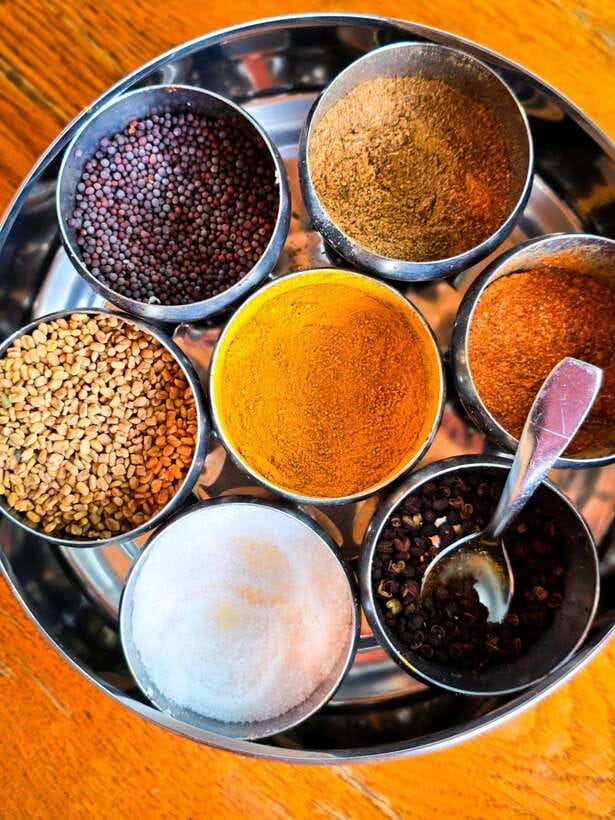
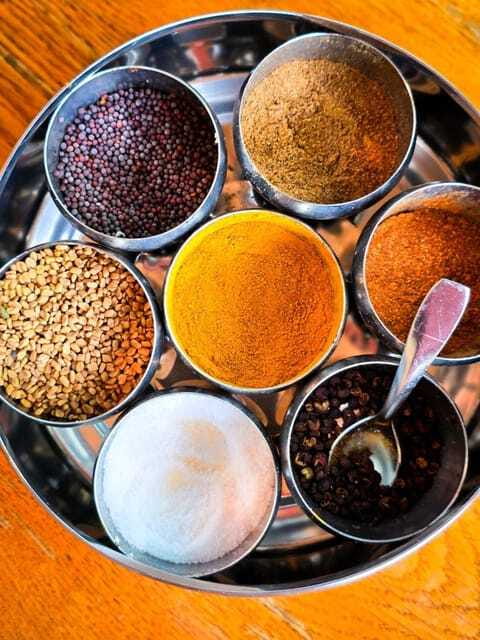
Next comes the filling. The class uses fresh, locally sourced ingredients and authentic Nepali spices, with the chefs explaining how the components come together.
The exact filling choices are not specified, so you should not book this expecting a particular meat, vegetable, or spice blend. What you can count on is instruction in preparing a momo filling and learning how seasoning fits into Nepali cooking.
This part is where the class moves beyond a generic dumpling workshop. The ingredients give you a taste of local cooking methods, while the chefs provide context about the place momos hold in celebrations and ordinary meals. You learn that the recipe is not only about wrapping food in dough. It is also about balance, texture, and the seasoning that makes the filling taste distinctly Nepali.
You may also find the chopping stage useful if you cook with children. An 11-year-old participant was keen to do much of the chopping, which suggests the class can work well for families who want a shared activity. Adults should still judge how much of the knife work suits their own children, since the available information does not specify age rules or safety arrangements.
Folding momos into traditional shapes
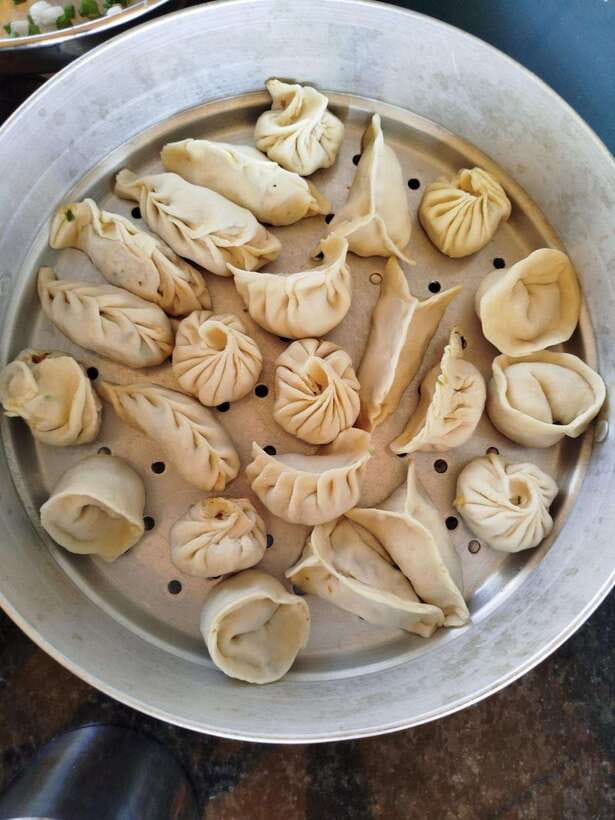
Folding is the part most people want to master. It is also the part most likely to produce a few lopsided dumplings. That is fine. A homemade momo does not need to look like it came from a restaurant kitchen.
The chefs show you how to turn the dough and filling into traditional shapes. You then repeat the folds until your hands begin to understand the movement. The class is valuable here because small corrections make a real difference. The right amount of filling, a properly rolled wrapper, and a firm seal all affect the finished dumpling.
One useful lesson is that momos are easier to make than they first appear. A participant who had assumed they would be difficult left with enough confidence to try them at home in Singapore. The class also includes a recipe, giving you a practical way to continue after Nepal.
Do not expect every momo to match the chef’s first attempt. Your goal is not a flawless display. It is to learn a repeatable method and enjoy the process. The friendly setting helps, especially if you are cooking with a partner, child, or small group of friends.
Tasting the momos you made yourself
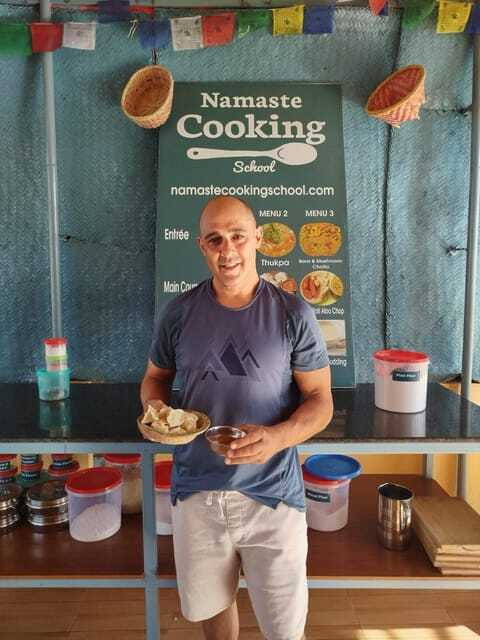
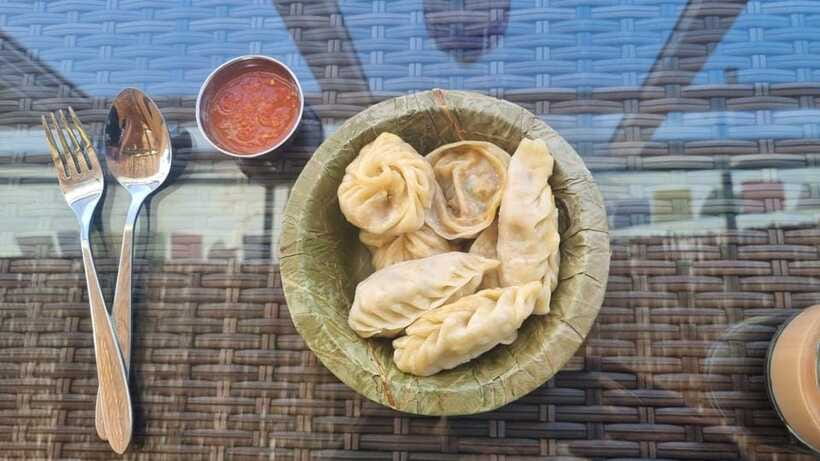
At the end, you taste your own handmade momos. This is more satisfying than being served a plate prepared entirely by someone else because you have followed the food from raw ingredients to finished dish.
You get to judge the results for yourself: the dough, the filling, the seasoning, and the seal. Some dumplings may be tidier than others, but that is part of the charm. The final tasting also gives the class a clear finish, with a meal that reflects the work you have just done.
The food has been praised as delicious, and the cooking area is kept clean and bright. Still, this is not a restaurant meal with a long menu. You come for the lesson and the shared tasting, not for a large spread of Nepali dishes.
If you want a bigger meal afterward, Thamel gives you plenty of places to continue eating, though no extra dishes are promised as part of the class. The included masala chai and handmade momos make the 15-dollar price easier to judge as a complete short activity rather than just a snack.
Is $15 good value for 1.5 hours?
At $15 per person, the class is fairly priced for a short, guided food experience in Kathmandu. The fee includes the 1.5-hour lesson, all momo ingredients, English instruction from local chefs, tasting of your own food, and welcome masala chai.
The value is strongest if you want an activity, not merely a meal. For the price, you receive practical instruction, local food context, and a recipe you can use later. You also avoid paying for transportation, since hotel pickup and drop-off are not included.
The timing needs a close look. The official duration is 1.5 hours, but the class description also uses a longer three-hour figure, and one participant noted that the session ran past the stated time. The clearest way to plan is to treat 1.5 hours as the listed duration while leaving extra space afterward. If you have a flight, dinner reservation, or another timed tour, do not schedule the next commitment too tightly.
The activity has received a 5 out of 5 rating from 10 reviews, with repeated praise for the chefs, the clean kitchen, the relaxed mood, and the taste of the momos. That does not make the class right for everyone, but it does point to a consistent strength: the human side of the experience.
Who will enjoy this class most?
I would recommend it to food lovers, first-time visitors who want a local activity, and anyone who likes learning by doing. You do not need to be an experienced cook. In fact, beginners may get the most from the step-by-step format.
Families can also consider it. The participation of an 11-year-old shows that the class can appeal to children who enjoy chopping, shaping, and eating what they make. Since no formal age policy is provided, check directly if you are planning to bring a very young child.
It also suits solo visitors because the cooking creates an easy reason to talk with the chefs and other participants. Couples and friends get a light, shared activity with a clear reward at the end.
You may want to skip it if you dislike group cooking, do not want to handle raw ingredients, or need a tightly controlled schedule. It is also not the best pick if you want a broad survey of Nepali cuisine. The focus is momos, with masala chai, rather than a full cooking menu.
Practical details that make the session easier
Book with the cancellation rule in mind. You can cancel up to 24 hours before the start for a full refund, and the reserve-now, pay-later option lets you hold a place without paying at once.
Check the available start times before booking, since the schedule can vary. Then arrive 10 minutes early. That small buffer helps you find the school and settle in before the dough work begins.
English is the listed teaching language. The chefs have been described as able to explain the process clearly in English, which is important when you are learning small movements such as sealing and folding.
Wear clothes you can cook in and shoes that feel secure. You may spend much of the class standing or working around the kitchen, so comfort matters more than dressing for a night out.
Should you book the Traditional Momo Making Class?
Book it if you want a short, personal food lesson with local women chefs and the chance to make something you can recreate at home. The clean kitchen, English guidance from Sushi, fresh ingredients, masala chai, and final tasting make this more useful than a simple restaurant stop.
I would be especially keen to recommend it to families, curious first-time cooks, and anyone with an open hour or two in Thamel. Leave extra time after the scheduled finish, since conversation and good company may stretch the session.
Skip it only if your schedule is rigid or you are looking for a large, multi-dish cooking course. For $15, this is a focused introduction to one of Nepal’s best-loved foods, with enough practical work to make the experience last beyond your time in Kathmandu.
FAQ
Where is the momo-making class held?
The class takes place at the Women Led Namaste Cooking School in Thamel, Kathmandu, in Nepal’s Bagmati Zone.
How long does the class last?
The listed duration is 1.5 hours. One participant noted that the session ran longer, so leave some extra time in your schedule.
How much does the class cost?
The price is $15 per person.
Is hotel pickup included?
No. Hotel pickup and drop-off are not included, so you must arrange your own transportation to the cooking school.
What is included in the price?
The price includes the 1.5-hour momo-making class, ingredients, guidance from local chefs, tasting of your handmade momos, and welcome masala chai.
Is the class taught in English?
Yes. English is the listed language of instruction.
Can I cancel for a full refund?
Yes. You can cancel at least 24 hours before the start time for a full refund.
Recently added around Kathmandu
- Kathmandu Airport Pickup and Drop-off Services★ 5.0 · 3 reviews
- Kathmandu Paragliding★ 5.0 · 3 reviews
- Explore The Beauty Of Langtang Valley In 8-Days Trek★ 5.0 · 3 reviews
- Kathmandu Chandragiri Cable Car and Swayambhunath Private Tour★ 5.0 · 3 reviews
- Kathmandu: Nightlife and Pub Crawl Tour★ 5.0 · 3 reviews
- Kathmandu: Momo Making Class with a Local Chef★ 5.0 · 3 reviews
- Mountain Flight Experience in Nepal★ 4.5 · 3 reviews
- Everest Base Camp Trek★ 5.0 · 3 reviews
Other Kathmandu Tours worth a look


Private Kathmandu Sightseeing Tour | UNESCO World Heritage sites
Read our review →
Everest Base Camp Helicopter Tour landing at Everest View Hotel
Read our review →


Nagarkot Sunrise View and Day Hiking from Kathmandu
Read our review →
Full Day 7 UNESCO Tour with Lunch – Private/Group
Read our review →
This tour also appears in