
REVIEW · ANNAPURNA CIRCUIT TREKS
13 Days Trekking in Annapurna Circuit
Crossing Thorong La Pass at 5,416 meters is the defining moment of this 13-day Annapurna Circuit trek. You’ll move from terraced foothills and subtropical forest into the high, dry country around Manang, sleeping in simple tea houses along the way.
I like the gradual route toward Manang, which gives you time to adjust before the pass, and I like that meals, permits, tea-house lodging, transport, and a licensed guide are bundled into the price. Guides such as Ravi and Sandip have been singled out for careful support and good organization. The main caution is the pace: this is a serious high-altitude walk, not a casual sightseeing tour, and the transport schedule and exact overnight stops should be confirmed before departure.
Key points to know before booking
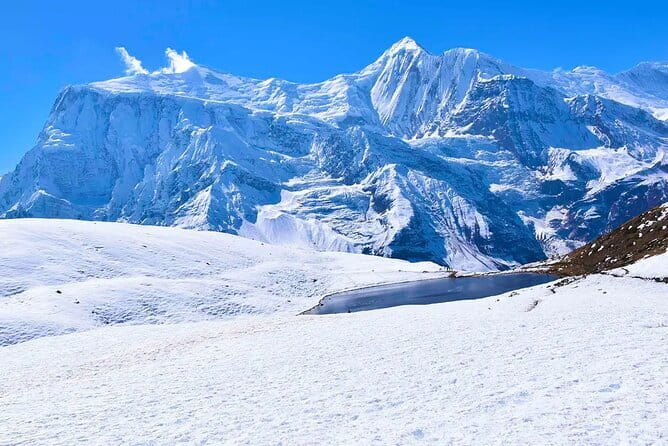
- Thorong La is the big test: You reach 5,416 meters on the trek’s hardest day, with an early start from Thorong Phedi.
- The scenery changes by the hour: Expect rice terraces, river valleys, pine forest, Buddhist villages, and stark high-altitude terrain.
- Manang provides essential acclimatization: Day 8 is reserved for shorter walks to Gangapurna Lake or Praken Monastery.
- The price covers the costly basics: At $809.10 per person, you receive meals, tea-house lodging, permits, a guide, transport to the route, and transport to Pokhara.
- The trip is private: Only your own group participates, with airport pickup available if required.
- Porter service costs extra: You must arrange and pay separately for a porter if you do not want to carry your own baggage.
Why this Annapurna Circuit trek is worth considering
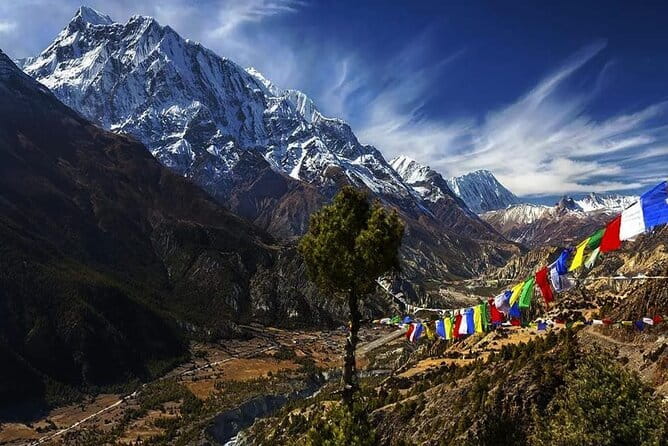
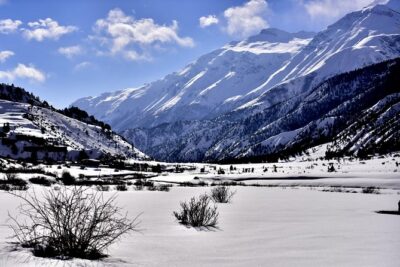
The Annapurna Circuit earns its reputation through variety. You do not spend 13 days staring at one kind of mountain view. The route begins among low hills, farm terraces, and villages, then follows the Marsyangdi River into pine country and Tibetan-influenced settlements before climbing toward the high pass.
That steady change gives the trek a strong sense of progress. Each day feels different, and the route has a clear dramatic peak: Thorong La. You then descend toward Pokhara, ending the walking portion with a contrast between thin mountain air and a more relaxed lakeside city.
The arrangement is lodge-based rather than camping-based. You sleep in tea houses and receive breakfast, lunch, and dinner throughout the trek, plus tea or coffee with breakfast. That matters because you are not carrying a tent, stove, or cooking equipment. You still need to accept basic accommodation and changing comfort levels, but the setup keeps the trek more manageable for people who want a long Himalayan walk without a full camping operation.
The stated price is $809.10 per person, which is good value if all listed services run as planned. The package includes Annapurna Conservation Area permits, TIMS registration, a government-licensed guide, meals, tea-house accommodation, the Kathmandu to trek-area transport, and private transport from the trek’s end to Pokhara. It also includes one night in Pokhara with breakfast.
You should budget separately for personal spending, a porter, extra nights, activities in Kathmandu or Pokhara, transport back to Kathmandu, and the Nepal entry visa. The package is not an all-in Nepal holiday. It is mainly a supported trek with a useful Pokhara finish.
More Annapurna Circuit Treks in Kathmandu
- Annapurna Circuit Trek with Tilicho Lake
★ 5.0 · 368 reviews - Annapurna Circuit Trek
★ 5.0 · 94 reviews - Annapurna Circuit Trek
★ 5.0 · 35 reviews
Day 1: Kathmandu to Bulbule through the lower hills
The opening transfer is a long one. You set out early for a scenic drive toward the trek’s starting area, passing small villages, terraced fields, river valleys, and views of the lower Himalayas. The itinerary describes a roughly nine-hour journey toward Bulbule at about 820 meters, while the transport notes refer to public transport toward Besisahar and shared transport to Nyadi.
That wording leaves some room for confusion. Before paying, I would ask the operator to confirm the exact vehicle, final driving point, and first overnight village. Public transport can be practical and affordable, but it may feel less controlled than a private road transfer, especially after an early airport arrival or a long international flight.
The first day is not a scenic stroll. It is mainly a transfer day, and the road can make it tiring. Still, starting low gives your body time to adjust before the serious climbing begins.
Day 2: Bulbule to Bahundanda and the first walking rhythm
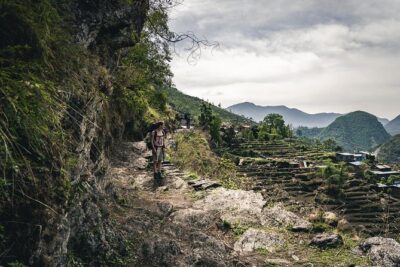
From Bulbule, you begin walking toward Bahundanda through farm country and village paths. Terraced fields dominate the lower part of the route, with hills and distant mountain views opening around you.
This is a useful first trekking day because the elevation gain is gradual. You can learn how your guide manages breaks, how much water you need, and how your pack feels before the trail becomes more demanding.
Bahundanda provides the first real tea-house night. Expect simple accommodation rather than hotel-style comfort. The appeal is the setting and the chance to stay close to village life, not private luxury.
Day 3: Forest paths, suspension bridges, and Chamche
The trail continues through dense forest and across suspension bridges, with the Marsyangdi River and its smaller tributaries below. The route descends in places before climbing again toward Chamche, so do not assume every day becomes a steady uphill walk.
This mix of short descents and climbs is typical of mountain trekking. It can be harder on your legs than a smooth ascent, but it also keeps the day varied. Forest cover offers shade, while bridge crossings add a little excitement without requiring technical climbing.
The Marsyangdi remains an important companion through this section. Its presence helps you understand the route physically: you are following a river corridor deeper into the mountains, not simply marching toward a distant summit.
More Hiking Tours in Kathmandu
- Everest Base Camp Trek – 14 Days
★ 5.0 · 1,499 reviews - Everest Base Camp Trekking
★ 5.0 · 485 reviews - Nagarkot Sunrise View and Day Hiking from Kathmandu
★ 5.0 · 471 reviews - Everest Base Camp Trekking – 13 Day
★ 5.0 · 365 reviews
Day 4: Gurung and Manangi villages on the way to Dharapani
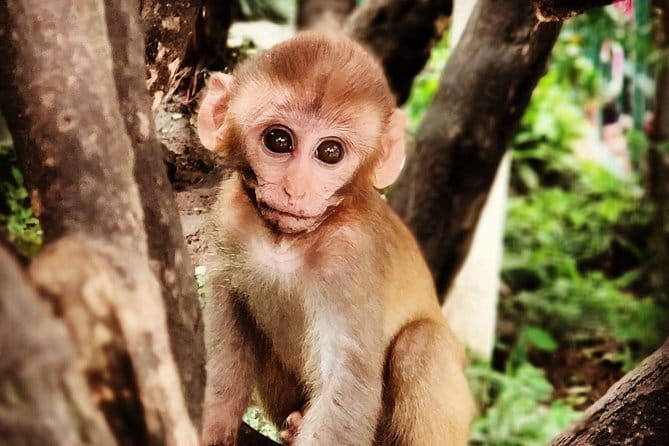
On the way to Dharapani, the route passes Gurung and Manangi settlements. This is one of the best cultural sections of the trek because the scenery is tied to daily village life, local architecture, and Buddhist mountain traditions.
The surroundings begin shifting from subtropical vegetation toward a cooler alpine setting. You will notice the change in forest and temperature as you gain height.
I like this part of the itinerary because it keeps the trek grounded in local communities. The high peaks are impressive, but the villages give the route its human scale. Your guide can also help you understand the transition between Gurung and Manangi areas, though the depth of interpretation will depend on the individual guide.
Day 5: Dharapani to Chame beneath Lamjung Himal
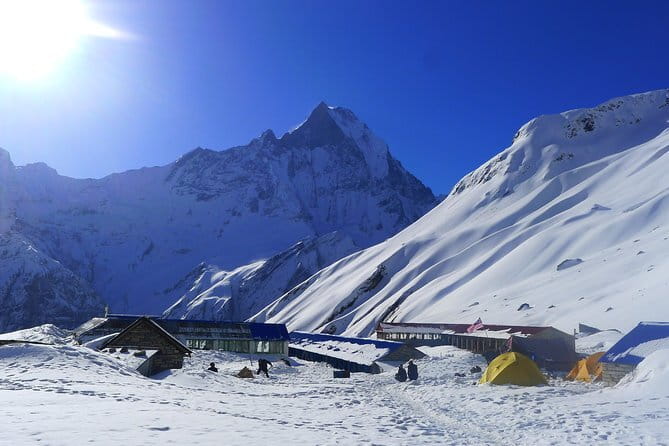
The walk to Chame brings stronger mountain views, including Lamjung Himal and Annapurna II. Chame is the administrative center of Manang District, so it feels like an important point on the route rather than just another overnight stop.
Pine forest becomes more common, and the air grows cooler as the route gains elevation. This is the stage where you start to feel that you are moving beyond the lower Himalayan foothills.
Chame is also a useful place to take stock of your condition. The pass is still several days away, but altitude effects can begin to appear well before the highest point. Tell your guide if you feel unwell, have a headache, or are struggling to sleep. The package includes a first-aid kit and an oximeter, but equipment does not replace careful pacing and honest communication.
Day 6: Chame to Lower Pisang and the first great mountain walls
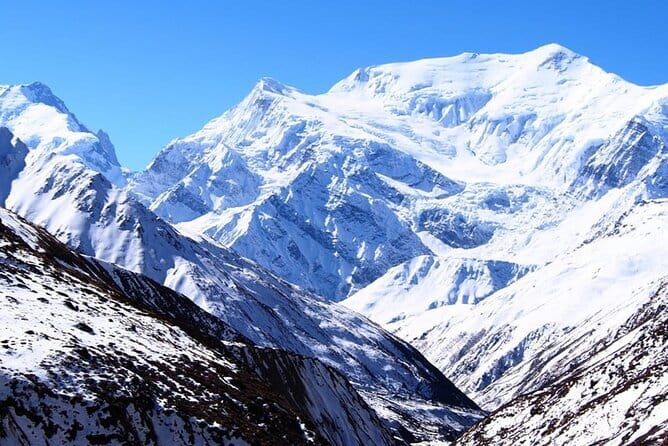
Leaving Chame, you follow forested paths toward Lower Pisang. Small villages appear along the way, while Annapurna II, III, and IV become more prominent.
Pisang is a traditional Manangi village, and the approach marks a clear change in the character of the trek. The lower route has felt greener and more river-based. Here, the mountains begin to dominate the view.
The itinerary specifies Lower Pisang, so do not assume you will stay in Upper Pisang. These places are close in name but can feel different in setting and trail position. Confirm the exact overnight location if accommodation style or village atmosphere matters to you.
Day 7: Pisang to Manang and a major cultural shift
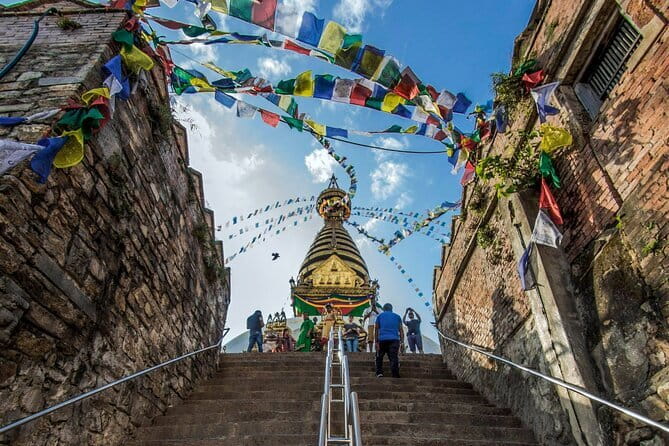
The trail continues to Manang, one of the most important settlements on the circuit. Manang is known for Tibetan cultural influences and Buddhist monasteries, and it is the natural base for adjusting to the higher elevation.
This day is a major turning point. The forest thins, the air feels sharper, and the surrounding country becomes more open and dry. You are now approaching the part of the trek where altitude matters more than distance.
Manang is not just a place to sleep. It is where you begin to slow down and pay attention to how your body responds. The itinerary wisely includes a full acclimatization day after arrival instead of pushing straight toward the pass.
Day 8: Acclimatization around Gangapurna Lake or Praken Monastery
You spend the day near Manang, with two suggested outings. One option is a hike to Gangapurna Lake. The other is a shorter walk to Praken Monastery, where you can look across toward Gangapurna, Annapurna III, and Himalchuli.
An acclimatization day should not be treated as a wasted day. The goal is to gain some height, return to sleep at the same altitude, and give your body time to adjust. Keep the pace easy and follow your guide’s advice rather than turning the rest day into a race.
This is also one of the most flexible days of the trip. If you feel strong, the longer outing may appeal. If you have a headache or poor sleep, the shorter monastery walk may be the wiser choice.
Day 9: Manang to Yakkharka in thinner air
The trail from Manang to Yakkharka passes through sparse forest and increasingly open high-altitude country. Views toward Annapurna II and Gangapurna remain a major feature of the day.
Distances can look modest on paper at this elevation, but the air makes every uphill section more demanding. You should focus less on speed and more on a steady walking rhythm. Small, regular sips of water and sensible breaks are more useful than trying to make up time.
Yakkharka is a staging point for the approach to Thorong Phedi. It is not the dramatic climax, but it places you in the right position for the final climb toward the pass.
Day 10: Yakkharka to Thorong Phedi
This is a shorter-looking but serious preparation day. You walk toward Thorong Phedi, the base area for Thorong La, as the trail becomes steeper and the surrounding terrain more exposed.
The important task is to arrive in good condition for the pass crossing. Do not burn energy trying to make this day feel heroic. Eat what you can, keep your clothing ready, and listen to your guide’s instructions about the next morning.
Tea-house accommodation at this altitude is basic. The package covers lodging and meals, but you should not expect the same range of food or comfort available in Kathmandu or Pokhara. The reward is your position beneath one of the trek’s defining challenges.
Day 11: Crossing Thorong La at 5,416 meters
The pass day begins early. You climb from Thorong Phedi toward Thorong La, where the altitude and steep trail make this the most demanding day of the circuit.
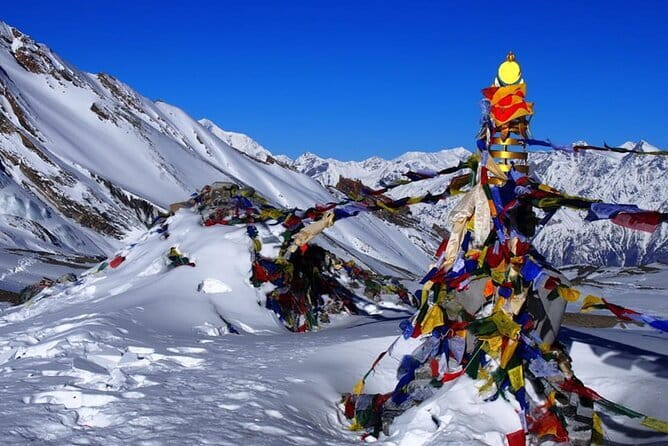
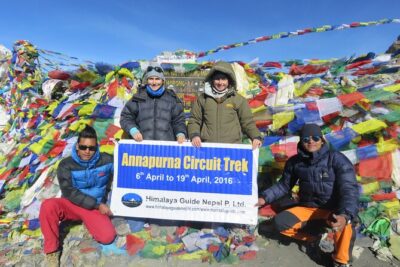
At the top, the route reaches 5,416 meters. The views are described as broad Himalayan panoramas, with a full sense of the high mountain world around you. The pass is the kind of achievement that gives the entire itinerary its shape.
You should take this day seriously. The climb may be slow, and the descent after the pass can also test tired knees. Your guide’s role matters most here: pacing, encouragement, route judgment, and attention to how you are coping all make a difference. Ravi and Sandip are named as guides associated with this program, and the feedback about them emphasizes care, organization, and attention to comfort.
The pass crossing is rewarding, but it is not guaranteed to feel easy. Weather, altitude, fitness, and sleep all affect the experience. A moderate fitness level is required, and you should be comfortable with several consecutive days of walking before booking.
Day 12: Leaving the trail for Pokhara
After the pass crossing and the successful completion of the walking section, you travel by bus to Pokhara. The package includes private transport from the trek-ending point to Pokhara and one standard twin-sharing hotel night with breakfast.
The exact transport description uses both bus and private transport language, so confirm what applies to your departure date. That small detail matters after a long descent, when you may prefer a direct vehicle rather than a shared ride.
A group dinner in Pokhara is part of the stated plan. It gives you a chance to mark the end of the trek before deciding what comes next. Pokhara also works well as a soft landing after the mountains, with more comfortable accommodation and easier access to onward plans.
Day 13: An open ending in Pokhara
The final day is deliberately flexible. You can stay longer in Pokhara, arrange time at Chitwan National Park, return to Kathmandu, or continue to another destination.
That freedom is useful, but the onward transport is not included. You need to arrange and pay for your next journey, as well as any extra hotel nights or activities. I would avoid booking a tightly timed international departure immediately after the trek unless you have built in enough room for road delays and fatigue.
What the $809.10 price really covers
At $809.10 per person, this is a practical package for someone who wants the main costs handled in advance. The included items are substantial:
- Airport pickup by private vehicle, if you request it
- Transport from Kathmandu toward the trekking route
- Shared transport to Nyadi
- Tea-house accommodation during the trek
- One Pokhara hotel night with breakfast
- Breakfast, lunch, and dinner during the trek
- Tea or coffee with breakfast
- A licensed English-speaking guide
- Guide accommodation, food, and related expenses
- Annapurna Conservation permits and TIMS registration
- Route map, first-aid supplies, and an oximeter
- Transport from the trek-ending point to Pokhara
The weak point is that personal costs are not small after the base price. A porter is extra, and so are personal expenses, visas, Kathmandu and Pokhara hotel nights, activities, and transport back to Kathmandu. You also need to clarify the meaning of the included 12 breakfasts, 12 lunches, and 12 dinners against the 13-day schedule.
Who will get the most from this trek
This route suits you if you want a major Himalayan pass, village-based accommodation, organized meals, and a guide without paying for a full luxury operation. It is also a good match if you prefer a private group rather than joining a large mixed party.
You should have moderate physical fitness and be ready for repeated walking days, steep sections, high altitude, and simple lodging. The itinerary is not aimed at someone seeking short walks followed by comfortable hotels.
It is less suitable if you need a fixed luxury standard, dislike public or shared transport, or want every onward transfer arranged. The tour gives you a strong trekking framework, but you still need to manage personal gear, extra transport, visa costs, and any porter service.
Practical questions to settle before departure
Confirm the exact first-night village, since the transport notes refer to Besisahar, Nyadi, and Bulbule. Ask where you will sleep on Day 6, how the Day 12 transfer to Pokhara will operate, and what is meant by private transport compared with bus transport.
A porter is not included. If carrying your own baggage for 13 days sounds unpleasant, arrange one in advance and ask about the cost and baggage limit.
Airport pickup is available if required. The stated meeting windows are 6:15 to 7:15 AM and 8:15 to 9:15 AM, Monday through Sunday, during the listed operating period. Confirm which window applies to your booking.
The cancellation terms are straightforward: cancel at least 24 hours before the local start time for a full refund. Changes or cancellations made less than 24 hours before the start are not accepted for a refund.
FAQ
Is airport pickup included?
Airport pickup by private vehicle is included if required.
Is accommodation included during the trek?
Yes. Tea-house accommodation is included during the trek, along with one standard twin-sharing hotel night in Pokhara with breakfast.
Are meals included?
Yes. Breakfast, lunch, and dinner are included during the trek, along with a cup of tea or coffee at breakfast.
Is a porter included?
No. Porter service for your baggage is not included and must be arranged separately if needed.
Is transport back to Kathmandu included?
No. Transport back to Kathmandu is not included. The package includes transport from the trek-ending point to Pokhara, but onward travel is your responsibility.
What happens if I cancel?
You can receive a full refund if you cancel at least 24 hours before the experience start time. Cancellations or changes made less than 24 hours before the start are not accepted for a refund.
Should you book the Annapurna Circuit trek?
I would book this trek if your priority is the classic Thorong La crossing, a clear 13-day schedule, guided support, and most trekking expenses bundled into one reasonable price. The route offers far more than mountain views: you get river valleys, terraced farms, Gurung and Manangi villages, Buddhist sites, Manang acclimatization, and a memorable high-pass day.
I would pause before booking if you need precise transport details, a porter included in the price, or a softer itinerary. Ask the operator to clarify the starting point, vehicle arrangements, baggage support, and the final Pokhara transfer. If those answers suit you, Blissful Himalayas offers a sensible way to take on one of Nepal’s great long-distance treks without handling every permit, meal, and lodge booking yourself.
Recently added around Kathmandu
- Kathmandu Airport Pickup and Drop-off Services★ 5.0 · 3 reviews
- Kathmandu Paragliding★ 5.0 · 3 reviews
- Explore The Beauty Of Langtang Valley In 8-Days Trek★ 5.0 · 3 reviews
- Kathmandu Chandragiri Cable Car and Swayambhunath Private Tour★ 5.0 · 3 reviews
- Kathmandu: Nightlife and Pub Crawl Tour★ 5.0 · 3 reviews
- Kathmandu: Momo Making Class with a Local Chef★ 5.0 · 3 reviews
- Mountain Flight Experience in Nepal★ 4.5 · 3 reviews
- Everest Base Camp Trek★ 5.0 · 3 reviews
Other Annapurna Circuit Treks worth a look

15-Day Private Annapurna Circuit Trek from Kathmandu
Read our review →
This tour also appears in