REVIEW · MARDI HIMAL TREKS
4 Days Mardi Himal Base Camp Trekking in Pokhara
Mardi Himal gives you a compact Himalayan trek with a clear goal: reach Mardi Himal Base Camp after walking through Australian Camp, rhododendron forest, Forest Camp, and High Camp. You get big mountain views without committing to a long expedition from Pokhara.
I like the mix of quiet forest trails and high mountain scenery, and I like that the price includes a guide, permits, TIMS, lodging, and transport at both ends. The main caution is the pace. Six-hour trekking days are followed by an eight-hour base-camp day and a nine-hour descent, so you need a moderate level of fitness and a willingness to walk steadily.
Key points to know before booking
- Four demanding days from Pokhara: The route packs Kande, Forest Camp, High Camp, Base Camp, and Siding into a short schedule.
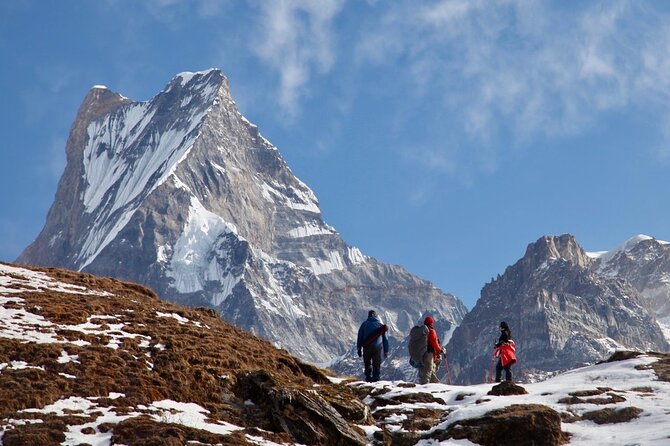
- Base Camp is the main reward: Day three starts early so you have time to enjoy the Himalayan views before returning toward Low Camp.
- Forest and mountain scenery change quickly: You move from Australian Camp and rhododendron woods to more open high-altitude views.
- Private trip, shared return vehicle: Your trekking group is private, but the Jeep from Siding to Pokhara is shared.
- Useful inclusions for the price: Hotel transfers, trekking permits, TIMS, a guide, guesthouse accommodation, and transport to Kande are covered.
- Bring a meal budget: Food is not included. The stated estimate is about 3,500 NPR per person per day.
Why this short Mardi Himal route works
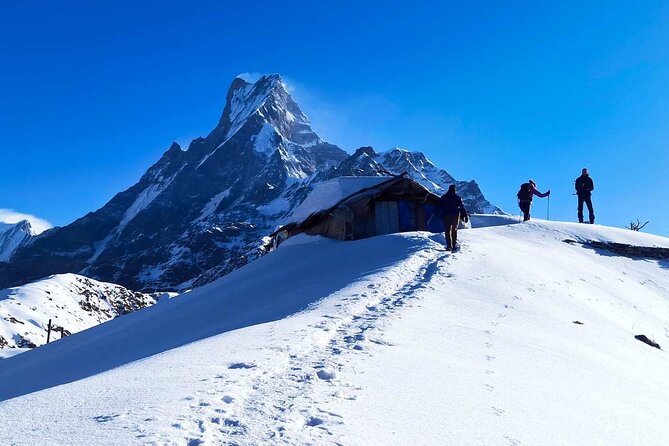
Mardi Himal is a good choice if you want a serious mountain walk but have only four days. The route begins near Pokhara, so you spend less time on long road transfers and more time on foot. It also gives you a satisfying progression, from lower forest paths to High Camp and then the Base Camp viewpoint.
The appeal is not just the final stop. The route changes character as you climb. Australian Camp brings an early scenic section, Forest Camp places you among trees and quieter paths, and High Camp brings the kind of open mountain setting that makes the trek feel properly Himalayan.
I also like the local guiding setup. An English-speaking guide leads your private group, and the guide’s value goes beyond finding the path. A local guide can help you read the day’s route, understand the surrounding communities, and adjust the rhythm of the walk to your group.
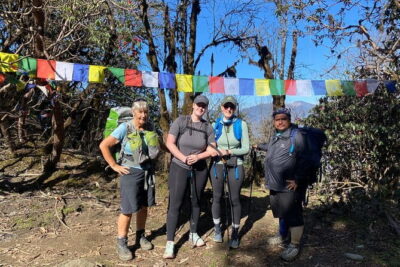
This is especially useful if you are trekking alone. One solo woman who booked the experience wanted a reputable guide because she was unsure about doing a multi-day walk in a foreign country. She normally preferred walking alone, yet the guided format offered a practical balance between personal space and support.
More Hiking Tours in Pokhara
- Poon hill Trek 3 days
★ 5.0 · 176 reviews - Trekking in Annapurna/Langtang/Everest/Upper Mustang regions
★ 5.0 · 161 reviews - Pokhara: 4-Day Ghorepani, Poonhill & Ghandruk Mountain Trek
★ 5.0 · 132 reviews
Day 1: Kande to Forest Camp through Australian Camp
The first morning begins with pickup from your hotel in Pokhara. A private car takes you to Kande, where the walking starts. That private transfer matters because it removes one early transport chore and gets your group directly to the trailhead.
From Kande, you walk toward Australian Camp before continuing to Forest Camp. The day takes about six hours, so it is a proper first trekking day rather than a gentle warm-up. You should expect a steady route and plan to keep water and small personal items close at hand.
Australian Camp is an appealing early point because it introduces the views and open spaces that make the trek worthwhile. After that, the route continues through forest toward Forest Camp. The change from open viewpoints to wooded trail gives the day some variety and keeps the first stage from feeling like one long climb.
Your overnight stay is in a guesthouse. That is a simple arrangement, but it suits this type of trek. You are there to rest, eat, and prepare for the next morning, not to expect hotel-style facilities in the hills.
The first day is also where you learn if the schedule suits you. If six hours on foot feels tough from the start, the following stages will require care. Keep your pace calm and even rather than trying to race ahead early.
Day 2: Forest Camp to High Camp
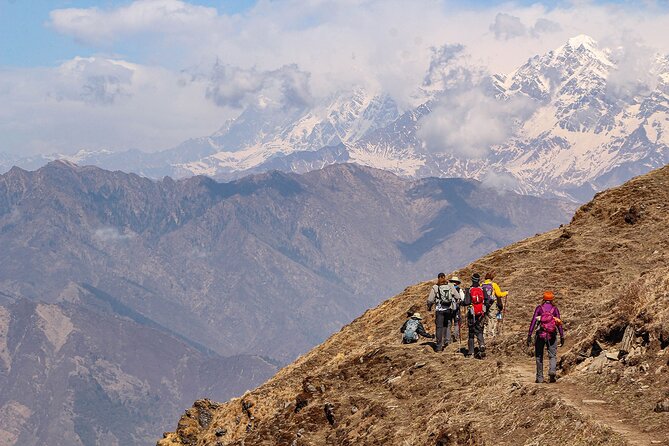
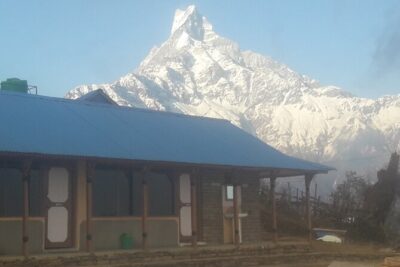
Day two starts early from Forest Camp and heads toward High Camp. The route passes through rhododendron forests, quiet sections of trail, and mountain viewpoints. At this point, the setting becomes more remote in feel, and the walk asks for steady effort.
The planned trekking time is about six hours. You should treat this as a full day outdoors, even if the distance itself does not sound extreme. The guide can help your group maintain a workable rhythm, which is one of the practical benefits of booking rather than trying to manage the route alone.
The trees are a major part of the day’s appeal. Rhododendrons give the trail color and texture, while the higher sections open toward wider mountain views. You get a clear sense of moving upward through different zones rather than repeating the same kind of scenery.
High Camp is important because it positions you for the early walk to Base Camp. The schedule does not ask you to rush from Pokhara to the summit area in one day. Instead, you spend the night higher up and begin the next morning close enough to make the main viewpoint possible.
The trade-off is that altitude and fatigue become more relevant here. The provided information does not state the exact elevation, room style, or facilities at each guesthouse, so you should be ready for basic mountain accommodation. Ask the provider before departure if you need precise sleeping or meal details.
Day 3: The early walk to Mardi Himal Base Camp
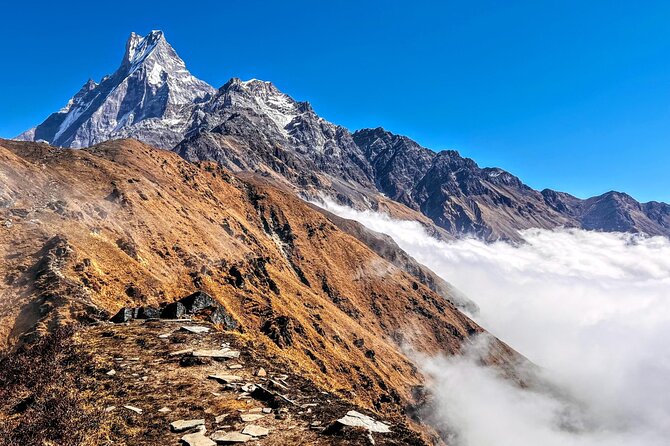
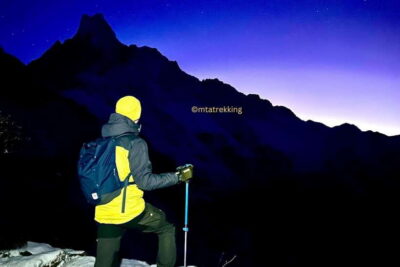
Day three is the centerpiece. You start early from High Camp and walk toward Mardi Himal Base Camp, with roughly eight hours of trekking planned for the day. The early start is useful because it allows time to appreciate the views before returning toward Low Camp.
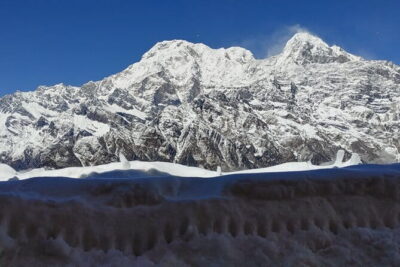
This is the day when the route’s effort pays off. From the Base Camp area, you can take in broad Himalayan views and the high mountain setting. The goal is not a quick photo stop. The schedule gives you time to enjoy the scenery before beginning the return section.
The eight-hour timing deserves attention. It includes the walk to Base Camp and the return toward Low Camp, so you should expect a long day on your feet. This is the strongest reason the trek is listed for people with moderate physical fitness. You do not need to be an elite hiker based on the information provided, but you should be comfortable with sustained walking over several days.
The day’s emotional rhythm is often as important as the views. You climb toward a clear objective, pause to take in the mountains, then reverse direction. That return can feel tiring because the excitement of reaching Base Camp has passed, so pacing and sensible breaks matter.
The overnight point is described as Low Camp. Because accommodation arrangements can differ by operating conditions, confirm the exact guesthouse plan if that detail is important to you. The key point is that the itinerary uses the third day to reach Base Camp and then begin the descent rather than spending an extra night at the highest point.
More Mardi Himal Treks in Pokhara:
- Pokhara: 4-Day Mardi Himal Trek
★ 4.9 · 59 reviews - Private Mardi Himal Trek
★ 5.0 · 42 reviews - From Pokhara: 4-Day Mardi Himal Base Camp Trek
★ 4.9 · 31 reviews - Mardi Himal Trek
★ 5.0 · 30 reviews
Day 4: Down to Siding and back to Pokhara
The last day is a long descent to Siding Village, followed by transport back to Pokhara. The listed trekking time is about nine hours, making this the longest day by duration. It is not simply a short downhill stroll after the main achievement.
The trail passes through lush forest and has a quieter feel as you lose height. Downhill walking can be easier on your breathing but harder on tired knees and feet. Trekking poles, if you use them, can be helpful, though poles are not listed among the tour inclusions.
At Siding, a shared Jeep takes you back to Pokhara. This is one logistical detail worth understanding before you book. The trip is private for your trekking group, but the final road transfer is shared, so the return vehicle may not offer the same privacy as the private car used from Pokhara to Kande.
The ride marks the end of the trek at Pokhara Lakeside. Hotel drop-off is included, which is useful after a long walking day. You do not need to arrange a separate transfer from the return point, though the exact road timing can depend on the shared vehicle.
What the $245 price covers
At $245 per person, the package offers solid value if you want a guided trek with the main practical pieces arranged. The price includes hotel pickup and drop-off, a private car from Pokhara to Kande, a shared Jeep from Siding to Pokhara, trekking permits, TIMS, an English-speaking guide, guesthouse accommodation, and a private trip format.
Those inclusions reduce the small costs and decisions that can add up on a short trek. You are not paying only for someone to walk beside you. You are also paying for route planning, permits, transport coordination, and lodging arrangements.
Food is the notable extra. Meals are available for purchase, with an estimated cost of about 3,500 NPR per person per day. That figure should be part of your real budget, along with personal drinks and any snacks you want during the walking days.
Gratuities are not included either. The information lists gratitude, which is best understood as a tip for the guide and service staff. The amount is not specified, so ask the operator if you want a clear local guideline before you start.
The private format adds value for people who prefer a group made up only of their own party. It can make the walking pace and daily conversations more comfortable than a large mixed group. It does not mean every transport segment is private, so keep the shared Jeep detail in mind.
The guide and cultural side of the walk
The guide is an English-speaking local trekking guide with experience on the route. The tour description places emphasis on local knowledge, route choices, mountain viewpoints, and contact with communities along the way. That means you can expect the walking experience to include more than trail navigation.
The cultural element is present but not described as a formal village program, workshop, or home visit. I would treat it as a chance to pass through local communities and learn from your guide rather than as a scheduled cultural performance.
The route is also selected to include quieter paths and viewpoints beyond the most obvious highlights. That can matter on a four-day trek because you want each walking stage to feel distinct. Still, exact trail conditions and daily route choices can change, so ask the guide on day one what the current plan looks like.
The strongest praise attached to this experience centers on the guide’s support and the feeling of safety for a solo woman. That is useful information for anyone who wants independence without having to handle every route and transport decision alone.
Who should book this trek
I would recommend this trek to you if you:
- Have four days available from Pokhara
- Want a private walking group
- Prefer a guide rather than organizing permits and transport yourself
- Can manage six to nine hours of trekking on scheduled days
- Want forest trails as well as high mountain views
- Are comfortable with guesthouse accommodation and separately purchased meals
It may not be the right fit if you want short walking days, luxury lodging, or a completely private vehicle from start to finish. The eight-hour Base Camp day and nine-hour return day are demanding, and the shared Jeep means the final transfer is not fully private.
You should also be realistic about the word private. Your activity group is private, but the return transport is shared. That distinction is minor for some people and important for others.
Practical preparation for four long days
Start with the fitness requirement. The tour specifically calls for a moderate physical fitness level, and the schedule supports that description. Regular walking before arrival will help, especially if you can include hills or longer outings.
Pack for changing conditions without assuming the provider supplies personal gear. The included items are transport, permits, guide service, and guesthouse accommodation. The information does not list equipment, porter service, meals, or personal supplies, so confirm what you need to bring.
Keep the first day controlled. You have three more walking days after Kande, and the final two are the hardest by duration. A calm pace will serve you better than trying to finish the first stage quickly.
Plan your money for meals and tips. Food is available to buy, but it is not part of the $245 price. Having Nepalese rupees ready may make purchases easier, although the supplied details do not specify payment methods at the guesthouses.
The provider offers free cancellation up to 24 hours before the local start time. Cancellations within 24 hours are not refunded, and late changes are not accepted. That gives you some flexibility before the final day, but the cutoff is firm.
Should you book the Mardi Himal Base Camp trek?
Book it if you want a short, organized Himalayan trek with a clear objective and useful transport included. The price is sensible for a private four-day arrangement that covers permits, TIMS, a guide, lodging, and both ends of the route.
I would be most comfortable recommending it to a fit first-time trekker who wants local support, or to a solo walker who values safety and route guidance but does not want to join a large group. The strongest benefits are the changing scenery, the private trekking format, and the practical help from an English-speaking guide.
Think twice if long days, basic guesthouses, separate meal costs, or a shared return Jeep will bother you. For everyone else, this is a focused way to reach Mardi Himal Base Camp from Pokhara without turning the trip into a much longer Himalayan commitment.
FAQ
How long does the Mardi Himal Base Camp trek take?
The experience lasts approximately four days.
Where does the trek begin?
The walking begins at Kande, reached from Pokhara by private car after hotel pickup.
Where does the trek finish?
The trek ends at Siding Village, where a shared Jeep takes you back to Pokhara Lakeside.
Is hotel pickup included?
Yes. Hotel pickup and drop-off are included.
Is the trip private?
Yes. Only your own group participates in the trekking activity.
Is the return transport private?
No. The transfer from Siding to Pokhara is arranged in a sharing Jeep.
Is a guide included?
Yes. An English-speaking trekking guide is included.
Are trekking permits and TIMS included?
Yes. The price includes the trekking permit and TIMS.
Are meals included?
No. Meals are available to purchase, with an estimated cost of about 3,500 NPR per person per day.
What happens if I cancel?
You can receive a full refund if you cancel at least 24 hours before the local start time. Cancellations or changes made within 24 hours are not accepted and are not refunded.
More 4-Day Experiences in Pokhara
- 4-Day Private Poon Hill Trekking Tour
★ 5.0 · 58 reviews - Pokhara: 4-Day Private Trek Tour
★ 4.9 · 43 reviews - Poon Hill Trek from Pokhara 4 Days
★ 5.0 · 27 reviews - 4 Days Poon Hill Trek from Pokhara
★ 5.0 · 26 reviews
Recently added around Pokhara
- Paragliding in Pokhara★ 5.0 · 3 reviews
- Pokhara: 5-Day Annapurna Base Camp Trek with Hot Spring★ 5.0 · 3 reviews
- Pokhara:4-Day Ghorepani Poon Hill Guided Trek via Ghandruk★ 5.0 · 3 reviews
- Pokhara: 7-Day Annapurna Base Camp Trek via Ghandruk★ 4.3 · 3 reviews
- Peace & Panorama: Stupa and Pumdikot Scenic Drive Tour★ 3.6 · 3 reviews
- Beautiful Sarankot Sunrise with Full Day Sightseeing in Pokhara★ 4.5 · 3 reviews
- 3 Day Australian Camp Dhampus Ghandruk Easy Trek in Pokhara★ 3.5 · 3 reviews
- Overnight Dhampus Australian Camp Easy Hiking from Pokhara★ 5.0 · 3 reviews