
REVIEW · ANNAPURNA CIRCUIT TREKS
12 Days Annapurna Circuit Trek from Kathmandu
The big draw here is the Annapurna Circuit in miniature: in 12 days, you move from Kathmandu and green river valleys to dry, high Manang and Mustang, then cross Thorong La at 5,416 meters. You get mountain scenery, old monasteries, suspension bridges, yak pasture, and traditional villages in one tightly planned trip.
I like the built-in acclimatization day in Manang, and I like that the $680 price includes permits, a guide, guest-house lodging, Kathmandu and Pokhara hotels, transfers, and a trekking pole. The main catch is the pace: Thorong La day can run 8 to 9 hours at high altitude, while long bus rides bookend the hike.
Key points to know before booking
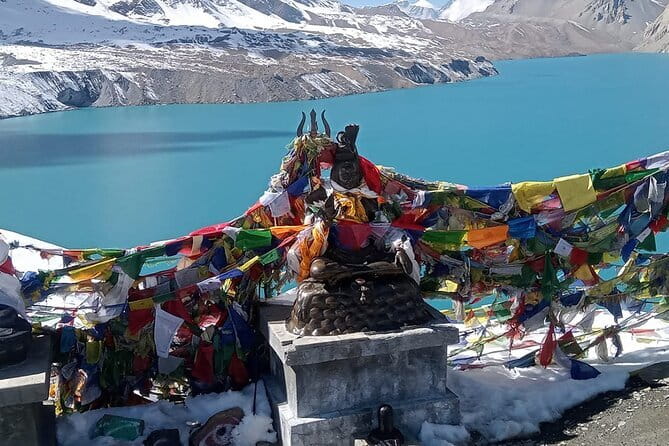
- Thorong La reaches 5,416 meters: Day 8 is the hardest section, with cold, wind, altitude, and a long descent to Muktinath.
- Manang gets an acclimatization day: You stay active rather than taking a full rest day before climbing higher.
- The scenery changes fast: Expect green river valleys, pine and juniper, dry Tibetan-style villages, alpine pasture, and the Kali Gandaki Valley.
- Guide names praised in the feedback include Biru, Milan, Amrit, and Krishna: Your assigned guide may differ, but English-speaking guide service is included.
- The $680 covers many core costs: Permits, guest houses, selected hotels, transport, breakfast in Kathmandu and Pokhara, and a trekking pole are included.
- The route uses road transport at both ends: The journey includes a long drive to Chame, a bus from Jomsom to Pokhara, and another 7 to 8-hour drive to Kathmandu.
What the 12-day Annapurna Circuit really offers
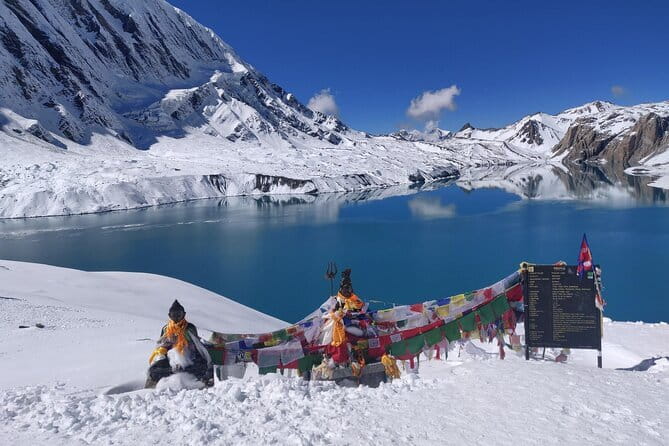
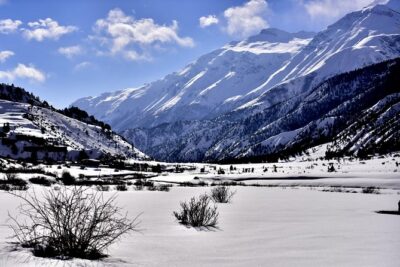
This is a compact, demanding version of one of Nepal’s best-known trekking routes. You are not simply walking through one type of mountain scenery. The route shifts from the lush Marshyangdi Valley to the dry upper Manang and Mustang regions, with the high pass providing the trip’s main physical test.
You will see views toward Annapurna, Dhaulagiri, Manaslu, and Mt. Pisang. The cultural side is just as important. Gurung, Manangi, and Tibetan communities shape the route, and you pass monasteries, Buddhist stupas, old village homes, and cultivated valleys.
The price is appealing for a private 12-day trip. You receive a guide, permits, accommodation, airport transfers, road transport, and a trekking pole, while food remains your responsibility at about $25 per day. That puts the suggested food budget near $300 for the trek, before optional tips and any personal spending.
There is one detail to clarify before paying: the tour is described as private, but the transport section says shared bus according to the itinerary. Ask CAN Travels how private the road transfers are, especially on the long journeys to Chame, Pokhara, and Kathmandu.
More Annapurna Circuit Treks in Kathmandu
- Annapurna Circuit Trek with Tilicho Lake
★ 5.0 · 368 reviews - Annapurna Circuit Trek
★ 5.0 · 94 reviews - Annapurna Circuit Trek
★ 5.0 · 35 reviews
Day 1: Kathmandu arrival and a soft landing in Thamel
A representative meets you at Tribhuvan International Airport and takes you by private vehicle to your hotel in Thamel. This is useful after an international flight, since you do not need to arrange a taxi while tired or figure out your first Nepalese directions alone.
The listed start time is 4:15 pm, while the arrival transfer is described as taking about five hours. Confirm how that time applies to your flight and hotel check-in. You receive one of two Kathmandu nights with breakfast here, giving you a base before the road journey begins.
Thamel is a practical place to stay. You can use the first evening to sort your gear, check your boots, and prepare for the long drive ahead. Do not treat this as a sightseeing day. The itinerary gives you little room for extra Kathmandu visits.
Day 2: The long road to Chame
Day 2 is mostly a road trip, lasting about nine hours. You travel toward Besisahar and then continue to Chame, crossing the Trishuli and Marsyangdi rivers along the way.
This day matters because the trek now reaches the Marsyangdi Valley, but it also tests your patience. A nine-hour road journey is a serious part of a 12-day schedule. The benefit is that you reach Chame without spending extra trekking days on lower sections of the route.
The drive brings changing river scenery and mountain views. You may see rafting activity on the Trishuli River. Since the transport is described as a shared bus in the inclusions, ask how much room is available for luggage and how often the vehicle stops.
Chame is the gateway to the walking section. From here, the trip begins to feel like a trek rather than a road-based tour.
Day 3: Chame to Upper Pisang, with suspension bridges and big peaks
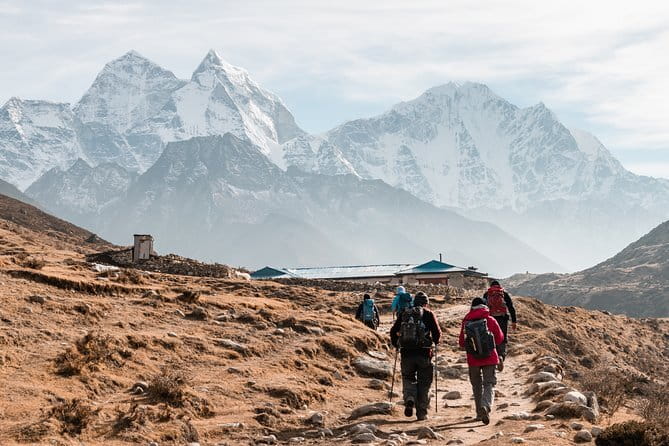
The six-hour walk from Chame to Upper Pisang brings the first strong mountain views. You pass Telekhu, see the Annapurna ranges and Mt. Pisang, and cross another suspension bridge before reaching the village.
Mt. Pisang rises to 6,091 meters, so the views here have real scale. You are beginning to gain height, but this day is not yet the great altitude test. It is a useful introduction to the daily pattern: several hours of walking, changing terrain, and a guest-house night.
Upper Pisang is especially interesting for its position in the upper Manang area. The route is no longer just a river-valley journey. You begin to see the drier mountain country that makes the northern section of the circuit so different from the lower valley.
More Hiking Tours in Kathmandu
- Everest Base Camp Trek – 14 Days
★ 5.0 · 1,499 reviews - Everest Base Camp Trekking
★ 5.0 · 485 reviews - Nagarkot Sunrise View and Day Hiking from Kathmandu
★ 5.0 · 471 reviews - Everest Base Camp Trekking – 13 Day
★ 5.0 · 365 reviews
Day 4: Braga and Manang’s Tibetan character
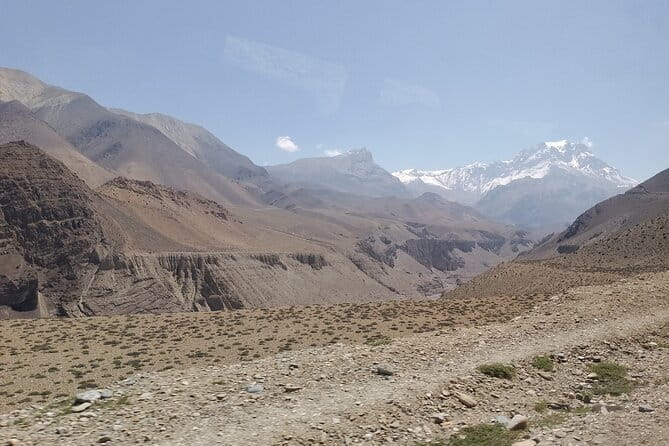
From Pisang, you walk for about six hours toward Braga and Manang. Braga is noted for its Tibetan-style architecture, with houses built one above another on the slope.
This is one of the strongest cultural sections of the trek. The buildings, monasteries, and village layout show how the high Manang communities adapted to a cold, dry mountain setting. You are not only walking past scenery. You are moving through a place with a distinct way of life.
Manang is also where altitude becomes a serious concern. The itinerary places you here for two nights, which is important before the route climbs toward Yak Kharka and Thorong Phedi. Your guide can help keep the pace sensible, but you still need to be honest about headaches, nausea, unusual tiredness, or other symptoms.
Day 5: Why the Manang acclimatization day matters
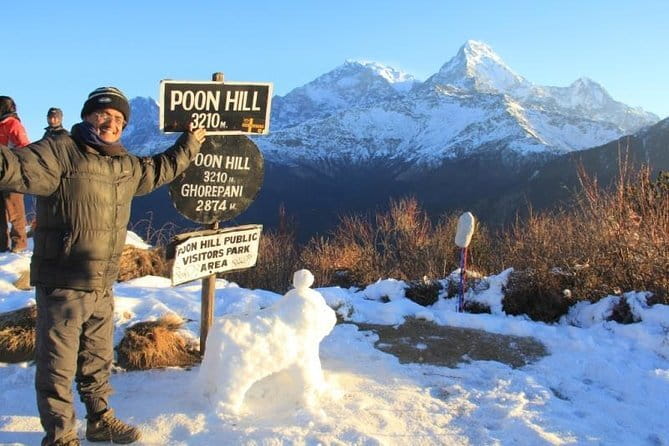
The extra day in Manang is one of the smartest features of this schedule. High-altitude walking is not only about fitness. Your body needs time to adjust, and the plan encourages you to stay active rather than spend the whole day lying down.
The itinerary allows about six hours for the day around Manang. The precise activity is not fully specified, so you should ask your guide what outing is planned. The key point is that you remain at Manang before climbing higher.
This is also a good day to appreciate the village and surrounding views without carrying the pressure of a major pass crossing. Use it to organize clothing, water, snacks, and layers for the colder days ahead. At this point, the route’s green lower-valley feel has given way to more open, dry country.
Day 6: Juniper, yak pasture, and Yak Kharka
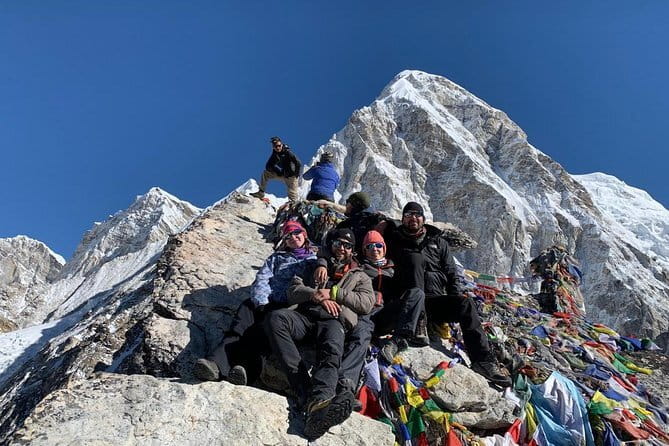
The walk to Yak Kharka covers about 10.4 kilometers and takes roughly six hours. The route climbs through juniper areas and alpine pasture, where you may see yaks grazing.
The distance is moderate, but the altitude changes the effort. You are now preparing for Thorong Phedi and the pass. A short-looking day can still feel hard when every uphill step comes with thinner air.
The route passes the only teahouse at Thorong Khola, according to the itinerary. That detail makes carrying water and snacks especially sensible, since you should not count on frequent refreshment stops.
Yak Kharka is a functional overnight stop rather than a place to rush through. The guest-house accommodation is basic by city standards, but it keeps you on the route and gives you the best chance to reach the pass in the planned sequence.
Day 7: Thorong Phedi and the final approach
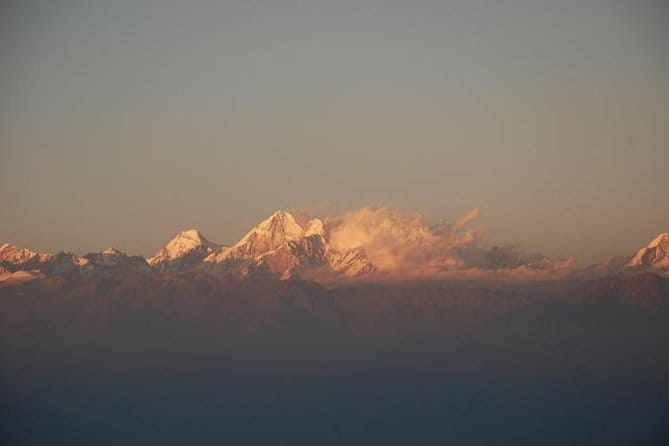
You continue for about six hours toward Thorong Phedi, following the east bank of the Jarang Khola. The trail passes steep bluffs before reaching Thorong Phedi, whose name means foot of the pass.
This is a day for conserving energy. The pass crossing comes next, so you want to arrive ready rather than exhausted. The route is already high and exposed, and the terrain becomes more severe as you leave the lower pasture behind.
Your guide’s role is particularly valuable here. The guides praised in the feedback, including Biru, Milan, Amrit, and Krishna, were described as caring, honest, friendly, and good at adjusting the pace. Those are the traits you want at this stage, although the particular guide assigned to you is not guaranteed.
Day 8: Thorong La at 5,416 meters, then down to Muktinath
This is the trip’s main challenge. The day lasts about 8 to 9 hours and includes the crossing of Thorong La Pass at 5,416 meters.
High altitude, strong wind, and a long descent make this a demanding day even for fit hikers. The pass itself is the reward: you reach the highest point of the trek, with wide Himalayan views and a clear sense that you have crossed from the Manang side toward Mustang.
The descent to Muktinath can be hard on tired knees. Take the guide’s pace seriously, keep warm, and do not hide altitude symptoms. The tour requires a strong physical fitness level, and that warning should not be brushed aside.
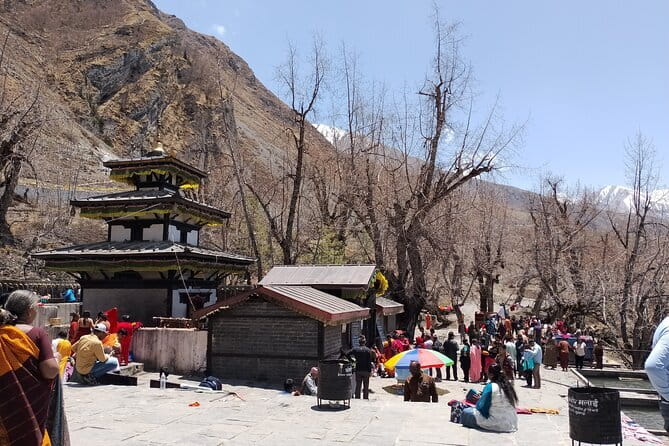
Muktinath is also an important religious site. Its position on the route gives the day more depth than a simple high-point achievement. You have moved through Buddhist and Hindu cultural territory, and the village has a strong spiritual identity.
Day 9: Muktinath, Kagbeni, and Jomsom
After the pass, the terrain changes again. You follow a route through meadows, orchards, and streams, then pass Kagbeni before reaching Jomsom in the Kali Gandaki Valley.
Kagbeni is known for its old village character and its position at the edge of the Mustang region. It is a fine place to notice how different the villages feel after Thorong La. The route is no longer dominated by the pass, and the lower valley brings more vegetation.
Jomsom is the end of the main hiking section. The itinerary allows around six hours, so you still have a meaningful walking day rather than simply transferring from Muktinath. This is a good point to look back at the route’s changing scenery, from river valleys and forests to dry high-altitude settlements.
Day 10: The bus to Pokhara
Today you ride a local bus to Pokhara, with the journey taking about 7 to 8 hours. The route goes via Beni Bazaar and Tatopani before reaching Pokhara.
This is not a scenic rest day in the easy sense. Local road travel can be tiring, and after the pass you may be ready for a quieter transfer. Still, the bus connects the mountain route with Pokhara without requiring another long stretch of walking.
Pokhara is famous for Phewa Lake, written as Phew Tal in the tour information. You receive one night there with breakfast. That night gives you a useful change of pace after guest houses and high mountain walking, though the schedule does not include a dedicated sightseeing program.
Day 11: The 7 to 8-hour return to Kathmandu
The journey back to Kathmandu takes another 7 to 8 hours. That is a lot of road time after 10 days of trekking and transport, but it allows the trip to finish in the capital rather than requiring an extra flight or a separate transfer plan.
The final Kathmandu night is included with breakfast. You can use it to repack, rest, and prepare for the airport. The schedule is efficient, but not leisurely. If you want several full days in Kathmandu or Pokhara, add them outside this 12-day plan.
Day 12: Airport transfer and departure
A representative takes you to Tribhuvan International Airport at least three hours before your scheduled departure. The airport drop-off is included, which is helpful for an early flight or a departure day when you have little spare energy.
Your trekking permit and official documents are included, as are round-trip hotel transfers. Keep your important items together during the trip, and confirm the departure pickup time with CAN Travels once your flight is fixed.
What the $680 price covers, and what it does not
At $680 per person, the package gives you a good amount of infrastructure for a 12-day private trek. Included are:
- Airport and hotel pickup and drop-off
- An English-speaking trekking guide
- Trekking permits and official documents
- Two Kathmandu nights with breakfast
- One Pokhara night with breakfast
- Guest-house accommodation during the trek
- Road transfers according to the schedule
- A trekking pole for each person
Food and drinks are not included. The stated estimate is about $25 per day, so plan for roughly $300 if you use that figure across 12 days. Gratuities are optional.
The word private needs a closer look. Only your group participates, but the transport description refers to a shared bus. That may be perfectly acceptable, but ask before booking if you expect a private vehicle for every road section.
How the guide can shape the experience
A good guide matters on this route, especially around altitude and the Thorong La crossing. The feedback highlights Biru several times, along with Milan, Amrit, and Krishna. Biru is described as caring and strong on mountain culture, while Krishna is praised for clear English and for adjusting the pace to suit the group.
Those comments point to the right questions to ask CAN Travels: Who is assigned to your group? How many people will the guide support? How will the pace change if someone struggles at altitude?
You are buying more than route-finding. You want someone who can explain local customs, monasteries, villages, and mountain conditions while also watching your health. The included guide is one of the strongest reasons this package can make sense for first-time Himalayan trekkers.
Who should book this trek
This trip suits you if you want the Annapurna Circuit’s major high point and cultural range but have only 12 days. It works particularly well for a small private group that values an English-speaking guide and does not want to arrange permits, hotels, guest houses, and road transfers separately.
You should have strong physical fitness and be ready for several hours of walking at altitude. Day 8 is not a casual excursion. If you prefer short walks, more hotel comfort, or generous spare days for weather and rest, this schedule may feel too tight.
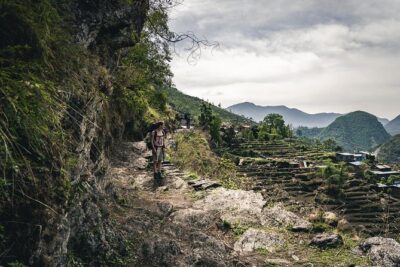
The trek also suits people who care about changing scenery. You will not see the same view for 12 days. Green valleys, juniper, yak pasture, Tibetan-style villages, dry Mustang terrain, orchards, and the Kali Gandaki Valley give the route its appeal.
Should you book the 12-day Annapurna Circuit trek?
Book it if you want a well-supported, time-efficient circuit with Thorong La, Manang, Muktinath, Jomsom, and Pokhara included. The price is strong for the services covered, and the built-in acclimatization day is a real advantage.
Before booking, confirm the transport arrangement, your guide’s name, the exact hotel and guest-house standards, and how food purchases work along the trail. Also make sure your fitness and altitude expectations match the 8 to 9-hour pass day.
For a fit hiker who wants major Himalayan scenery, local culture, and a clear route plan without arranging every detail alone, this is a sensible choice. For a slower, softer holiday, add extra days or choose a less demanding trek.
FAQ
How long is the Annapurna Circuit trek?
The experience lasts approximately 12 days, including arrival and departure transfers, road journeys, trekking days, and nights in Kathmandu and Pokhara.
What is the highest point of the trek?
The route crosses Thorong La Pass at 5,416 meters.
Is an acclimatization day included?
Yes. Day 5 is spent in Manang, where you remain active before continuing to higher elevations.
What accommodation is included?
Two nights in Kathmandu and one night in Pokhara are included with breakfast. During the trek, you stay in guest houses.
Are trekking permits included?
Yes. Trekking permits and official documents are included in the package.
Is food included in the price?
No. Food and drinks are available for purchase, with an estimated cost of about $25 per day.
Can I cancel for a full refund?
Yes, if you cancel at least three full days before the experience start time. Cancellations made within three days are not refunded, and changes within that period are not accepted.
Recently added around Kathmandu
- Kathmandu Paragliding★ 5.0 · 3 reviews
- Kathmandu Airport Pickup and Drop-off Services★ 5.0 · 3 reviews
- Kathmandu Chandragiri Cable Car and Swayambhunath Private Tour★ 5.0 · 3 reviews
- Explore The Beauty Of Langtang Valley In 8-Days Trek★ 5.0 · 3 reviews
- Kathmandu: Nightlife and Pub Crawl Tour★ 5.0 · 3 reviews
- Mountain Flight Experience in Nepal★ 4.5 · 3 reviews
- Kathmandu: Momo Making Class with a Local Chef★ 5.0 · 3 reviews
- Everest Base Camp Trek★ 5.0 · 3 reviews
Other Annapurna Circuit Treks worth a look

15-Day Private Annapurna Circuit Trek from Kathmandu
Read our review →
This tour also appears in