
REVIEW · ANNAPURNA CIRCUIT TREKS
12 days Annapurna Circuit Trek
The high point here is Thorong La Pass, reached before dawn on day eight after a careful climb through Manang and Yak Kharka. The route then drops into Mustang, reaches Muktinath, and finishes with a sunrise at Poon Hill. It is a serious mountain trek, not a sightseeing holiday with a few walks added.
I like the way the price covers tea-house lodging, three meals during the trek, permits, guides, and several long-distance transfers. I also like the personal setup: this is a private activity for your group, and the company can adjust the plan. The main caution is the pace. Several days run close to 10 or 12 hours, and porters, insurance, drinks, and some transport options cost extra.
Key points to know before booking
- Thorong La is the central challenge: You leave around 3 a.m. on day eight to cross the 5,416-meter pass.
- The route gives you two classic viewpoints: Manang brings close mountain views, while Poon Hill provides the famous sunrise finish.
- Meals and permits are included: Breakfast, lunch, and dinner are provided during the trek, along with ACAP and TIMS fees.
- The private format offers flexibility: Your group travels together, with customization and group discounts available.
- Transport is part of the adventure: Expect public transportation, jeeps, buses, and a long return to Kathmandu.
- A porter is optional: Porters cost $20 per day and carry up to 20 kilograms.
Why this Annapurna Circuit route works
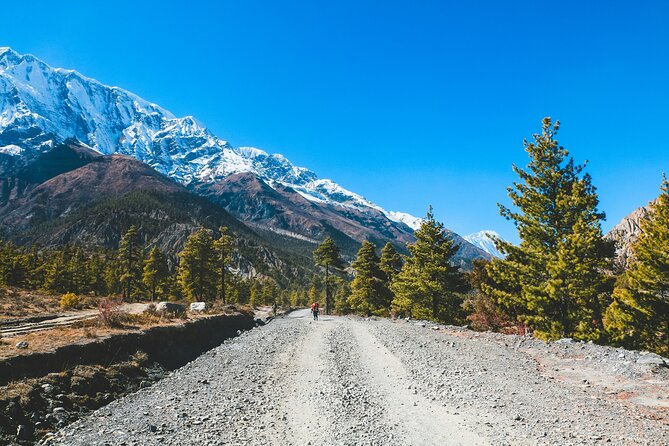
The Annapurna Circuit is appealing because the scenery changes sharply as you climb. You begin beside the Trishuli River and on rough mountain roads, move through forests and villages, reach the dry high country around Manang, cross a huge pass, and then descend toward Mustang and the Kali Gandaki valley.
This 12-day version packs that change into a tight schedule. You do not spend time wandering from town to town at a gentle pace. You keep moving, and that makes the trip efficient for someone with limited time. It also means you need a moderate level of fitness and a willingness to handle long days.
The $1,100 price is strong value for what is included. You receive transport from Kathmandu to Dharapani, the Muktinath to Tatopani jeep, transport from Nayapul to Pokhara, a tourist bus back to Kathmandu, one night in Pokhara with breakfast, tea-house lodging, full-board trekking meals, permits, taxes, guide costs, and a farewell dinner in Kathmandu.
That does not make the trek all-inclusive. Drinks, tips, laundry, phone use, insurance, Nepal visa fees, and personal costs are on you. A porter adds $20 per day. Still, the core costs are clearly bundled, which makes budgeting easier than arranging each part separately.
More Annapurna Circuit Treks in Kathmandu
- Annapurna Circuit Trek with Tilicho Lake
★ 5.0 · 368 reviews - Annapurna Circuit Trek
★ 5.0 · 94 reviews - Annapurna Circuit Trek
★ 5.0 · 35 reviews
Day 1: Kathmandu to Dharapani by road
The first day is mainly a transport day, and it is a long one. You travel from Kathmandu toward Besishar beside the Trishuli River, then continue by jeep to Dharapani, where you spend the night.
The listed duration is about 12 hours. That matters. You are not arriving at a quiet trailhead after a quick transfer. You are spending most of the day on public transportation and a mountain road before the walking begins.
This route gives you an early look at rural Nepal, but comfort and speed can vary. Keep water, snacks, warm layers, and basic medication close at hand rather than buried in your main bag. Your accommodation starts at Dharapani, and the overnight stop places you in position for the trek’s first full walking day.
Day 2: Forests and changing views on the way to Chame
The second day takes you to Chame, headquarters of the Manang District. As you gain height, the surroundings begin to change, with rhododendron forests and wider mountain views.
The day is again listed at roughly 12 hours, so you should expect an active schedule. Chame is an important stopping point because the route is beginning to feel like a high mountain trek rather than a road journey.
I like this part of the route for its gradual visual shift. You are not thrown straight into an exposed, barren setting. Forest, river valleys, villages, and mountain glimpses lead you upward in stages. The drawback is simple: the long day can feel demanding so early in the program.
Day 3: Upper Pisang at 3,300 meters
You continue to Upper Pisang, at about 3,300 meters. Lamjung Himal, rising to 6,893 meters, provides one of the major views, especially in the morning light.
This is a shorter listed day at about 10 hours, though that remains a full day in the mountains. Upper Pisang gives you a sense of the altitude and the stark change in architecture and scenery that comes with it.
The route offers more than a destination photograph. You are moving into a higher, drier part of the circuit, and the air begins to feel colder and thinner. Take the guide’s pace seriously here. Do not treat a strong first few days as proof that altitude will not affect you later.
More Hiking Tours in Kathmandu
- Everest Base Camp Trek – 14 Days
★ 5.0 · 1,499 reviews - Everest Base Camp Trekking
★ 5.0 · 485 reviews - Nagarkot Sunrise View and Day Hiking from Kathmandu
★ 5.0 · 471 reviews - Everest Base Camp Trekking – 13 Day
★ 5.0 · 365 reviews
Day 4: Upper Pisang to Manang
The fourth day passes through Upper Pisang and Geru before reaching Manang. This is one of the richest mountain-view days, with sights toward Annapurna II, Annapurna III, Annapurna IV, Gangapurna, Tilicho, and Pisang Peak.
Manang sits beneath Annapurna III and is one of the key places on the circuit. The air is drier and colder, and the route has a more open, high-altitude feel.
At about 10 hours, it is still a substantial day. Yet the reward is not only the scenery. Manang is the practical center of the trek’s acclimatization plan, and arriving here gives you a chance to slow down before the pass section.
Day 5: Acclimatization around Manang
You spend a second night in Manang for acclimatization. The plan includes a possible walk toward Ice Lake, while Annapurna and Gangapurna remain the major visual draws.
This rest day is one of the most important parts of the schedule. It is not wasted time. It gives your body a chance to adjust before you climb higher toward Thorong La.
The itinerary lists up to 12 hours, depending on the day’s walk. Ice Lake is presented as an option, so ask your guide how strenuous the outing will be and how it fits your condition. If you are tired, a shorter outing around Manang may be the wiser choice. The private format should make that conversation easier.
Day 6: Manang to Yak Kharka
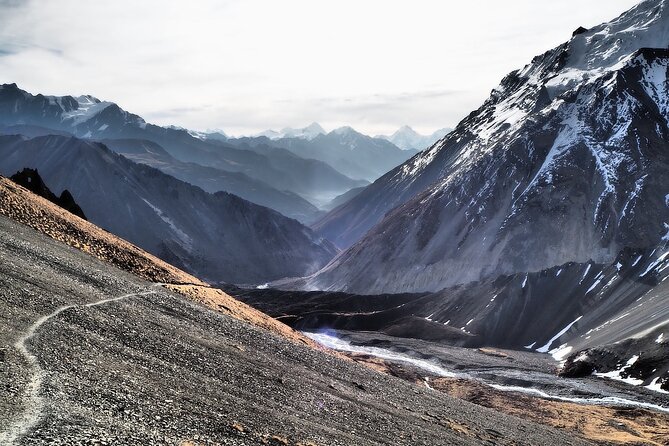
You leave Manang and climb toward Tenki before entering the Jarsang Khola valley. The route crosses a stream and leaves the Marshyangdi Valley behind as you move northwest.
Yak Kharka is a classic high-altitude stop before the pass. The day is listed at around 12 hours, and the steady climb is more important than speed. At this point, the air is thinner and the cold more noticeable.
This is where good pacing earns its keep. Walk steadily, drink regularly, and tell your guide if you develop symptoms that concern you. The package includes an experienced, government-licensed English-speaking guide, but the guide can only help if you communicate clearly.
Day 7: Yak Kharka to Thorung Phedi
The route to Thorung Phedi brings you closer to the main challenge. You climb to a ridge, descend, cross the Marsyangdi River on a wooden bridge, and continue toward the foot of Thorong La.
The day lasts about 12 hours according to the schedule. Thorung Phedi is not the pass itself. It is the staging point for the early start and high climb that follows.
This is a good night to organize everything before bed. Keep your warmest clothes, headlamp, water, and small essentials ready. The next morning begins around 3 a.m., so a calm evening matters more than squeezing in extra activity.
Day 8: Thorong La Pass and Muktinath
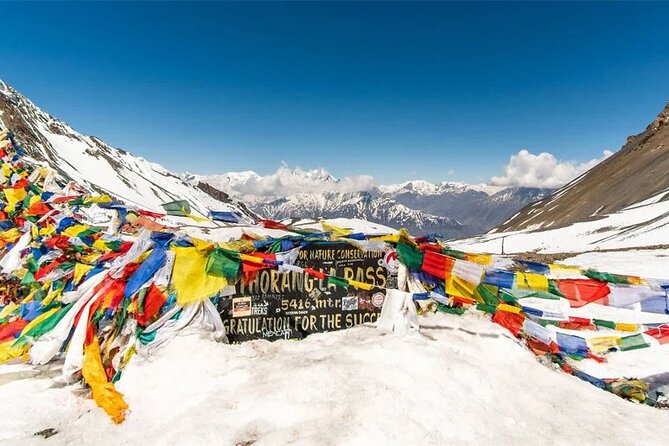
This is the defining day. You wake around 3 a.m. and climb toward Thorong La, one of the world’s highest trekking passes, at approximately 5,416 meters.
The pass is the hardest physical section of the trip. Weather, altitude, footing, and your own condition all matter. You should not view the early start as a gimmick. It is built into the plan to give you the best chance of crossing during the safer morning window.
After reaching the pass, you descend to Muktinath. The day is listed at around 10 hours, but the effort can feel greater because of the altitude and the early start. Muktinath also changes the character of the route. You have crossed from the Manang side toward Mustang, and the descent brings relief after the pass.
This is the point where the guide’s planning is especially valuable. You need someone who understands the pace of the group, the route, and the practical demands of the crossing.
Day 9: Jeep to Tatopani and a hot-spring rest
From Muktinath, you take a jeep for roughly three hours to Tatopani. Once there, you can rest at the lodge or visit the hot springs.
The road transfer is not as scenic or peaceful as walking every kilometer, but it keeps this 12-day program workable. Without some vehicle sections, fitting Manang, Thorong La, Muktinath, Ghorepani, and Poon Hill into the schedule would be much harder.
Tatopani offers a welcome change of pace. A hot-spring visit can loosen tired legs, though it is optional. This is also a useful recovery day after the pass and long descent.
Day 10: Thakali villages and Ghorepani
You leave Tatopani and walk through the Thakali settlements of Sikha and Chitre. The route reaches the east bank of the Kali Gandaki River before climbing toward Ghorepani.
The day is again listed at about 12 hours. You are climbing after a day that included road transport and a possible hot-spring stop, so do not assume the schedule is easy.
This section adds cultural interest to the mountain views. Sikha and Chitre provide a look at traditional settlements along the route, while Ghorepani positions you for the final sunrise walk. The repeated lodge stays and included meals keep the logistics simple, but tea-house accommodation is basic by design. You are paying for a practical mountain base, not resort comforts.
Day 11: Poon Hill sunrise and Pokhara
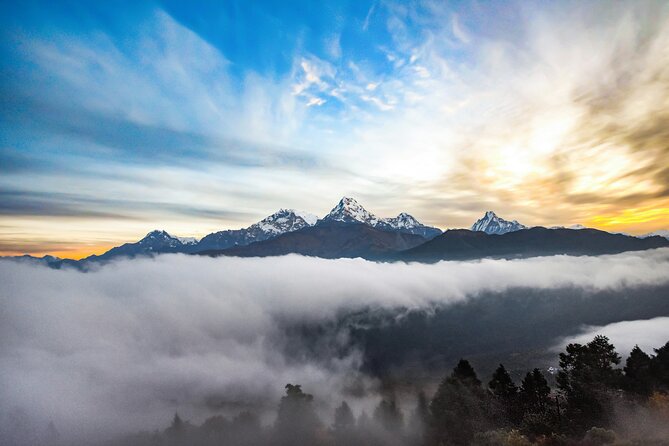
The morning begins with a climb to Poon Hill, at approximately 3,210 meters. From the viewpoint, you can see sunrise across the Dhaulagiri and Annapurna ranges, including Machhapuchhre, often called Fishtail, and Annapurna.
The Poon Hill section is listed at one hour, but the full day continues after the viewpoint. You trek from Ghorepani to Birethani, then take a bus to Pokhara.
This is a smart ending because it gives you a final mountain viewpoint before the trip shifts to a lakeside city. Pokhara is also a practical place to rest after the high pass and repeated long walking days. One night with breakfast is included.
Do not underestimate the final transfer. The walk to Birethani and bus ride to Pokhara make this another full day, even though the sunrise visit itself is short.
Day 12: Pokhara to Kathmandu
After breakfast, you return to Kathmandu by tourist bus. The alternative is a 25-minute flight, but the flight is not included and costs extra.
The bus keeps the base price lower, though it takes longer than flying. If you are connecting to an international departure, check the timing carefully before choosing the bus. The itinerary provides the transport, but it does not promise a fast arrival.
The farewell dinner in Kathmandu is included, giving the trip a clear closing point. Since the tour can be customized, ask about timing if you need to coordinate the return with another booking.
Guides, planning, and the private format
The company provides a government-licensed, experienced, English-speaking trekking guide. The package covers the guide’s meals, insurance, salary, lodging, and transportation, so those costs do not appear later as surprise charges.
Bhim Panta is identified with Magnificent Himalayan Treks, and the company’s arrangements also involve guides named Manit and Kumar. Manit is described as responsive during online planning, including questions about the itinerary and equipment. That kind of pre-trip contact is useful when you are deciding what to bring for a high pass.
The activity is private, meaning only your group participates. That gives you more room to discuss pace, rest stops, and possible changes than a large fixed group would. At the same time, group discounts are available, so the format can work well for friends or family traveling together.
One important limit remains: porters are not included. You can hire one for $20 per day, with a stated carrying capacity of up to 20 kilograms. For a trek with several 10 to 12-hour days, many people will find that worthwhile.
What the $1,100 price really covers
At $1,100 per person, the trip includes much of the expensive framework:
- Transport from Kathmandu to Dharapani
- Jeep transport from Muktinath to Tatopani
- Transport from Nayapul to Pokhara
- Tourist bus from Pokhara to Kathmandu
- Tea-house or lodge accommodation during the trek
- Breakfast, lunch, and dinner during the trekking period
- One night in Pokhara with breakfast
- ACAP and TIMS permits
- Government and local taxes
- Guide wages, meals, lodging, insurance, and transport
- A farewell dinner in Kathmandu
You still need money for drinks, alcohol, tips, laundry, telephone use, camera or video fees, personal purchases, insurance, and your Nepal visa. Visa fees listed are $30 for 15 days, $50 for 30 days, and $125 for 90 days.
The price is best for someone who wants a managed route without paying for luxury lodging. Its value comes from combining permits, food, guide support, and transport in one plan. It is less attractive if you want a slow itinerary, private rooms, or every personal expense covered.
Who should book this trek
I would recommend it to you if you want the classic Annapurna Circuit highlights in 12 days and are comfortable with early mornings, basic lodges, long walking days, and road transfers.
It suits a private group that values direct contact with a local company and wants some room to adjust the program. It also suits people who appreciate cultural stops such as Manang, Muktinath, and the Thakali villages rather than focusing only on mountain photographs.
I would hesitate if you have not prepared for sustained walking or if you expect a soft adventure with short daily outings. Thorong La is a serious pass, and the schedule gives you little spare time if you fall behind.
Free cancellation is available up to 24 hours before the local start time. That is useful, but it does not replace proper travel insurance, which is not included in the package.
FAQ
How long is the Annapurna Circuit trek?
The experience lasts approximately 12 days, beginning in Kathmandu and ending with transport back from Pokhara to Kathmandu.
What is the price per person?
The listed price is $1,100 per person.
Is the tour private?
Yes. Only your group participates in the private activity.
Is hotel pickup included?
Pickup is offered, but the provided information does not specify the exact pickup location or hotel coverage.
What type of accommodation is included?
Tea-house or lodge accommodation is included during the trek. One night in Pokhara with breakfast is also included.
Are meals included?
Yes. Breakfast, lunch, and dinner are included during the trek. The package lists 12 breakfasts, 11 lunches, and 10 dinners, along with a farewell dinner in Kathmandu.
Is Thorong La Pass included?
Yes. The route crosses Thorong La Pass on day eight, after an early morning departure from the Thorung Phedi area.
Is a porter included?
No. Porters are available for $20 per day and carry up to 20 kilograms.
Is transport from Pokhara to Kathmandu included?
Yes. A tourist bus is included. A 25-minute flight is available as an alternative, but it is not included and costs extra.
Are permits included?
Yes. The Annapurna Conservation Area Permit and Trekkers Information Management System card fee are included.
Should you book it?
Book this trek if you want a cost-conscious, well-supported route through the Annapurna Circuit with the major highlights in place: Manang, Thorong La, Muktinath, Tatopani, Ghorepani, and Poon Hill.
The best reasons to choose it are the included permits and meals, the private-group setup, the experienced local guide structure, and the efficient transport plan. The main reasons to pause are the demanding schedule, basic accommodation, optional porter cost, and long road transfers.
For a prepared hiker who wants a full Himalayan journey without arranging every detail alone, this is a strong-value plan. Just arrive ready for the altitude, protect your schedule around the 3 a.m. pass start, and budget for insurance, drinks, tips, visa fees, and a porter if you prefer to walk light.
Recently added around Kathmandu
- Kathmandu Paragliding★ 5.0 · 3 reviews
- Kathmandu Airport Pickup and Drop-off Services★ 5.0 · 3 reviews
- Kathmandu Chandragiri Cable Car and Swayambhunath Private Tour★ 5.0 · 3 reviews
- Explore The Beauty Of Langtang Valley In 8-Days Trek★ 5.0 · 3 reviews
- Kathmandu: Nightlife and Pub Crawl Tour★ 5.0 · 3 reviews
- Mountain Flight Experience in Nepal★ 4.5 · 3 reviews
- Kathmandu: Momo Making Class with a Local Chef★ 5.0 · 3 reviews
- Everest Base Camp Trek★ 5.0 · 3 reviews
Other Annapurna Circuit Treks worth a look

15-Day Private Annapurna Circuit Trek from Kathmandu
Read our review →
This tour also appears in