
REVIEW · ANNAPURNA CIRCUIT TREKS
Annapurna Circuit Trek with Tilicho Lake (16 Days)
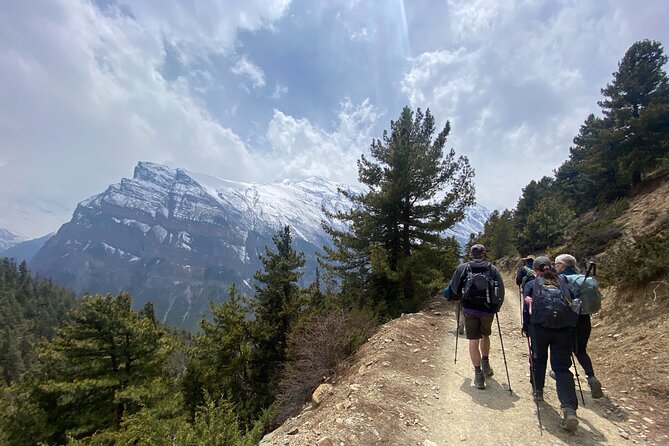
The big prize here is Tilicho Lake at 4,919 meters, followed by the hard-earned crossing of Thorong La Pass at 5,416 meters. In 16 days, you move from green river valleys and pine forests to the dry, Tibetan-influenced country around Manang and Mustang.
I like the careful acclimatization stop in Manang and the extra support of one assistant guide per five trekkers. I also like the practical transport plan, which combines private vehicles, shared jeeps, buses, and teahouses instead of pretending every part of the Annapurna Circuit is polished.
The main consideration is cost control. The $1,800 price covers a lot, but trekking meals, drinking water, insurance, hot showers, Wi-Fi, charging, and a $50 government fee are extra. You also need strong fitness for several long days above 4,000 meters.
Key points to know before booking
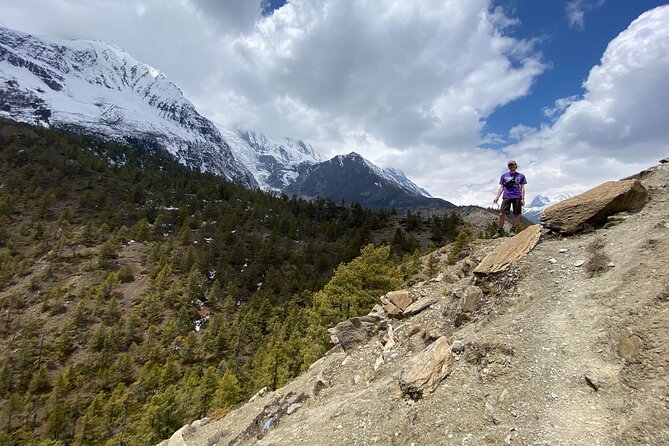
- Tilicho Lake detour: Reach one of the world’s highest walkable alpine lakes at 4,919 meters.
- Thorong La crossing: Climb from Thorong Phedi to Nepal’s famous 5,416-meter trekking pass, then descend to Muktinath.
- Gradual altitude gain: The route includes an acclimatization day in Manang before the high section.
- Small maximum group: No more than 14 people are scheduled, with assistant guides for added support.
- Mixed transport plan: Private transfers, shared jeeps, a public bus, and a tourist bus are all part of the route.
- Cultural variety: You pass through Gurung, Manangi, Tibetan-influenced, and Thakali communities.
Why this 16-day Annapurna route is special
The classic Annapurna Circuit is rewarding because the scenery changes almost every day. This version adds Tilicho Lake, so you get two major high-altitude goals rather than only the pass crossing.
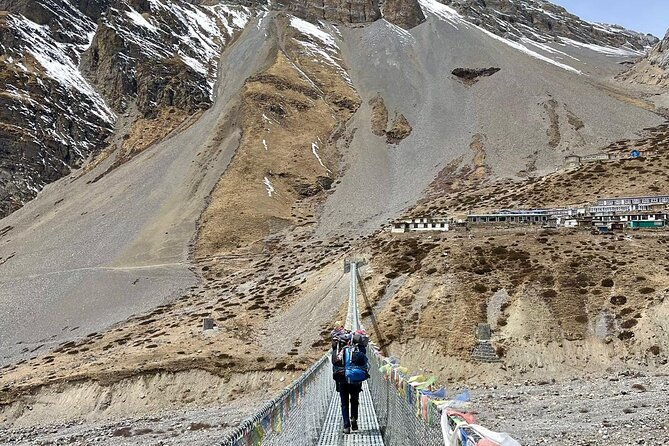
You begin near Kathmandu and climb through the Marsyangdi Valley. Pine forests give way to dry hills, stone villages, prayer flags, monasteries, and broad mountain views. After Thorong La, the world changes again. The Kali Gandaki Valley is more arid, with Mustang-style villages and strong winds around Jomsom.
I like this variety. A shorter route can give you a fine mountain walk, but it may not give you such a clear sense of Nepal’s changing climate and cultures. Here, the route moves from subtropical foothills to alpine country and then into a desert-like rain-shadow region.
The tradeoff is that this is not a gentle sightseeing holiday. Several days are described as roughly 12-hour travel or trekking days. Roads have also changed parts of the Annapurna Circuit, so this is not a completely foot-only journey.
More Annapurna Circuit Treks in Kathmandu
- Annapurna Circuit Trek with Tilicho Lake
★ 5.0 · 368 reviews - Annapurna Circuit Trek
★ 5.0 · 94 reviews - Annapurna Circuit Trek
★ 5.0 · 35 reviews
Days 1 and 2: Kathmandu to Dharapani
Your arrival day is deliberately simple. A representative meets you at Tribhuvan International Airport and transfers you to a three-star hotel in Thamel. After check-in, you have free time, which is useful after an international flight and gives you a chance to buy or check personal trekking gear.
Day 2 is a long transfer toward the trailhead. The route follows the Prithvi Highway beside the Trishuli River, with a stop near Trishuli and another at Mugling. Mugling is a major junction where buses, trucks, tea stalls, and snack vendors create a very Nepali roadside scene.
You continue to Besisahar, the administrative center of Lamjung and a common starting point for the Annapurna Circuit. From there, a shared jeep takes you to Dharapani at 1,960 meters.
This day may be tiring. The listed duration is about 12 hours, and road travel in the hills can feel slow. Still, starting the walking portion at Dharapani saves several lower-altitude days and gets you quickly into the mountain setting.
Days 3 and 4: Pine forests, Chame, and Upper Pisang
From Dharapani, the trail passes Bagarchhap at 2,160 meters. Its whitewashed houses, Buddhist chortens, and pine-covered ridge mark the shift toward the Tibetan-influenced upper Marsyangdi Valley.
You continue toward Chame at 2,670 meters, the administrative center of Manang District. The village combines Tibetan-style buildings with basic modern services, making it a practical overnight stop rather than just a scenic one.
On Day 4, you pass through Bharatang at 2,850 meters. Apple orchards and small juice farms offer a welcome change from the forested trail. The route then reaches Upper Pisang at 3,300 meters, where the village sits above the Marsyangdi River with views toward Annapurna II and Pisang Peak.
The choice of Upper Pisang matters. It gives you a higher overnight stop and places you among traditional stone and Tibetan-style buildings. The downside is the steady altitude gain, so you should walk at the guide’s pace and treat headache, nausea, or unusual fatigue seriously.
Days 5 and 6: Manang and the useful acclimatization day
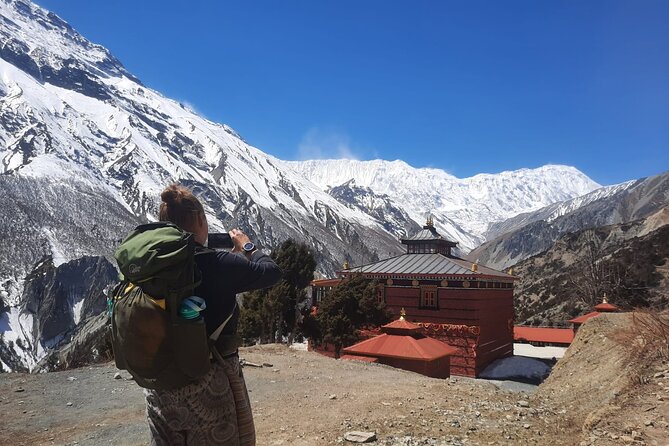
The trail reaches Manang at 3,540 meters on Day 5. This is one of the most important settlements on the circuit, set below Annapurna III and Gangapurna and filled with trekking services, traditional homes, and mountain culture.
The route can follow a higher trail through Ghyaru and Ngawal. These old stone villages offer broad views and make the walk more demanding than simply following the lower valley route. The effort is worthwhile if your body is handling the altitude well.
Day 6 is reserved for acclimatization in Manang. You can choose among three hikes with your guide: the exact options are not specified, but the plan is to spend the day gaining height and returning to sleep at 3,540 meters.
This pause is one of the strongest features of the schedule. It gives you time to adjust before Siri Kharka, Tilicho Base Camp, and Thorong La. It also prevents the itinerary from feeling like a race from one high village to the next.
More Hiking Tours in Kathmandu
- Everest Base Camp Trek – 14 Days
★ 5.0 · 1,499 reviews - Everest Base Camp Trekking
★ 5.0 · 485 reviews - Nagarkot Sunrise View and Day Hiking from Kathmandu
★ 5.0 · 471 reviews - Everest Base Camp Trekking – 13 Day
★ 5.0 · 365 reviews
Days 7 to 9: The demanding Tilicho Lake detour
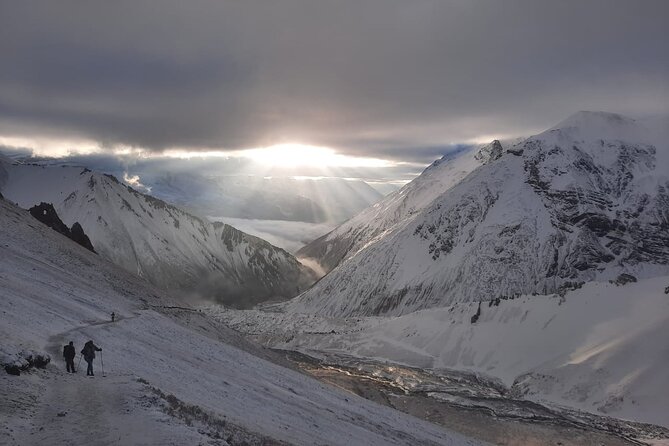
After Manang, you leave the main circuit for Siri Kharka at 4,060 meters. The route climbs through juniper shrubs and reaches a remote ridge with views of Gangapurna and the Chulu range.
Day 8 takes you to Tilicho Base Camp at 4,150 meters. The distance is not necessarily extreme, but the trail is described as intense, with narrow sections beside landslide-prone slopes. This is a place where sure footing, patience, and a guide who watches the group closely matter.
Day 9 is the out-and-back walk to Tilicho Lake. At 4,919 meters, the lake sits in a stark basin below snowy peaks and glacier-shaped slopes. It is revered in both Hindu and Buddhist traditions, giving the visit cultural meaning as well as visual drama.
The listed stop at the lake is only 45 minutes, but the full day involves the approach and return. Do not judge this section by the lake visit alone. You are walking at a serious altitude, and weather can change quickly. Bring warm layers, sun protection, water treatment, and enough personal energy for the return route.
This detour is best for people who want a more ambitious Annapurna itinerary. If you prefer an easier schedule, the extra high-altitude days may feel like too much. The company does include a licensed, first-aid-trained guide, but no itinerary can remove the physical demands of 4,900 meters.
Days 10 and 11: Yak Kharka to Thorong Phedi
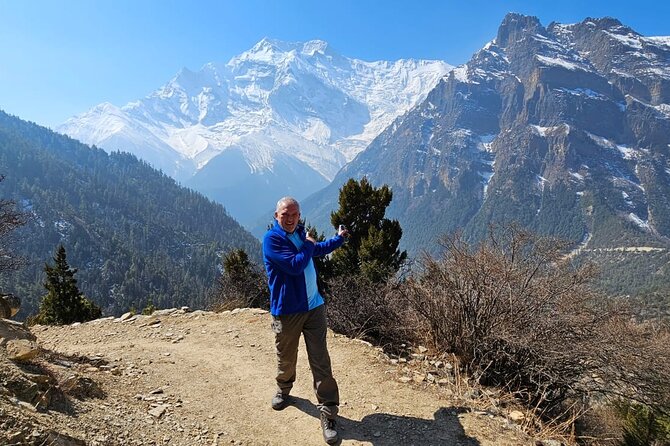
After returning from the Tilicho side, the route heads toward Yak Kharka at about 4,050 meters. The described trail drops roughly 250 meters toward Khangsar before climbing again, so this is not simply a downhill recovery day.
Yak Kharka is a staging point for the pass. The settlement is high and basic, and you should expect fewer comforts than in Manang. Standard teahouse accommodation is included, but hot showers, Wi-Fi, and battery charging normally cost extra where available.
Day 11 reaches Thorong Phedi at 4,540 meters. The trail follows barren ridges and dusty slopes toward the base of the pass. This overnight stop keeps you close to the next day’s climb, but sleeping high can be difficult.
Keep your pack light. Porters carry your overnight bag at a ratio of one porter for two trekkers, while you carry your daily essentials. Confirm before departure what weight limit applies, since the supplied details do not state one.
Day 12: Thorong La and the descent to Muktinath
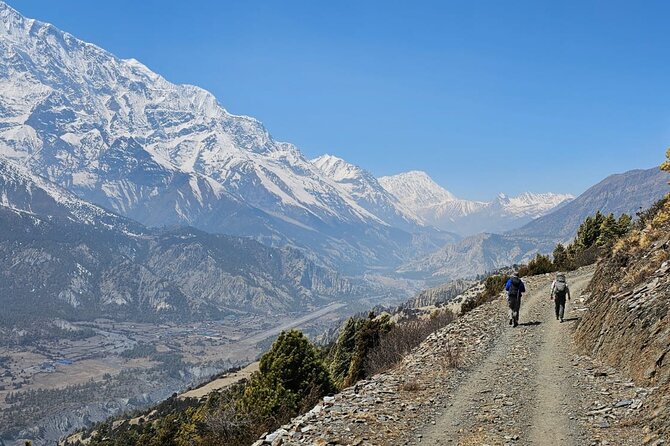
The pass day begins early, with a climb of more than 900 meters from Thorong Phedi to Thorong La. At 5,416 meters, this is the highest point of the trek and the day most likely to test your fitness, pacing, and response to altitude.
The crossing is a major achievement, but it is not the end of the work. After reaching the pass, you descend about 1,600 meters toward Muktinath at 3,760 meters. A long descent can be tough on knees and feet, especially after the morning climb.
Muktinath is one of Nepal’s most important pilgrimage towns, respected in both Hindu and Buddhist traditions. Its location also marks a striking shift toward the dry valleys of Mustang.
This day is listed at roughly 12 hours. That figure should shape your expectations. You need good boots, trekking poles if you use them, and a sensible plan for snacks and water. Emergency evacuation insurance is required, and it must cover the highest altitude reached on the trek.
Days 13 and 14: Kagbeni, Jomsom, and the road to Pokhara
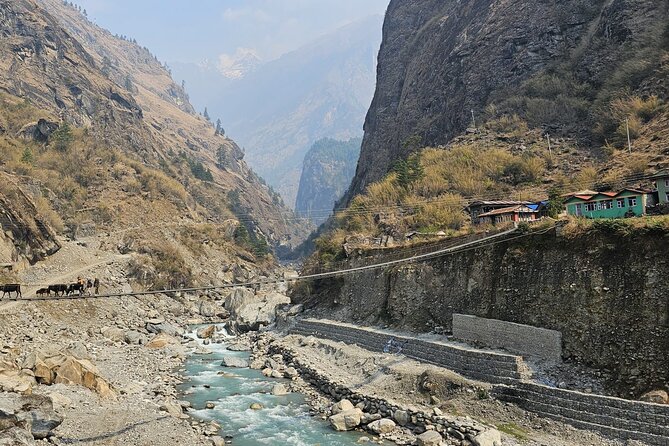
From Muktinath, you continue to Kagbeni at 2,810 meters. This old settlement sits where the Kali Gandaki and Jhong rivers meet and serves as the gateway to Upper Mustang.
Kagbeni’s narrow stone lanes and red-walled monastery give it a strong sense of place. The village is a better cultural stop than a quick roadside pause, though the planned stop is only 30 minutes, so your time there may be limited.
The trail follows the windy Kali Gandaki River to Jomsom at 2,720 meters. Jomsom is the main administrative center of Mustang and a practical transport hub. The next day uses a public bus toward Pokhara, passing through Kalopani at 2,530 meters and Beni at 850 meters.
Kalopani is greener than the dry country above, while Beni is a busy river-valley market town. This bus journey is part of the real Annapurna experience, but it may be rough and slow. If you want a polished, private transfer throughout, this package will not fit that preference.
You reach Pokhara Lakeside after the mountain road and then stay at a three-star hotel with breakfast. Phewa Lake and the relaxed lakeside setting make a welcome change after teahouses and high passes.
Days 15 and 16: Pokhara rest and return to Kathmandu
Day 15 gives you time in Pokhara before the return to Kathmandu. The city offers a calmer setting beside Phewa Lake, with views toward Machapuchare and the Annapurna range when conditions allow.
Later, a tourist bus covers about 200 kilometers along the Prithvi Highway to Kathmandu. The trip is listed at roughly 12 hours, so do not plan an important international connection for the same day.
On Day 16, you have a few final hours in Thamel depending on your flight schedule. Airport drop-off is included, which keeps the final morning simple.
What the $1,800 price really covers
At $1,800 per person, this is not a bare-bones independent trek. The price includes airport transfers, Kathmandu and Pokhara hotels with breakfast, standard teahouses, permits, government fees listed in the inclusions, a licensed guide, porters, assistant guides, and several transport legs.
You also get crew insurance, an Annapurna Conservation Area Permit, a TIMS Permit, and a trek achievement certificate. A maximum group size of 14 is reasonable for a route with narrow trails and changing altitude.
The important catch is that the price does not cover most daily spending during the trek. Meals are excluded apart from the specified hotel breakfasts and two dinners. Drinking water, charging, hot showers, Wi-Fi, personal equipment, tips, travel insurance, extra nights, rescue, and delay-related costs are also outside the package.
There is also a stated $50 government fee per person not included. Add a budget for food, drinks, small comforts, tips, and emergencies before deciding that $1,800 is your full cost.
Who should book this trek
I would suggest this route to a fit hiker who wants the complete Annapurna story: village culture, high mountain scenery, Tilicho Lake, Thorong La, Muktinath, Mustang, and Pokhara.
It also suits you if you value support. The company provides one assistant guide per five trekkers, carries overnight bags at a two-to-one porter ratio, and uses guides trained in first aid. The company’s team includes people named Raj Rai, Suman, Prashant, Prem, and Pemba Sherpa, although your assigned guide is not specified in the trip details.
I would not choose it if you want short walking days, private transport all the way, or a package with meals and insurance already settled. The itinerary is demanding, and the high sections require honest preparation.
Free cancellation is available up to 24 hours before the start time. Weather or minimum-group problems can lead to a new date or a full refund, but extra nights and emergency costs remain your responsibility.
Should you book the Annapurna Circuit with Tilicho Lake?
Book it if you want a serious 16-day Himalayan trek with strong logistical support and two major high-altitude goals. The Manang acclimatization day, assistant-guide ratio, porter arrangement, and included permits give the trip useful structure.
Before paying, ask for the exact meal plan, porter baggage limit, assigned guide, current road conditions, and the full list of government fees. If you can handle long days, budget for the extras, and carry proper insurance, this is a well-rounded way to experience the Annapurna Circuit.
FAQ
How long is the Annapurna Circuit with Tilicho Lake trek?
The experience lasts approximately 16 days, including arrival and departure days, transport, the trek, time in Pokhara, and the return to Kathmandu.
Where does the experience start?
The meeting point is in Thamel, Kathmandu, Nepal. Airport pickup is included on arrival.
What is the highest point of the trek?
The highest point is Thorong La Pass at 5,416 meters. Tilicho Lake reaches 4,919 meters.
Is an acclimatization day included?
Yes. Day 6 is a scheduled acclimatization day in Manang at about 3,540 meters, with hike options chosen with the guide.
What kind of accommodation is provided?
You receive accommodation in a three-star hotel in Kathmandu, a three-star hotel in Pokhara, and standard teahouses during the trekking portion.
Are meals included?
Only the specified hotel breakfasts and two dinners are included. Meals during the trek are not included.
Is travel insurance included?
No. You must arrange your own travel insurance, including coverage for emergency evacuation and the highest altitude reached.
How large is the group?
The maximum group size is 14 people. One assistant guide is provided for every five trekkers.
Is cancellation free?
You can cancel at least 24 hours before the start time for a full refund. Weather or minimum-group cancellations offer a different date or a full refund.
Recently added around Kathmandu
- Kathmandu Airport Pickup and Drop-off Services★ 5.0 · 3 reviews
- Kathmandu Paragliding★ 5.0 · 3 reviews
- Kathmandu Chandragiri Cable Car and Swayambhunath Private Tour★ 5.0 · 3 reviews
- Explore The Beauty Of Langtang Valley In 8-Days Trek★ 5.0 · 3 reviews
- Kathmandu: Nightlife and Pub Crawl Tour★ 5.0 · 3 reviews
- Kathmandu: Momo Making Class with a Local Chef★ 5.0 · 3 reviews
- Mountain Flight Experience in Nepal★ 4.5 · 3 reviews
- Thangka Painting Workshop★ 5.0 · 3 reviews
Other Annapurna Circuit Treks worth a look

15-Day Private Annapurna Circuit Trek from Kathmandu
Read our review →
This tour also appears in