
REVIEW · ANNAPURNA CIRCUIT TREKS
15-Day Private Annapurna Circuit Trek from Kathmandu
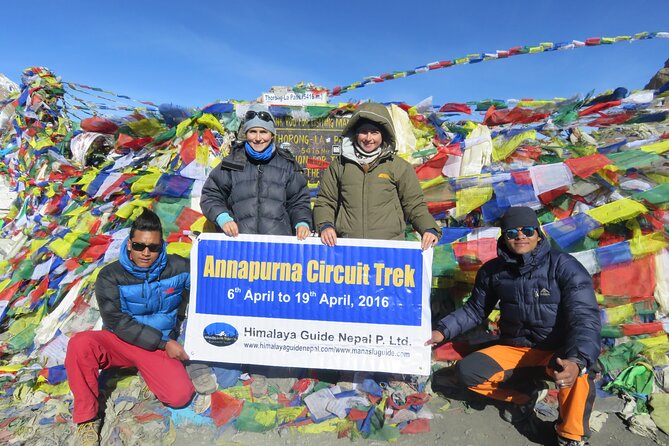
The big draw here is the full Annapurna Circuit in a tight 15-day plan, including the 5,416-meter Thorong La Pass and the sunrise walk to Poon Hill. You move from river valleys and Hindu villages into the dry high country around Manang, then cross to Mustang and descend through hot springs, rhododendron forest, and Magar settlements.
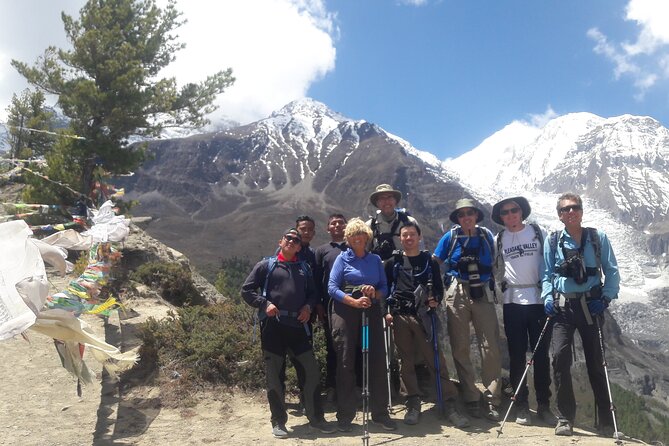
I like the private format, since your group can set its walking rhythm and speak directly with one guide. I also like the family-run touch: the team offers a homely setting and teaches you Nepali language along the way. The main caution is simple: several walking days are listed at about 12 hours, and the pass day demands an early start, strong fitness, and careful acclimatization.
Key points to know before booking
- Thorong La is the trip’s main test: You cross a 5,416-meter pass after spending an acclimatization day in Manang.
- The route has great variety: Expect Marshyangdi River valleys, pine forest, high pasture, Tibetan-influenced villages, Mustang, hot springs, and rhododendron woods.
- Poon Hill adds a second mountain highlight: An early morning climb from Ghorepani brings views of Dhaulagiri, Annapurna South, Hiunchuli, Nilgiri, and Tukuche Peak.
- Transport is part of the package: Airport transfers, the bus to Bulbule, public transport from Muktinath, a car to Pokhara, and a tourist bus back to Kathmandu are included.
- Meals and permits are covered: Breakfast, lunch, dinner, ACAP permission, and a TIMS card are included.
- A porter costs extra: Guide services are included, but porter service must be arranged separately if you want help carrying your main bag.
Why this Annapurna route works in 15 days
This is not a gentle sightseeing trip with a little walking added. It is a serious mountain trek that links several of Nepal’s best-known sections in one long loop.
You begin near Besisahar and Bulbule, follow the Marshyangdi River toward Manang, cross Thorong La, then descend through Muktinath and the Kali Gandaki region. The final section takes you through Tatopani, Shikha, and Ghorepani before Poon Hill and Pokhara.
The route changes character almost every few days. Lower down, you walk through villages and farmland beside a lively river. Higher up, the valley opens into drier country with stone villages and broad mountain views. After the pass, the route feels different again, with pilgrimage sites, apple-growing country around Marpha, hot springs, and forested ridges.
I find that variety a major reason to choose this trip. You are not looking at the same kind of scenery for two weeks. The drawback is that the schedule leaves little room for delays, weather problems, or a slow walking pace.
More Annapurna Circuit Treks in Kathmandu
- Annapurna Circuit Trek with Tilicho Lake
★ 5.0 · 368 reviews - Annapurna Circuit Trek
★ 5.0 · 94 reviews - Annapurna Circuit Trek
★ 5.0 · 35 reviews
Day 1: The long road from Kathmandu to Bulbule
Your first day uses a local bus toward Besisahar and Bulbule. The drive takes roughly six to seven hours, following the Trisuli River and crossing it at Muglin before continuing along the Marshyangdi route.
This opening day is about getting into the mountains rather than hiking. A local bus gives you a more everyday view of Nepal than a private luxury vehicle, but it can also be tiring. Road travel in the hills takes patience, so I would treat this as a full travel day.
The package includes the bus ticket to Bulbule. Airport pickup and drop-off are also covered, which is useful if you want one company handling your arrival, trek departure, and return.
Days 2 and 3: River valleys, suspension bridges, and Chamje
From the Ghermu area, the trail passes through villages and roads before reaching the east bank of the Marshyangdi River. You continue toward Ngadi and climb to Bahun Danda, a Brahmin settlement at about 1,270 meters.
That uphill section gives you an early taste of the trek’s rhythm: village walking, river crossings, short climbs, and stops for food. The day is listed as roughly 12 hours, so do not assume that lower elevation means easy walking.
The next stage heads downhill to Syange, crosses a suspension bridge, and climbs toward Chamje along cliffside sections. The route description includes a steep uphill stretch and a narrow trail beside the river. This is one of the more rugged early sections, though the included admission for the suspension bridge suggests there are no major extra sightseeing fees at this point.
These first walking days are important because they build your legs before the high country. They also show you why a private guide matters. Your guide can help manage the pace, explain village life, and adjust the day if your group is moving slower than expected.
Day 4: Entering the higher country at Chame
The route crosses the Marshyangdi by suspension bridge and passes through Karte, Dharapani, Bagarchhap, and Danque before reaching Chame. Bagarchhap sits around 1,960 meters, while Danque is about 2,300 meters.
The stone entrance chorten at Danque marks a clear change in feel. You are moving into the cultural and architectural world of the upper valley, where Buddhist details become more noticeable.
This is another long day, listed at about 12 hours. The route includes several settlements rather than one single attraction, so the pleasure comes from the steady change in scenery and village style. Chame is also a practical overnight point before the trail reaches more exposed high-altitude ground.
More Hiking Tours in Kathmandu
- Everest Base Camp Trek – 14 Days
★ 5.0 · 1,499 reviews - Everest Base Camp Trekking
★ 5.0 · 485 reviews - Nagarkot Sunrise View and Day Hiking from Kathmandu
★ 5.0 · 471 reviews - Everest Base Camp Trekking – 13 Day
★ 5.0 · 365 reviews
Day 5: Forest and rock walls on the way to Manang
The trail passes through dense forest and a narrow valley before crossing to the south bank of the Marshyangdi Khola at about 3,038 meters. The route then reaches a dramatic curved rock face that rises roughly 1,500 meters above the river.
This is one of the most striking sections of the trek. The river feels small beside the rock walls, while the forest keeps the lower trail shaded and enclosed. You get a strong sense of the valley tightening as you gain height.
The day is again marked as about 12 hours, so the beauty comes with effort. If you prefer shorter walking days, ask the operator before booking how flexible this stage can be. The itinerary is private, but the total number of overnight stops is fixed, and there may not be much spare time.
Days 6 and 7: Manang and the acclimatization pause
The route toward Manang gives you a choice between a lower path along the Marshyangdi Khola and a higher route through pine forest. Both meet again at Mungji.
That choice is one of the useful features of a private trek. You can discuss the day’s condition with your guide rather than simply follow a large group. The higher route may offer broader views, while the lower route may feel more sheltered. The supplied plan does not specify the exact choice on the day, so expect your guide to help decide.
Day 7 is set aside for acclimatization in Manang, and this is not wasted time. You need a pause before the trail climbs toward Thorong La at 5,416 meters. The plan suggests optional exploration, including a visit to a lama for a 100-rupee donation.
Manang is the right place to slow down, check how you feel, and avoid treating altitude like a race. Headache, poor sleep, unusual tiredness, or loss of appetite should be taken seriously. Your guide’s role is especially valuable here, but your own honesty matters just as much.
Days 8 and 9: Leaving the Marshyangdi for the high valley
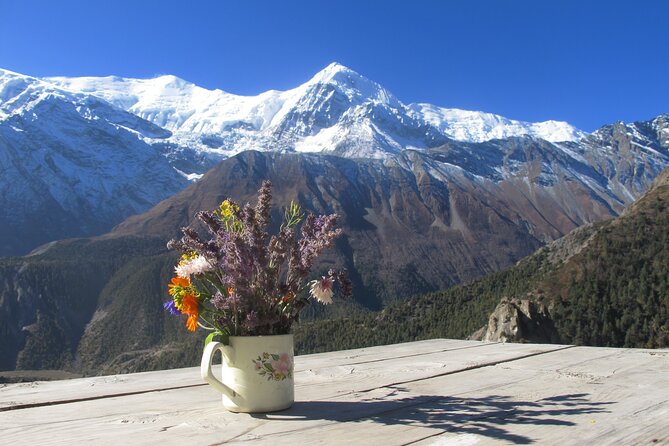
After Manang, the trail climbs toward Tanki and Ghungsang, then leaves the Marshyangdi valley and follows the Jar Sang Khola. The valley turns northward, passing pastures and scrub.
This section feels more open and spare than the forested lower route. You are now walking in the zone where altitude, cold, wind, and pace matter more than distance alone.
Day 9 is described as the final camp before Thorong La. The trail follows yak grazing ground and reaches the Durali Tea Shop after crossing the Jarsang Khola. The itinerary again assigns about 12 hours, which makes this a demanding approach day.
Take the timing seriously. You will want warm layers, water, snacks, and a headlamp ready for the following morning. Personal expenses such as mineral water, hot drinks, beer, laundry, showers, battery charging, and boiled water are not included, so carry enough cash for these needs.
Day 10: Thorong La Pass at 5,416 meters
This is the physical centerpiece of the trip. From Thorong Phedi, you start early for the long climb to Thorong La. The route description calls it the last hard day in the Manang District, and that is a fair warning.
The pass itself is a major achievement, but the day does not end when you reach the top. You must also descend, and downhill walking at altitude can be rough on tired legs. The itinerary lists only about 30 minutes at the pass stop, which likely means the schedule allows a short pause for photos and rest before continuing.
The pass is included as a sightseeing stop without an extra admission charge. The real cost is the preparation: time, fitness, proper clothing, and a sensible attitude toward altitude.
Days 11 and 12: Muktinath, Jomsom, and Tatopani
After the pass, you reach the Muktinath and Jomsom area. Muktinath is a major pilgrimage place, and the route gives you several possible onward choices toward Tatopani or Pokhara.
The plan notes options including a short flight from Jomsom to Pokhara or a longer route through Marpha, Ghasa, and Tatopani. This is a key point to clarify before departure. The listed package specifically includes public transportation from Muktinath to Tatopani, so the exact transport arrangement may depend on the route your group selects.
Day 12 follows the Kali Gandaki River after time at a hot spring. You cross a suspension bridge and continue beside the Burung Khola before reaching the junction toward Shikha.
Tatopani is a welcome contrast to the pass. After cold, high mountain walking, a hot spring gives you a chance to relax. The cost of personal drinks and similar extras is not included, so budget for small purchases along the way.
Days 13 and 14: Magar villages, Ghorepani, and Poon Hill
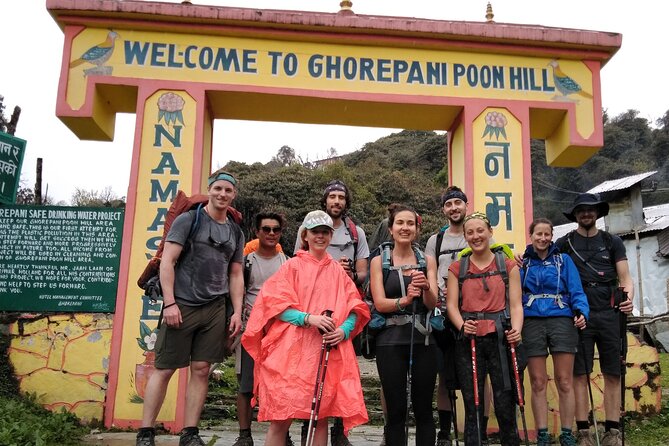
From Shikha, the route passes through the Magar villages of Phalate and Chitre. You walk through terraced fields and then enter rhododendron and pine forest on the way to Ghorepani.
This is a hard day despite the lower altitude. The long descent and later forest climb can be tiring, especially after the pass section. Ghorepani gives the trek a final change of scenery before the early morning push to Poon Hill.
On Day 14, you hike for roughly 40 to 50 minutes before sunrise to Poon Hill at 3,210 meters. From the viewpoint, you may see Dhaulagiri, Tukuche Peak, Nilgiri, Annapurna South, and Hiunchuli.
Poon Hill is a smart finish because it gives you one last mountain viewpoint without requiring another major pass. The early start can be cold and sleepy, but the sunrise is the reason to do it. Afterward, you continue to Pokhara Lakeside, with transport from the trek’s ending point to Pokhara by car included.
Day 15: Returning to Kathmandu
The final day uses a deluxe tourist bus from Pokhara to Kathmandu. The drive is listed at about 12 hours, so it is another long travel day rather than a relaxed morning beside the lake.
You can choose from different return services, but the included arrangement is the tourist bus. The company also offers a farewell lunch or dinner at a suitable time, depending on the schedule.
The tour ends in Kathmandu. Extra nights and food in Kathmandu or Pokhara are not included, so add those costs if your international flights do not match the 15-day plan exactly.
What the $995 price really covers
At $995 per person, this package offers strong value if you want the main logistics handled. It includes airport transfers, transport at both ends of the trek, regular lodge accommodation, an experienced guide, permits, taxes, and all 15 breakfasts, lunches, and dinners.
The guide’s salary, equipment, insurance, transport, lodging, and food are included. That matters because guide costs can otherwise become a surprise on a high-altitude trek.
You still need to budget for:
- Porter service
- Extra nights in Kathmandu or Pokhara
- Travel insurance
- Drinks and bottled water
- Laundry, phone use, showers, charging, and boiled water
- Personal purchases and donations
The porter omission is the biggest practical point. If you do not want to carry your own main bag over long days and a high pass, request a porter before the trip and confirm the added price.
The private, family-run approach
The company describes itself as a family-member team offering a homely environment. It also plans to teach you Nepali language during the trip. That can make the experience feel more personal than a standard fixed group departure, especially if you are curious about daily life beyond the trail.
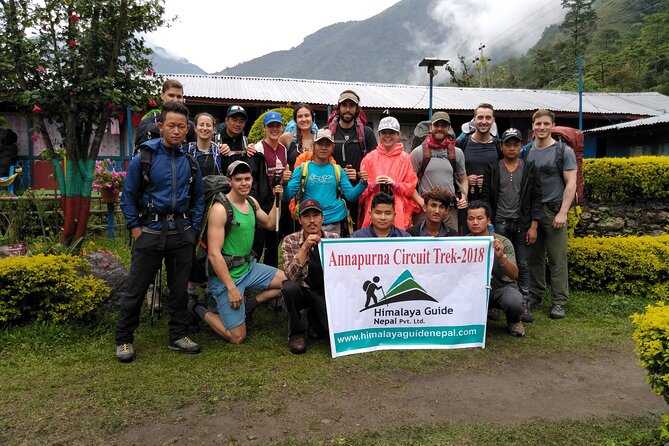
The private format means only your group participates. You can ask for explanations, discuss route choices, and speak directly with your guide throughout the trek.
Several guide and porter names appear in the company’s recent trip history, including Pratap, Dinesh, Binoot, Salman, and Bashudev. If you have a preferred guide or want to know who will lead your group, ask before booking. The people highlighted in the company’s trip history are praised for being friendly, careful, cheerful, and focused on safety. Those are exactly the qualities I would want on a pass crossing.
The published rating is 4.9 from 18 ratings, with 100 percent recommending the experience. That is a positive signal, but I would still ask direct questions about the walking pace, porter cost, transport after Muktinath, and contingency plans.
Who should book this trek
I would suggest this route to you if you want a classic Annapurna experience but prefer private guiding over a large departure. It suits someone with moderate physical fitness who can handle repeated long days, steep climbs, suspension bridges, and high altitude.
It is also a good choice if you value practical inclusions. Having permits, meals, guide costs, airport transfers, and major transport covered keeps the planning load low.
I would hesitate if you want leisurely walking days, private hotel rooms, or a flexible schedule with lots of spare time. The route has several 12-hour days, normal lodge accommodation, local and public transport, and a very demanding pass crossing.
Free cancellation is available if you cancel at least 24 hours before the local start time. Changes inside that window are not accepted, and a minimum group requirement applies even though the activity itself is private.
Should you book the 15-day Annapurna Circuit?
Book it if you want the full arc: river valleys, Manang, acclimatization, Thorong La, Muktinath, Tatopani, Ghorepani, Poon Hill, and Pokhara. The $995 package covers the expensive and confusing parts of the trip, while the private format gives you room to ask questions and set a sensible pace.
Before paying, confirm four things: the exact guide, the route and transport after Muktinath, the porter fee, and how the schedule changes if altitude or road conditions cause delays. If you are fit, prepared, and happy with long days, this is a well-priced way to take on one of Nepal’s most varied classic treks.
FAQ
Where does the trek start?
The experience starts at Tribhuvan Airport in Kathmandu, Nepal, with a listed start time of 10:15 am.
How long is the Annapurna Circuit trek?
The experience lasts approximately 15 days.
Is airport pickup included?
Yes. International airport pickup and drop-off between the airport and hotel are included.
Is transportation from Kathmandu to the trekking route included?
Yes. A bus ticket to Bulbule is included. The drive is listed as approximately six to seven hours.
Is a guide included?
Yes. An experienced guide is included, along with the guide’s salary, equipment, insurance, transportation, lodging, and food.
Is a porter included?
No. Porter service is not included, but it can be arranged on request for an additional cost.
Are meals included?
Yes. The package includes 15 breakfasts, 15 lunches, and 15 dinners.
Are permits included?
Yes. The Annapurna Conservation Area Permit and TIMS card are included, along with government taxes.
Is travel insurance included?
No. You must arrange your own travel insurance for the trek.
What happens if I cancel?
You can receive a full refund if you cancel at least 24 hours before the experience start time. Cancellations or changes made less than 24 hours before the start are not accepted for a refund.
Recently added around Kathmandu
- Kathmandu Airport Pickup and Drop-off Services★ 5.0 · 3 reviews
- Kathmandu Paragliding★ 5.0 · 3 reviews
- Explore The Beauty Of Langtang Valley In 8-Days Trek★ 5.0 · 3 reviews
- Kathmandu Chandragiri Cable Car and Swayambhunath Private Tour★ 5.0 · 3 reviews
- Kathmandu: Nightlife and Pub Crawl Tour★ 5.0 · 3 reviews
- Kathmandu: Momo Making Class with a Local Chef★ 5.0 · 3 reviews
- Mountain Flight Experience in Nepal★ 4.5 · 3 reviews
- Everest Base Camp Trek★ 5.0 · 3 reviews
Other Annapurna Circuit Treks worth a look

Annapurna Circuit Trek with Tilicho Lake (16 Days)
Read our review →This tour also appears in