
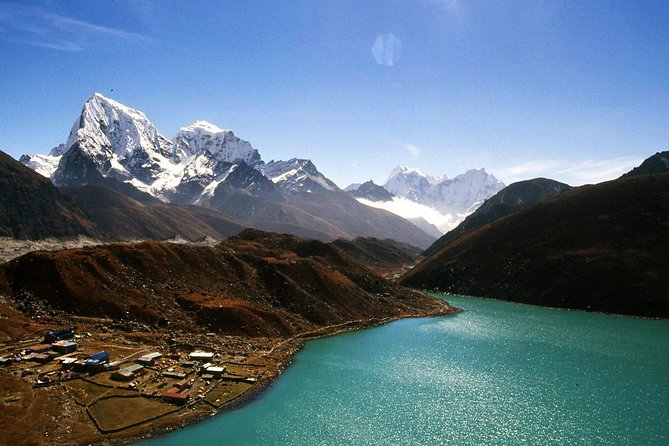
REVIEW · EVEREST BASE CAMP TREKS
Everest Base Camp with Gokyo Lake 17 Days
The most rewarding part of this trek is the route itself. You do not simply walk to Everest Base Camp and turn around. You reach Gokyo Lake, climb Gokyo Ri, cross the demanding Cho La Pass, then continue toward Everest Base Camp and Kala Patthar country.
I like the mix of famous sights and quieter mountain villages, and I like that the $1,480 price includes permits, meals during the trek, lodge accommodation, a guide, porter support, airport transfers, and domestic flights. The main consideration is altitude: Cho La rises to 5,420 meters, and the itinerary asks you to cover serious ground at high elevation. You need moderate fitness and a sensible attitude toward changing flight and mountain conditions.
Key points at a glance
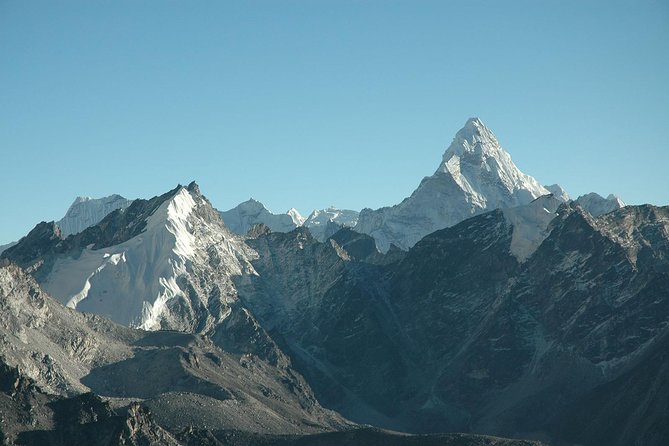
- Gokyo and Everest in one route: See the sacred Gokyo Lake area, Gokyo Ri, Cho La Pass, and the Everest Base Camp region.
- A full 17-day schedule: The trip allows time for acclimatization in Namche Bazaar and a gradual climb before the highest sections.
- High-altitude challenge: Cho La Pass reaches 5,420 meters, while Kala Patthar rises to 5,550 meters.
- Good practical coverage: The package includes trekking permits, TIMS, meals, guide services, porter support, local transport, and city hotels.
- Small-to-medium group size: The maximum group size is 18 people, large enough for support but not a giant expedition.
- Named guide support: Pemba and Pasang are among the guides associated with the operation, with porter teams included as part of the service.
Why this Gokyo and Everest route is special
The usual Everest Base Camp route gives you the big name. This route gives you the big name plus a second high mountain world around Gokyo. That extra loop is the reason to choose it.
You begin in Kathmandu, then fly to Lukla before walking through the Khumbu region. The trail passes through Namche Bazaar, Dole, Machhermo, and Gokyo. From there, you climb Gokyo Ri, cross Cho La Pass, and rejoin the Everest route near Dzonglha and Lobuche.
That creates a more varied trip than a direct out-and-back. You see high villages, broad Himalayan views, a famous monastery at Tengboche, Gokyo’s sacred waters, and the Everest Base Camp area.
The trade-off is simple: the route is harder. A direct Everest Base Camp trek is already demanding. Adding Gokyo and Cho La means more days, more elevation changes, and one especially serious pass crossing.
More Everest Base Camp Treks in Kathmandu:
- Everest Base Camp Trek – 14 Days
★ 5.0 · 1,499 reviews - Everest Base Camp Helicopter Tour landing at Everest View Hotel
★ 5.0 · 668 reviews - Everest Base Camp Trekking
★ 5.0 · 485 reviews
What the $1,480 price covers
At $1,480 per person, this is not a bare-bones walking holiday. The price includes airport pickup and departure, transport in Kathmandu, a three-star city hotel with breakfast, trekking lodges, and domestic flights connected with the Lukla route.
During the trek, you receive breakfast, lunch, dinner, and tea or coffee. A guide, guide insurance, guide lodging, guide meals, trekking permits, and the TIMS card are included as well.
The porter arrangement is also clear: one Sherpa porter is assigned for every two trekkers to carry baggage. That matters on a route where you need to keep your daypack light and conserve energy for the high sections.
A sleeping bag and down jacket are available if needed. Ask about the exact rental or loan arrangement before departure, but this inclusion is useful because nights at altitude can be cold and lodge rooms are basic.
You also receive a T-shirt, first-aid medicine items, and a trip achievement certificate. In Kathmandu, the package includes one cultural show and a farewell dinner.
The price does not include your international flight, travel insurance, personal spending, bar bills, extra meals in Kathmandu, entrance fees, or tips for the trekking crew. Those costs can affect your final budget, so do not treat $1,480 as the full cost of a Nepal holiday.
Days 1 to 4, Kathmandu, Lukla, and Namche Bazaar
Day 1 is your arrival in Kathmandu, with transfer to the hotel. The city stay gives you a starting point before the mountain section, and breakfast is included at the three-star hotel.
On Day 2, you fly to Lukla and walk to Phakding at 2,620 meters. The itinerary lists breakfast, lunch, and dinner. This first walking day is relatively short compared with later stages, which helps you begin adjusting to the pace.
Day 3 takes you to Namche Bazaar at 3,420 meters. The route gains height, and Namche becomes an important pause point. This is the first major mountain town on the route and a useful place to settle into the rhythm of lodge life.
Day 4 is an acclimatization and exploration day in Namche. I consider this one of the most important parts of the schedule. You are not wasting a day by resting. You are giving your body time to adjust before the route climbs above 4,000 meters.
The itinerary does not specify a particular acclimatization walk, so the exact plan may depend on your guide and group. Use the day carefully. Rest, drink the tea provided at meals, and avoid treating Namche as a place to rush through.
Days 5 to 8, Dole, Machhermo, and Gokyo Lake
On Day 5, you walk to Dole at 4,110 meters. The day is listed at about six hours, so this is a meaningful step up in both altitude and effort.
Day 6 continues to Machhermo at 4,410 meters. The walking time is given as three to five hours, but shorter distance does not mean an easy day. At this height, your pace naturally slows, and small climbs can feel much larger than they look.
Day 7 brings you to Gokyo at 4,760 meters. This is one of the route’s major rewards. The Gokyo area is known for its sacred lake, and the setting gives you a different view of the Khumbu than the standard Everest approach.
The high point of Day 8 is a hike to Gokyo Ri. Afterward, you trek to Thagnak at 4,678 meters. Gokyo Ri gives you the chance to look across a broad collection of Himalayan peaks, but the height makes this a demanding morning.
You should not assume that every day is a relaxed photo stop. The route combines long walking days with high sleeping elevations. If you are looking for a simple sightseeing tour, this is not it. If you want a demanding route with Gokyo Lake included, this section is the reason to book.
A few more Kathmandu days to weigh up
- Private Kathmandu Sightseeing Tour | UNESCO World Heritage sites
★ 5.0 · 756 reviews - Half day cooking class in Thamel kathmandu
★ 5.0 · 607 reviews - Nagarkot Sunrise View and Day Hiking from Kathmandu
★ 5.0 · 471 reviews - Kathmandu: Full Day 7 UNESCO Tour with Lunch – Private/Group
★ 5.0 · 415 reviews
Day 9, the Cho La Pass crossing
Cho La Pass is the defining challenge of this itinerary. You cross at 5,420 meters, then continue toward Dzonglha.
This is the point where the trip moves from a hard high-altitude trek to a serious mountain crossing. The itinerary does not give a precise walking time for the pass day, so you should be ready for a long and tiring effort.
The pass is also where conditions can have the greatest effect on the plan. The tour description confirms the route, but it does not promise a fixed weather window or guaranteed conditions. Your guide’s judgment matters here, and flexibility is important.
The reward is that Cho La connects the Gokyo side of the route with the Everest Base Camp trail. Instead of retracing your steps, you continue through new villages and mountain terrain.
This is also a good reason to use the included porter support. Carry only what you need for the day, and let the porter handle the main baggage within the operator’s arrangement.
Days 10 to 12, Lobuche, Gorak Shep, and Everest Base Camp
Day 10 takes you to Lobuche at 4,940 meters. By this point, you will have already spent several nights high in the mountains, but the thin air still demands care.
On Day 11, you reach Gorak Shep at 5,147 meters. This is one of the highest sleeping points on the itinerary. The lodge stay is practical rather than luxurious, and the included meals are valuable because dining options become more limited as you climb.
Day 12 is the major Everest objective. The itinerary says you hike in the morning to either Everest Base Camp at 5,365 meters or Kala Patthar at 5,550 meters, then descend to Pheriche at 3,950 meters.
That wording matters. The plan allows for either Everest Base Camp or Kala Patthar, so confirm with the operator which objective is planned for your departure and how weather or group conditions may affect the choice.
Everest Base Camp is the iconic name, but Kala Patthar is the higher viewpoint. Your guide can help weigh the day’s conditions, your health, and the group’s pace.
The descent to Pheriche is welcome after the high morning. Dropping nearly 1,200 meters from Gorak Shep to Pheriche also gives your body a break from the most demanding elevation.
Days 13 to 17, Tengboche, Lukla, and Kathmandu
Day 13 leads to Tengboche at 3,860 meters. The village is home to Khumbu’s biggest monastery, making this more than a simple overnight stop. It adds a cultural layer to the mountain route and breaks up the long return walk.
Day 14 continues to Monjo at 2,635 meters. You are now descending toward the lower valley, where the air should feel easier than it did around Gorak Shep and Cho La.
Day 15 brings you back to Lukla at 2,840 meters. After the high pass and Everest region, this return can feel like a real change of pace.
On Day 16, you fly to Kathmandu. Domestic mountain flights can be sensitive to conditions, and the published schedule does not describe a backup day. I would ask the operator how flight delays are handled before booking and keep some flexibility in your wider Nepal plans.
Day 17 is departure day, with breakfast included. The overall schedule is described as lasting about 14 to 19 days, while the detailed plan covers 17 days. That range likely reflects flight and mountain conditions, but you should confirm the expected dates before paying for onward travel.
Lodges, meals, guides, and porters
Accommodation during the trek is in trekking lodges, with twin-sharing rooms in the city hotel. You should expect a practical mountain setup, not resort comfort.
Breakfast, lunch, and dinner are included during the trek, along with tea or coffee. This removes one of the common daily worries on a long trek: deciding where to eat and carrying enough food money for every meal.
The guide service is central to the trip. Pemba and Pasang are names associated with the guiding team, and the included service covers guide salary, food, accommodation, and insurance. Since the route crosses Cho La and reaches more than 5,000 meters, ask who will lead your group and how many trekkers will be assigned to each guide.
The maximum group size is 18. That is not a private trek, but it is also not a huge crowd. A group of that size can affect walking pace, meal timing, and decisions on high pass days.
Porter support is included at a ratio of one porter for two trekkers. Pack with restraint. The more efficiently you pack, the easier it is for the entire team to manage bags along the route.
Who should book this trek
This trip suits you if you want Everest Base Camp but also want Gokyo Lake and Cho La Pass. It is especially good for someone who prefers a route with more variety rather than the simplest path to the famous base camp.
You need moderate physical fitness, but that phrase should not be read as a promise of ease. The itinerary includes long walking days, high sleeping elevations, and a pass above 5,400 meters.
I would choose this route if you have enough time for the full schedule and want a guided package with core costs bundled together. The included meals, permits, lodge stays, guide, porters, and transfers make planning easier.
I would hesitate if you dislike basic accommodation, high-altitude walking, group schedules, or uncertain mountain flights. The route is not a good match for a quick Nepal visit squeezed between fixed international connections.
Practical details before you commit
The starting point is Kathmandu in the Kathmandu Valley. Airport pickup and departure are included, along with transport in an air-conditioned car or tourist deluxe bus during the city portions of the trip.
Confirmation is received at booking. The tour accepts a maximum of 18 people, and a mobile ticket is provided.
Travel insurance is not included. That is an important omission for a high-altitude trek. You are also responsible for international airfare, personal expenses, bar bills, entrance fees, extra Kathmandu meals, and tips for the trekking crew.
Free cancellation is available if you cancel at least 24 hours before the experience start time. Cancellations or changes made less than 24 hours before the start are not accepted for a refund, and the cutoff uses local time.
Should you book Everest Base Camp with Gokyo Lake?
I would book this trek if you want the full Khumbu experience in one ambitious route. Gokyo Lake, Gokyo Ri, Cho La Pass, Tengboche Monastery, Everest Base Camp, and Kala Patthar give you more variety than a standard Everest Base Camp walk.
The price is strong for what is included, especially with meals, permits, guide support, porters, domestic transfers, city accommodation, and trekking lodges covered. Before booking, confirm the guide assigned to your group, the plan for Everest Base Camp or Kala Patthar, sleeping bag arrangements, and how the operator handles Lukla flight delays.
Choose it for scenery, variety, and practical support. Skip it if you need a gentle holiday or a rigid timetable. This is a demanding trek, but it gives you a well-rounded route through one of Nepal’s most famous mountain regions.
FAQ
How long is the Everest Base Camp with Gokyo Lake trek?
The detailed itinerary covers 17 days. The tour information gives an approximate duration of 14 to 19 days, so the final length may vary.
Where does the trek start?
The experience starts in Kathmandu, Nepal. Airport pickup and departure services are included.
What is the highest point on the itinerary?
Cho La Pass reaches 5,420 meters. Kala Patthar, if included in your morning hike, reaches 5,550 meters.
Is Everest Base Camp guaranteed in the itinerary?
The Day 12 plan gives the option of hiking to either Everest Base Camp or Kala Patthar. Confirm the exact objective with the operator before departure.
Are meals included?
Breakfast, lunch, and dinner are included during the trekking portion, along with tea or coffee. Breakfast is included at the city hotel.
Is accommodation included?
Yes. The package includes a three-star twin-sharing hotel in the city and trekking lodge accommodation during the mountain portion.
Are a guide and porter included?
Yes. Guide services, guide expenses, and porter support are included. The stated arrangement is one Sherpa porter for every two trekkers.
What is not included in the price?
International airfare, travel insurance, tips for the trekking crew, extra Kathmandu meals, personal expenses, bar bills, and tour entrance fees are not included.
Recently added around Kathmandu
- Kathmandu Airport Pickup and Drop-off Services★ 5.0 · 3 reviews
- Kathmandu Paragliding★ 5.0 · 3 reviews
- Explore The Beauty Of Langtang Valley In 8-Days Trek★ 5.0 · 3 reviews
- Kathmandu Chandragiri Cable Car and Swayambhunath Private Tour★ 5.0 · 3 reviews
- Kathmandu: Nightlife and Pub Crawl Tour★ 5.0 · 3 reviews
- Kathmandu: Momo Making Class with a Local Chef★ 5.0 · 3 reviews
- Mountain Flight Experience in Nepal★ 4.5 · 3 reviews
- Everest Base Camp Trek★ 5.0 · 3 reviews
Other Everest Base Camp Treks worth a look


Everest Base Camp Helicopter Tour landing at Everest View Hotel
Read our review →


Everest Base Camp Helicopter Tour landing at Hotel Everest View
Read our review →

This tour also appears in