REVIEW · MARDI HIMAL TREKS
5 Day Mardi Himal Base Camp Trek in Pokhara
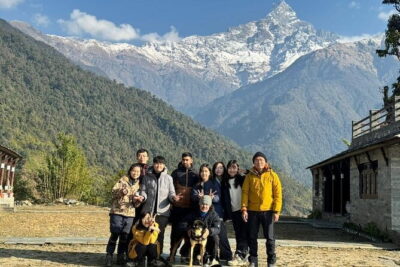
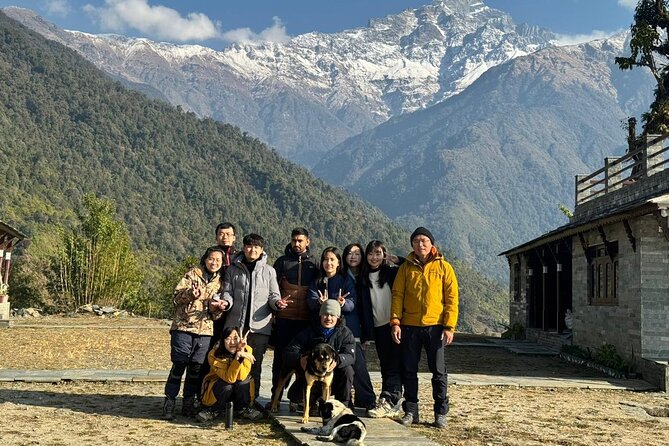
Mardi Himal gives you a short route into Nepal’s high country without the longer commitment of the Annapurna Circuit or Annapurna Base Camp trek. In five days, you move from Pokhara’s lakeside area to rhododendron forests, open ridges, and the base camp beneath Machhapuchhre, the famous Fishtail mountain.
I like two things here. First, the route packs plenty of scenery into a modest price of $230 per person. Second, the private format means your group can walk with an English-speaking guide such as Amrit, Biru, or Bikram, depending on availability, rather than being folded into a large public group. The main catch is the moderate fitness requirement, with a steep seven-hour day to Mardi Himal Base Camp and basic guesthouse accommodation.
Key points to know before booking
- Five days from Pokhara: The trek begins with a road transfer to Kande and ends with a shared jeep or bus from Lumre.
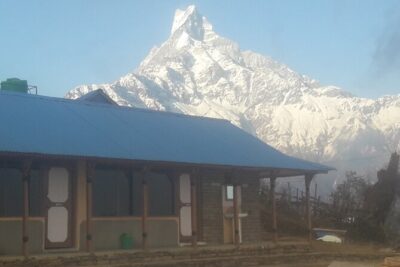
- Machhapuchhre takes center stage: You get views of Fishtail, Annapurna South, Hiunchuli, and Mardi Himal as the trail climbs.
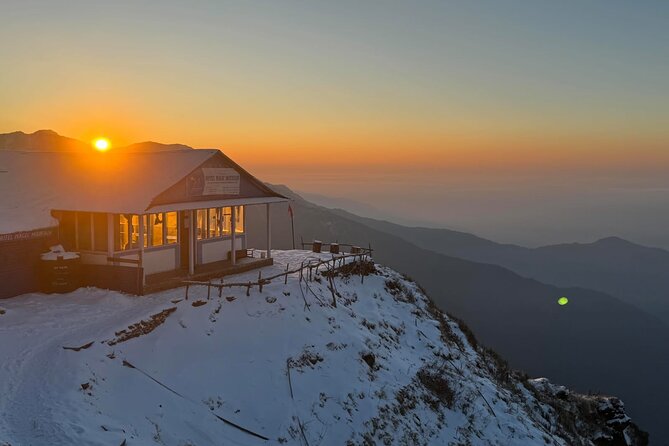
- Forest first, high ridge later: Rhododendron and oak woods give way to more exposed mountain paths near High Camp.
- Base Camp is the hardest day: The out-and-back walk from High Camp takes about seven hours and uses a narrow, steep trail.
- Simple logistics are included: Permits, official documents, guesthouse lodging, guide support, and transfers are part of the package.
- Budget for meals: Food and drinks are not included, with an estimated extra cost of about $25 per person.
Why Mardi Himal works as a five-day trek
Mardi Himal is a good choice if you want a real Himalayan walk but have limited time in Pokhara. The route moves through several distinct zones rather than repeating one type of scenery. You begin among cultivated hills and forest, pass small settlements, and finish on a high ridge with broad mountain views.
The big reward is the change in scale. Near the start, the trail feels green and close. Higher up, the trees thin out and the peaks take over. Machhapuchhre is the familiar star, while Annapurna South, Hiunchuli, and Mardi Himal fill out the skyline.
You should not confuse a five-day schedule with an easy holiday. The itinerary lists trekking days of roughly five to seven hours. The route includes uphill sections, steep descents, and a narrow climb to Base Camp. A moderate level of fitness is required, and you should be comfortable walking for several hours on uneven mountain paths.
The private setup is useful here. You are not locked into the pace of a big group, so you can discuss rest stops and daily timing with your guide. The guides named in the available feedback, Amrit, Biru, and Bikram, are associated with friendly support, trail knowledge, local culture, and careful tea-house arrangements. Availability of a particular guide is not guaranteed, so ask when booking if a named guide matters to you.
More Hiking Tours in Pokhara
- Poon hill Trek 3 days
★ 5.0 · 176 reviews - Trekking in Annapurna/Langtang/Everest/Upper Mustang regions
★ 5.0 · 161 reviews - Pokhara: 4-Day Ghorepani, Poonhill & Ghandruk Mountain Trek
★ 5.0 · 132 reviews
Day 1: Kande to Pitam Deurali and Australian Camp
The first morning starts with pickup in the Lakeside area of Pokhara, followed by a shared bus or jeep to Kande. The drive gives you countryside and mountain views before the walking begins.
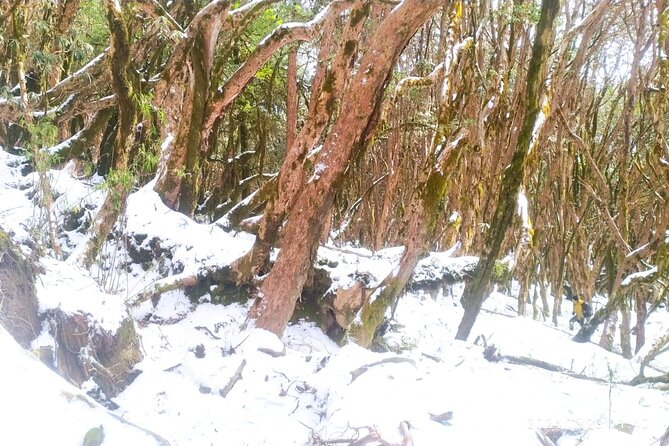
From Kande, the route climbs through green hillsides toward Australian Camp and Pitam Deurali. This is a pleasant introduction to the trek because the trail begins in a wooded setting rather than on a bare road. Forest paths and open viewpoints provide early glimpses of the surrounding mountains.
The day is listed at about six hours, including the transfer and trek. Australian Camp and Pitam Deurali are important early viewpoints, but do not expect the full high-mountain drama yet. The appeal is the gradual change from Pokhara’s urban edge to a quieter trail through forest and hill settlements.
This first stage is also a useful test of your pace. If the uphill sections feel demanding, tell your guide early. The route becomes more strenuous as it rises toward Low Camp and High Camp. Accommodation is in a guesthouse, and meals are purchased separately.
Day 2: Pitam Deurali to Low Camp through rhododendron forest
After breakfast, you continue from Pitam Deurali toward Low Camp. The route enters dense forest filled with rhododendrons and other wildflowers. In season, the flowers add color to the trail, but the forest itself is the main attraction at this point.
This is one of my favorite parts of the route because the walking feels sheltered and calm. The trees break up the views, so you will not have a clear mountain panorama at every turn. That is not a flaw. The changing trail keeps the day varied, and occasional openings reveal the peaks in stages.
The trek takes about six hours. You are gaining height, so the day may feel harder than the distance suggests. Low Camp marks the shift toward the high ridges. The trail becomes less about village paths and more about reaching open mountain country.
Guesthouse accommodation keeps the trip practical, but you should expect basic conditions rather than hotel comfort. The tour covers the room, while food and drinks cost extra. The estimated meal budget is about $25 per person for the full trek, though your actual spending depends on what you buy.
Day 3: Low Camp to High Camp and Middle Camp
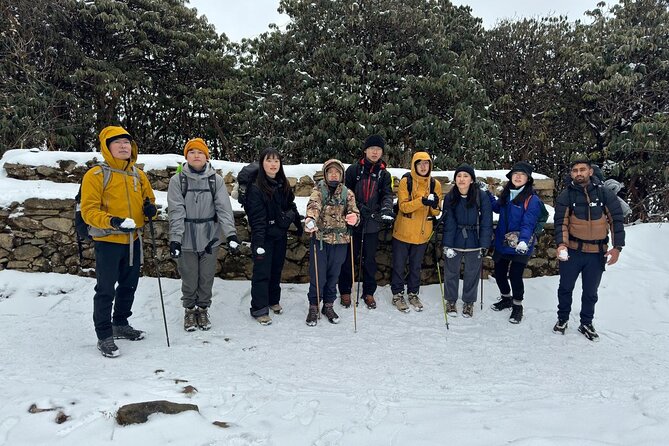
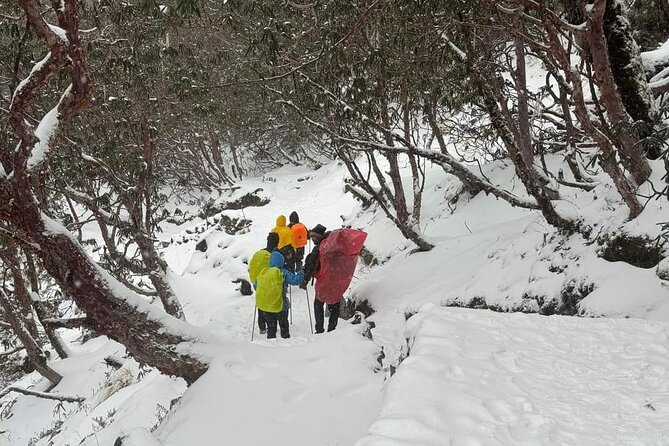
From Low Camp, the trail climbs through oak and rhododendron forest toward Middle Camp, which is reached in roughly one to two hours. From there, the path continues upward toward High Camp.
This is where the Mardi Himal route begins to feel properly alpine. The trees continue for part of the climb, but the trail opens more as you gain height. You get better views of Machhapuchhre and the Annapurna range, with the setting changing from enclosed woodland to exposed ridges.
The listed walking time is about five hours. That sounds shorter than some other days, but the climb matters more than the clock. High Camp is the key staging point for the next morning’s Base Camp walk, so this day is about gaining height steadily without rushing.
I like this arrangement because it puts you near the main viewpoint before the hardest outing. You are not trying to reach Base Camp and return to Pokhara in one exhausting push. Still, High Camp is not the place to underestimate the cold, exposure, or steep trail. Pack warm layers and keep your day bag light, but bring enough water and personal essentials for the next morning.
More Mardi Himal Treks in Pokhara:
- Pokhara: 4-Day Mardi Himal Trek
★ 4.9 · 59 reviews - Private Mardi Himal Trek
★ 5.0 · 42 reviews - From Pokhara: 4-Day Mardi Himal Base Camp Trek
★ 4.9 · 31 reviews - Mardi Himal Trek
★ 5.0 · 30 reviews
Day 4: High Camp to Mardi Himal Base Camp
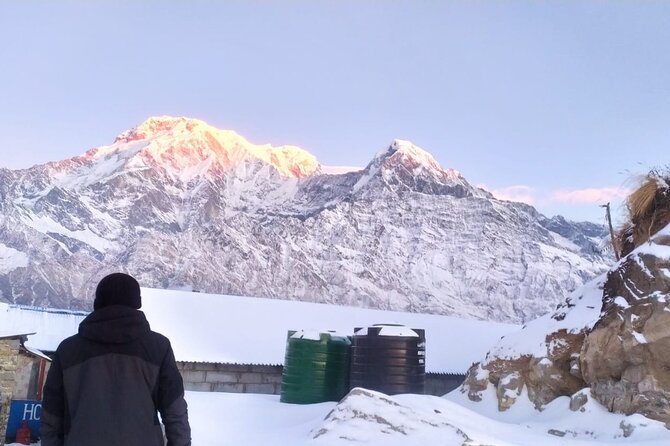
Day four is the centerpiece. You leave High Camp early and follow a narrow, steep trail toward Mardi Himal Base Camp. The full trek is listed at about seven hours, so this is the longest and most demanding walking day.
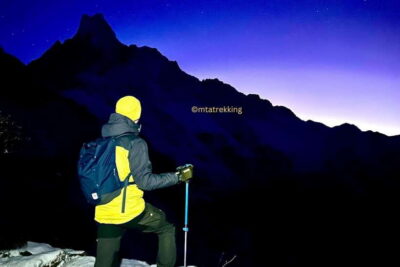
The early start matters because it gives you more time for the climb and the return. It also places you on the ridge during the clearest part of the morning when conditions allow. The trail is not described as technical climbing, but steep ground and narrow sections require care. Your guide’s role is especially important here, helping with route choices, pace, and safe movement.
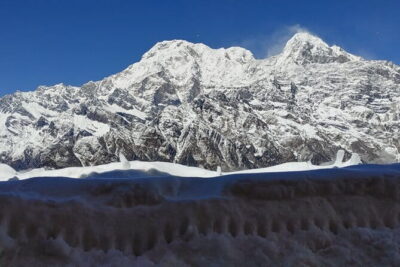
At Base Camp, the reward is the high mountain setting and close views of Mardi Himal, Machhapuchhre, Annapurna South, and Hiunchuli. The views are the reason to accept the effort of this day. You will not be walking through forest anymore. The scene opens toward snow-covered summits and broad ridges.
This is also the day that best separates the trek from a casual hill walk. You need to be ready for sustained uphill walking and a long return to High Camp. If your priority is comfort, this may feel too ambitious. If your priority is a short route with a serious Himalayan payoff, it is the strongest part of the trip.
Day 5: Siding village to Lumre and back to Pokhara

The final stage takes you down toward Siding village and then on to Lumre. The route passes through forest and small settlements before the trek ends. From Lumre, a shared local jeep or bus takes you back to Pokhara.
The walking time is listed at about seven hours, making this another full day. Descending can sound easy on paper, but long downhill sections can be tough on knees and ankles. Trekking poles are worth considering, although the tour only confirms the guide’s first-aid kit and does not list equipment rental.
Siding and Lumre give the final day a local feel. Instead of ending at a major roadhead surrounded by tour traffic, you finish through smaller settlements and then use ordinary local transport. Shared transport can be less predictable and less comfortable than a private vehicle, but it is part of the practical, lower-cost design of the trip.
Once you return to Pokhara, hotel drop-off within the Lakeside area is included. If you are staying outside that zone, confirm the pickup and drop-off arrangement before you pay.
What the $230 price really covers

At $230 per person, this is a competitively priced five-day trek. The value comes from bundling the major essentials: a guide, trekking permit and official documents, guesthouse accommodation, transport from Pokhara to Kande, transport from Lumre to Pokhara, and hotel pickup and drop-off in the Lakeside area.
The experience is listed as a private tour, so only your own group takes part. That is a meaningful benefit for couples, families, or friends who want a flexible pace. It also avoids the social uncertainty of joining a large group where one slow walker can affect everyone’s day.
You should read the price carefully. Food and drinks are not included. The stated estimate is about $25 per person, which is modest for five days but still needs to be added to your budget. Gratuities are optional. The package also does not list porter service, trekking gear, travel insurance, or personal clothing and equipment, so do not assume those items are covered.
The included emergency first-aid kit is a useful basic safeguard, but it is not a substitute for insurance. The supplied details do not describe medical evacuation cover, so arrange your own travel insurance before setting out.
Guides, villages, and the human side of the route
The mountain scenery gets most of the attention, but the village sections help give the trek its character. The route passes through traditional Gurung and Magar communities, where you may see local homes, small settlements, and guesthouses serving homemade meals.
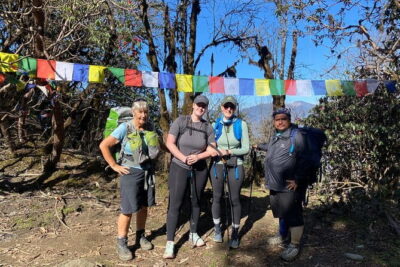
An English-speaking guide adds value beyond route finding. A good guide can help you understand local customs, communicate at guesthouses, and adjust the walking pace when the trail gets steep. The strongest praise attached to this experience centers on the guides, especially Amrit, Biru, and Bikram, with repeated emphasis on friendly support, local culture, good arrangements, and tea houses with strong views.
Because the activity is private, use that access well. Ask your guide about the villages, the mountain names, and the daily plan. You will get more from the trek if you treat the guide as a local interpreter, not just someone walking ahead of you.
Practical preparation for the five days
The listed start time is 12:15 am, which is unusually early for a Pokhara trekking departure. Confirm this point directly before the trip, since the time may refer to an overnight or early morning pickup. Also confirm the exact pickup location within the Lakeside area.
You should arrive ready for long walking days and changing conditions. The tour only states that moderate fitness is needed, so plan for:
- Comfortable trekking shoes with good grip
- Warm layers for High Camp and Base Camp
- Rain protection
- A day pack for water, snacks, and personal items
- A headlamp for the early start to Base Camp
- Trekking poles if downhill walking bothers your knees
- Cash for food, drinks, and optional tips
The route includes official permits and documents, so that part is handled for you. You still need to bring personal identification and any documents your operator requests.
Accommodation is in guesthouses. That keeps costs down and puts you close to the trail, but you should expect simple rooms and basic facilities. The supplied information does not specify room type, heating, bathrooms, or Wi-Fi, so ask if those details affect your decision.
Who should book this trek
I would recommend this trip to you if you want a compact Annapurna-region trek with strong mountain views, village contact, and a private guide. It suits people who can manage five to seven hours of walking and who prefer a planned package rather than arranging permits, lodging, and transport alone.
It is also a good fit if you have only a few days in Pokhara. The route gives you forests, villages, high ridges, and a Base Camp objective without requiring a much longer holiday.
I would think twice if you want luxury lodging, included meals, private road transport, or a gentle walking schedule. The Base Camp day is long, the trail becomes steep and narrow, and the shared transfers keep the price low but may reduce comfort. The 12:15 am listed start time also deserves confirmation before booking.
Free cancellation is available if you cancel at least 24 hours before the local start time. Changes or cancellations inside that window are not accepted for a refund.
Should you book the Mardi Himal Base Camp trek?
Book it if you want the best mountain return for a short five-day schedule and can accept basic guesthouses, paid meals, shared transport, and two demanding walking days. The scenery changes steadily, and the ridge near Base Camp gives the trek a genuine high-country finish.
Skip it if you are not prepared for seven-hour days or if you need a soft, fully serviced holiday. For fit walkers with limited time in Pokhara, though, the $230 package is a sensible way to reach Mardi Himal with permits, guide support, lodging, and the main transfers already arranged.
FAQ
How long is the Mardi Himal Base Camp trek?
The experience lasts approximately five days, including the road transfers from Pokhara to Kande and from Lumre back to Pokhara.
Where does the trek begin?
The walking portion begins at Kande after a transfer from Pokhara. The route then continues toward Australian Camp and Pitam Deurali.
Where does the trek end?
The walking route ends after descending from Siding village to Lumre. A shared local jeep or bus then takes you back to Pokhara.
Is hotel pickup included?
Yes. Hotel pickup and drop-off are included for accommodations within the Lakeside area of Pokhara.
Is transportation included?
Yes. The package includes a shared bus or jeep from Pokhara to Kande and shared transport from Lumre to Pokhara.
Is a guide included?
Yes. An English-speaking trekking guide is included. The tour is private, so only your own group participates.
Are trekking permits included?
Yes. Trekking permits and all official documents are included in the package.
Is accommodation included?
Yes. Guesthouse accommodation during the trek is included.
Are food and drinks included?
No. Food and drinks are available for purchase, with an estimated additional cost of about $25 per person.
What fitness level is required?
You should have a moderate level of physical fitness. The itinerary includes walking days of about five to seven hours, including a steep seven-hour trip to Mardi Himal Base Camp.
Can I cancel for a full refund?
Yes, if you cancel at least 24 hours before the experience start time. Cancellations or changes made less than 24 hours in advance are not accepted for a refund.
More 5-Day Experiences in Pokhara
- Kathmandu/Pokhara: 5-Day Annapurna Base Camp (ABC) Trek
★ 4.9 · 72 reviews - From Pokhara: 5-Day Annapurna Basecamp Trek with Hot Springs
★ 4.9 · 26 reviews - Mardi Himal Trek 5 Days
★ 5.0 · 23 reviews - Ghorepani Poonhill Trek 5 Days from Pokhara
★ 5.0 · 14 reviews
Recently added around Pokhara
- Paragliding in Pokhara★ 5.0 · 3 reviews
- Pokhara: 5-Day Annapurna Base Camp Trek with Hot Spring★ 5.0 · 3 reviews
- Pokhara:4-Day Ghorepani Poon Hill Guided Trek via Ghandruk★ 5.0 · 3 reviews
- Pokhara: 7-Day Annapurna Base Camp Trek via Ghandruk★ 4.3 · 3 reviews
- Peace & Panorama: Stupa and Pumdikot Scenic Drive Tour★ 3.6 · 3 reviews
- Beautiful Sarankot Sunrise with Full Day Sightseeing in Pokhara★ 4.5 · 3 reviews
- 3 Day Australian Camp Dhampus Ghandruk Easy Trek in Pokhara★ 3.5 · 3 reviews
- Overnight Dhampus Australian Camp Easy Hiking from Pokhara★ 5.0 · 3 reviews