REVIEW · ANNAPURNA BASE CAMP TREKS
5 Day Private Guided Trekking in Annapurna Base Camp
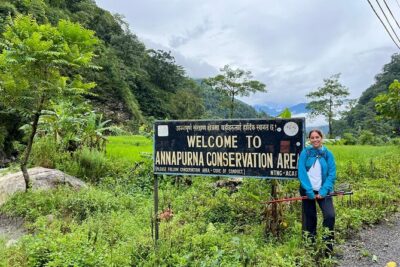
Annapurna Base Camp is the prize here: a high mountain bowl ringed by Annapurna South, Annapurna I, Machapuchare, and Hiunchuli. You reach it on foot, not by road, after moving from terraced hills and forest into cold alpine country. The final approach is short on paper, but altitude makes it serious.
I like the private format, since your guide can watch your pace and adjust the day around your group. I also like the mix of scenery: rhododendron and bamboo forests, waterfalls, Gurung villages, yak country, and the natural hot springs at Jhinu Danda. The main drawback is the tight five-day schedule. You need moderate fitness, and the climb to roughly 4,100 meters leaves little room for a slow acclimatization plan.
Key points to know before booking
- Private trekking with guide Sirjan, also written Srijan: Your group travels alone, with the guide’s salary, food, lodging, and insurance covered.
- The route starts at Siwai near Pokhara: Transport takes you to the trailhead, then the walking begins through villages and forest.
- Machapuchare Base Camp comes before ABC: You get close views of sacred Fishtail Mountain before reaching the main destination.
- Jhinu Danda adds a welcome recovery stop: Natural hot springs offer a chance to ease tired legs during the descent.
- The package includes permits and four days of meals: Breakfast, lunch, dinner, the trekking permit, and TIMS card are covered.
- Five days means a demanding pace: This suits people with moderate fitness who are ready for long uphill and downhill sections.
Why Annapurna Base Camp is worth the effort
Annapurna Base Camp is not just a viewpoint with a sign. It is a mountain sanctuary surrounded by steep, snowy peaks. The setting changes as you walk, which gives the trek its appeal.
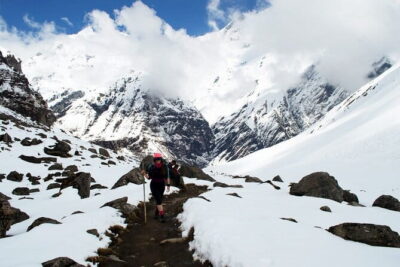
Near the lower sections, you pass terraced fields, traditional villages, and green forest. Higher up, the trees thin out and the trail opens toward rock, meadow, snow, and sharp ridgelines. You get a real sense of moving through several climate zones in a few days.
Machapuchare, often called Fishtail, is one of the visual stars of the route. The mountain is sacred and climbing it is prohibited. At Machapuchare Base Camp, you are close enough to appreciate its twin summit and dramatic profile before continuing toward Annapurna Base Camp.
The Annapurna Conservation Area also gives the walk more than mountain scenery. The route passes through habitats with varied plant life and wildlife. You might see signs of yak herding in the upper sections, especially near the alpine route toward MBC and ABC.
More Annapurna Base Camp Treks in Kathmandu
- Annapurna base camp trek 5 Days
★ 5.0 · 252 reviews - Annapurna Base Camp Trek
★ 5.0 · 111 reviews - Kathmandu to Annapurna Base Camp (ABC) 5-Day Trek
★ 5.0 · 102 reviews
Day 1: From Pokhara to Siwai and into the hills
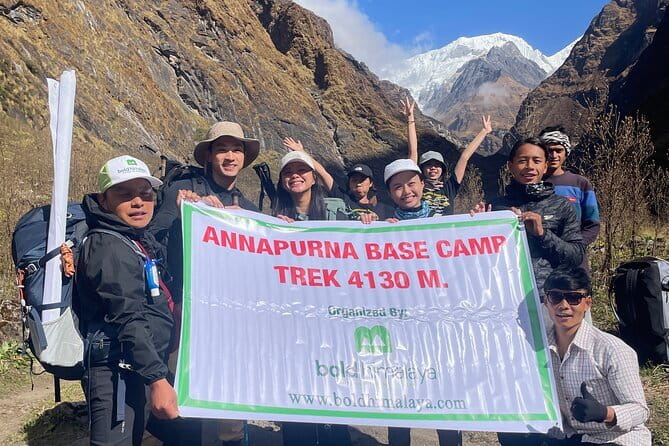
The trip begins with transport from Pokhara to Siwai, the starting point for the trek. The road journey matters because Siwai is where the walking route takes over. If you are arranging your own arrival in Nepal, note that the experience is listed in Kathmandu but the actual trekking program begins from Pokhara.
From Siwai, you walk into the Annapurna foothills. The first day introduces the pattern that defines the route: forest paths, village sections, stone steps, and changing views across the hills. The exact overnight point is not clearly stated in the available schedule, so confirm it with Bold Himalaya before departure.
This is also the day to settle into your guide’s rhythm. The guide identified in the trip material is Sirjan, sometimes written Srijan. His strongest reported qualities are attentiveness, support, and a habit of staying close to the group and matching its pace. That matters on a private trek, especially if one person climbs more slowly than the others.
Accommodation on this route is in tea houses. These are simple trekking lodges rather than full-service hotels. They give you a place to eat and sleep along the trail, but you should approach the stay as practical mountain lodging. The included meals cover breakfast, lunch, and dinner for four days.
Day 2: Sinuwa, bamboo forest, Dovan, and the Modi Khola
After breakfast in Sinuwa, the trail continues through thick forest. Bamboo and other woodland sections provide shade, while waterfalls and the Modi Khola River add sound and movement to the walk.
This is one of the most attractive parts of the route because the scenery keeps changing without requiring a major side trip. You are not simply walking uphill for hours with the same view. The river corridor, forest, and falls break up the effort.
The day also brings a physical warning. Forest trails in the Annapurna region often involve repeated climbs and descents rather than one steady slope. Even when the map distance looks manageable, stone steps and uneven ground can make the day tiring. Good shoes and a steady pace are more useful than trying to hurry.
Dovan is an important point on the route toward the higher camps. The trail becomes more focused on reaching the mountain interior from here. Keep some energy in reserve, since the next day brings the main altitude gain and the biggest destination of the trek.
Day 3: Rhododendron forest, MBC, and Annapurna Base Camp
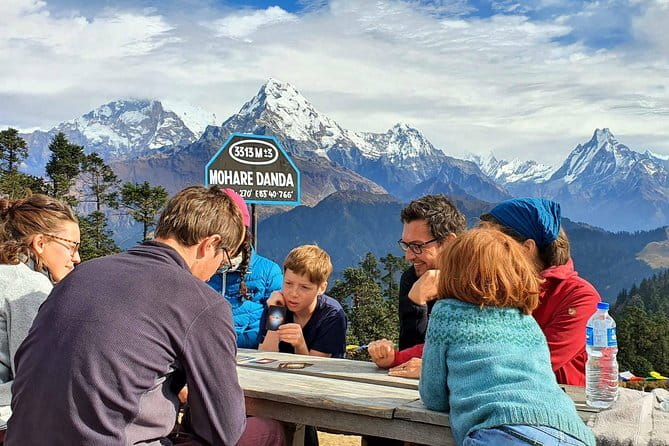
Day three is the central day of the experience. You leave after an early breakfast and head toward Machapuchare Base Camp through a striking rhododendron forest.
Rhododendrons are one of Nepal’s best-known mountain plants, and the forest gives the lower part of the day a different feel from the bamboo country below. As you climb, the vegetation becomes more open. You may also encounter yak herders in this high section, a reminder that the upper valley is still used for seasonal mountain life.
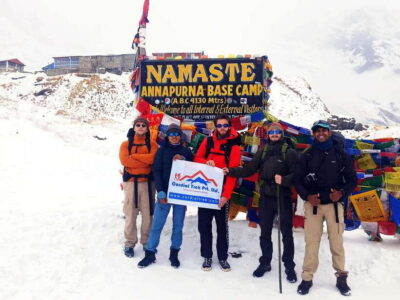
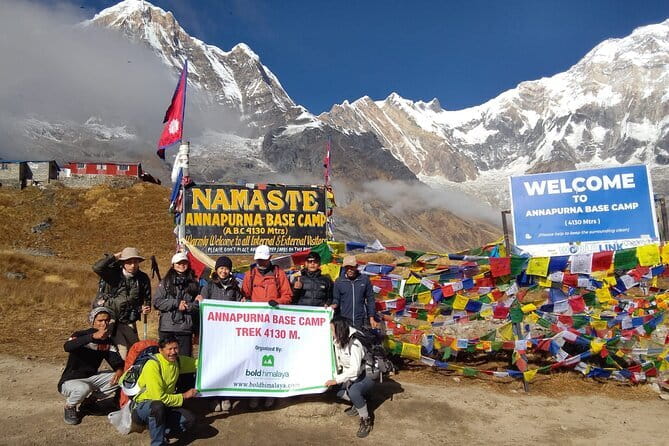
After lunch, you continue to Annapurna Base Camp. The route reaches roughly 4,100 meters, so the distance is only part of the challenge. Pay attention to headache, unusual tiredness, dizziness, or nausea, and tell your guide early if you feel unwell. A private group makes this kind of communication easier, but it does not remove the effects of altitude.
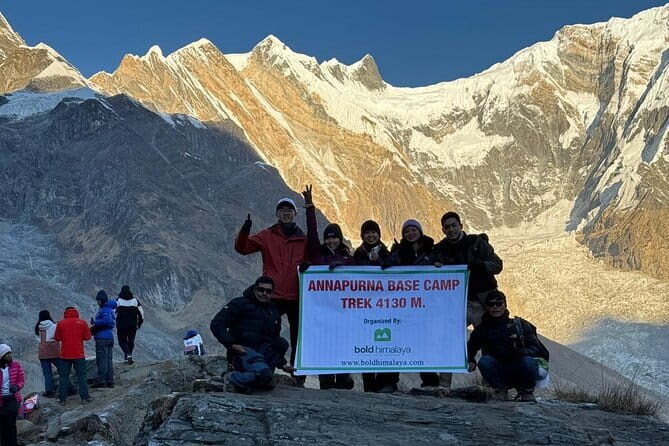
The reward is the mountain amphitheater at ABC. Annapurna South, Annapurna I, Hiunchuli, and Machapuchare rise around the basin. Light and weather control how much you see, so do not expect the same view every minute. Clear conditions can produce huge panoramas, while cloud may leave you with brief openings and a more moody mountain scene.
The scheduled stop at Annapurna Base Camp includes admission. The available itinerary gives about three hours for this stop, which allows time to take in the setting, photograph the peaks, and absorb the achievement before settling for the night.
This is the day when the five-day schedule feels most demanding. You are gaining altitude quickly compared with a longer itinerary. If you have never trekked above 4,000 meters, ask the operator how the guide handles symptoms and what happens if you need to stop short of ABC.
More Hiking Tours in Kathmandu
- Everest Base Camp Trek – 14 Days
★ 5.0 · 1,499 reviews - Everest Base Camp Trekking
★ 5.0 · 485 reviews - Nagarkot Sunrise View and Day Hiking from Kathmandu
★ 5.0 · 471 reviews - Annapurna Circuit Trek with Tilicho Lake
★ 5.0 · 368 reviews
Day 4: Sunrise at ABC and the long descent
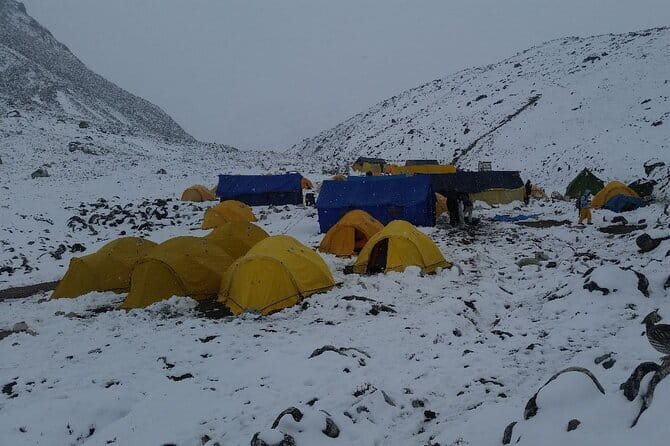
The day begins early so you can watch sunrise over the Annapurna massif. This is a smart use of the location. Morning light often gives the peaks a sharper shape and warmer color than the middle of the day, though cloud can still affect the view.
After sunrise, you retrace the route down through Machapuchare Base Camp and Deurali. The descent is easier on your lungs but harder on knees and thighs. Trekking poles can help, although they are not listed as part of the package, so ask what equipment you need to bring.
The route then returns toward the forest. That change is welcome after the exposed upper country, but the day remains long because you are giving back much of the height gained on day three. Pace yourself, drink regularly, and do not treat downhill walking as effortless.
Jhinu Danda’s natural hot springs are one of the route’s best extras. They provide a chance to relax tired muscles and add a human, low-key moment after the drama of ABC. Drinks and extra items are not included, so budget separately for anything you buy during the trek.
Day 5: Forest descent, Siwai, and the return to Pokhara
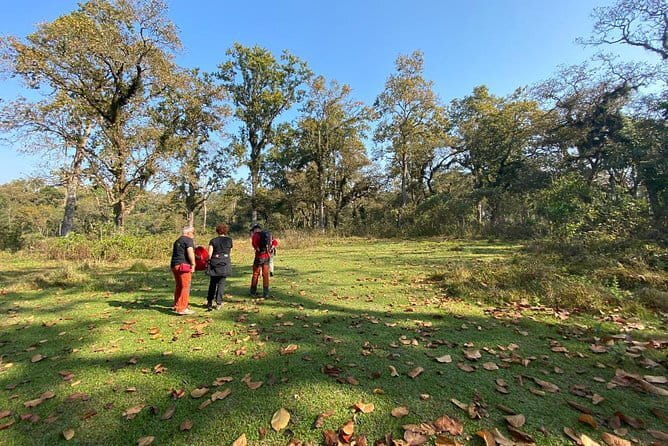
The final day continues down through bamboo and forest toward Siwai. By now, the scenery feels less alpine and more settled, with greener hills and familiar village surroundings.
At Siwai, the guide arranges a jeep for the return to Pokhara. That private transport is useful after several days on foot. It also makes the end of the trip clear and simple: you finish the walking at the roadhead rather than having to organize your own connection.
The schedule does not provide exact driving or walking times for each day. Ask for the planned overnight stops, approximate hours, and pickup details before paying. That is especially important if you have onward travel from Pokhara or need to connect with Kathmandu.
What the $225 price covers
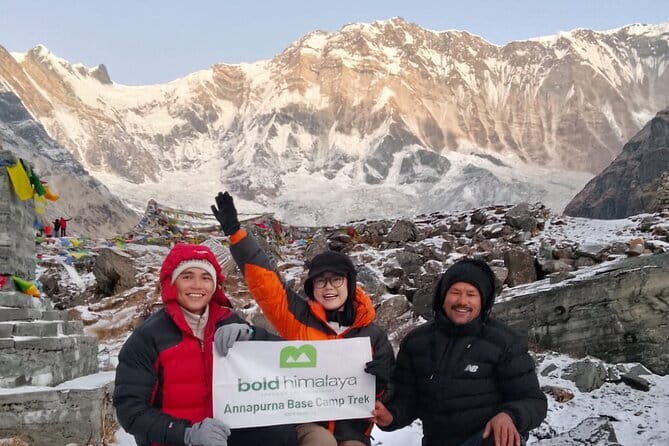
At $225 per person, the trip offers solid value if you want the main trekking services arranged in one package. The price includes private transportation, all fees and taxes, the trekking permit, and TIMS card.
It also covers the guide’s salary, accommodation, meals, and insurance. Four breakfasts, four lunches, and four dinners are included, along with some seasonal fruit. Those inclusions remove several costs that can otherwise add up on a short trek.
The private format is the bigger value point. You are not tied to a large group’s pace, and the guide can focus on your party. For friends or family traveling together, group discounts may improve the price further.
There are clear exclusions. Drinks, desserts, extra meal items, travel insurance, and tips for the trekking crew are not included. More importantly, the stated package does not clearly include porters. Trip accounts connected with this experience refer to porters, but you should confirm whether porter service is part of your specific booking, how much luggage you may bring, and what you must carry yourself.
The price also does not turn a five-day trek into an easy one. You are paying for organization and support, not a gentle walking holiday. The value is strongest for someone who wants a private guide and a straightforward ABC plan without arranging permits, meals, and transport independently.
The guide and the level of support
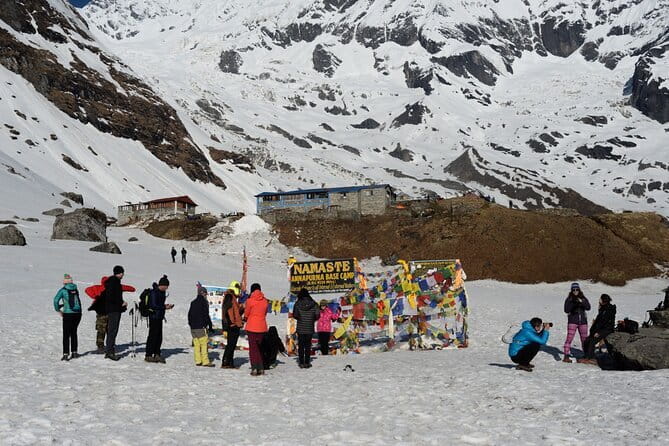
Guide Sirjan, also written Srijan, receives the strongest praise in the available trip feedback. The recurring themes are warmth, careful pacing, frequent check-ins, and strong communication before, during, and after the trek.
Those details matter more than a polished sales pitch. A guide who stays behind the group, watches the slowest walker, and checks how people are feeling can make a hard route feel manageable. On a high-altitude trek, that support has practical value.
The package covers the guide’s food, accommodation, salary, and insurance. It does not state the size of the guide team for every booking. Since the activity is private, only your own group participates, but confirm the number of guides and any porter arrangements if your party is large or carrying substantial bags.
Who should book this five-day trek?
I would recommend this trip to you if you:
- Have moderate physical fitness and can handle repeated uphill and downhill walking
- Want a private guide rather than a fixed large group
- Prefer a five-day schedule over a longer, slower ABC program
- Care about mountain scenery, villages, forests, and local Gurung culture
- Like having permits, meals, and transport arranged in advance
- Want the hot springs at Jhinu Danda as part of the route
I would hesitate if you have limited hiking experience, are unsure how your body reacts to altitude, or need a relaxed schedule with spare days. The itinerary moves quickly toward about 4,100 meters. A longer version may suit you better, but this five-day option is the one to discuss if your time is tight.
The trek is also a good match for couples, friends, or families who value control over the pace. A private booking lets you ask for more breaks, though the guide still has to work within the route and weather conditions.
Practical details to settle before departure
Confirmation is provided when you book. Pickup is offered, but confirm where and when it applies, especially since the walking program starts from Pokhara rather than Kathmandu.
Bring travel insurance that covers trekking, since it is excluded from the price. You should also plan for personal drinks, optional food, and tips for the trekking crew.
Weather can affect the trip. If poor weather forces cancellation, you are offered another date or a full refund. You can cancel for a full refund up to 24 hours before the start time. Changes or cancellations made inside that window are not accepted and are not refunded.
The operator also offers mobile tickets and group discounts. Those are useful conveniences, but the more important questions are practical: What is the exact pickup point? Which tea houses are planned? Are porters included? What luggage can you bring? How does the guide respond if someone cannot continue toward ABC?
Should you book the Annapurna Base Camp trek?
Book it if you want a private, tightly organized route to ABC and you are ready for a physically demanding five days. The best features are the mountain setting, the visit to Machapuchare Base Camp, the sunrise at ABC, and the natural hot springs at Jhinu Danda.
The guide support also looks like a real strength, particularly if you request Sirjan or Srijan and confirm his availability. Before booking, get clear answers about porter service, overnight stops, walking hours, and the Pokhara pickup.
I would choose this trip for a fit person with limited time who wants permits, meals, transport, and a guide handled in one payment. I would choose a longer itinerary for anyone who wants more time to adjust to altitude. At $225, it is a good-value package, but only if you understand that the low price and five-day format come with a brisk pace.
FAQ
Where does the Annapurna Base Camp trek begin?
The walking portion begins at Siwai after transport from Pokhara. The experience is listed in Kathmandu, so confirm whether your booking includes any transfer from Kathmandu to Pokhara.
How high does the trek go?
Annapurna Base Camp is reached at approximately 4,100 meters above sea level.
Is this a private tour?
Yes. Only your group participates in the activity.
Is a guide included?
Yes. The package includes a guide, along with the guide’s salary, accommodation, meals, and insurance. The guide is identified as Sirjan, also written Srijan in some trip details.
Are meals included?
Four breakfasts, four lunches, and four dinners are included. Some seasonal fruit is also provided. Drinks, desserts, and extra meal items are not included.
Are trekking permits included?
Yes. The trekking permit and TIMS card are included, along with all listed fees and taxes.
Can I cancel for a full refund?
Yes, if you cancel at least 24 hours before the experience start time. Cancellations or changes made less than 24 hours before the start time are not accepted or refunded. If poor weather causes the operator to cancel, you are offered another date or a full refund.
More 5-Day Experiences in Kathmandu
- 5-Day Sunrise Tour in Kathmandu Near Everest
★ 5.0 · 12 reviews - 5 Days Hiking, Tour, Meditation and Yoga Retreat in Kathmandu, Nepal
★ 5.0 · 10 reviews - Pokhara: 5-Day Annapurna Base Camp (ABC) Trek
★ 5.0 · 9 reviews - From Kathmandu: 5-Day Gosaikunda Lake Trek
★ 5.0 · 6 reviews
Recently added around Kathmandu
- Kathmandu Airport Pickup and Drop-off Services★ 5.0 · 3 reviews
- Kathmandu Paragliding★ 5.0 · 3 reviews
- Explore The Beauty Of Langtang Valley In 8-Days Trek★ 5.0 · 3 reviews
- Kathmandu Chandragiri Cable Car and Swayambhunath Private Tour★ 5.0 · 3 reviews
- Kathmandu: Nightlife and Pub Crawl Tour★ 5.0 · 3 reviews
- Kathmandu: Momo Making Class with a Local Chef★ 5.0 · 3 reviews
- Mountain Flight Experience in Nepal★ 4.5 · 3 reviews
- Everest Base Camp Trek★ 5.0 · 3 reviews
Other Annapurna Base Camp Treks worth a look
Kathmandu to Annapurna Base Camp (ABC) 5-Day Trek
Read our review →