REVIEW · ANNAPURNA BASE CAMP TREKS
Pokhara: 5-Day Annapurna Base Camp (ABC) Trek
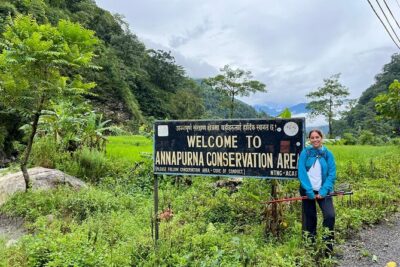
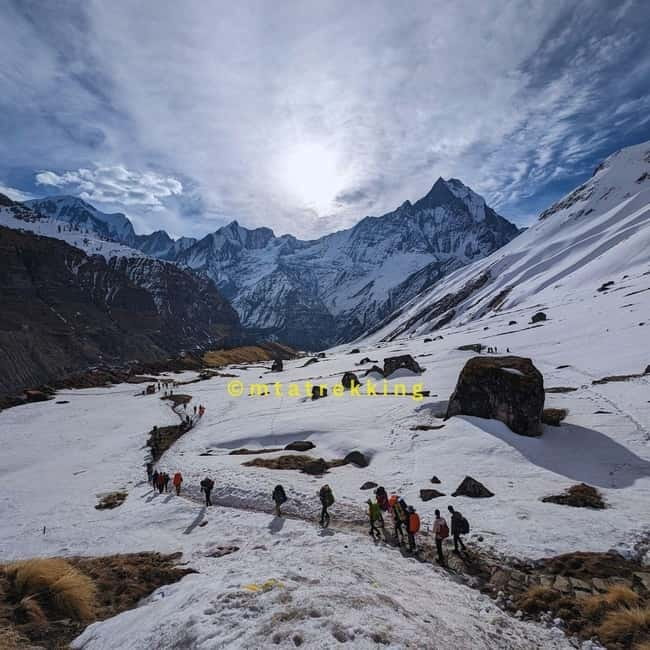
Annapurna Base Camp gives you a rare Himalayan prize without requiring a two-week schedule. In five days, you travel from Pokhara to 4,130 meters, passing rice terraces, forest trails, Gurung villages, Machhapuchhre Base Camp, and the high mountain bowl of ABC.
I like the private format, which lets your guide adjust walking and rest times to your pace. I also like the practical setup: hotel pickup, permits, tea-house lodging, transport, a first-aid kit, and luggage storage in Pokhara are included. The main caution is simple: this is a hard trek, and the five-day plan leaves little spare time if you struggle with steep climbs or altitude.
Key points to know before booking
- Reach 4,130 meters in only three trekking days: The route is efficient, but you need a fair level of fitness.
- Start and finish at your Lakeside hotel: Pickup and return transport are included within the Lakeside area, with airport pickup also available.
- Sleep in mountain tea houses: Basic accommodation puts you close to the trail and local village life.
- See Gurung culture along the route: Traditional villages and daily mountain life are part of the experience, not just scenery.
- Pause at Jhinu Hot Springs: The optional soak is a welcome way to ease tired legs near the end.
- Private guides receive the strongest praise: Santosh, Prabit, and Ramit are named as kind, careful, and good at managing walking times.
Why the five-day ABC route works
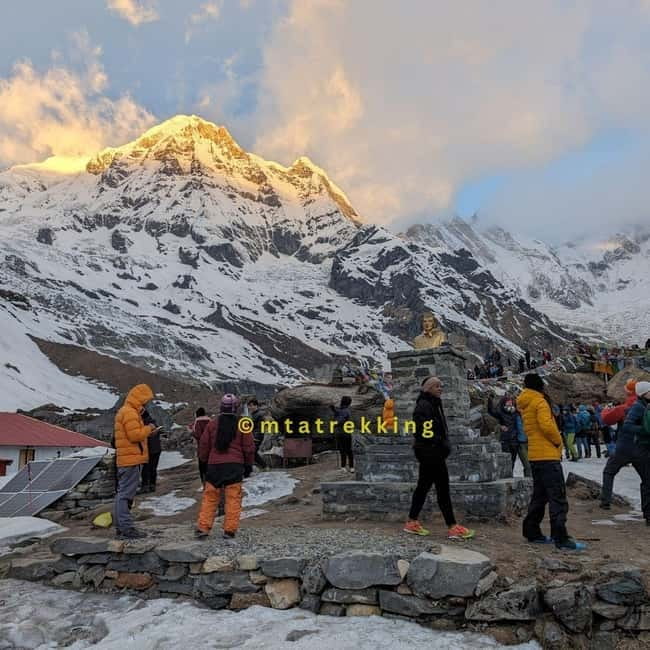
The Annapurna Base Camp trek is one of Nepal’s best short Himalayan journeys. You do not spend the whole trip in a vehicle, but you also avoid the long approach used on slower versions of the route. A private jeep takes you from Pokhara to Siwai, the last road point, then your walking begins.
That balance is the chief value here. You get a real high-altitude trek, not a quick viewpoint walk, while keeping the total trip to four nights and five days. At $136 per person, the package is especially attractive because it includes private transport, an English-speaking government-registered guide, permits, tea-house accommodation, taxes, and luggage storage in Pokhara.
Check the meal arrangement carefully before paying. Meals are included only with the full-board option, so the headline price may not cover food unless you select that package. Mountain costs also rise quickly for hot showers, Wi-Fi, drinks, mineral water, laundry, and other personal needs.
The private group format matters more than it might first appear. A guide can slow the pace, add rest stops, or make small changes when someone feels tired. One guide helped adjust the schedule so a participant did not overexert themselves, while another carefully checked equipment before departure. That sort of attention is useful on a route where the altitude, not just the distance, tests you.
More Annapurna Base Camp Treks in Kathmandu
- Annapurna base camp trek 5 Days
★ 5.0 · 252 reviews - Annapurna Base Camp Trek
★ 5.0 · 111 reviews - Kathmandu to Annapurna Base Camp (ABC) 5-Day Trek
★ 5.0 · 102 reviews
From Pokhara to Sinuwa through Jhinu
Your day starts with pickup at a hotel in Pokhara’s Lakeside area, or at Pokhara International Airport. The drive toward Siwai takes about three hours by jeep or SUV. This is not a sightseeing drive in the relaxed sense, but it saves valuable walking time and gets you closer to the trail.
From the road end, you walk toward Lower Sinuwa at about 2,300 meters. The day is listed at roughly five to six hours, depending on the exact route and stops. Expect a proper first trekking day, with uphill sections and enough effort to make the tea house feel well earned.
Jhinu is the special stop. The village is known for its natural hot springs, though the schedule places the optional soak mainly on the return journey. You pass through a Gurung community, see terraced farmland, and begin to trade Pokhara’s roads for forest paths and mountain views.
This first day gives you a useful test. If your legs feel strained early, tell your guide at once. The private setup allows better pacing, but it cannot turn a demanding mountain trail into an easy walk. Carry cash, water, and a change of clothes where you can reach them easily.
Sinuwa to Deurali and the higher forest
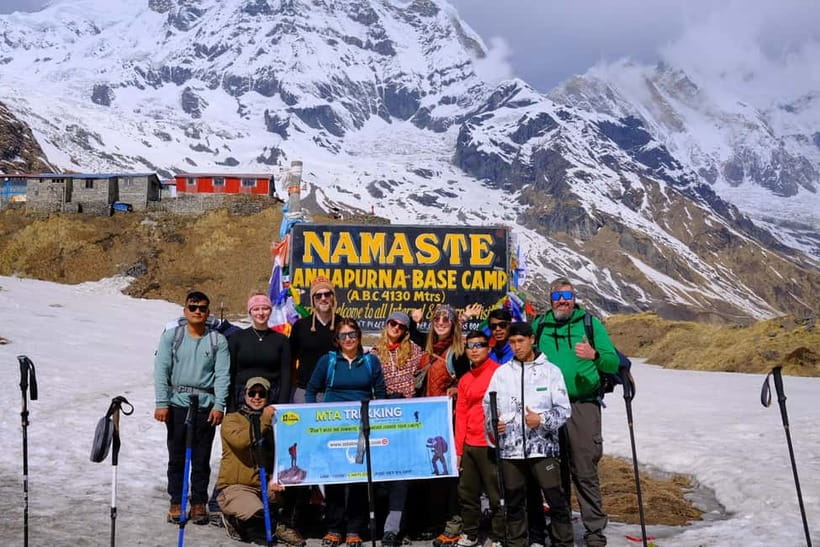
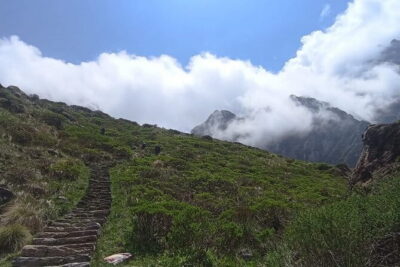
The second day takes you from Lower Sinuwa to Deurali at about 3,200 meters. Plan on around six hours of walking. The route moves through changing forest and mountain terrain, with the air growing cooler and thinner as you gain height.
This is where the trek starts to feel serious. You are no longer simply walking through attractive foothills. You are preparing your body for a night above 3,000 meters and for the final push to base camp.
The timetable includes photo stops, guided sightseeing, sunset views, and a sunrise. Treat those descriptions as possibilities rather than promises. Weather, walking speed, and daylight control the day in the mountains. Your guide’s judgment matters more than any fixed photo schedule.
Deurali is also a sensible place to pay attention to altitude symptoms. Headache, unusual tiredness, dizziness, or nausea should be reported promptly. The trip information notes that altitude sickness is possible at ABC, even if it is described as rare. Do not try to hide symptoms to keep to the timetable.
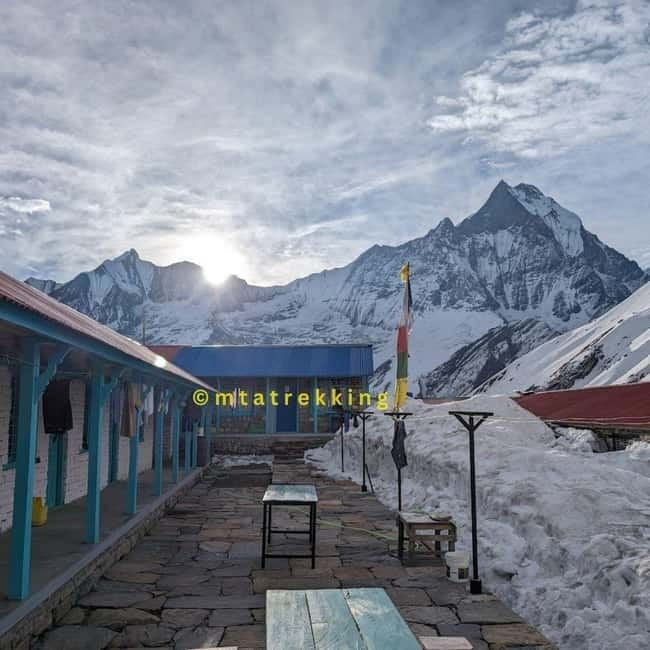
Tea-house nights are part of the appeal, but they are basic mountain accommodation rather than a hotel stay. You should expect a simple place to sleep and should budget separately for hot showers, Wi-Fi, drinks, and other extras. The package covers the bed, but not every comfort you may want after six hours on your feet.
Deurali to Machhapuchhre Base Camp
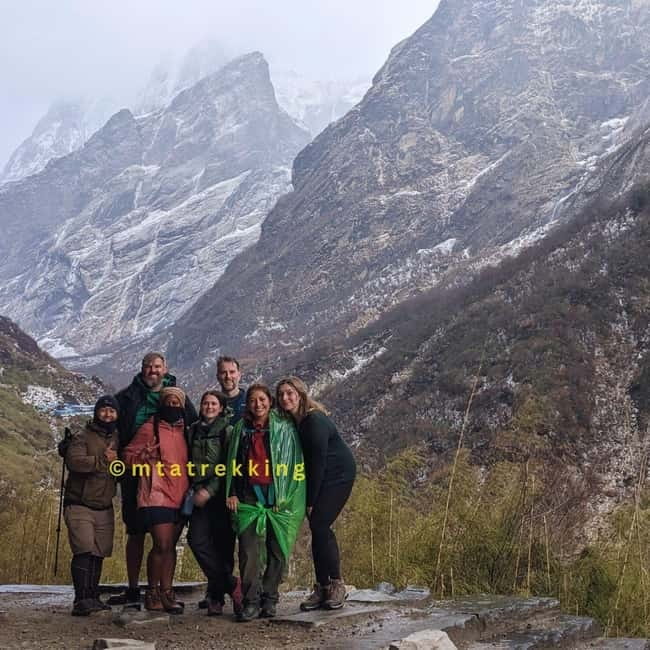
The third day is the high point of the approach. From Deurali, you walk toward Machhapuchhre Base Camp, then continue to Annapurna Base Camp. The listed walking time is about four to six hours, depending on the day’s conditions and stops.
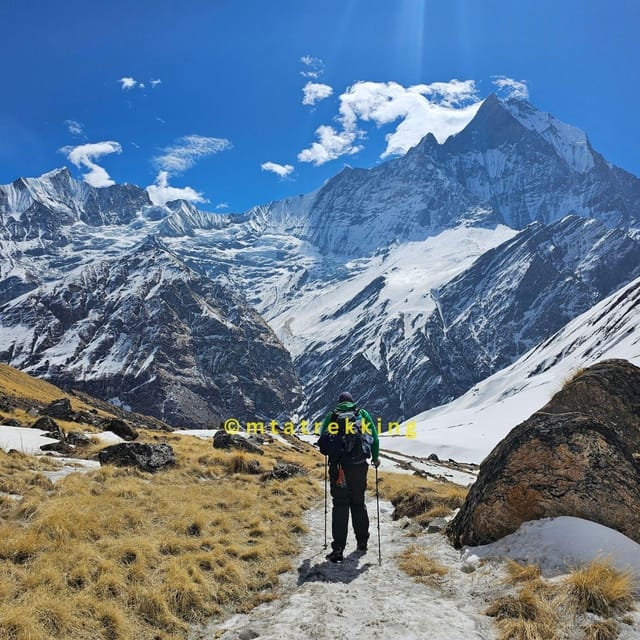
Machhapuchhre means Fishtail, and the stop gives you views of the distinctive peak. It is an important part of the route because it marks the transition from the forested approach into the broad high mountain setting around ABC. The views become the reason for every uphill step.
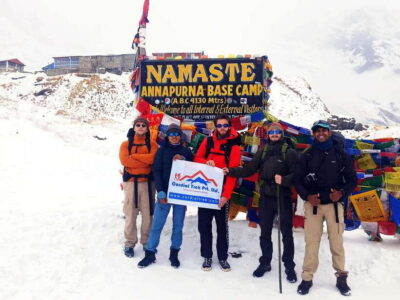
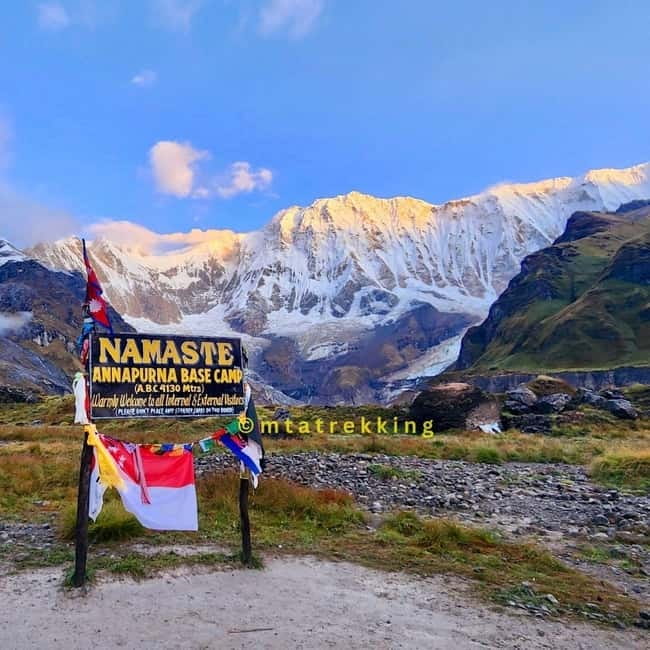
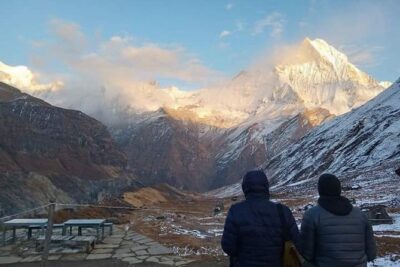
At 4,130 meters, Annapurna Base Camp is the goal. You are surrounded by the Annapurna Massif, with the mountains rising around the basin. The setting is far more powerful than a simple endpoint or signpost. You have walked into the mountains rather than driven to a lookout.
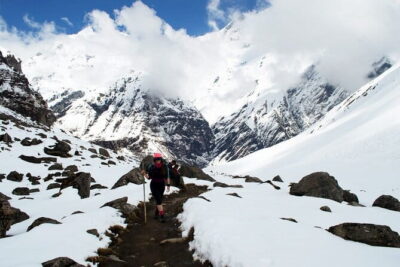
Your guide should manage the pace carefully here. The altitude can affect people differently, and the shorter distance on paper does not mean an easy day. Keep your clothing handy, drink as advised by your guide, and avoid racing ahead for photographs.
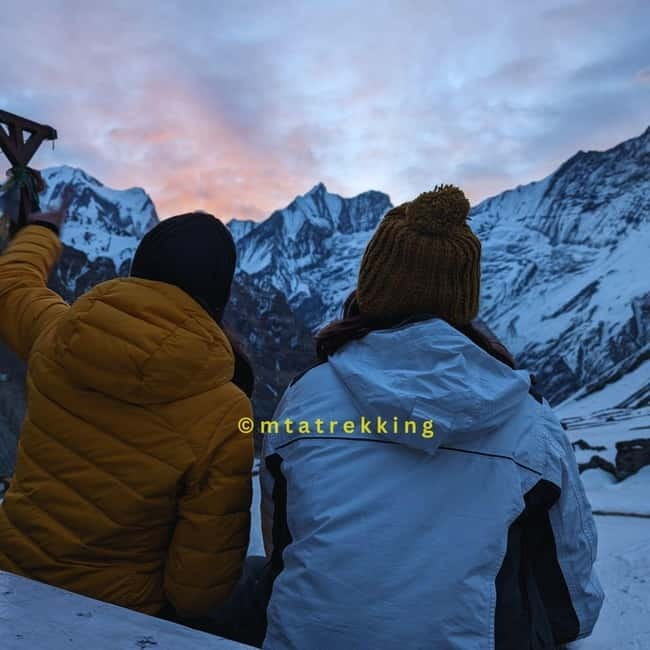
The overnight stay at base camp is a major part of the experience. It allows you to see the site in changing light, including sunset and, if conditions cooperate, sunrise. One of the most memorable details from the trip accounts is a sunrise facing the south face of Annapurna. You will want a warm layer ready before dawn, since the mountain setting matters most when you are comfortable enough to stay outside and watch it.
More Hiking Tours in Kathmandu
- Everest Base Camp Trek – 14 Days
★ 5.0 · 1,499 reviews - Everest Base Camp Trekking
★ 5.0 · 485 reviews - Nagarkot Sunrise View and Day Hiking from Kathmandu
★ 5.0 · 471 reviews - Annapurna Circuit Trek with Tilicho Lake
★ 5.0 · 368 reviews
Base camp sunrise and the descent to Bamboo
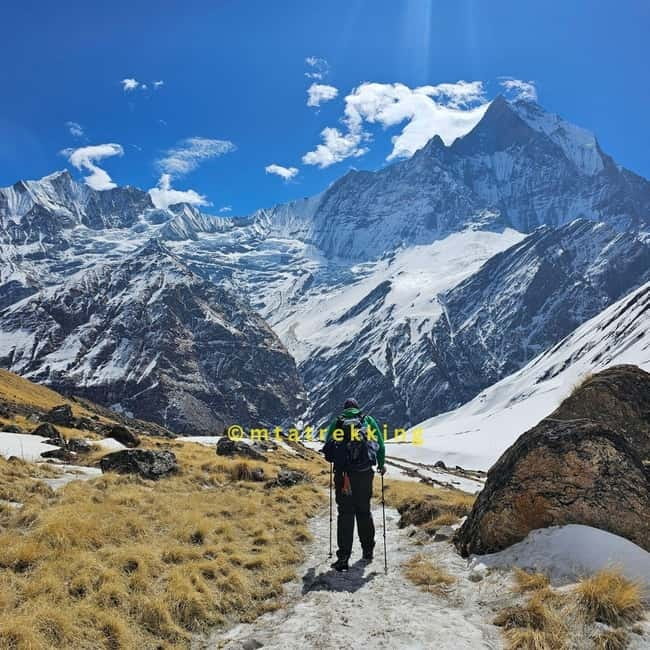
Day four begins at Annapurna Base Camp, with time to take photographs and look across the surrounding peaks. The sunrise is not guaranteed, since clouds and weather can change the view, but the early start is worthwhile if conditions are clear.
You then descend to Bamboo at about 2,400 meters. The descent takes around six hours and can be tough in a different way from the climb. Knees and toes often take more punishment downhill, so use footwear with good grip and take short, controlled steps.
Bamboo provides a lower and generally easier place to sleep after the high camp night. The drop in altitude is welcome, but do not assume the day is gentle. You still have a long walk, and tiredness can make uneven trail sections harder to manage.
The schedule includes scenic stops and another sunrise or sunset opportunity. Again, keep some flexibility. Your best day may not match the printed order of photo stops, and a careful guide may choose rest over a rushed viewpoint.
Bamboo, Jhinu Hot Springs, and the road back
The final walking day takes you from Bamboo toward Jhinu Danda. The listed time is about six hours, followed by transport back to Pokhara. This is your last substantial trail day, so the hot spring stop arrives at a useful point.
The soak at Jhinu is optional. I would treat it as a comfort stop, not the main purpose of the day. Bring or keep access to suitable clothing, and remember that the package does not include hot showers or personal washing costs elsewhere on the route.
After Jhinu, a jeep or SUV takes you back to Lakeside Pokhara in about three hours. The return drive closes the loop neatly, though mountain roads can be tiring after a full day of walking. Hotel drop-off within the Lakeside area is included.
This final combination of trail, hot spring, and road transfer is one reason the route feels well planned. You finish with a cultural and local experience rather than simply leaving base camp and spending the rest of the day in a vehicle.
Gurung villages and the human side of the trek
The Annapurna route is not only a mountain challenge. You pass through traditional Gurung villages and see how communities live along steep Himalayan trails. The itinerary does not promise a formal cultural program, so think in terms of village streets, tea houses, farms, and conversations guided by your English-speaking leader.
That is where the guide adds real value. Santosh is described as kind and easy to understand. Prabit is praised for explaining the route, preparing equipment, and handling small details. Ramit is noted for explaining natural features and local culture while managing travel times and rest breaks.
Guide quality can shape the whole trek. A good leader helps you notice the place, not just reach the next lodge. Ask questions about village life, the mountains, and the trail. You are paying for more than navigation, especially on a private trip.
What is included, and what you still pay for
The package includes:
- Tea-house accommodation
- Hotel pickup and drop-off within Lakeside Pokhara
- Airport pickup and drop-off
- Private transport between Pokhara and Siwai
- Annapurna Conservation Area Permit
- Government permits, TIMS, and taxes
- A professional, government-registered trekking guide
- First-aid kit
- Luggage storage in Pokhara during the trek
Meals require closer attention. Food is included when you choose the full-board option, so confirm that selection before booking. If you choose an option without meals, allow extra money for food throughout the trek.
You also pay for personal extras. Hot showers, Wi-Fi, drinks, mineral water, laundry, and mountain water costs are excluded. Porter service costs $20 per day, and rescue and insurance are not included.
Rescue and travel insurance deserve special attention. At 4,130 meters, the route has genuine altitude risk, and insurance should be arranged separately before departure. The activity provider does not cover those costs.
At $136, the tour can be strong value if you want transport, permits, a private guide, and basic lodging arranged in one package. It is less of a bargain if you expect meals, porterage, showers, and every drink to be covered. Read the meal option and exclusions as carefully as the price.
Fitness, weather, and what to pack
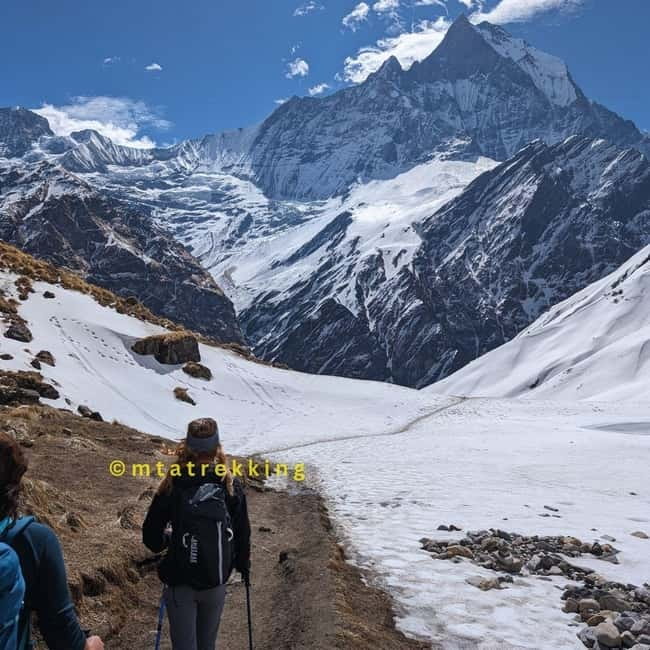
You should be comfortable walking for five to six hours on steep and uneven mountain trails. One five-day participant found the route achievable but physically testing. That is the right way to think about it: possible for a fit hiker, but not a casual stroll.
Pack comfortable shoes, comfortable clothing, spare clothes, cash, and your passport or an accepted copy of your ID. For the monsoon months of June through August, add proper rain gear and take your guide’s advice seriously. Heavy rain can make trails slower and less pleasant.
Leeches can appear on lower trails during the monsoon. Long trousers tucked into gaiters and insect repellent can help. This is an annoying detail, but a small amount of preparation can keep it from becoming a major distraction.
The trek is not suitable for pregnant people, wheelchair users, people with mobility or visual impairments, people currently suffering from altitude sickness, or people over 70. These limits reflect the trail and altitude rather than the quality of the service.
Should you book this Annapurna Base Camp trek?
Book it if you want a short, private Himalayan trek with a clear goal, strong guide support, and the convenience of transport from Pokhara. The combination of Gurung villages, forest trails, Machhapuchhre views, a base-camp sunrise, and Jhinu Hot Springs gives the trip more variety than a simple out-and-back mountain hike.
Think twice if you are not used to long uphill days, if you want a relaxed schedule, or if you dislike basic tea-house accommodation. Five days is efficient, but it leaves little room for a slow pace or a weather delay.
For a prepared hiker who understands the altitude and checks the full-board price, this is a practical way to reach Annapurna Base Camp without committing to a much longer itinerary. Bring fitness, patience, cash for extras, and a willingness to let your guide adjust the day. Those choices will matter more than squeezing every stop into the printed timetable.
FAQ
How long is the Annapurna Base Camp trek?
The experience lasts five days and four nights, including travel from Pokhara, the trek to Annapurna Base Camp, the descent, and the return drive.
What altitude does Annapurna Base Camp reach?
Annapurna Base Camp reaches 4,130 meters, or about 13,550 feet.
Where does the trek start?
Pickup is available from hotels and locations within Pokhara’s Lakeside area, as well as Pokhara International Airport.
Is transport from Pokhara included?
Yes. Private jeep or SUV transport is included between Pokhara and Siwai, the last road point, and for the return journey to Pokhara.
Is food included in the price?
Meals are included with the full-board option. Confirm that you choose the meal-included option when booking.
Where do you sleep during the trek?
Accommodation is provided in tea houses along the route, including stops at Sinuwa, Deurali, Annapurna Base Camp, and Bamboo.
Is a guide included?
Yes. The trek includes a professional, government-registered English-speaking guide, and the group is private.
Is Jhinu Hot Springs included?
The route passes through Jhinu, and the hot spring visit is optional. Personal costs connected with hot showers and similar services are not included.
Do I need to bring cash?
Yes. Cash is listed among the recommended items and is useful for personal expenses such as drinks, showers, Wi-Fi, water, and laundry.
Is travel insurance included?
No. Rescue and insurance are not included, so you need to arrange your own coverage.
More 5-Day Experiences in Kathmandu
- 5 Day Private Guided Trekking in Annapurna Base Camp
★ 5.0 · 25 reviews - 5-Day Sunrise Tour in Kathmandu Near Everest
★ 5.0 · 12 reviews - 5 Days Hiking, Tour, Meditation and Yoga Retreat in Kathmandu, Nepal
★ 5.0 · 10 reviews - From Kathmandu: 5-Day Gosaikunda Lake Trek
★ 5.0 · 6 reviews
Recently added around Kathmandu
- Kathmandu Airport Pickup and Drop-off Services★ 5.0 · 3 reviews
- Kathmandu Paragliding★ 5.0 · 3 reviews
- Kathmandu Chandragiri Cable Car and Swayambhunath Private Tour★ 5.0 · 3 reviews
- Explore The Beauty Of Langtang Valley In 8-Days Trek★ 5.0 · 3 reviews
- Kathmandu: Nightlife and Pub Crawl Tour★ 5.0 · 3 reviews
- Kathmandu: Momo Making Class with a Local Chef★ 5.0 · 3 reviews
- Mountain Flight Experience in Nepal★ 4.5 · 3 reviews
- Thangka Painting Workshop★ 5.0 · 3 reviews
Other Annapurna Base Camp Treks worth a look
Kathmandu to Annapurna Base Camp (ABC) 5-Day Trek
Read our review →