REVIEW · ANNAPURNA BASE CAMP TREKS
From Pokhara: 10-Day Poon Hill and Annapurna Base Camp Trek
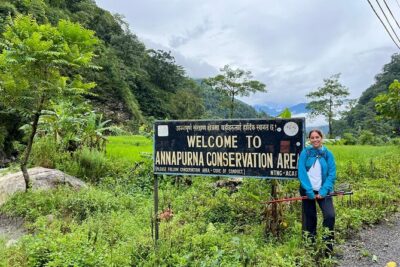
The big reward here is the way two famous Himalayan routes fit into one trip. You walk the sunrise trail to Poon Hill, then continue through forests and mountain villages to Annapurna Base Camp, where Annapurna I rises to 8,091 meters. It is a strong choice if you want more than a short viewpoint walk from Pokhara.
I like the patient pace and the private format, especially if you are a slow hiker or want the guide to adjust the day around your energy. I also like the mix of scenery: terraced fields, Gurung villages, rhododendron forests, suspension bridges, high valleys, and a soak in Jhinu Danda. The main caution is simple: this is a serious 10-day mountain trek, and rain, cold, steep stone steps, and altitude can all affect the experience.
Key points before you book
- Poon Hill and Annapurna Base Camp in one route: You get the famous sunrise viewpoint and the high mountain sanctuary rather than choosing only one.
- Private guiding with flexible pacing: Guides including Biru, Arjun, and Bikram have been praised for patience, safety, route planning, and adapting the trek when needed.
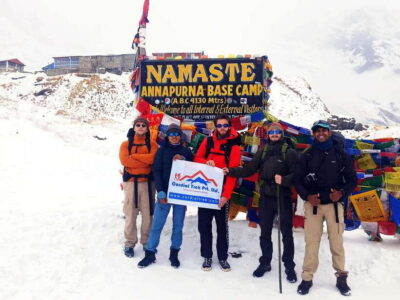
- A real progression in altitude: The route rises from Tikhedhunga at 1,577 meters to Annapurna Base Camp at 4,130 meters.
- Village life and forest walking: Gurung settlements, terraced fields, bamboo, rhododendron, and marigold forests keep the route varied.
- Jhinu Danda hot springs: The final mountain days end with a chance to soak tired legs in natural hot springs.
- Low headline price, extra daily costs: The $310 fee covers guiding, permits, lodging, transfers, and Poon Hill entry, but not food, drinks, insurance, or optional comforts such as hot showers and Wi-Fi.
Why this 10-day route works
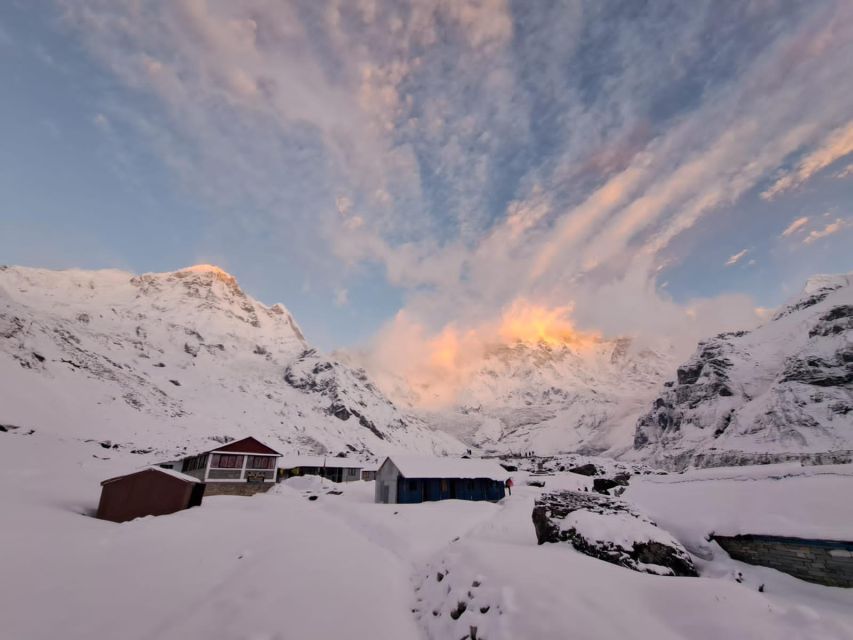
The Poon Hill and Annapurna Base Camp combination gives you a fuller taste of the Annapurna region than a short trek. The first section offers broad sunrise views and classic village scenery. The second moves into the narrow Modi Khola valley and the Annapurna Sanctuary, where the mountains feel much closer and taller.
I like the ten-day schedule because it avoids cramming the entire route into a rushed week. Walking days range from about three to six hours according to the information provided, and the private setup lets the pace respond to your fitness. That matters on stone stairs and at higher altitudes, where rushing takes the fun out of the scenery.
The price is $310 per person. That is good value for a private trek if you use the included services: hotel pickup and drop-off within the Lakeside area, a professional guide, trekking permits and official documents, private car transfers between Pokhara and Nayapul, guesthouse accommodation, an emergency first aid kit, and Poon Hill entry.
Still, $310 is not your complete trip budget. Food and drinks are extra, and you need travel insurance that covers emergency rescue. At higher elevations, one person found that Wi-Fi, battery charging, a hot shower, and heater use could add up to $30 to $40 per day. You do not have to buy every comfort, but carrying enough Nepalese rupees or other accepted funds is wise. One trekker had brought too little cash and was fortunate that the guide could help with a loan.
More Annapurna Base Camp Treks in Pokhara
- Kathmandu/Pokhara: 5-Day Annapurna Base Camp (ABC) Trek
★ 4.9 · 72 reviews - Private 7 – Day Annapurna Base Camp Trekking
★ 5.0 · 50 reviews - Annapurna Base Camp Trek (8 days)
★ 5.0 · 45 reviews
Day 1: Pokhara to Tikhedhunga through terraced fields
Your day begins with a roughly 1.5-hour private car ride from Pokhara to Nayapul. The included transfer keeps the morning simple and avoids the need to arrange a separate vehicle for the trailhead.
From Nayapul, you start walking along the Modi Khola and pass small villages and terraced fields. The first overnight stop is Tikhedhunga at 1,577 meters. This is a useful opening day because it gets your legs moving without pushing you straight into the highest sections.
The route introduces the human side of the Annapurna area early. You are not only walking toward snowy peaks. You are passing working settlements and cultivated hillsides, with the trail connecting village life to the mountains above.
Day 2: Ulleri’s stone steps and the forests near Ghorepani
Day two brings one of the most demanding early sections: the steep stone steps at Ulleri. They are not technically difficult, but the long climb can test your knees and breathing. Take them slowly, drink regularly, and let the guide set a pace you can maintain.
After Ulleri, the trail continues through rhododendron and marigold forests, with village sections breaking up the climb. Ghorepani sits at 2,874 meters and gives you a clear sense that the trek is entering higher country.
The reward is a wider mountain view, including the Annapurna and Dhaulagiri ranges. Clouds can still hide the peaks, especially outside the best spring and autumn periods, so keep your expectations flexible. The forest walk remains worthwhile even when the big views do not appear.
Day 3: Poon Hill sunrise, then on to Tadapani
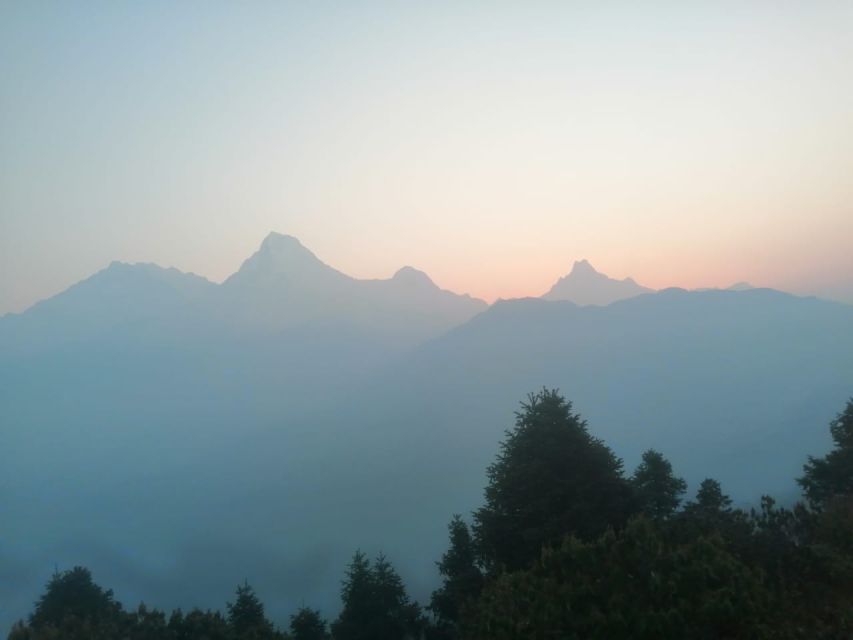
The early start to Poon Hill is the signature moment of the first half. At 3,210 meters, the viewpoint opens to panoramic sunrise views over the Annapurna range and Dhaulagiri. The cold and pre-dawn climb are part of the bargain, so keep warm clothing ready rather than buried in your pack.
After returning to Ghorepani for breakfast, you continue toward Tadapani at 2,630 meters. The trail passes through forest and rhododendron-filled valleys, giving the day a pleasant rhythm: dramatic morning views, a return to the lodge, then a quieter walk through trees.
Poon Hill is valuable because it provides a broad view of many peaks early in the trip. It also helps you appreciate the scale of the route before the trail turns toward the enclosed mountain valley leading to base camp.
More Hiking Tours in Pokhara
- Poon hill Trek 3 days
★ 5.0 · 176 reviews - Trekking in Annapurna/Langtang/Everest/Upper Mustang regions
★ 5.0 · 161 reviews - Pokhara: 4-Day Ghorepani, Poonhill & Ghandruk Mountain Trek
★ 5.0 · 132 reviews - Ghorepani – Poon Hill Trek 3N-4D
★ 5.0 · 125 reviews
Day 4: Gurung villages and the climb to Chhomrong
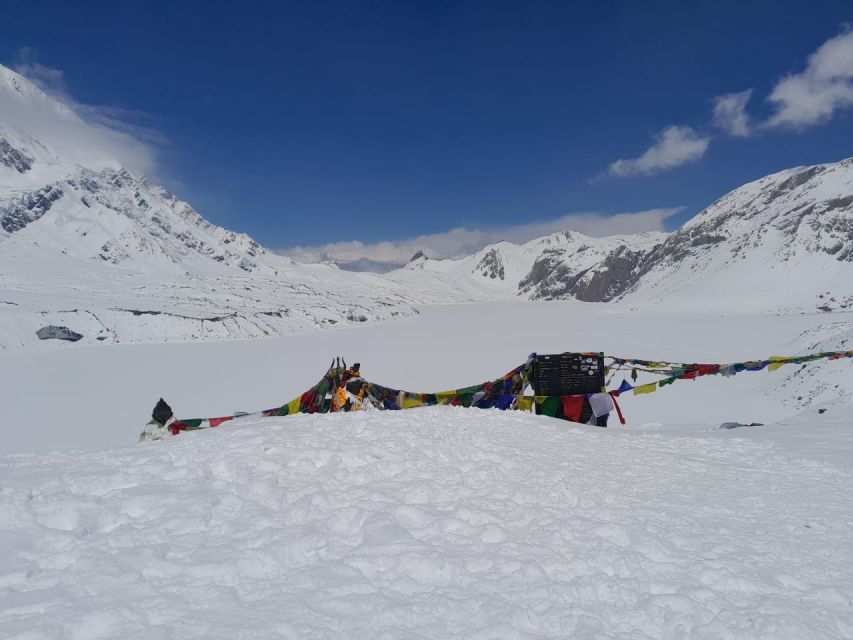
From Tadapani, the route descends gradually through forest toward Gurjung village. You then drop to the Kimrong Khola before climbing again to Chhomrong at 2,170 meters.
This up-and-down pattern is typical of the Annapurna foothills. Distance alone does not tell you how tiring the day will be. A descent may feel easy at first, but the climb after the river can be demanding.
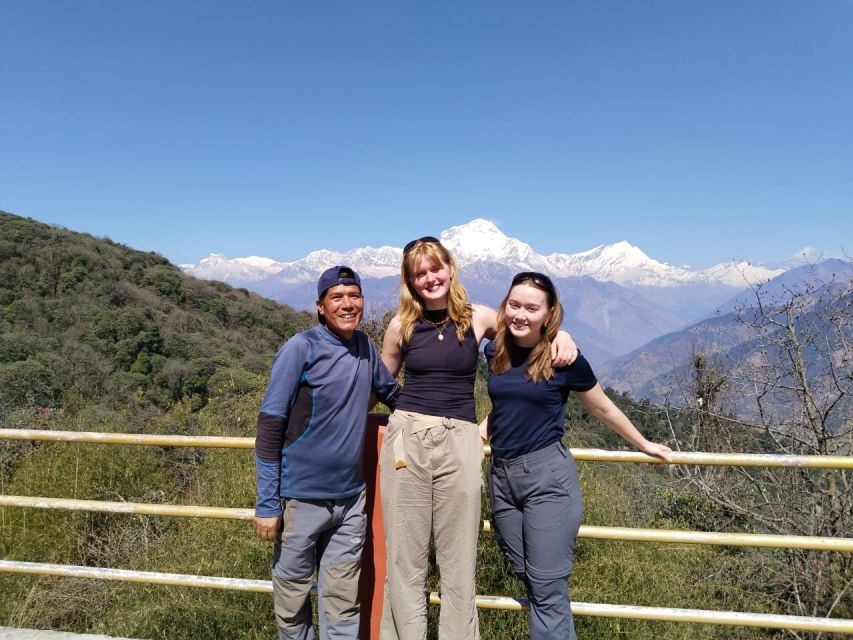
Chhomrong is a large Gurung village and one of the route’s important stopping points. From here, you get views toward Annapurna South and Machhapuchhre, also called Fishtail. The village is a practical place to rest before the route narrows into the Modi Khola valley.
Day 5: Chhomrong to Bamboo
The morning begins with a descent to the Chhomrong Khola and a crossing on a suspension bridge. Then you climb to Sinuwa and continue through bamboo and rhododendron forest toward Bamboo at 2,310 meters.
This is another day when your legs work harder than the mileage might suggest. The trail repeatedly changes direction and grade, and the forest can limit distant views. I would treat this as a conditioning day rather than expect a nonstop parade of mountain panoramas.
Bamboo is a sensible overnight stop before the route climbs higher. The thick forest gives way gradually as you continue toward the upper Modi Khola valley. Your guide can also explain the next day’s plan and help you judge how you are responding to the altitude.
Day 6: Bamboo to Deurali beside the Modi Khola
From Bamboo, you continue through forest and along the Modi Khola valley. The trail passes the Himalayan Hotel and Hinku Cave before climbing steadily to Deurali at 3,230 meters.
The valley becomes more enclosed here, and the route feels more remote than the lower villages. You are gaining altitude in a measured way, but this is the point to take headaches, unusual tiredness, or other symptoms seriously. The schedule should never matter more than your health.
Deurali is an important staging point for base camp. Keep your clothing and water close, since higher elevations can feel much colder and basic comforts may cost more. The next day is the central physical challenge of the trek.
Day 7: Machhapuchhre Base Camp to Annapurna Base Camp
The trail from Deurali follows a narrow valley that opens into the Annapurna Sanctuary. You pass Machhapuchhre Base Camp at 3,700 meters and continue to Annapurna Base Camp at 4,130 meters.
This is the day when the route’s earlier effort pays off. Peaks named along the wider circuit include Annapurna I, II, III, and IV, Dhaulagiri, Nilgiri, Machhapuchhre, and Hiunchuli. At base camp, the mountains surround you rather than appearing as distant points on a horizon.
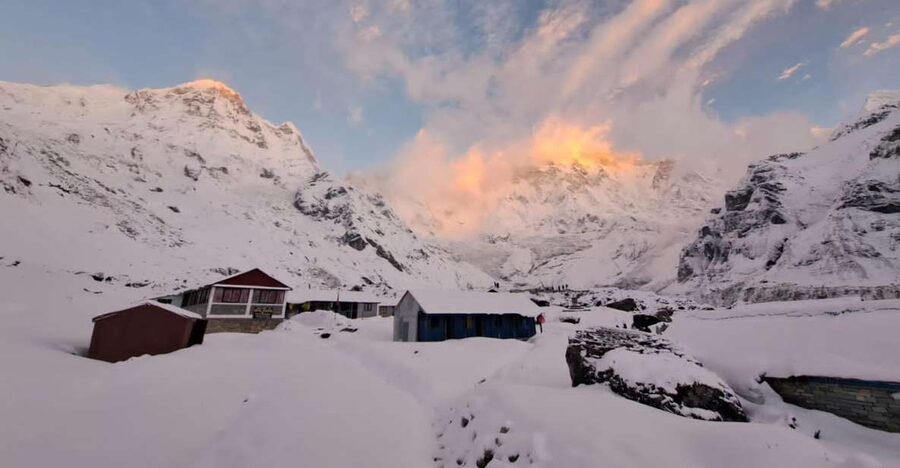
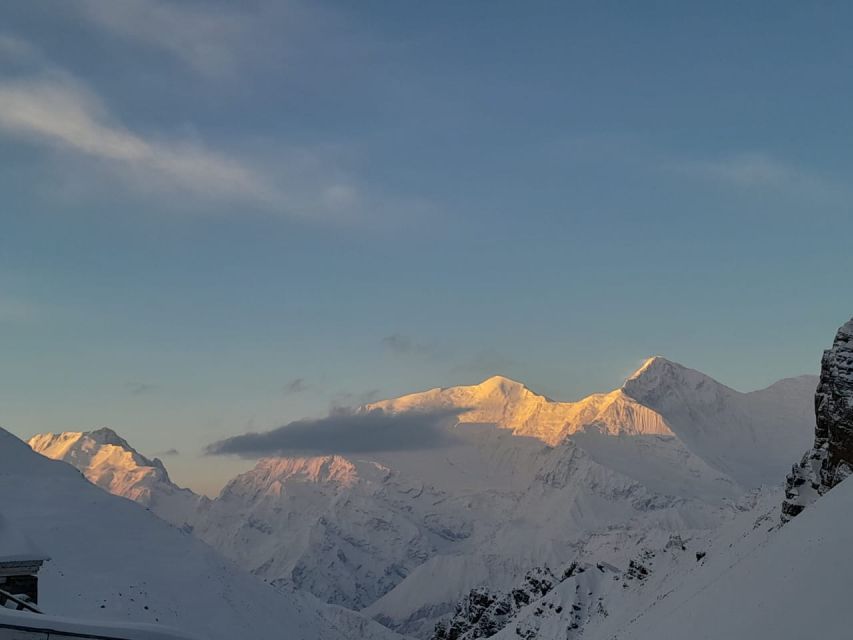
Annapurna I reaches 8,091 meters, while Machhapuchhre rises to 6,993 meters and Hiunchuli to 6,441 meters. You may see more or less of them depending on cloud and weather. The setting is powerful even when the sky is not perfectly clear, but do not assume photographs will look like a clear-season brochure every day.
You spend the night at base camp. That makes the experience more memorable than simply reaching the viewpoint and turning around, though it also means coping with cold, basic accommodation, and high-altitude conditions.
Day 8: Sunrise at base camp and the long return to Bamboo
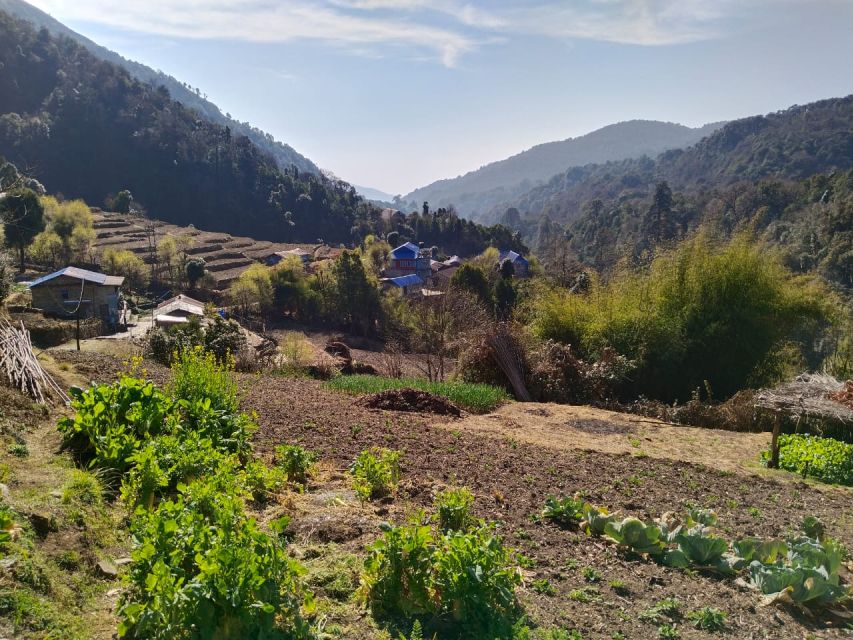
An early morning at Annapurna Base Camp gives you another chance to see sunlight reach the surrounding peaks. The morning light changes quickly, so have your warm layers ready before leaving your bed.
The return follows the route through Deurali and back to Bamboo. Descending is usually easier for breathing, but it can still be hard on knees and ankles after several long days. Trekking poles, comfortable shoes, and a steady pace are useful here.
The return day also lets you notice details missed on the way up. The valley’s shape, river sound, and changing vegetation become easier to read when you are no longer focused only on reaching base camp.
Day 9: Bamboo to Jhinu Danda and the hot springs
You continue downhill through forest, return to Chhomrong for lunch, then descend farther to Jhinu Danda at 1,780 meters. The altitude drop is welcome after the high camp, although the trail can still be tiring.
Jhinu Danda’s natural hot springs are the payoff. Soaking your legs after the long ascent and descent can feel especially good, and the stop gives the final part of the trek a different mood from the high mountain nights.
One practical point matters here: the route description includes Jhinu Danda as the overnight stop, and the activity information specifically encourages completing the full trek rather than leaving this section by jeep. If you want the full walking experience, plan to keep going on foot and save time for the springs.
Day 10: Walking to Nayapul and returning to Pokhara
The final day takes you from Jhinu Danda to Nayapul, followed by the private car ride back to Pokhara. After nine days on foot, the return transfer is a welcome finish rather than another transport puzzle.
Hotel pickup and drop-off are included within the Lakeside area. Confirm the exact pickup point when booking, especially if your accommodation sits outside that zone.
Guides, pacing, and private-group value
The guide is central to this experience. The trek is offered with Nepali, English, or Hindi-speaking guides, and the group is private rather than shared with strangers.
Past departures have used guides named Biru, Arjun, and Bikram. Biru was praised for patient planning, accommodation arrangements, safety checks, and calm help for a slow hiker. Arjun adjusted one trek when altitude sickness became a concern, adding three days so the walker could continue at a safer pace. Bikram was praised for adapting speed, explaining local people and nature, and helping when cash ran short.
These details point to the real value of a private guide: not just showing you the trail, but watching how you are doing. The itinerary is listed as ten days, yet one departure was extended because of altitude problems. That is a reminder to treat the schedule as a framework, not a race.
The porter’s arrangements are not clearly listed among the inclusions, so ask exactly what luggage support is provided before departure. One account describes a porter carrying a 20-kilogram backpack, but you should not assume that level of service is automatically included in every booking.
Weather, seasons, and what to pack
Spring, from March to May, and autumn, from September to November, are described as the best seasons for stable weather and clear mountain views. Even then, mountain weather can shift quickly.
A September departure faced three rainy days and only one sunny day. The guide helped by pointing out mountain views whenever the clouds opened, but you should book this trek for the walking experience as well as the photographs.
Bring:
- Passport or ID card
- Passport-sized photo
- Comfortable trekking shoes
- Travel insurance with emergency rescue cover
- Layers suitable for changing temperatures
- Enough money for food, drinks, charging, Wi-Fi, hot showers, or heaters if you want them
Plastic bottles and pets are not allowed. Pregnant women and wheelchair users are not considered suitable for this activity. The route includes steep stairs, descents, suspension bridges, and an overnight stay at 4,130 meters, so basic walking fitness is important.
Who should book this trek
I would choose this trip if you want a private Himalayan route with a clear goal, but also want village life and forests along the way. It suits people who can walk several hours a day and accept simple guesthouse accommodation.
It is especially useful for a slower hiker because the guides have shown a willingness to adjust pace and, when necessary, the schedule. It also suits first-time Himalayan trekkers who want help with permits, route planning, and lodging rather than arranging each piece alone.
I would think twice if you want guaranteed sunshine, luxury accommodation, or a short and easy walk. The highest point is 4,130 meters, and the weather can hide the peaks. Food, drinks, insurance, and optional lodge comforts also add to the advertised price.
Cancellation is free up to 24 hours before the activity for a full refund, and you can reserve now and pay later. Those terms help if your mountain plans are still taking shape, but they do not replace travel insurance.
Should you book the Poon Hill and ABC trek?
Book it if you want the best parts of two Annapurna routes in one private journey: the sunrise from Poon Hill, the high valley to Annapurna Base Camp, authentic village stops, and hot springs at the end. The $310 price is attractive for the included guide, permits, transfers, guesthouses, and private arrangement.
Go in with realistic expectations. Rain may hide the mountains, the Ulleri steps and high-altitude days demand effort, and daily spending continues after you pay for the trek. If you are comfortable with those limits, this is a well-paced route with strong practical support and a satisfying finish.
FAQ
How long is the trek?
The trek lasts 10 days, beginning and ending in Pokhara.
Where does the trek start?
You are picked up within the Lakeside area of Pokhara and driven to Nayapul, about 1.5 hours away.
What is the highest point?
Annapurna Base Camp is the highest listed point, at 4,130 meters.
Does the trek include Poon Hill?
Yes. You hike to Poon Hill at 3,210 meters for sunrise on day three.
Is the group private?
Yes. The activity is offered as a private group experience.
Which languages can the guide speak?
Guides are available in Nepali, English, and Hindi.
Is food included?
No. Food and drinks are available for purchase but are not included in the price.
Is travel insurance included?
No. You must arrange your own travel insurance. Emergency rescue is also not included and should be covered by your policy.
What is included in the $310 price?
The price includes hotel pickup and drop-off within Lakeside, a professional English-speaking trekking guide, permits and official documents, private car transfers between Pokhara and Nayapul, guesthouse accommodation, an emergency first aid kit with the guide, private touring, and Poon Hill entry.
Can I cancel the booking?
You can cancel up to 24 hours in advance for a full refund. The activity also offers a reserve-now, pay-later option.
More Poon Hill Treks in Pokhara
- From Pokhara: 3-Day Ghorepani Poon Hill Trek with Guide
★ 4.9 · 68 reviews - 4-Day Private Poon Hill Trekking Tour
★ 5.0 · 58 reviews - Pokhara: 3-Day Ghorephani and Poon Hill Private Trek
★ 5.0 · 58 reviews - Pokhara: 2-Day Ghorephani and Poon Hill Private Trek
★ 4.6 · 50 reviews
Recently added around Pokhara
- Paragliding in Pokhara★ 5.0 · 3 reviews
- Pokhara: 5-Day Annapurna Base Camp Trek with Hot Spring★ 5.0 · 3 reviews
- Pokhara:4-Day Ghorepani Poon Hill Guided Trek via Ghandruk★ 5.0 · 3 reviews
- Pokhara: 7-Day Annapurna Base Camp Trek via Ghandruk★ 4.3 · 3 reviews
- Peace & Panorama: Stupa and Pumdikot Scenic Drive Tour★ 3.6 · 3 reviews
- Beautiful Sarankot Sunrise with Full Day Sightseeing in Pokhara★ 4.5 · 3 reviews
- 3 Day Australian Camp Dhampus Ghandruk Easy Trek in Pokhara★ 3.5 · 3 reviews
- Overnight Dhampus Australian Camp Easy Hiking from Pokhara★ 5.0 · 3 reviews
Other Annapurna Base Camp Treks worth a look
Kathmandu to Annapurna Base Camp (ABC) 5-Day Trek
Read our review →