
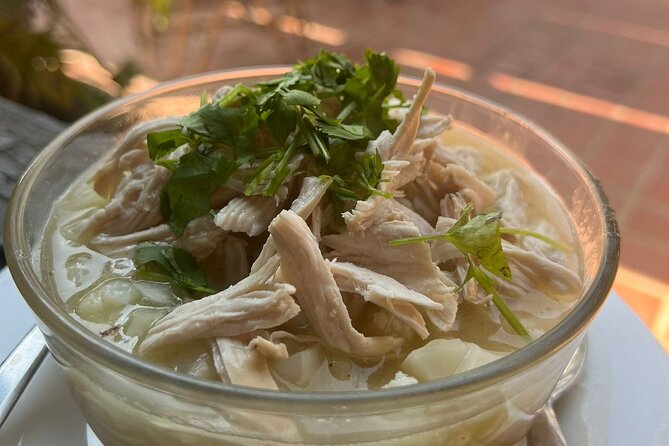
REVIEW · KATHMANDU TOURS
Momo, Dhalbhat & Thukpa Cooking Class, Nepal
The best part of this three-hour class is that it begins with a local market visit, not a table covered with pre-measured ingredients. Esther Rai takes you shopping in Lalitpur, then helps you prepare Nepali staples such as momo, Dal Bhat, and thukpa near Patan Durbar Square. I like the market contact and the chance to cook in a family setting. One thing to note: some preparation may already be done, so this is a guided food lesson rather than a fully from-scratch test of your kitchen skills.
I like that Esther shares cooking as a way to explain family life, customs, education, and everyday Nepal. I also like the location, just a five-minute walk from the Golden Temple and Patan Durbar Square, making it easy to pair food with old Patan. The main drawback is that the class has a maximum of 10 people, so the amount of hands-on time may depend on the group.
Key points at a glance
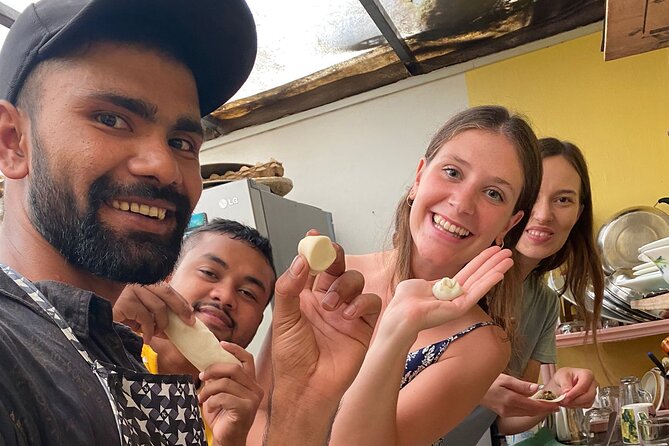
- Shop before you cook: Visit a local vegetable market and speak with sellers before buying ingredients.
- Three Nepali staples: Learn to make momo, Dal Bhat, and thukpa, with other menus possible by request.
- A family-led class: Esther Rai teaches from her own love of cooking, with help from Amos.
- Excellent Patan location: The meeting point in Nagabahal is about five minutes from Patan Durbar Square.
- Eat what you prepare: The class ends with a complete meal made during the session.
- Good value at $25: The price includes the market visit, instruction, cooking, and food, with free cancellation up to 24 hours ahead.
Why this Patan cooking class feels different
Many cooking lessons begin indoors, with every onion, spice, and dumpling wrapper already waiting. This one puts a short local shopping trip first. That small change matters. You see the vegetables before they are chopped, watch how ingredients are bought, and get a little contact with ordinary market life in Lalitpur.
Esther Rai started the class during the Covid-19 period as a way to support her family. Cooking was already part of her life. She grew up spending time in the kitchen with her mother and sister, watching and joining the work. That family connection gives the class a personal focus rather than making it feel like a polished restaurant demonstration.
You are not simply shown a plate of Nepali food. You help prepare it, sit down to eat it, and hear about the customs and family routines linked to the food. The class is a useful choice if you want your meal in Nepal to come with some context.
The setting also helps. The meeting point is at Nagabahal in Lalitpur, close to the Golden Temple and Patan Durbar Square. A rooftop cooking area is part of the setting, according to the experience details, and the location makes it easy to add historic Patan before or after the class.
More Cooking Classes in Kathmandu
- Half day cooking class in Thamel kathmandu
★ 5.0 · 607 reviews - Kathmandu: Local Women-Led Nepali Cooking & Momo Class
★ 4.9 · 360 reviews - Kathmandu: Local Lead Nepali Cooking & Momo-Making Class
★ 5.0 · 212 reviews
Starting at Nagabahal and the Golden Temple
The class begins at Nagabahal, Nyadha Galli, in Lalitpur. From there, the planned stops include the Golden Temple, also called Hiranya Varna Mahavihar, and Patan, also known as Lalitpur.
The Golden Temple is a fitting first point because it places the food lesson inside Patan’s traditional setting. You are close to one of the city’s best-known historic courtyards, rather than starting in the tourist-heavy Thamel area. The class does not promise a long temple tour, so you should think of this as location and cultural context rather than a separate guided sightseeing visit.
The practical benefit is simple: you can combine the class with time at Patan Durbar Square. The cooking location is about a five-minute walk away. If you plan your day well, you can visit the square, see the Golden Temple, and then focus on food without losing time in traffic.
I would allow extra time before the start if you want to explore the area. The class itself lasts about three hours, and its timing is meant for market shopping, cooking, and eating. Arriving early gives you room to look around without cutting into the kitchen portion.
The market visit comes before the kitchen
The local market is one of the strongest parts of the class. Esther takes you to buy ingredients, including fresh vegetables and, depending on the chosen menu, meat. You can interact with local sellers and see the practical side of Nepali cooking before returning to prepare the food.
This is valuable because ingredients can tell you plenty about a place. You learn what goes into the meal, how it is selected, and which items matter to the recipes. You also get a chance to ask Esther about unfamiliar spices and ingredients while you are looking at them, not after the meal has already been served.
The market visit is not described as a formal shopping tour with a long list of stops. It is a working part of the cooking class. That means the pace may be shaped by the menu and by what needs to be bought that day. I like this practical approach. It keeps the outing connected to the meal rather than adding a sightseeing stop with little purpose.
For photographers and curious eaters, the market gives you a better feel for daily life than a restaurant does. Still, be respectful when interacting with sellers. The point is to buy food and learn, not to treat the market like a stage.
Making momo, Dal Bhat, and thukpa
The class teaches three of Nepal’s most familiar comfort foods: momo, Dal Bhat, and thukpa. You learn the preparation process, take part in the cooking, and eat once the food is ready.
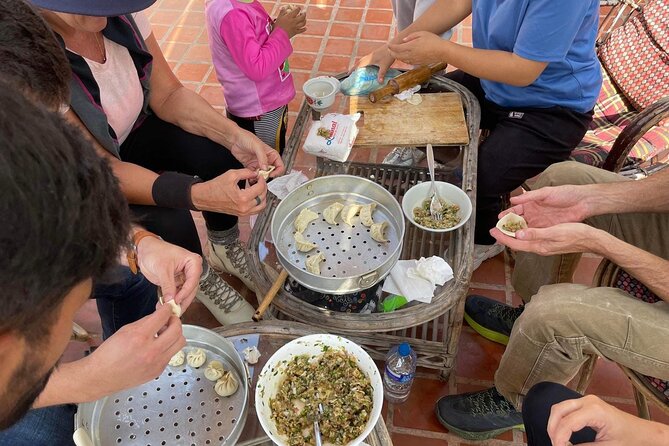
Momo is the hands-on star for many people. Shaping dumplings takes practice, and it is the kind of task that works well in a small group. You can expect guidance from Esther and her helper, especially if you have never made them before.
Dal Bhat is central to the meal tradition of Nepal. It usually brings together rice, lentils, and accompanying dishes, though the exact menu can vary. Learning it here gives you a useful base for understanding one of the country’s everyday meals, rather than treating it as a special dish found only in tourist restaurants.
Thukpa adds a different style of cooking to the lesson. This noodle soup is a familiar Himalayan food, and making it alongside momo and Dal Bhat gives the class a wider range of techniques and flavors.
Esther also offers menus based on requests. The stated menu includes momo, Dal Bhat, and thukpa, while the cooking details and past class menus include chicken curry and other combinations. If one dish matters most to you, ask about the planned menu when booking or before the class begins.
The cooking is not presented as a strict examination. You are there to learn and participate, not to produce restaurant-perfect dumplings. That makes it suitable for beginners, families, and people who enjoy food but do not spend much time in the kitchen.
A different kind of day from the same base:
- Everest Base Camp Trek – 14 Days
★ 5.0 · 1,499 reviews - Private Kathmandu Sightseeing Tour | UNESCO World Heritage sites
★ 5.0 · 756 reviews - Everest Base Camp Helicopter Tour landing at Everest View Hotel
★ 5.0 · 668 reviews - Everest Base Camp Trekking
★ 5.0 · 485 reviews
How hands-on is the cooking?
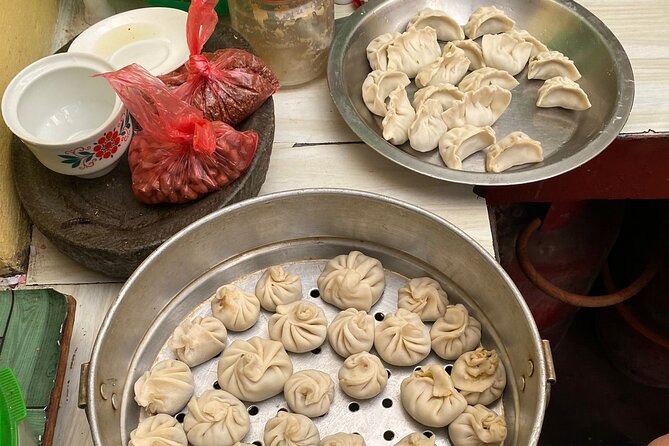
This is the point where you should keep expectations realistic. The class is participatory, but one person who attended found that many tasks had already been completed. That can happen in a three-hour class, especially when a meal includes several dishes and a group of up to 10 people.
You will learn and practice the recipes, but you may not personally chop, season, and cook every single ingredient from start to finish. Esther and her helper may prepare parts of the meal so the session stays on schedule. If your main goal is a detailed professional cooking lesson, this may feel limited.
I see the trade-off differently. Pre-preparation lets you cover several Nepali dishes in one morning and sit down to eat within the allotted time. You still get the market visit, instruction, practice, and a complete meal. For most people, that is a fair exchange at this price.
The class is likely to feel more personal with fewer people. The maximum is 10, which is still small compared with a large commercial food tour, but it is not a private lesson by default. If the group fills, you may share tasks and have less time at the cutting board or stove.
Eating in a family-style setting
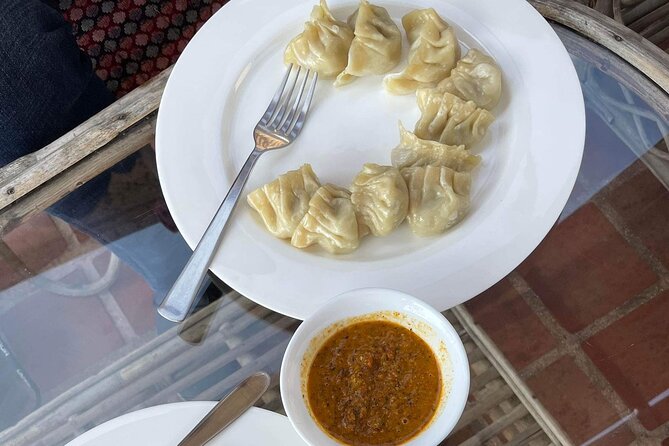
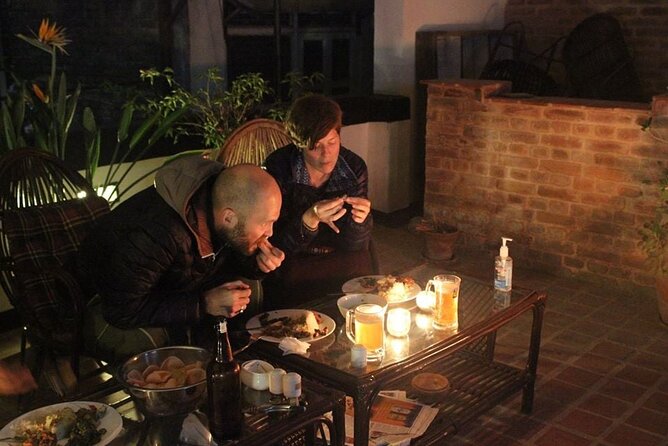
After the cooking, you eat the meal you helped prepare. This is more than a final sample. It gives you a chance to taste the balance of spices and textures while the process is still fresh in your mind.
The strongest praise for the class centers on the food itself. People found the Dal Bhat especially good, and the overall meal was described as among the best food experienced in Nepal. That does not guarantee that every dish will match your personal taste, but it points to the care Esther puts into the cooking.
The setting is part of the appeal. You may cook on a rooftop, and the class has a welcoming family atmosphere. Esther and Amos are described as kind and clear in their explanations. The tone seems relaxed, with room for conversation and laughter rather than a formal demonstration where you sit silently and watch.
Food also opens the door to wider subjects. Esther’s class can lead into discussions about Nepali customs, family life, education, and daily routines. If you want only recipes, you can focus on the kitchen. If you are curious about Nepal beyond temples and mountain views, the conversation adds real value.
What the $25 price buys you
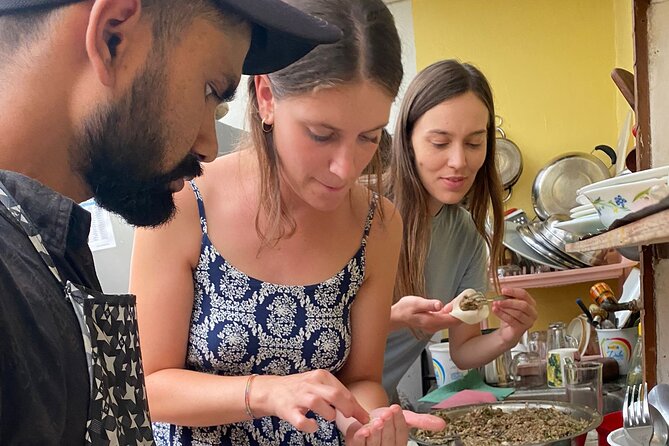
At $25 per person, this is a strong-value half-day activity. The price covers roughly three hours, the market visit, ingredients, instruction, cooking, and the meal you eat afterward. You also get a location close to Patan’s major sights, which can save time and transport costs during a busy Kathmandu day.
The value is not just the amount of food. You are paying for access to a local kitchen, a market visit, personal guidance, and an explanation of dishes you might otherwise order without understanding. A restaurant meal may cost less, but it will not give you the same chance to ask how the food is made.
The value drops slightly if you want every step to be fully hands-on. The note about some items being prepared in advance is important. I would book this for cultural contact and a practical introduction to Nepali food, not as a serious chef-training session.
The group limit of 10 also affects the value. With a small group, you should have a better chance to ask questions and practice. With a full group, you may share some cooking jobs. The price remains reasonable either way, but your personal kitchen time may vary.
Who should book this class?
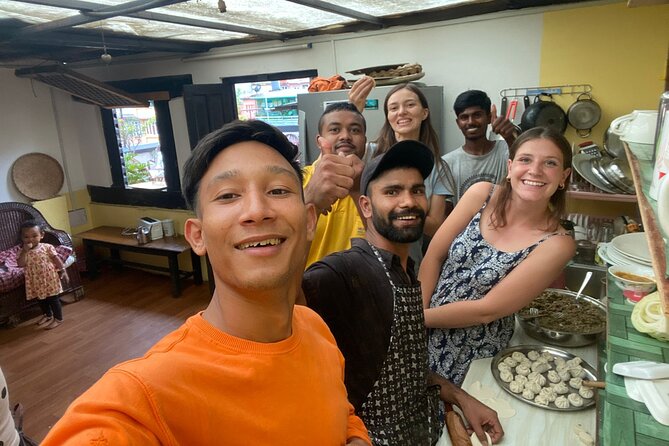
I would recommend it to first-time visitors who want to move beyond Thamel and see another side of Kathmandu Valley. Patan gives you an easy setting for that, and the market visit adds a local touch without requiring a full day away from the city.
It is also a good fit for people who enjoy food as a way to understand culture. You can learn recipes while hearing about family life and Nepali customs. The meal at the end makes the class satisfying even if you have limited cooking experience.
Couples, friends, and small family groups should find the format easy to enjoy. The relaxed style and manageable length make it less demanding than a full-day food program. It also suits people who want a scheduled activity near Patan Durbar Square.
I would hesitate only if you need a fully private class, a strict professional curriculum, or total control over every ingredient and cooking step. You should also tell the provider about menu preferences in advance if you want a particular dish.
The class is available with a mobile ticket, and confirmation is received at booking. It is near public transportation, and the activity ends back at the meeting point. Since the plan depends on good weather, bad conditions can lead to another date or a full refund.
You can cancel for a full refund up to 24 hours before the start time. Cancellations or changes made inside that 24-hour window are not refunded or accepted, so keep that deadline in mind when arranging your Kathmandu schedule.
My call: book it for food and local connection
I would book this class if I wanted a friendly introduction to Nepali cooking with more personal contact than a restaurant can offer. The market visit, Patan location, family setting, and final meal make the $25 fee easy to justify.
Go in expecting a guided, social cooking session, not a three-hour masterclass where you prepare every item alone. Some work may be done ahead of time, and a full group can mean shared tasks. For a first taste of momo, Dal Bhat, and thukpa, though, this is a practical and enjoyable choice.
If you are staying in Thamel, the short trip to Lalitpur is part of the point. You get out of the usual visitor circuit, see a local market, and spend time near Patan’s historic center. That combination makes this one of the better low-cost food activities for a Kathmandu visit.
FAQ
Where does the cooking class meet?
The meeting point is Nagabahal, Nyadha Galli, Lalitpur 44600, Nepal.
Where does the activity end?
The class ends back at the meeting point.
How long does the class last?
The activity lasts approximately three hours.
How much does the class cost?
The listed price is $25 per person.
What foods can I learn to cook?
The class teaches momo, Dal Bhat, and thukpa. The menu can also be arranged around a guest request.
Is a market visit included?
Yes. You visit a local vegetable market before cooking, buy ingredients, and interact with local sellers.
Who teaches the class?
Esther Rai leads the class. Amos is also involved as her cooking partner or helper.
How many people can join?
The activity has a maximum of 10 participants.
Is the class close to Patan Durbar Square?
Yes. The cooking location is about a five-minute walk from Patan Durbar Square.
Can I cancel for a refund?
Yes. You can cancel at least 24 hours before the start time for a full refund. Cancellations or changes made less than 24 hours before the start time are not refunded or accepted.
More hands-on workshops in Kathmandu
- Knife (Khukuri) Making Workshop- Forge of the Gurkhas
★ 5.0 · 143 reviews - Local Women Lead Nepali Cooking Class
★ 5.0 · 125 reviews - The best Private Nepali Cooking Class in Kathmandu
★ 5.0 · 83 reviews - Kathmandu: Traditional Momo Making Class & Pickup
★ 4.8 · 60 reviews
Recently added around Kathmandu
- Kathmandu Paragliding★ 5.0 · 3 reviews
- Kathmandu Airport Pickup and Drop-off Services★ 5.0 · 3 reviews
- Kathmandu Chandragiri Cable Car and Swayambhunath Private Tour★ 5.0 · 3 reviews
- Explore The Beauty Of Langtang Valley In 8-Days Trek★ 5.0 · 3 reviews
- Kathmandu: Nightlife and Pub Crawl Tour★ 5.0 · 3 reviews
- Mountain Flight Experience in Nepal★ 4.5 · 3 reviews
- Kathmandu: Momo Making Class with a Local Chef★ 5.0 · 3 reviews
- Everest Base Camp Trek★ 5.0 · 3 reviews
Other Kathmandu Tours worth a look


Private Kathmandu Sightseeing Tour | UNESCO World Heritage sites
Read our review →
Everest Base Camp Helicopter Tour landing at Everest View Hotel
Read our review →


Nagarkot Sunrise View and Day Hiking from Kathmandu
Read our review →
Full Day 7 UNESCO Tour with Lunch – Private/Group
Read our review →
This tour also appears in