
REVIEW · KATHMANDU TOURS
Cook and Eat: Cooking Class in Kathmandu near Thamel
Kathmandu’s best cooking lesson may be the one that gets you out of the kitchen first. You begin with tea or coffee, choose three Nepali dishes, then visit a local market with a guide to see and gather the ingredients before cooking them yourself.
I like the market stop because it gives the food a local setting, not just a recipe sheet. I also like the flexible, hands-on format: you can prepare dishes such as momos, thukpa, dal bhat, or yomari, with guidance from Chef Vikram, Kamal, and the cooking team. The main consideration is that the full menu is not listed in advance, and extra beverages and transportation are not included.
Key Points to Know Before Booking
- Choose three dishes: Your meal can include familiar favorites such as momos, thukpa, dal bhat, or yomari, depending on the available menu.
- Shop before you cook: A guided visit to a local market helps you see the ingredients used in Nepali food.
- Three hours of activity: The session includes welcome drinks, shopping, preparation, cooking, eating, and a final tea or coffee.
- Small groups are possible: The maximum group size is 15, while a group of three has also been accommodated.
- Food and equipment are included: Ingredients, cooking tools, instruction, help, and the food prepared during class are covered in the price.
- Meet near Thamel: The class begins and ends at Shepherd Holidays on Yapikhya Marg in Kathmandu.
Why This Kathmandu Cooking Class Works
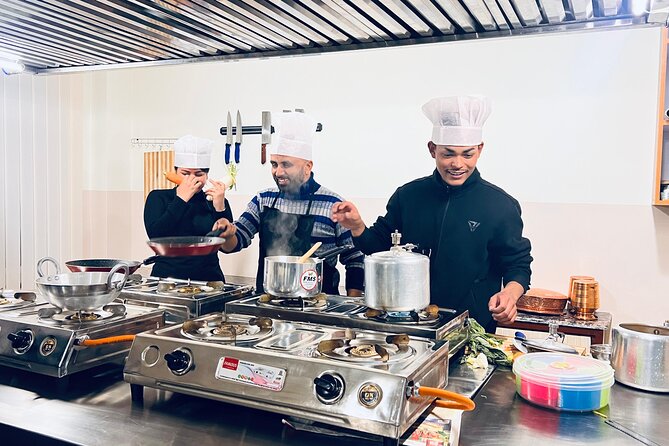
At $24 per person, this is a reasonably priced way to spend half a day in Kathmandu. You are not paying only for a demonstration. The fee covers ingredients, equipment, an instructor, a helper, and the food you prepare and eat.
That matters in Kathmandu, where a cooking class can easily become a passive show. Here, you choose the dishes and take part in the work. You may chop vegetables, shape dumplings, stir a soup, or help assemble a full plate of Nepali food. The exact tasks depend on your choices and the class pace.
The class also connects the food to daily life. A market visit before cooking lets you see the raw ingredients and understand what goes into the dishes. It is a modest but useful touch, especially if you have eaten Nepali food in restaurants and want to understand how it comes together at home.
The class has a maximum of 15 people. That is not a tiny private lesson, but it is still a manageable size for a group activity. One session had only three people, which allowed plenty of room for participation. Your group size may vary, so ask to be hands-on rather than simply watching.
More Cooking Classes in Kathmandu
- Half day cooking class in Thamel kathmandu
★ 5.0 · 607 reviews - Kathmandu: Local Women-Led Nepali Cooking & Momo Class
★ 4.9 · 360 reviews - Kathmandu: Local Lead Nepali Cooking & Momo-Making Class
★ 5.0 · 212 reviews
Starting with Milk Tea on Yapikhya Marg
The meeting point is Shepherd Holidays, Yapikhya Marg, Kathmandu 44600. The experience begins and ends there, so you do not have to arrange a complicated transfer between the cooking school and another part of town.
The opening is simple. You are welcomed with tea or coffee, introduced to the staff, and shown the menu. One class began with milk tea, a fitting start for a morning or afternoon devoted to Nepali food.
This first conversation is important because you choose three dishes before shopping and cooking. If you already know you want momos, say so early. The same goes for a soup, a rice-and-lentil meal, or a seasonal sweet.
The published examples include momos, thukpa, dal bhat, and yomari. These give you a good range:
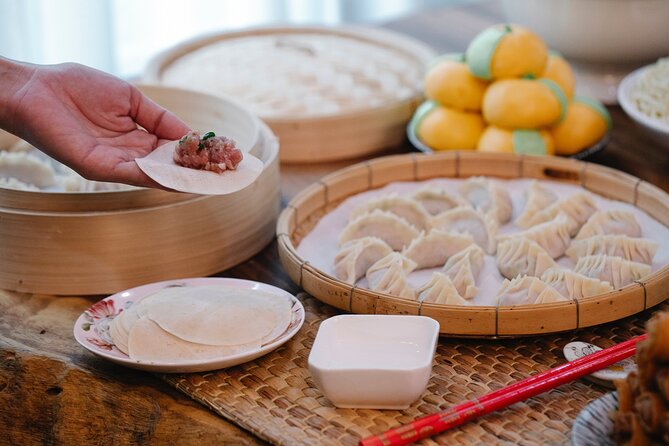
- Momos are filled dumplings and one of Nepal’s most popular foods.
- Thukpa is a noodle soup, useful if you want to learn a dish built around broth and preparation.
- Dal bhat combines lentils, rice, and accompaniments in a meal closely tied to everyday Nepali eating.
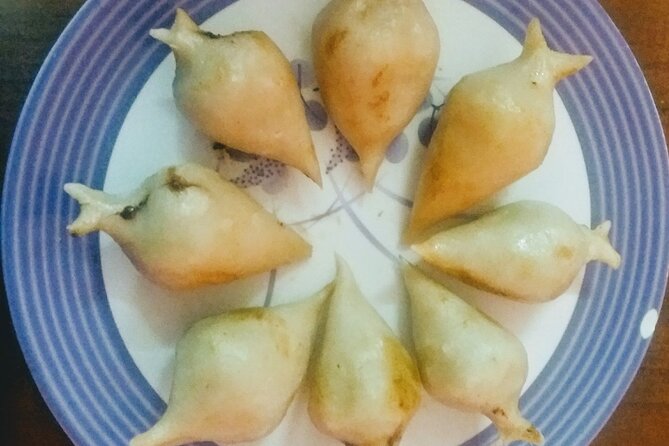
- Yomari is a traditional sweet dumpling, giving you a chance to prepare something different from the usual savory class dishes.
The full menu is not specified, so do not assume every dish will be available every day. Your best approach is to choose a balanced set of three items from what the staff offers that day.
A Market Visit Before the Apron Goes On
After you select your dishes, a guide takes you to a local market for ingredients. This is one of the most useful parts of the experience because it shows you the food before it has been cleaned, chopped, seasoned, and arranged on a plate.
You can look at the produce, spices, grains, noodles, and other items needed for the recipes. The value is not in spending a long time shopping. It is in learning what the cooks select and how those ingredients connect to the finished food.
The market visit also adds context to dishes that can seem simple on a restaurant menu. A plate of dal bhat may look straightforward, but the ingredients and preparation create the flavor. Momos also become easier to understand when you see the filling ingredients before they are wrapped.
Keep your expectations practical. This is not presented as a large market tour or a separate sightseeing stop. It is a short, food-focused visit tied directly to your cooking lesson. If you want to ask questions, this is a good time to ask about ingredients, substitutions, and what you might find in a shop back home.
Cutting, Mixing, and Cooking with the Chef
Back at the kitchen, the practical work begins. You cut and prepare the ingredients, then cook with the chef. The staff includes an instructor and a helper, which should make it easier to keep the group moving when several dishes are being prepared at once.
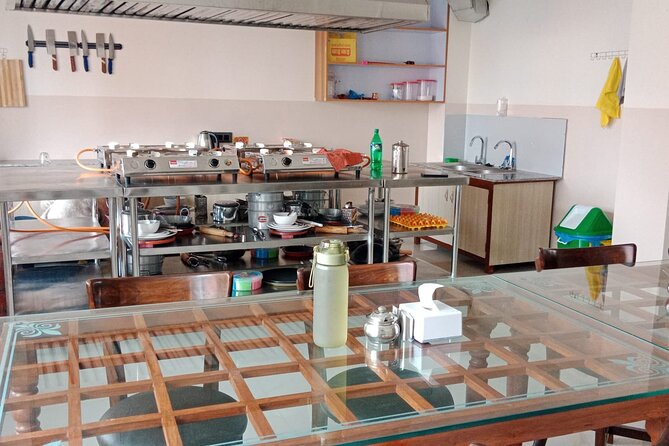
A clean kitchen and a professional setup are part of the appeal. You get the tools you need, so there is no need to bring equipment or purchase ingredients separately. The cooking team guides the process in English, and Chef Vikram and Kamal have been associated with the class.
The most useful feature is that you can decide how active you want to be. If you cook often, ask to handle more of the preparation. If you are less comfortable in the kitchen, let the chef demonstrate a step first and then copy it. You will get more from the class if you take part instead of waiting for someone else to finish each recipe.
Momos are particularly well suited to this format. The preparation lets you see how the filling is made and how the dough is shaped. The cooking process is clear enough that you can feel confident trying the dish at home later.
A class built around three dishes can move at different speeds. Some recipes require more chopping, while others need time to cook or rest. Listen closely when the chef explains the order of work. You may need to prepare one part while another dish is already on the stove.
The instruction is meant to be friendly rather than formal. One participant found the chef’s English clear and the explanations easy to follow. That is useful in a hands-on class, where a small misunderstanding can affect the food.
A different kind of day from the same base:
- Everest Base Camp Trek – 14 Days
★ 5.0 · 1,499 reviews - Private Kathmandu Sightseeing Tour | UNESCO World Heritage sites
★ 5.0 · 756 reviews - Everest Base Camp Helicopter Tour landing at Everest View Hotel
★ 5.0 · 668 reviews - Everest Base Camp Trekking
★ 5.0 · 485 reviews
Eating What You Prepared
The third part of the class is the reward: the dishes are served, and you eat the food prepared during the session. This turns the lesson into a shared meal rather than a cooking demonstration that ends when the burners are switched off.
You will have a chance to see how your three dishes work together. If you choose dal bhat, thukpa, and yomari, for example, you will prepare a savory meal with a sweet finish. If you choose momos, you may focus more closely on dumpling preparation and enjoy them soon after cooking.
The meal is included, but the information distinguishes between food and beverages. The food and drink prepared during class are covered, while additional beverages are not included. Tea or coffee is offered at the beginning and again before departure.
The class is also a good choice if you want to eat something you may not recognize on a standard restaurant menu. Yomari, in particular, gives the session a distinctly Nepali touch. Ask about the dish choices when you arrive, since the menu may shape the character of your meal.
Do not expect a restaurant-style service experience. You are eating what you made, and that is the point. The results may vary slightly depending on your cooking skill, the pace of the group, and the amount of help you request.
What the $24 Price Really Covers
The $24 fee offers solid value for a three-hour experience. You receive instruction, a market visit, ingredients, equipment, help from the staff, and a meal. Buying a comparable range of ingredients and arranging a kitchen in Kathmandu would be awkward for a short visit, so the convenience adds real value.
The price is especially attractive if you want more than a standard meal. For roughly the cost of a casual restaurant outing, you get food plus a practical skill and some contact with local cooking traditions.
The value is less clear if you want a private lesson or a carefully structured professional course. The group can reach 15 people, and the experience is designed as a shared activity. You may receive more individual attention in a small group, but that is not guaranteed.
Group discounts are available, which can make the class a good choice for families or friends. Private pickup and drop-off can also be arranged for an extra charge. The standard price does not include accommodation, personal expenses, or private vehicle transportation.
Timing, Location, and Practical Details
Plan on about three hours from welcome to farewell. The sequence is easy to understand:
- Tea or coffee, staff introductions, and dish selection
- A guided market visit for ingredients
- Cutting and preparation
- Cooking with the chef
- Serving and eating
- Final tea or coffee and departure
The class returns to the same meeting point on Yapikhya Marg. That makes planning easier if you are staying around Thamel, though you should arrange your own way there unless you pay extra for private transport.
Confirmation is provided at booking. The maximum is 15 people, and group discounts may be available. Since the menu is chosen on arrival, contact the provider ahead of time if a dietary concern or a specific dish is important to you. The supplied details do not provide a separate dietary policy, so it is better to ask than assume.
The cancellation policy is generous if you plan ahead. You can cancel at least 24 hours before the local start time for a full refund. Changes or cancellations inside that 24-hour window are not accepted for a refund. The experience also requires good weather, and if poor weather forces a cancellation, you will be offered another date or a full refund.
Who Will Enjoy This Class Most
I would recommend this cooking class to anyone who wants a practical introduction to Nepali food without committing to a full-day program. Three hours is long enough to cook several dishes but short enough to fit around sightseeing in Kathmandu.
It suits first-time cooks because the chef and helper guide the process. It also suits experienced home cooks who want to learn how Nepali dishes are assembled and seasoned. Ask for extra tasks if you already know your way around a cutting board.
Families and small groups should consider it, especially because group discounts are available. The meal at the end gives children and adults a clear reason to stay engaged, though the supplied information does not specify a minimum age.
It is less suitable if you want a private, advanced culinary course, a long market tour, or a fixed menu known weeks ahead. It is also not the right pick if you need hotel pickup included in the base price.
Should You Book This Kathmandu Cooking Class?
Book it if you want to do more than eat Nepali food. The market stop, choice of three dishes, clear English instruction, and shared meal give you a useful introduction to cooking in Kathmandu. Momos are a smart choice if you want a recipe you can try at home, while thukpa, dal bhat, and yomari offer a wider look at Nepali food.
I would choose a smaller date if possible and tell the staff that you want to work with the ingredients yourself. At $24, the class offers good value for a three-hour activity, with the main compromises being the possible group size, the unspecified full menu, and the extra cost for private transportation.
FAQ
How long does the Kathmandu cooking class last?
The class lasts approximately three hours, including the welcome drink, market visit, preparation, cooking, meal, and farewell tea or coffee.
Where does the cooking class begin and end?
It begins and ends at Shepherd Holidays on Yapikhya Marg, Kathmandu 44600, Nepal.
How many dishes can I prepare?
You can choose any three items from the menu available during the class.
Which Nepali dishes may be available?
Examples include momos, thukpa, dal bhat, and yomari. The complete menu is not specified, so availability can vary.
What is included in the $24 price?
The price includes ingredients, cooking equipment, an instructor, a helper, and the food and drink prepared during the class.
Is transportation included?
Private vehicle pickup and drop-off are not included in the standard price. They are available for an extra charge.
What is the cancellation policy?
You can cancel at least 24 hours before the local start time for a full refund. Cancellations or changes made less than 24 hours before the start time are not accepted for a refund. If poor weather causes the class to be canceled, you will be offered another date or a full refund.
More hands-on workshops in Kathmandu
- Knife (Khukuri) Making Workshop- Forge of the Gurkhas
★ 5.0 · 143 reviews - Local Women Lead Nepali Cooking Class
★ 5.0 · 125 reviews - The best Private Nepali Cooking Class in Kathmandu
★ 5.0 · 83 reviews - Kathmandu: Traditional Momo Making Class & Pickup
★ 4.8 · 60 reviews
More Food in Kathmandu
- Kathmandu Food and Drink Walking Tour
★ 5.0 · 266 reviews - Kathmandu: Food and Drink Walking Tour
★ 4.9 · 119 reviews - Walking Street Food Tour in Kathmandu
★ 5.0 · 111 reviews - Secret Food Tour – Food Bites and Sights Kathmandu 14+ Testings
★ 5.0 · 82 reviews
Recently added around Kathmandu
- Kathmandu Airport Pickup and Drop-off Services★ 5.0 · 3 reviews
- Kathmandu Paragliding★ 5.0 · 3 reviews
- Explore The Beauty Of Langtang Valley In 8-Days Trek★ 5.0 · 3 reviews
- Kathmandu Chandragiri Cable Car and Swayambhunath Private Tour★ 5.0 · 3 reviews
- Kathmandu: Nightlife and Pub Crawl Tour★ 5.0 · 3 reviews
- Kathmandu: Momo Making Class with a Local Chef★ 5.0 · 3 reviews
- Mountain Flight Experience in Nepal★ 4.5 · 3 reviews
- Everest Base Camp Trek★ 5.0 · 3 reviews
Other Kathmandu Tours worth a look


Private Kathmandu Sightseeing Tour | UNESCO World Heritage sites
Read our review →
Everest Base Camp Helicopter Tour landing at Everest View Hotel
Read our review →


Nagarkot Sunrise View and Day Hiking from Kathmandu
Read our review →
Full Day 7 UNESCO Tour with Lunch – Private/Group
Read our review →
This tour also appears in