
REVIEW · TIBETAN CULTURE TOURS
Half day Tibetan cultural tour
Pokhara’s Tibetan settlements offer something you will not get from a standard city tour: a close look at how Tibetan refugees have preserved their language, faith, and daily customs in Nepal. Guide Thupten Gyatso leads you through a monastery, school, carpet workshop, photo gallery, and medical center before lunch.
I like the direct contact with people who carry this story themselves, especially the meeting with a Tibetan doctor and the chance to see carpets being made by hand. I also like the small group limit of eight, which should leave room for questions. The main consideration is pace: four and a half hours covers a lot, so this is better for learning than for lingering at any one stop.
Key points before you book
- Thupten Gyatso leads the tour: Your English-speaking guide is a Tibetan native with a personal connection to the culture and communities you visit.
- A working Tibetan settlement, not just a museum: You learn how people maintain Tibetan identity, language, religion, and education in Nepal.
- Handmade carpets are part of the visit: See the workshop process, then browse finished designs in the showroom.
- The medical center adds a rare perspective: A Tibetan doctor explains traditional treatment and provides a consultation.
- Lunch is part of the cultural lesson: Try momos and thenthuk, with vegetarian and gluten-free choices available.
- Lakeside pickup keeps the morning simple: Transport is included around Pokhara’s Lakeside area, but hotels elsewhere may require an extra fee.
Why this four-and-a-half-hour tour matters
Pokhara is best known for mountain views, lakeside walks, and trekking logistics. Those are good reasons to come, but they can leave you with only a surface picture of the people who live around the valley. This tour shifts the focus from scenery to community.
You spend the half day learning how Tibetan refugees have built lives in Nepal while holding on to familiar religious practices, language, schooling, food, and crafts. That makes the experience useful for anyone who wants context rather than another quick photo stop.
The tour is led by Thupten Gyatso, a Tibetan native who guides the conversation in English. His role matters here. You are not simply being shown a collection of objects. You are given explanations about why those objects matter, how Tibetan institutions operate, and how people have kept their identity across many years in exile.
The group is capped at eight people. That is a practical advantage because the tour includes several question-heavy stops. At a school, monastery, medical center, or workshop, a smaller group makes it easier to hear the explanation and ask about details that catch your attention.
More Historical Tours in Pokhara
- Full-Day Tibetan Cultural Tour to Tibetan Settlements Pokhara
★ 5.0 · 184 reviews - Afternoon Tibetan Cultural Tour to Tibetan Settlements Pokhara
★ 5.0 · 106 reviews - Morning Tibetan cultural tour to Tibetan settlements Pokhara
★ 5.0 · 66 reviews
Leaving Lakeside for the Tibetan settlement
Pickup is provided from hotels in the Lakeside area, with a return there at the end. If you are staying outside Lakeside, check the transport charge before booking. The extra cost depends on your hotel location, so it is not included in the $61 price.
The published duration is 4.5 hours. That is long enough to visit several places and eat lunch without turning the day into a full excursion. It is also short enough to fit around other Pokhara plans, such as a boat ride or an afternoon at your hotel.
The exact order and timing of stops can vary, but the main visit is to one Tibetan refugee settlement near Pokhara Valley. You will walk through the settlement and see places tied to everyday life, religious practice, education, health care, and craft production.
Do not expect a quiet attraction designed only for sightseeing. This is a living community. The best approach is to listen carefully, ask respectful questions, and remember that the settlement is also home, school, workplace, and place of worship for the people you meet.
Seeing Tibetan life in Nepal
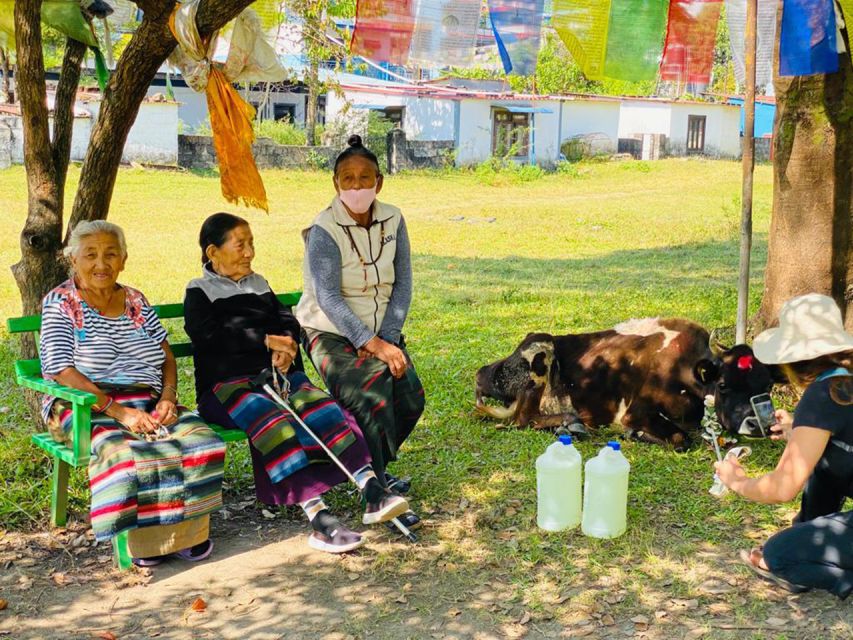
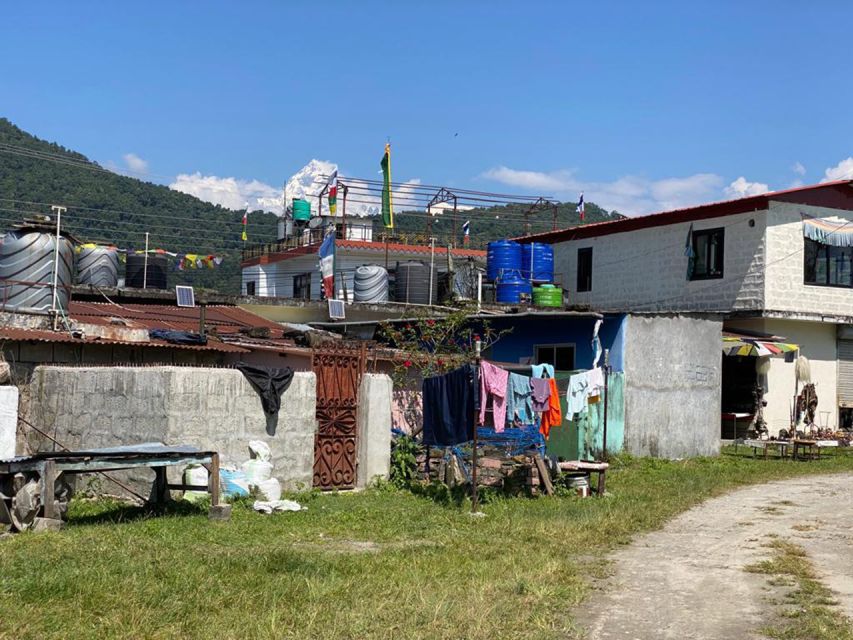
The settlement visit gives the tour its purpose. You learn how Tibetan people living in Nepal have kept their language, religious customs, and cultural identity over time. The photo gallery adds a useful historical layer, with images showing the settlement in the early 1960s.
Those pictures help connect the present-day visit with the earlier period of refugee settlement. Instead of hearing only general facts, you can see how conditions and communities developed. The gallery also shows the effort involved in keeping Tibetan culture alive away from Tibet.
This part may appeal most if you like social history and personal stories. It is less about grand monuments and more about institutions that support ordinary life. The value is in understanding how a community continues its traditions through schools, monasteries, medicine, food, and work.
The tour does not promise a full account of Tibetan history, and four and a half hours cannot provide one. It offers a focused introduction to Tibetan life in Nepal, with direct access to places that many independent visitors would not know how to arrange.
Buddhist symbols at the monastery
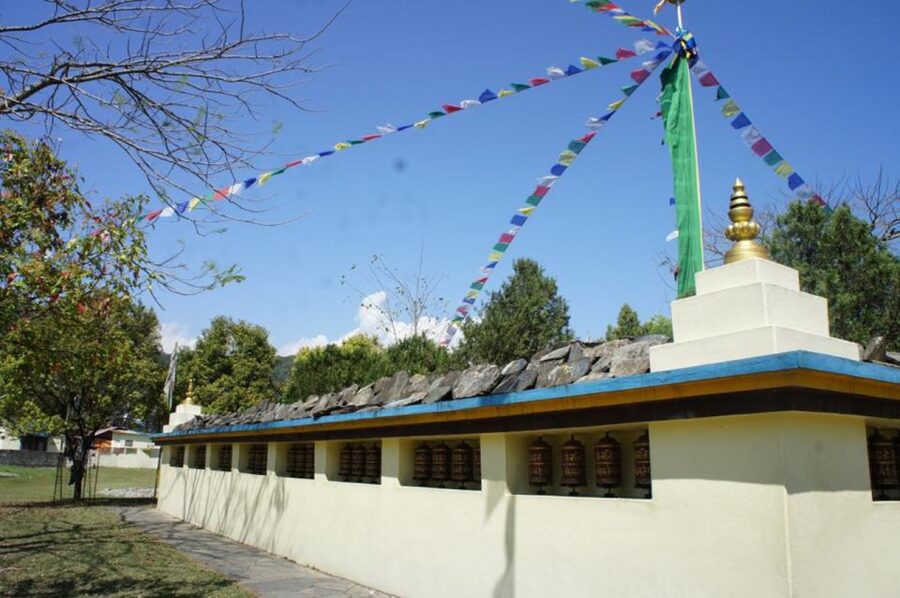
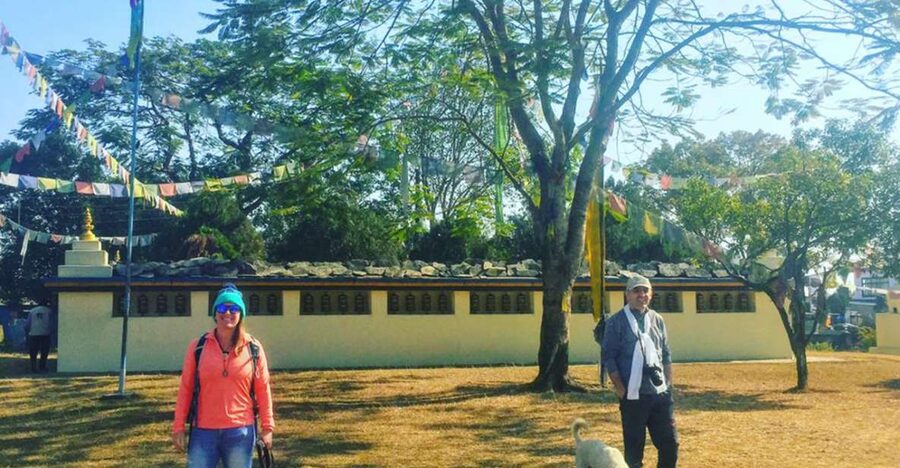
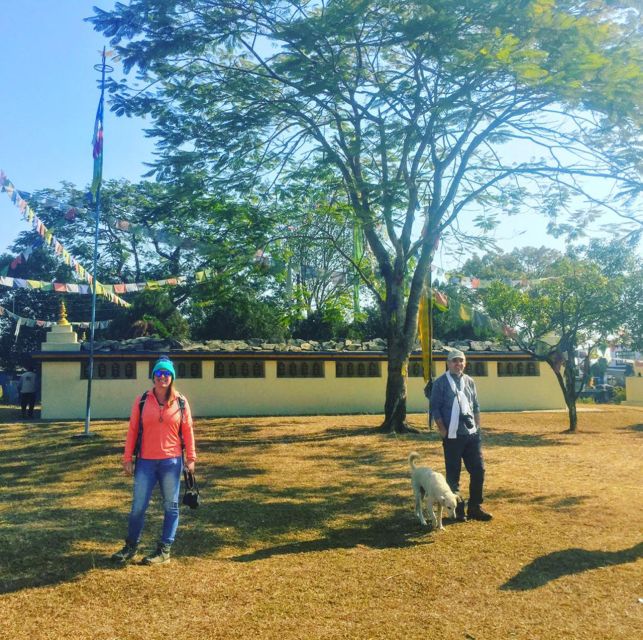
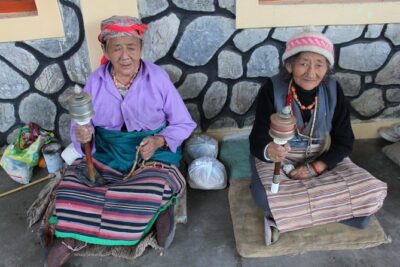
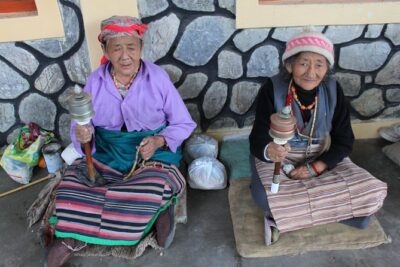
A visit to a Buddhist monastery introduces the religious side of the settlement. You learn about monks’ lives and the meaning of familiar Tibetan Buddhist symbols, including prayer wheels, prayer flags, and stupas.
These objects are easy to photograph without understanding. The guide helps explain their place in daily practice. Prayer wheels, for example, are not simply colorful features along a path, and prayer flags are not just decoration. The point of this stop is to connect visible symbols with belief and routine.
The monastery is also a chance to ask how religious life fits into the wider settlement. You can learn about the role of monks and why Buddhist practice remains so important to Tibetan identity.
Dress and behavior should be respectful at the monastery. The provided information does not specify a formal dress code, but modest clothing and a quiet manner are sensible choices at any religious site. Photography rules may vary, so ask before taking pictures of people or inside the monastery.
More Tibetan Culture Tours in Pokhara:
- Afternoon Tibetan cultural tour
★ 5.0 · 41 reviews - Half Day Tibetan Cultural tour Pokhara
★ 5.0 · 36 reviews - Morning Half Day Tibetan cultural tour to Tibetan Settlements
★ 5.0 · 26 reviews - Pokhara: Private Half-Day Tour and Tibetan Culture Tour
★ 3.8 · 14 reviews
Tibetan schools and the work of preserving language
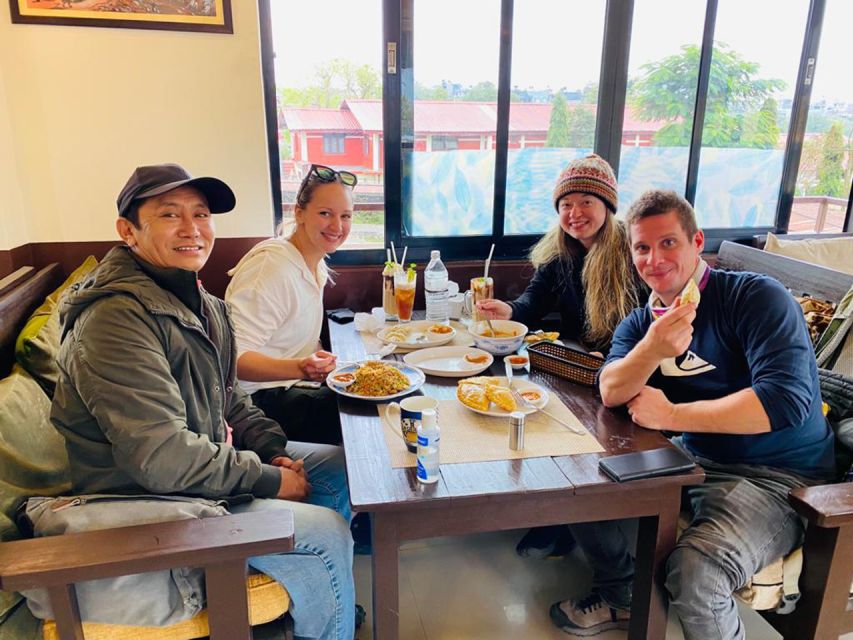
The school visit is one of the more important parts of the tour because it shows how culture is passed to younger generations. You learn about Tibetan schools and the educational system used in the settlements.
Education here has a task beyond standard subjects. It helps maintain Tibetan language and cultural identity while children grow up in Nepal. That gives the school a central place in the story of the community.
I find this more useful than simply hearing that Tibetan culture has been preserved. A school shows how preservation happens in practice, through teaching and daily routines. You can ask about the balance between Tibetan cultural education and life in Nepal, though the exact subjects or schedule are not specified.
Keep in mind that a school is a working place, not a performance staged for visitors. The tour’s educational focus is a strength, but it also means you should be prepared for explanation rather than entertainment.
Watching carpets made by hand
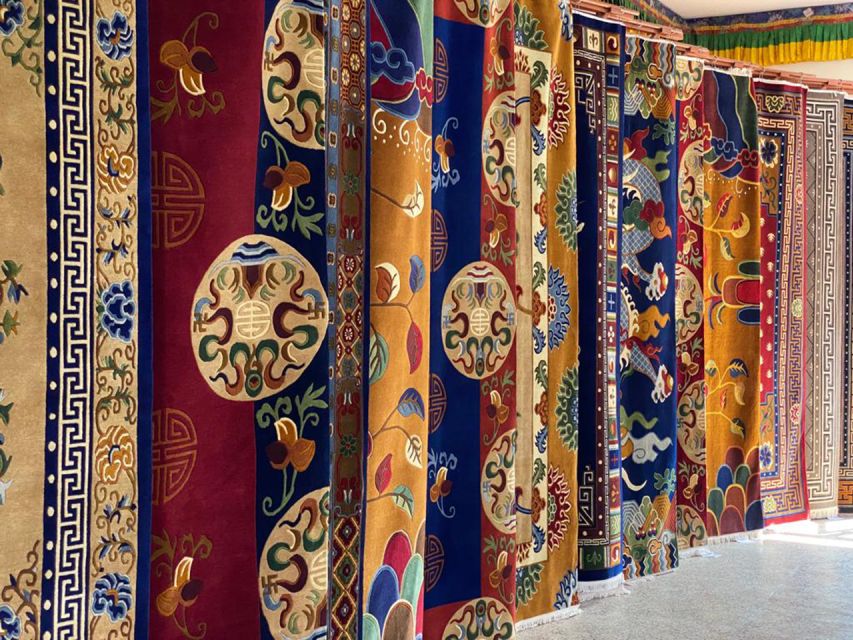
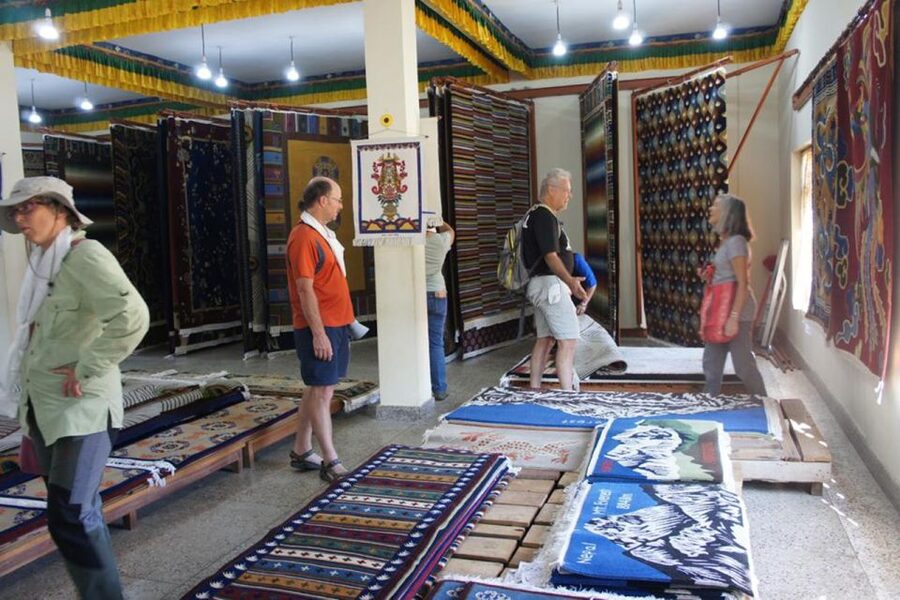
The carpet workshop provides a clear, practical look at Tibetan craft. Thupten takes you through the process and explains how the carpets are made by hand. You then visit a showroom with finished carpets in different colors and designs.
This two-part visit is useful. At the workshop, you see the labor and skill behind the product. At the showroom, you can examine the finished patterns and consider whether a carpet is something you want to buy.
The workshop may be especially interesting if you enjoy traditional crafts or want to understand why handmade goods take time. A finished carpet can look simple from a distance, but seeing the process gives you a better sense of the work involved.
The showroom is also the point where you should keep your buying decisions clear. You can explore the designs without assuming you must purchase anything. If you are considering a carpet, ask about size, materials, care, transport, and delivery before making a decision. The supplied details do not specify prices or shipping arrangements, so those questions need to be handled on site.
A Tibetan doctor and traditional medicine
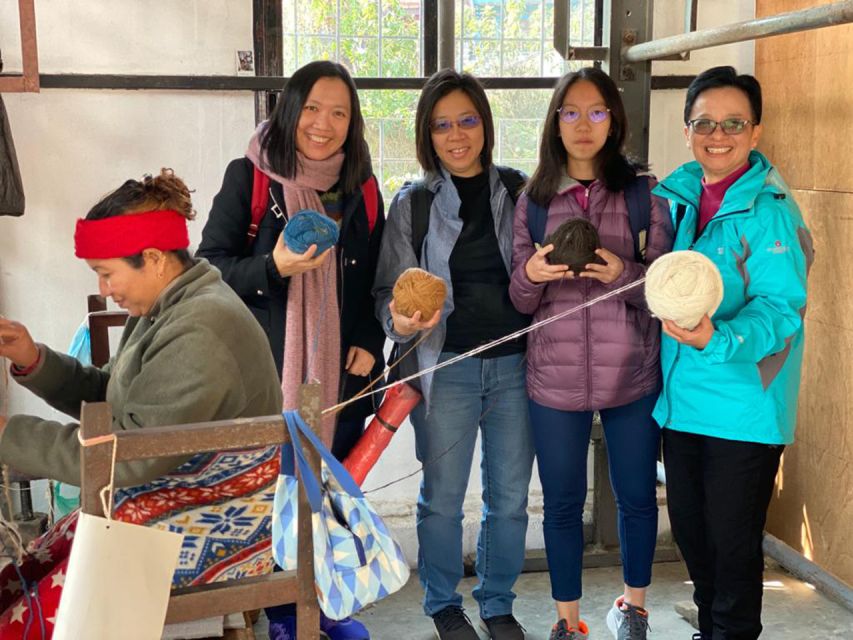
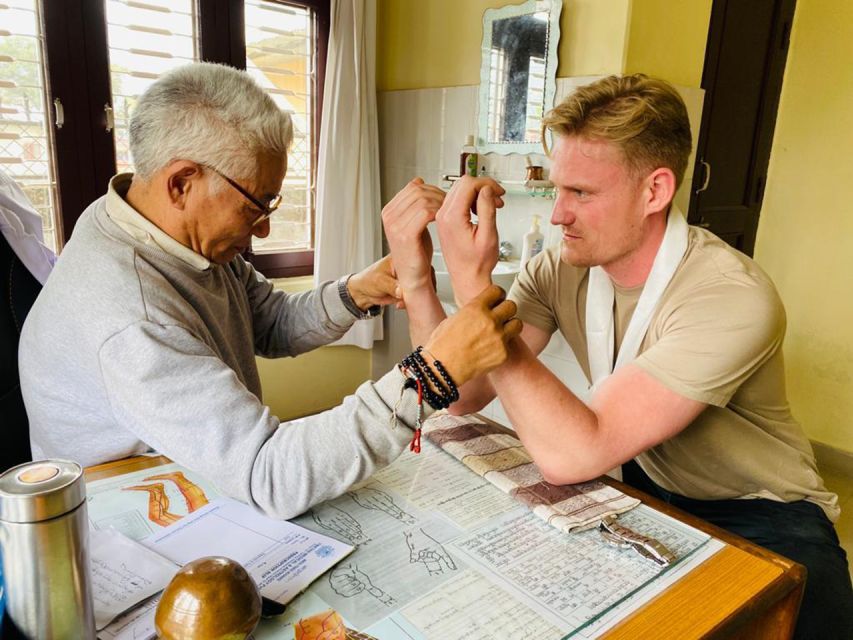
Meeting a Tibetan doctor makes this tour different from a standard cultural walk. At the Tibetan medical center, you learn basic information about the traditional medical system and its treatments. The tour also includes a consultation and first-hand experience with a medical check-up.
This should be approached as a cultural and educational encounter, not as a replacement for medical care. The information provided does not explain the length or medical scope of the consultation, so you should not expect a full clinical diagnosis or treatment plan.
Still, the stop offers a rare look at how Tibetan medicine is practiced and understood. You can ask how the system approaches health, what kinds of treatment are used, and how it fits into the community.
The medical center also brings the refugee story into the present. A settlement is not only a place with religious symbols and handmade goods. It has doctors, schools, restaurants, and services that support daily life.
Lunch with momos and thenthuk
Food is one of the easiest ways to connect with a culture, and lunch gives the tour a relaxed change of pace. You eat at a local Tibetan restaurant and can try momos, the familiar filled dumplings, along with thenthuk.
Thenthuk is a nourishing soup made with freshly kneaded dough, meat, and vegetables. The dough is prepared in pieces and cooked in the broth, making it a filling choice after a morning of walking and listening.
Vegetarian and non-vegetarian options are available. Gluten-free food is also provided, including plain rice and vegetable curry. If you need a gluten-free meal, tell the provider when booking or at the start of the tour so the restaurant can prepare appropriately.
Lunch is not an elaborate food tasting with a long menu. Its value is that you eat Tibetan food in a local setting while Thupten explains the dishes and their place in Tibetan cuisine. Tea, coffee, fresh juice, and mineral water are included as well.
What the $61 price includes
At $61 per person, the tour is not the cheapest way to fill a morning in Pokhara. It is a reasonable price if you want a guide, transport from Lakeside, several arranged visits, lunch, drinks, and access to people who can explain the community directly.
The value rests on access and interpretation. You could perhaps visit a monastery or find a Tibetan restaurant independently, but arranging a school visit, carpet workshop, photo gallery, medical center, and consultation would be much harder on your own.
The small group limit improves the value. You are paying for a focused guide rather than being moved through a large crowd. Since much of the tour depends on conversation, questions, and explanations, that format suits the subject.
The price includes the Tibetan guide, Lakeside pickup and drop-off, the settlement visit, monastery visit, school and cultural explanations, carpet workshop and showroom, photo gallery, medical center consultation, lunch, and listed drinks. Hotels outside Lakeside may require an additional transport fee.
Free cancellation is available up to 24 hours before the start for a full refund, and you can reserve now and pay later. Those policies make it easier to fit the tour into a changing Pokhara schedule.
Who will enjoy this most
I would recommend this experience to you if you have a real interest in Tibetan culture, Buddhist practice, refugee communities, traditional crafts, or food. It suits curious adults and older children more than families with very young children.
Children under five are not accepted. The tour is also not suitable for wheelchair users, so anyone with mobility needs should ask for detailed access information before booking.
You should choose this tour if you prefer explanation and conversation to a fast list of sights. The strongest parts are the personal guidance from Thupten, the school and monastery visits, the meeting with a doctor, and the chance to see a working carpet workshop.
You may want a different activity if your main goal is dramatic mountain scenery, shopping, or a long, slow monastery visit. This tour is about cultural understanding, and its 4.5-hour schedule moves through several stops.
Practical tips for a better visit
Wear comfortable shoes because the program includes walking around the settlement and visiting several sites. Bring water, although mineral water and other drinks are included.
Keep your questions ready. Ask about the refugee settlement’s early years, the school system, Buddhist symbols, carpet production, and Tibetan medicine. Thupten’s role is strongest when you engage with the explanations rather than simply follow the route.
Tell the provider about dietary needs early, especially if you need gluten-free food. Plain rice and vegetable curry are available, along with vegetarian and non-vegetarian choices.
Lakeside pickup is included, but confirm your hotel location. The tour provider charges extra for pickup outside the Lakeside area, based on where you are staying.
The tour is offered in English and uses a small group format. Its published rating is 5 out of 5 from four verified bookings, with particular praise for Thupten’s friendly guidance, clear cultural explanations, and ability to introduce participants to monks, doctors, and Tibetan food.
Should you book the Tibetan cultural tour?
Book it if you want to understand a community rather than simply pass through it. The $61 fee buys a well-organized half day with a Tibetan guide, cultural sites, a medical consultation, a craft demonstration, lunch, and Lakeside transport.
I especially like that the program joins the past and present. The photo gallery explains the settlement’s early years, while the school, clinic, workshop, monastery, and restaurant show how Tibetan life continues today.
Skip it if your Pokhara plans leave no room for conversation or if you are looking only for outdoor scenery. For everyone else, this is a thoughtful, focused way to spend half a day, and Thupten Gyatso’s personal connection gives the experience its strongest advantage.
FAQ
How long does the Tibetan cultural tour last?
The tour lasts 4.5 hours, including the settlement visit, cultural stops, lunch, and return to Lakeside.
Where does pickup take place?
Pickup and drop-off are provided for hotels in Pokhara’s Lakeside area. An extra transport fee applies to hotels outside Lakeside, depending on the hotel location.
What language is the tour conducted in?
The live tour guide speaks English.
How many people can join the tour?
The tour is offered as a small group experience with a maximum of eight participants.
Is lunch included?
Yes. Lunch at a local Tibetan restaurant is included, with Tibetan momos and thenthuk among the food options. Vegetarian and non-vegetarian meals are available.
Are gluten-free meals available?
Yes. Gluten-free choices include plain rice and vegetable curry. Tell the provider about your dietary needs in advance.
Is the tour suitable for young children or wheelchair users?
Children under five are not permitted, and the tour is not suitable for wheelchair users.
Recently added around Pokhara
- Paragliding in Pokhara★ 5.0 · 3 reviews
- Pokhara: 5-Day Annapurna Base Camp Trek with Hot Spring★ 5.0 · 3 reviews
- Pokhara:4-Day Ghorepani Poon Hill Guided Trek via Ghandruk★ 5.0 · 3 reviews
- Pokhara: 7-Day Annapurna Base Camp Trek via Ghandruk★ 4.3 · 3 reviews
- Peace & Panorama: Stupa and Pumdikot Scenic Drive Tour★ 3.6 · 3 reviews
- Beautiful Sarankot Sunrise with Full Day Sightseeing in Pokhara★ 4.5 · 3 reviews
- 3 Day Australian Camp Dhampus Ghandruk Easy Trek in Pokhara★ 3.5 · 3 reviews
- Overnight Dhampus Australian Camp Easy Hiking from Pokhara★ 5.0 · 3 reviews
Other Tibetan Culture Tours worth a look
Full-Day Tibetan Cultural Tour to Tibetan Settlements Pokhara
Read our review →
Afternoon Tibetan Cultural Tour to Tibetan Settlements Pokhara
Read our review →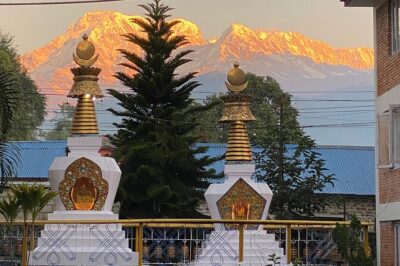
Morning Tibetan cultural tour to Tibetan settlements Pokhara
Read our review →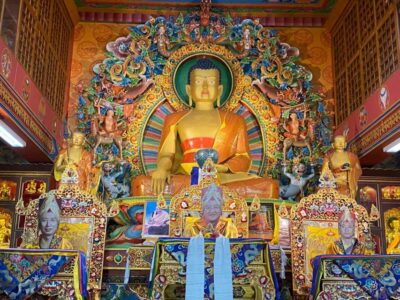
Morning Half Day Tibetan cultural tour to Tibetan Settlements
Read our review →
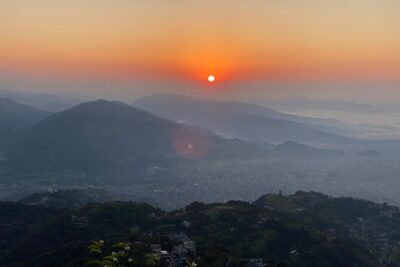
Sarangkot Sunrise with a half day Tibetan cultural tour
Read our review →This tour also appears in