
REVIEW · TIBETAN CULTURE TOURS
Morning Tibetan cultural tour to Tibetan settlements Pokhara
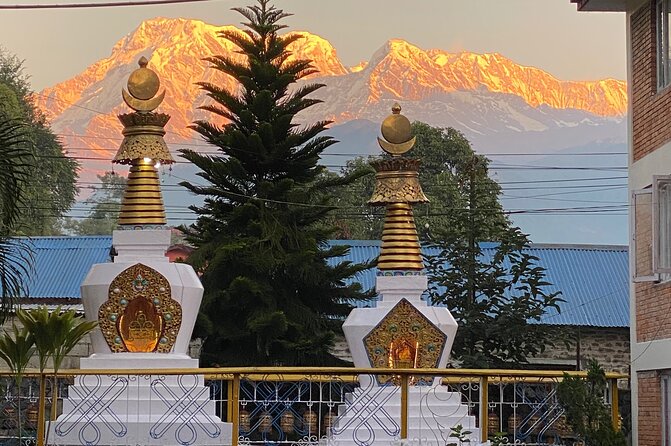
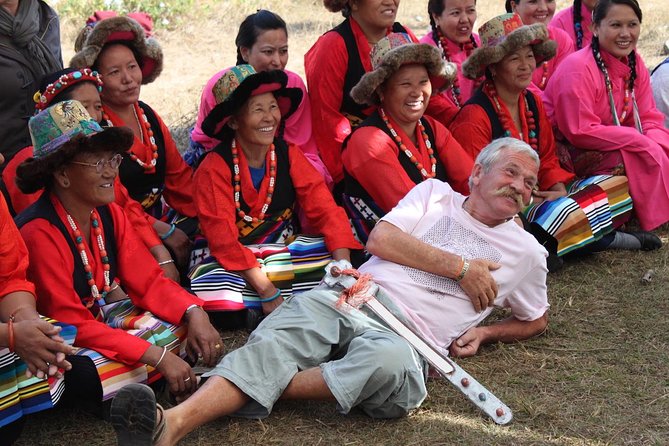
Pokhara’s Tibetan settlements give you a side of the city that lakeside sightseeing cannot. Starting at 5:30 a.m., this small-group outing follows guide Thupten Gyatso through monasteries, villages, schools, and family life. You get more than a quick photo stop. You get time to ask questions about Tibetan religion, refugee life, medicine, food, and daily routines in Nepal.
I especially like the access to local Tibetan communities, rather than only visiting a monastery from the outside. I also like the food element, with a home visit and Tibetan dishes such as momos and thukpa included in the day.
The main drawback is the early start and long duration. Eight to nine hours is a full morning and afternoon, and the four-hour visit at Tashi Ling may feel slow if you prefer a faster sightseeing schedule.
Key points to know before booking
- Meet guide Thupten Gyatso at 5:30 a.m. The early departure leaves plenty of time for the settlements and monasteries.
- Visit three important Buddhist sites. You will see Jangchub Choeling, Pema Ts’al Sakya Monastic Institute, and Shree Gaden Dhargay Ling Monastery.
- Eat Tibetan food in a local setting. The program includes a Tibetan family visit and food such as momos and thukpa.
- Spend four hours in Tashi Ling Tibetan Village. This is the longest part of the day, with time for village walks, schools, and local life.
- Keep the group small. A maximum of 15 people allows more room for questions and personal attention.
- Plan for changing weather. The tour operates in all weather, so dress for the conditions.
Why Pokhara’s Tibetan settlements matter
Pokhara is home to a significant Tibetan population. These settlements are not staged cultural displays. They are places where Tibetan families, monks, students, and community groups live, study, worship, and work in contemporary Nepal.
That distinction matters. You are not simply looking at old religious objects or hearing a broad history lecture. You are being introduced to how Tibetan culture continues in a new country, with religion, education, food, and family life all connected.
The tour is led by Thupten Gyatso, who explains Tibetan culture, Buddhist teachings, history, and refugee life in Nepal. The experience is best for you if you enjoy asking questions and listening carefully. The quality of the day depends partly on the conversation, so this is not a tour for anyone who wants only a checklist of sights.
Pickup is offered, and hotel transfers are included for convenience. The tour is also available with group discounts, and confirmation is provided when you book. Most people can take part, and the tour is near public transportation.
More Historical Tours in Pokhara
- Full-Day Tibetan Cultural Tour to Tibetan Settlements Pokhara
★ 5.0 · 184 reviews - Afternoon Tibetan Cultural Tour to Tibetan Settlements Pokhara
★ 5.0 · 106 reviews - Afternoon Tibetan cultural tour
★ 5.0 · 41 reviews
The 5:30 a.m. start and first monastery visit
Your day begins early, at 5:30 a.m. That may sound severe on a holiday, but it gives the schedule room for several settlements and a long visit to Tashi Ling. You should arrange your breakfast plans with the early departure in mind, especially since food is also part of the morning program.
The first stop is Jangchub Choeling Tibetan Buddhist Monastery, where you spend about an hour. Admission is included, and the visit introduces the religious setting that shapes much of Tibetan community life.
Here, Thupten explains Buddhist beliefs and the experience of Tibetans living in Nepal. You can ask about the relationship between religion and daily life, as well as the history of Tibetan settlement in the country.
The monastery visit is not described as a formal performance, so expect an educational stop rather than a show. Dress respectfully and follow the guide’s instructions inside religious spaces. Since this is the first stop, it also sets the tone for the rest of the day: listen, ask questions, and give the community room to carry on with its own routine.
Breakfast with a Tibetan family in Tashi Palkhel
At Tashi Palkhel Tibetan Settlement, you visit a local Tibetan family and taste Tibetan food. The program describes this as a breakfast at a local home, while the overall tour also includes lunch featuring momos and thukpa. Because the food schedule is presented in more than one way, confirm the exact timing when you book.
The home visit is one of the most useful parts of the day because it brings the culture down to an ordinary, human scale. Monasteries explain religious life, but a family meal shows how food and hospitality work at home.
Tibetan cuisine is practical and suited to a cooler mountain climate. Momos are filled dumplings, while thukpa is a noodle soup. The meal gives you something concrete to remember, not just facts and names.
Vegetarian and non-vegetarian food are served, and gluten-free food is available. Tell the provider about your needs in advance so the meal can be handled properly. The home setting may also mean that the pace is less predictable than at a standard restaurant. That is part of the point, but it is worth knowing if you have a tight schedule afterward.
Meeting a young monk at Pema Ts’al Sakya Monastic Institute
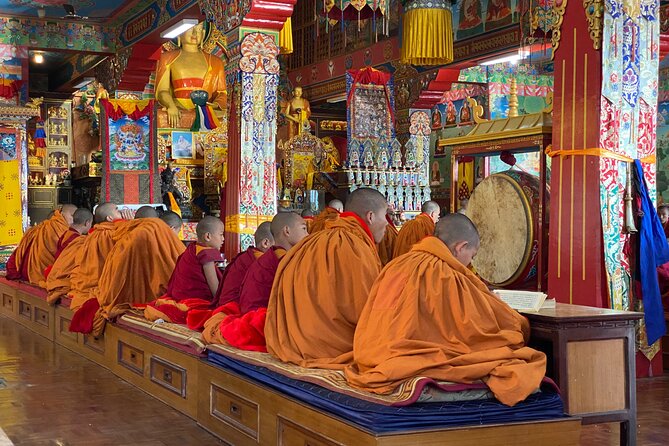
The next stop is Pema Ts’al Sakya Monastic Institute, with about an hour set aside for the visit. Here, you meet a young monk who can share insights into monastic life and education.
This gives you a chance to ask direct questions about how young monks study and live. It also adds a personal voice to the broader explanation of Tibetan Buddhism. You may want to ask about daily lessons, religious study, or how education fits into monastic life, depending on what the monk is prepared to discuss.
The value of this stop is its interaction. You are not only looking at buildings or religious symbols. You are hearing from someone connected to the institute’s student life.
Still, keep your expectations sensible. The information provided does not promise a long private audience or a set lecture. The visit is built around conversation, so the experience may depend on the day’s schedule and the questions you bring.
More Tibetan Culture Tours in Pokhara:
- Half Day Tibetan Cultural tour Pokhara
★ 5.0 · 36 reviews - Morning Half Day Tibetan cultural tour to Tibetan Settlements
★ 5.0 · 26 reviews - Pokhara: Private Half-Day Tour and Tibetan Culture Tour
★ 3.8 · 14 reviews - Sarangkot Sunrise with a half day Tibetan cultural tour
★ 5.0 · 13 reviews
Reading the symbols at Shree Gaden Dhargay Ling
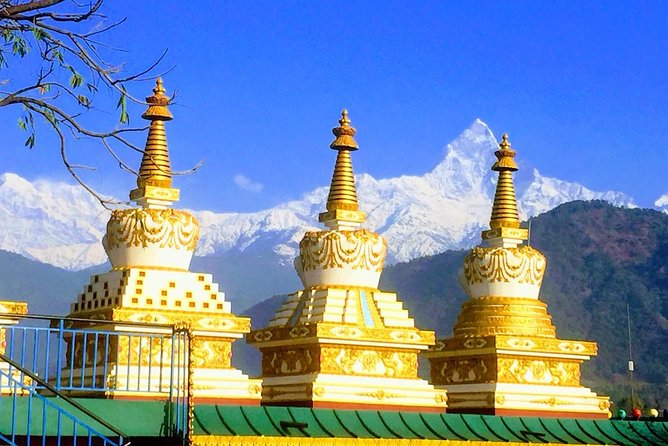
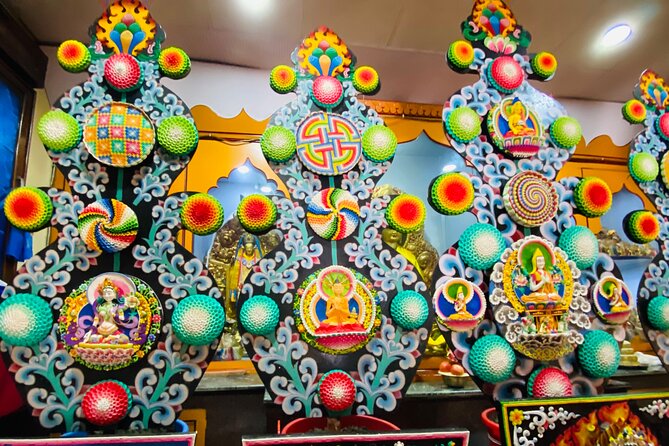
Shree Gaden Dhargay Ling Monastery is a shorter stop, lasting about 45 minutes. The focus here is on Buddhist signs and symbols used in daily religious life.
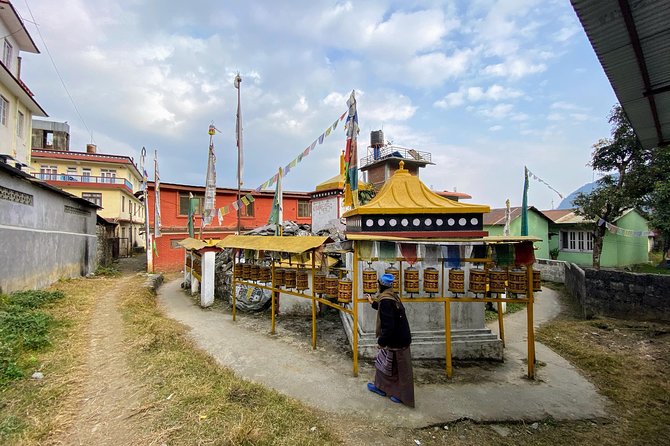
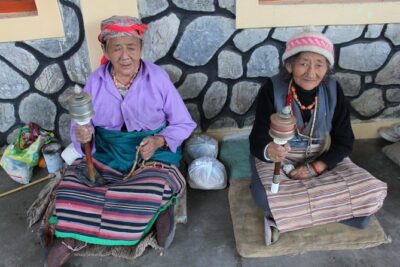
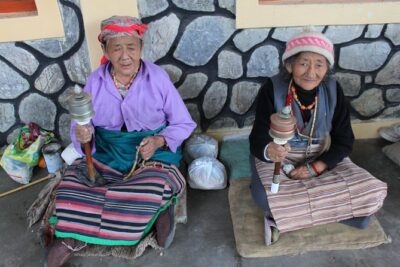
You learn about prayer wheels, prayer flags, and stupas, along with the meanings attached to them. This is useful preparation for the rest of the tour because it helps you recognize details that might otherwise look decorative or unfamiliar.
Prayer flags, for example, are not simply colorful fabric. Prayer wheels and stupas also carry religious meaning, and the guide explains how these objects fit into Buddhist practice. A short stop can work well here because the purpose is focused: learn the symbols, then see how they appear in the community.
You should not expect a long sightseeing visit at this monastery. Forty-five minutes is enough for an introduction, but not for a detailed study of every feature. The tour’s strength is the overall sequence, with each monastery adding a different subject.
Four hours in Tashi Ling Tibetan Village

Tashi Ling Tibetan Village receives the longest time allocation, about four hours. That tells you where the tour places its main emphasis: on community life rather than only religious architecture.
With Thupten, you walk around the village and see how people live their daily lives. The program also includes visits connected with Tibetan schools and other community activities. This is the part of the day where the idea of Tibetan culture becomes less abstract.
A long village visit lets you slow down. You can notice how homes, religious places, schools, and ordinary routines fit together. You may also have more time for questions than during the shorter monastery stops.
The four-hour duration can be a strength or a weakness. I would value it if I wanted a careful look at Tibetan life and enough time for conversation. If I had already visited several Tibetan communities, or if I preferred a fast-paced day, I might find the schedule too long.
Bring patience and comfortable clothing. The tour operates in all weather, and the village portion involves walking. The information does not specify the exact walking distance or terrain, so ask the provider if you have mobility concerns.
How the small group affects the experience
The maximum group size is 15 people. That is small enough to make questions practical, especially during the family and monastery visits.
A smaller group also helps with the personal side of the tour. Thupten can spend more time explaining a Buddhist symbol or responding to a question than he could with a large coach group.
Do not expect a completely private tour. Fifteen people is still a group, and the experience includes shared transport and shared visits. The benefit is a more manageable group, not total flexibility.
The guide is central to the day. Thupten Gyatso is presented as someone who shares personal and cultural knowledge about Tibetan people, Buddhist teachings, history, and life in Nepal. One detailed account of the experience gave particular praise to his ability to explain Tibetan culture and religion. If you enjoy guided discussion, that is a strong reason to consider this tour.
Food, timing, and what to wear
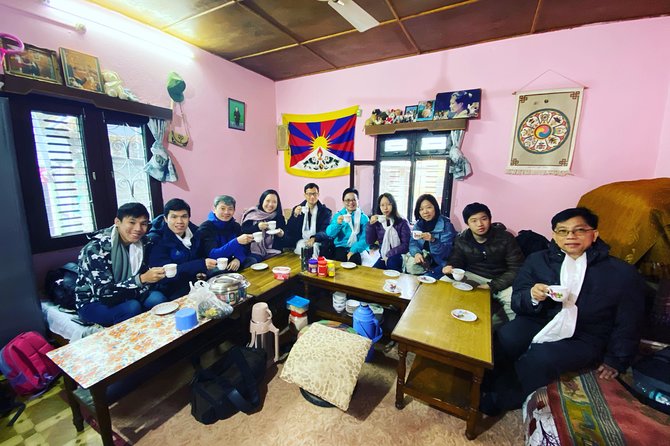
The tour combines cultural visits with food, but you should not treat it as a food tour. The meal supports the cultural program. Momos and thukpa offer a taste of Tibetan cuisine, while the family visit gives the food a social setting.
Vegetarian, non-vegetarian, and gluten-free options are available. State your preference before the day begins. The supplied details do not specify the number of dishes, drink choices, or exact restaurant, so do not book this expecting a large tasting menu.
The early start means you should prepare the night before. Have suitable clothing ready and confirm pickup details. Since the tour runs in all weather, take a rain layer or other protection suited to the forecast. The tour is in Pokhara, where conditions can change during the day, but no specific weather pattern or walking surface is guaranteed here.
The duration is about eight to nine hours. That includes several stops, a family food visit, monastery visits, and four hours in Tashi Ling. Plan no important afternoon appointment immediately afterward.
Is the $85 price fair?
At $85 per person, the price is not the cheapest way to see a monastery in Pokhara. You are paying for a full-day cultural program, hotel transfers, a local Tibetan guide, several community stops, and food.
The value comes from access and structure. Finding three monasteries, two settlements, a Tibetan family, a monastic institute, and a village on your own would take planning. You would also miss much of the context unless you had a guide able to explain religion, refugee life, symbols, and present-day community life.
The small-group limit helps the price make more sense. You are not paying for a large bus and a brief stop at one attraction. You are buying a guided day with time for conversation.
Still, the value depends on your interests. If you mainly want scenic viewpoints, boating, or a relaxed morning beside the lake, this is not the best use of $85. If Tibetan culture and Buddhist life are high on your list, the combination of access, explanation, food, and transport is more convincing.
Who should book this experience?
I would recommend it most strongly to curious visitors who want cultural context and direct contact with local communities. It suits people who enjoy history, religion, food, and long conversations more than those who want rapid sightseeing.
It is also a good choice if you are visiting Pokhara for a limited time and want one organized day focused on Tibetan life. Hotel transfers remove some planning, and the small group makes the schedule easier to manage.
Families may appreciate the school and young monk components, though the early start and long day could be tiring for small children. People with dietary restrictions can use the vegetarian, non-vegetarian, and gluten-free options, but should communicate needs ahead of time.
I would hesitate if you dislike early mornings, have limited stamina for a full-day outing, or want a tightly timed tour with no relaxed village section. The four-hour Tashi Ling visit is the key question. If that sounds appealing, the schedule works. If it sounds excessive, choose a shorter cultural visit.
Should you book the Tibetan cultural tour?
Book this tour if you want to understand how Tibetan religion, family life, education, food, and refugee experience continue in Nepal. The strongest parts are the access to local communities, the personal guidance from Thupten Gyatso, and the time set aside for Tashi Ling rather than rushing through it.
Before booking, be ready for the 5:30 a.m. departure, an eight to nine hour day, walking in all weather, and a program built around conversation. Confirm the exact food timing, especially if you need breakfast early or have dietary requirements.
For culturally curious visitors, the $85 cost is reasonable because it covers more than transport and entrance stops. For anyone seeking only Pokhara’s famous views, it is better to spend the day elsewhere.
FAQ
What time does the tour depart?
The tour departs at 5:30 a.m.
How long does the experience last?
The tour lasts approximately eight to nine hours.
Is hotel pickup included?
Yes. Hotel transfers are included, and pickup is offered.
What monasteries are visited?
The tour visits Jangchub Choeling Tibetan Buddhist Monastery, Pema Ts’al Sakya Monastic Institute, and Shree Gaden Dhargay Ling Monastery.
Will I visit a Tibetan family?
Yes. At Tashi Palkhel Tibetan Settlement, you visit a local Tibetan family and taste Tibetan food.
What food is included?
The experience includes Tibetan food, with momos and thukpa listed among the dishes. A local home breakfast is also part of the Tashi Palkhel visit.
Can dietary requirements be accommodated?
Yes. Vegetarian, non-vegetarian, and gluten-free food are available.
How many people can join the tour?
The group has a maximum of 15 participants.
Can I cancel for a full refund?
Yes. You can cancel at least 24 hours before the start time for a full refund. Changes or cancellations made less than 24 hours before the start time are not accepted for a refund.
More Morning in Pokhara
- From Pokhara: Sarangkot Sunrise Himalayas Tour
★ 4.7 · 218 reviews - Pokhara: Sarangkot Sunrise with Half or Full-Day City Tour
★ 4.8 · 100 reviews - The Best of Pokhara: Full-Day Private Tour with Sarangkot Sunrise
★ 5.0 · 66 reviews - Pokhara: Sarangkot Sunrise And Private Full-Day Tour
★ 4.8 · 32 reviews
Recently added around Pokhara
- Paragliding in Pokhara★ 5.0 · 3 reviews
- Pokhara: 5-Day Annapurna Base Camp Trek with Hot Spring★ 5.0 · 3 reviews
- Pokhara: 7-Day Annapurna Base Camp Trek via Ghandruk★ 4.3 · 3 reviews
- Pokhara:4-Day Ghorepani Poon Hill Guided Trek via Ghandruk★ 5.0 · 3 reviews
- Peace & Panorama: Stupa and Pumdikot Scenic Drive Tour★ 3.6 · 3 reviews
- Beautiful Sarankot Sunrise with Full Day Sightseeing in Pokhara★ 4.5 · 3 reviews
- 3 Day Australian Camp Dhampus Ghandruk Easy Trek in Pokhara★ 3.5 · 3 reviews
- Overnight Dhampus Australian Camp Easy Hiking from Pokhara★ 5.0 · 3 reviews
Other Tibetan Culture Tours worth a look
Full-Day Tibetan Cultural Tour to Tibetan Settlements Pokhara
Read our review →
Afternoon Tibetan Cultural Tour to Tibetan Settlements Pokhara
Read our review →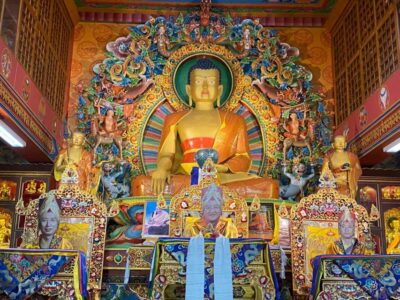
Morning Half Day Tibetan cultural tour to Tibetan Settlements
Read our review →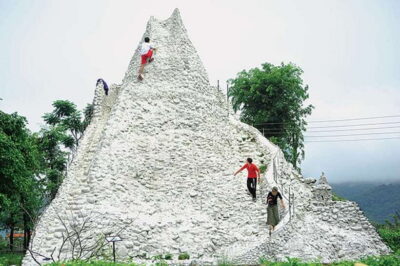
Sarangkot Sunrise with a half day Tibetan cultural tour
Read our review →
This tour also appears in