
REVIEW · KATHMANDU TOURS
Local Women Led Nepali Cooking Class
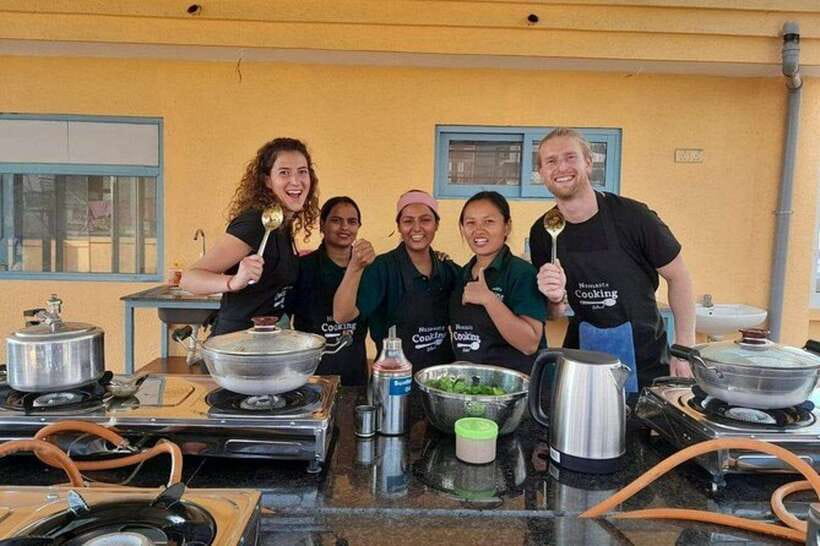
The most meaningful part of this three-hour Nepali cooking class is the people behind it. Namaste Cooking School gives you a close look at local food while supporting women who have survived trafficking and built new lives through work, skill, and community.
I like two things right away: the farm-to-table ingredients connect the meal to Nepal’s farmers, and the small group size keeps the class personal. The $30 price also covers the food you prepare, lunch or dinner, recipes, and a certificate, which makes it a strong value in central Thamel.
One point needs care before booking: pickup information is not fully consistent. Pickup service is advertised, but hotel pickup and drop-off are listed as not included, so confirm the arrangement before you pay.
Key points at a glance
- Women-led cooking with a purpose: Your class supports an organization that employs women who survived trafficking.
- Three parts to the meal: The menu covers an entree, main course, and dessert, giving you more than a single Nepali dish to practice.
- Local ingredients: Produce and other cooking supplies come from local farmers where possible.
- Small English-speaking group: The class is limited to eight people, with instruction in English.
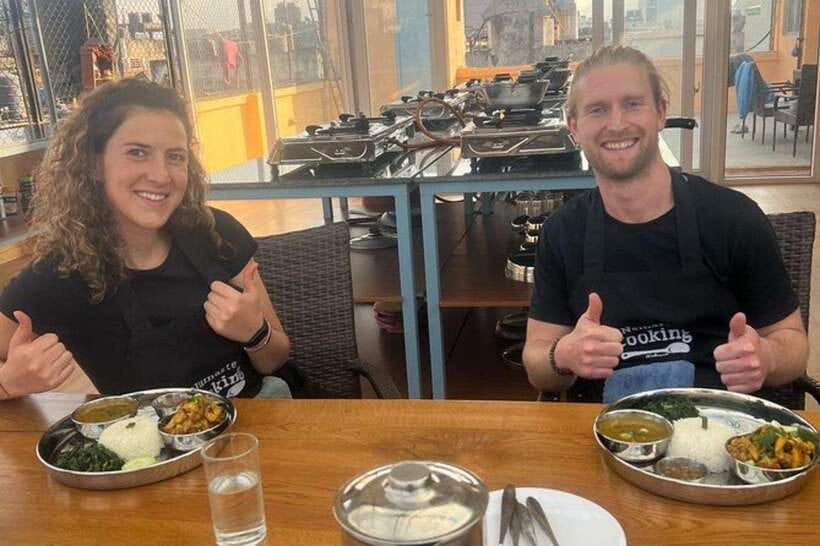
- Food is included: You eat the lunch or dinner you prepare, and you take home recipes and a participation certificate.
A cooking class with a wider purpose
Namaste Cooking School is not simply a place to follow a recipe and sit down to eat. The school links Nepali food with women’s economic independence, giving the class a social purpose that you can see in the way the experience is presented.
The women leading the school are survivors of trafficking. That fact matters, but it should not reduce them to a difficult past. The school presents them as workers, teachers, and people rebuilding their lives. Your booking helps support that work while giving you a direct way to engage with Nepal’s food traditions.
I appreciate this approach because it avoids turning social hardship into a sightseeing display. The focus remains on cooking, sharing food, and learning. You take part in a useful exchange rather than simply donating money from a distance.
The class also gives you a reason to ask questions. Food is an easy bridge between cultures. While you prepare the meal, you can learn how local ingredients are used, how Nepali flavors are balanced, and how food fits into daily life. The experience is likely to feel more personal than a restaurant meal because you are involved from the first preparation step to the final plate.
More Cooking Classes in Kathmandu
- Half day cooking class in Thamel kathmandu
★ 5.0 · 607 reviews - Kathmandu: Local Women-Led Nepali Cooking & Momo Class
★ 4.9 · 360 reviews - Kathmandu: Local Lead Nepali Cooking & Momo-Making Class
★ 5.0 · 212 reviews
Arriving in Thamel for a three-hour session
The school is in the heart of Thamel, Kathmandu’s best-known visitor district. That central location is helpful if you are staying nearby or already spending time in the area. You will not need to set aside a full day, and the three-hour format fits neatly into a morning, afternoon, or evening plan.
Starting times are based on availability, so check the schedule before you build the rest of your day around the class. A cooking session can work well after a morning of sightseeing, before an evening walk through Thamel, or as a relaxed break from temples and museums.
The location is convenient, but Thamel can be busy and confusing for first-time visitors. Give yourself enough time to find the school, especially if you are relying on a taxi or arranging a meeting point. The supplied information says pickup service is available, yet also says hotel pickup and drop-off are not included. Treat pickup as something to confirm, not as a guaranteed part of the $30 price.
Meeting the women behind the kitchen
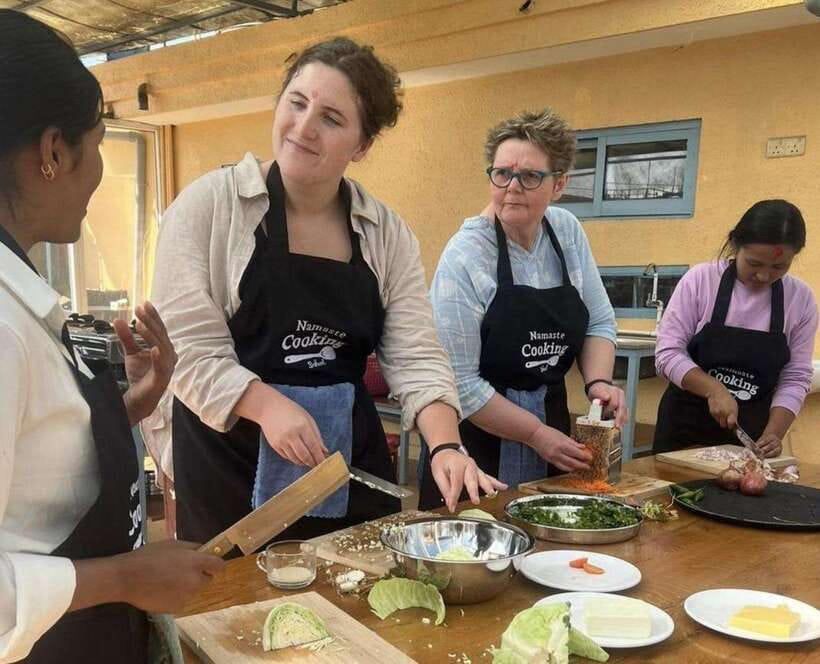
The class is taught in English and limited to eight participants. That is a useful size for a practical lesson. You should have a better chance of seeing the preparation clearly, asking questions, and getting help with unfamiliar techniques than you would in a large demonstration-style group.
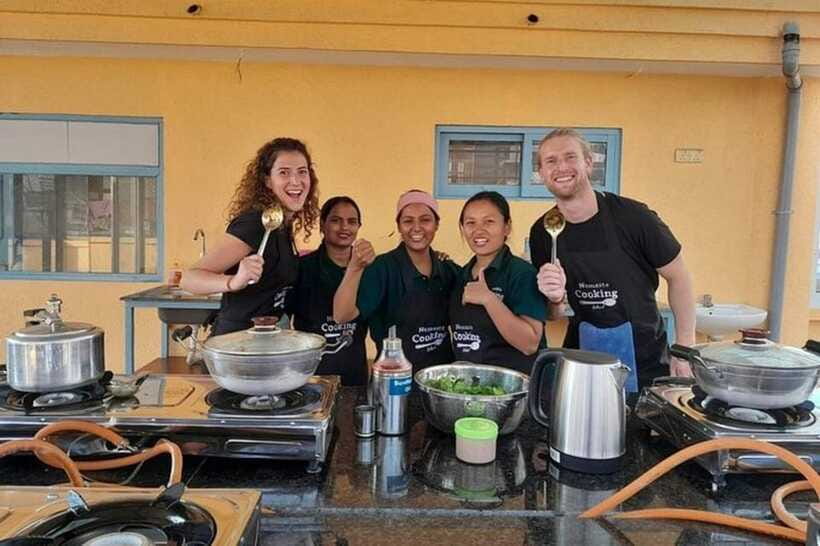
The women running the class are described as friendly, capable, and full of energy. One account of the experience highlights a team of four women who brought plenty of laughter and fun to the three hours. That gives you a good sense of the tone: this is meant to be social and hands-on, not stiff or formal.
Still, the exact staff members are not identified in the available information, so you should not expect a named chef or celebrity instructor. The value comes from the local teaching and the shared activity, not from a famous culinary personality.
The class is also a good choice if you are traveling alone. A small cooking group gives you a natural way to meet people without having to force conversation. Couples and families can join too, though the pace may suit people who are happy to share kitchen space and work as part of a group.
Preparing an entree, main course, and dessert
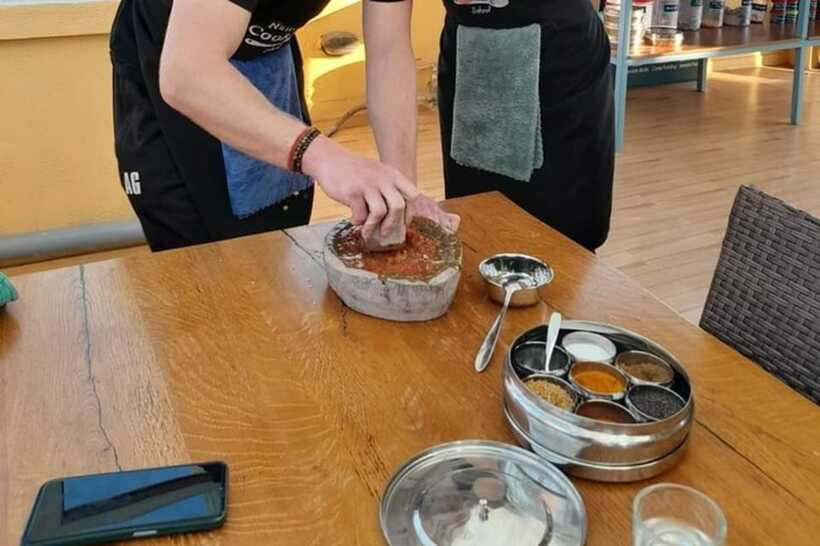
The menu is organized across an entree, a main course, and dessert. The supplied information does not name the exact dishes, which means you should check the current menu when booking if a particular Nepali recipe is important to you.
That broad menu structure is still useful. Instead of learning one item in isolation, you get a complete meal with different stages and flavors. You can see how a Nepali meal moves from an opening dish to a filling main plate and finishes with something sweet.
The first course may help you get comfortable with the kitchen and the ingredients. This is often where you learn the basic rhythm of the class: preparing produce, handling seasonings, and following instructions. Since the exact entree is not stated, I would avoid booking with the expectation of a particular snack or starter.
The main course is likely to be the practical center of the session. This is where you spend more time combining ingredients and working toward a dish substantial enough for lunch or dinner. The school’s emphasis is on authentic Nepali cuisine, so the lesson is intended to reflect local cooking rather than a generic international cooking format.
Dessert rounds out the meal and gives the session a clear finish. It also means the class feels like a full food experience rather than a short workshop followed by a separate restaurant visit.
You eat what you prepare. That sounds simple, but it changes the experience. You are not watching a chef make a dish and then receiving a plate prepared by someone else. The meal becomes a direct reminder of the work you did, including any small mistakes or uneven results.
A different kind of day from the same base:
- Everest Base Camp Trek – 14 Days
★ 5.0 · 1,499 reviews - Private Kathmandu Sightseeing Tour | UNESCO World Heritage sites
★ 5.0 · 756 reviews - Everest Base Camp Helicopter Tour landing at Everest View Hotel
★ 5.0 · 668 reviews - Everest Base Camp Trekking
★ 5.0 · 485 reviews
Farm-to-table ingredients and Himalayan flavors
Namaste Cooking School sources ingredients directly from local farmers. This gives the class a stronger connection to Nepal’s food supply and makes the cooking feel less like a staged activity designed only for visitors.
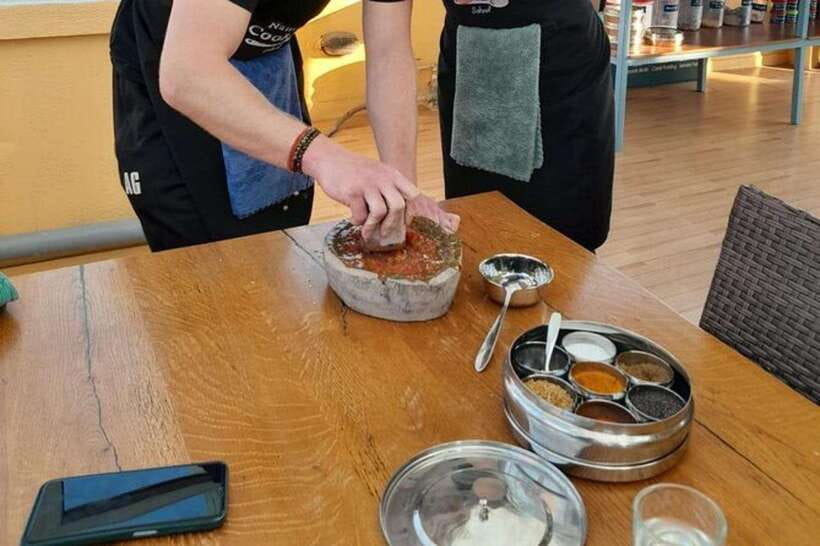
Using local ingredients also helps explain why Nepali food tastes the way it does. Ingredients are not just decoration on a plate. They shape the balance, texture, and aroma of the finished meal. Working with them yourself can help you understand the food more clearly than reading a menu description.
The school describes its cooking as a way to preserve authentic Nepali cuisine. That does not mean every dish will match one single national standard. Nepali cooking varies by region, household, season, and community. You should think of this class as an introduction to local traditions, not a complete guide to all Himalayan food.
The experience is especially worthwhile if you enjoy food with a story attached to it. You are learning about ingredients, but you are also supporting local farmers and a women-led organization. Those connections give the $30 fee more weight than the cost of a standard meal.
What the $30 price really covers
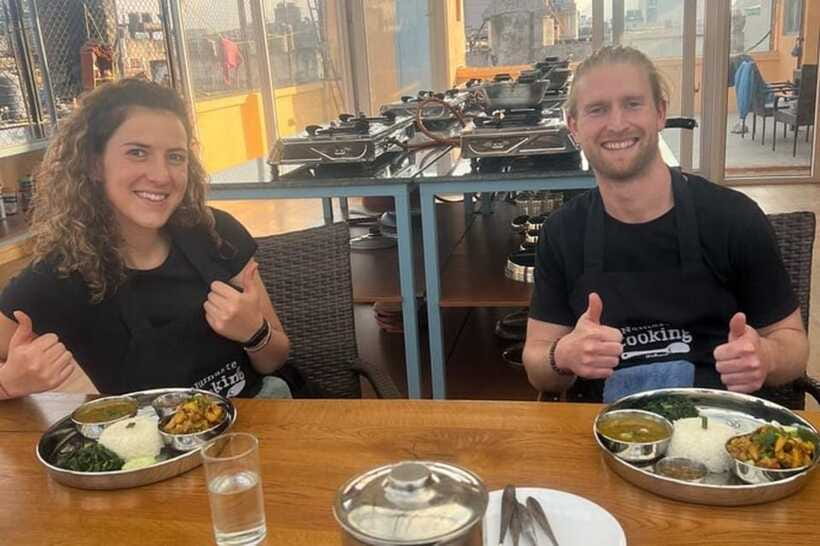
At $30 per person, the class is reasonably priced for a three-hour activity in central Kathmandu. The fee includes all cooking ingredients, the lunch or dinner you prepare, a recipe booklet, and a certificate of participation.
The food itself is only part of the value. You are also paying for instruction, kitchen use, a small group setting, and the time spent preparing several parts of a meal. If you planned to eat out anyway, the class combines that meal with an activity and a cultural exchange.
The recipe booklet is useful after you leave. A cooking class can easily become a pleasant memory that never reaches your home kitchen. Having the recipes gives you a better chance of repeating at least some of the dishes and sharing Nepali food with friends or family.
The certificate is less important for most people, though it can be a fun memento. I would not choose the class because of the certificate. Choose it for the meal, the instruction, and the chance to support the school’s work.
Personal expenses are not included. The stated price also does not include hotel pickup and drop-off. Since pickup is mentioned separately as available, ask the provider exactly what is offered and if an additional charge applies.
A social, cheerful atmosphere
The class appears to place as much value on company as on technique. The women leading it are described as friendly, welcoming, and full of humor, with a strong sense of fun during the session.
That matters because cooking beside strangers can feel awkward if the class is overly formal. Here, you should expect conversation and shared work. You may chop beside another participant, compare results, or laugh over a difficult step. The experience is designed to unite people through food, not simply to deliver a lecture.
A lively class is not perfect for everyone. If you want a quiet, highly technical lesson with long explanations about professional kitchen methods, this may not be the right fit. The tone appears warm and social, with enjoyment treated as part of the lesson.
For most people, that is a plus. You do not need advanced cooking skills, and you do not need to know much about Nepali cuisine before arriving. The point is to take part, learn, and share the food at the end.
Who should book this experience
I would recommend the class to several types of visitors:
- Food-focused visitors: You want more than a restaurant meal and enjoy learning how dishes are made.
- First-time visitors to Nepal: The class offers an approachable introduction to local flavors and traditions.
- Solo travelers: The small group gives you a simple way to meet people in a friendly setting.
- Couples and families: You can share the work and eat a meal you prepared together.
- Socially conscious visitors: You want your spending to support women rebuilding their lives after trafficking.
- Short-stay visitors: Three hours is enough to fit into a busy Kathmandu schedule.
You may want to skip it if you dislike group activities, have strict dietary needs that have not been confirmed, or want a detailed menu in advance. The available information does not specify individual dishes, dietary accommodations, kitchen accessibility, or the precise pickup arrangement. Ask those questions before booking if they affect your decision.
Booking, cancellation, and practical planning
The class is offered as a small group with a maximum of eight participants. That limit is one of the better features because cooking requires access to work surfaces, ingredients, and instruction.
English is the stated teaching language. If you are comfortable following cooking instructions in English, the class should be straightforward to join. The information does not list other teaching languages.
You can cancel up to 24 hours before the experience for a full refund. The reserve-now-and-pay-later option also lets you hold a place without paying immediately, which is useful if your Kathmandu schedule is still changing.
I would book earlier if you have a fixed travel date. With only eight spaces, a popular time could fill faster than a large group tour. At the same time, do not book until you have checked the start time and clarified transport.
Is the Namaste Cooking School class worth booking?
Yes, especially if you want a personal food experience with a clear local and social purpose. The strongest reasons to book are the women-led format, local ingredients, complete meal, small group, and fair $30 price.
You should go for the chance to cook and eat Nepali food while supporting the school’s work, not because you expect a luxury kitchen or a named chef. Confirm the menu if you need a specific dish, and confirm pickup because the transport details are not entirely clear.
For a three-hour activity in central Thamel, this is a good choice for curious eaters who like meeting people and taking part. The recipe booklet gives the experience some life after your trip, while the meal and conversation make it more than a standard cooking demonstration.
FAQ
Where is the Nepali cooking class located?
Namaste Cooking School is located in Thamel, in Nepal’s Bagmati Zone.
How long does the cooking class last?
The activity lasts three hours.
How much does the class cost?
The listed price is $30 per person.
What food will I prepare?
The class includes an entree, a main course, and dessert. The exact dishes are not specified in the available information, so check the current menu before booking if you want a particular recipe.
Is the meal included?
Yes. Lunch or dinner made from the dishes you prepare is included.
Are cooking ingredients provided?
Yes. All cooking ingredients are included in the activity price.
Is the class taught in English?
Yes. English is the stated language of instruction.
How many people can join the class?
The class is limited to eight participants.
Can I cancel for a refund?
Yes. You can cancel up to 24 hours in advance for a full refund.
More hands-on workshops in Kathmandu
- Knife (Khukuri) Making Workshop- Forge of the Gurkhas
★ 5.0 · 143 reviews - Local Women Lead Nepali Cooking Class
★ 5.0 · 125 reviews - The best Private Nepali Cooking Class in Kathmandu
★ 5.0 · 83 reviews - Kathmandu: Traditional Momo Making Class & Pickup
★ 4.8 · 60 reviews
Recently added around Kathmandu
- Kathmandu Airport Pickup and Drop-off Services★ 5.0 · 3 reviews
- Kathmandu Paragliding★ 5.0 · 3 reviews
- Explore The Beauty Of Langtang Valley In 8-Days Trek★ 5.0 · 3 reviews
- Kathmandu Chandragiri Cable Car and Swayambhunath Private Tour★ 5.0 · 3 reviews
- Kathmandu: Nightlife and Pub Crawl Tour★ 5.0 · 3 reviews
- Kathmandu: Momo Making Class with a Local Chef★ 5.0 · 3 reviews
- Mountain Flight Experience in Nepal★ 4.5 · 3 reviews
- Everest Base Camp Trek★ 5.0 · 3 reviews
Other Kathmandu Tours worth a look


Private Kathmandu Sightseeing Tour | UNESCO World Heritage sites
Read our review →
Everest Base Camp Helicopter Tour landing at Everest View Hotel
Read our review →


Nagarkot Sunrise View and Day Hiking from Kathmandu
Read our review →
Full Day 7 UNESCO Tour with Lunch – Private/Group
Read our review →
This tour also appears in