
REVIEW · POKHARA TOURS
Nepalese Kitchen in Pokhara: Momos or Dal Bhat Cooking Class
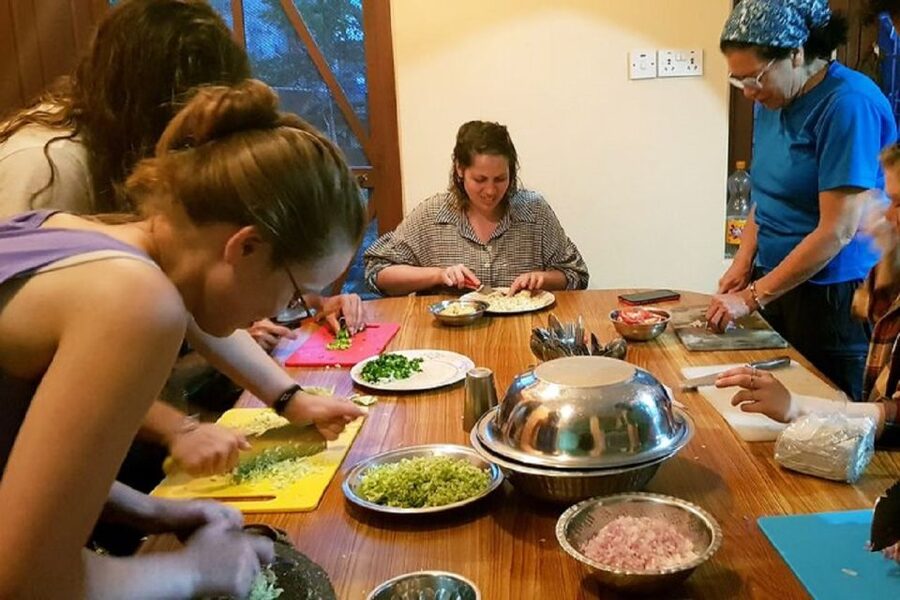
The best part of this Pokhara cooking class is its setting: you cook in Sarita’s own home kitchen, not in a polished cooking school built for tourists. You chop, season, shape, and cook beside a local host, then sit down to eat what you made. I like the personal setting and the chance to learn food that Nepali families actually eat.
I also like the choice between momos and dal bhat. Momos are playful and hands-on, while dal bhat gives you a better look at the many parts of Nepal’s everyday meal. The main thing to consider is the taxi transfer. One person found the driver tried to press for extra service, so confirm the pickup details and fare before setting off.
Quick points to know
- Sarita teaches in a private home kitchen, giving the class a friendly, family feel rather than a group-school atmosphere.
- Choose momos or dal bhat, depending on whether you want dumpling technique or a fuller Nepali meal.
- The class is genuinely hands-on: you chop vegetables, mix fillings, shape momos, season dishes, and cook.
- Momo production can be generous: some sessions produced 70 or more dumplings, so arrive hungry.
- Round-trip transport from Pokhara Lakeside is included, with pickup and drop-off listed at Lakeside Road, Lakeside-6.
- You receive a printed or digital recipe, making this more useful than a meal that ends when you leave the table.
A home kitchen instead of a tourist classroom
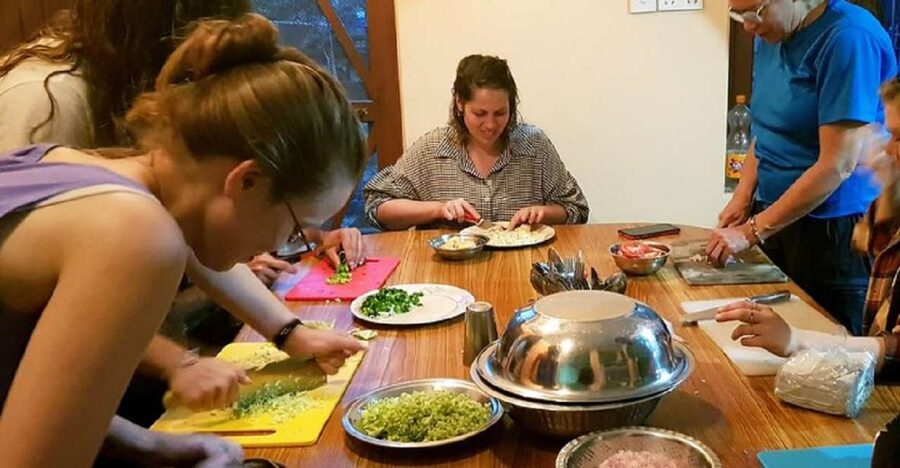
This is a small, private-group activity in Pokhara’s Pashchimanchal area. The host is Sarita, a warm and patient instructor who has guided beginners through both momo and dal bhat preparation. English, Hindi, and Nepali are available, and several participants found Sarita’s English clear and helpful.
The home setting changes the tone. You are not sitting in rows while someone demonstrates from a distance. You work at the counter, ask questions as you go, and see how ingredients and spices are handled in an everyday Nepalese kitchen.
That setting also brings a cultural side to the class. You may meet members of Sarita’s family, and the conversation can move beyond recipes to local food customs and daily life. The kitchen has been described as clean, with fresh ingredients prepared for the lesson. Some ingredients have come from the family garden, which adds a direct connection to the food on your plate.
You should understand that this is a home visit as much as it is a cooking lesson. If you want a sleek culinary studio, restaurant-style presentation, or a formal chef demonstration, this may feel informal. If you want a personal look at how a local household cooks, the informality is the point.
More Cooking Classes in Pokhara:
- Nepalese Momos or Dal Bhat Cooking Class (Cook with Delight)
★ 5.0 · 99 reviews - MoMo or Dal Bhat Cooking Class at Aama Kitchen in Pokhara
★ 4.9 · 28 reviews - Pokhara: 3 Hour Authentic Nepali Thakali Dish Cooking Class
★ 5.0 · 10 reviews
Starting from Lakeside Road
The listed pickup point is Lakeside Road in Lakeside-6, Pokhara, and round-trip transport from the Lakeside area is included. The itinerary gives two pickup options and two drop-off options, both tied to Lakeside Road, so check the exact meeting point when you book.
The transfer is useful after a morning of sightseeing or before an afternoon walk around Pokhara. You do not need to arrange a separate taxi to reach the kitchen, and the return ride removes some of the guesswork at the end.
Still, transport deserves a little care. One person had trouble with a taxi driver who tried to ask for more money for additional services. I would confirm that the included transfer covers the agreed route, keep your booking details handy, and avoid accepting extra arrangements unless you understand the price.
The activity asks you to bring a passport or ID card, and a copy is accepted. That is a small but important detail, especially if you are already carrying only a day bag.
The first lesson: ingredients, spices, and local methods
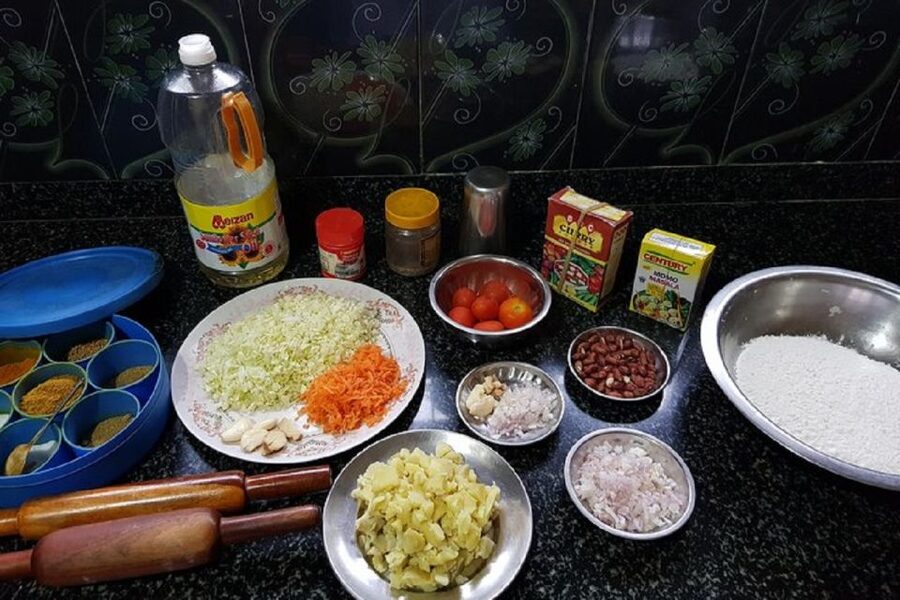
Once you arrive, the class begins with an introduction to ingredients and traditional cooking methods. The supplied ingredients and spices are included, so you can focus on the work instead of shopping or guessing which spice belongs in which dish.
The value here is not simply learning a list of ingredients. You get a sense of how flavor is built through chopping, mixing, seasoning, and cooking in stages. Sarita explains what you are doing and why, and she adjusts her pace for the people in front of her.
This works well for beginners. One participant with limited English found that Sarita gave slow, simple instructions, while others appreciated her patience when shaping momos proved difficult. You do not need prior cooking skill, though you should be ready to take part rather than watch.
A useful question to ask is how the recipe can be adapted at home. Momo technique, in particular, can be applied to other dumpling fillings and styles. The class gives you more than one fixed dish if you pay attention to the shaping, filling, folding, and steaming methods.
Choosing momos or dal bhat
Your main decision is the dish. The two options offer different kinds of cooking practice.
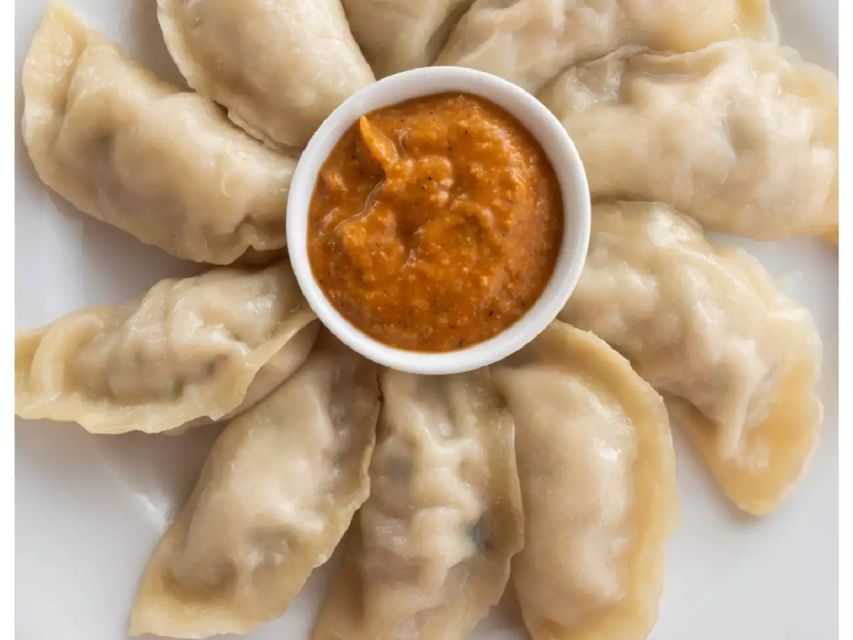
Momos are Nepalese dumplings, and the process is active from start to finish. You prepare the filling, work with the dough, fold the dumplings, and cook them with a dipping sauce. Shaping is harder than it looks, so expect your first few to look uneven. That is part of the fun, and Sarita guides you until the folds become more natural.
The quantity can be surprisingly large. Some sessions produced 70 or more momos, and one participant joked that you should arrive with an empty stomach. If you are cooking with a partner or a small group, the work becomes social and fast-moving. You may also make vegetable or cheese momos, depending on the arrangement.
One useful suggestion from a past participant was to try several fillings, such as vegetable, chicken, and buff, instead of making a large batch of only one kind. That is not promised as part of the class, so ask ahead if tasting different fillings matters to you. The same applies to fried momos, since the standard description focuses on freshly steamed momos.
Dal bhat is a broader meal and usually involves several parts rather than one central item. You work through multiple stages and learn how lentils, rice, vegetables, spices, and accompanying dishes come together. It takes more time and coordination, but it gives you a stronger feel for Nepal’s everyday food culture.
Several people particularly enjoyed making dal bhat from scratch and found the finished meal satisfying. One participant noted that the class included multiple dishes, while another appreciated learning how locals prepare a meal they had already eaten around Nepal. If you want a lesson that explains how a complete meal is assembled, choose dal bhat.
Momos are probably the better pick for a relaxed, tactile activity. Dal bhat is the better pick if you want a meal with several components and a clearer connection to everyday Nepali dining.
More hands-on workshops in Pokhara:
- Pokhara: 3 Hour MoMo cooking class
★ 4.5 · 10 reviews - Pokhara: Nepali Cooking Class and Momo Making Workshop
★ 5.0 · 6 reviews - Half day cooking class in Thamel kathmandu
★ 5.0 · 607 reviews - Kathmandu: Local Women-Led Nepali Cooking & Momo Class
★ 4.9 · 360 reviews
Three hours of chopping, shaping, and cooking
The stated duration is three hours, though one momo session took about four hours. That difference makes sense. Folding a large number of dumplings takes time, particularly when you are learning from scratch and stopping to talk along the way.
The schedule includes a photo stop, a visit, guided time, free time, and the three-hour cooking class. The cooking portion is the clear focus. The other itinerary labels are broad, so do not book this expecting a separate sightseeing tour of major Pokhara attractions. The special visit is to the home kitchen and the cooking session itself.
The pace is usually practical rather than rushed. Sarita prepares the ingredients and then lets you do much of the work. You can expect to chop vegetables, mix and season fillings, handle dough, and help cook the food. Her patient approach is especially useful when the food requires repeated practice.
For momos, the shaping stage is likely to take the most attention. For dal bhat, the challenge is keeping track of several preparations. In both cases, ask questions as you go and take notes if you want to reproduce the dish later.
You will eat the food you prepare at the end. Drinking water is included. Extra food and drinks outside the class are not included, so plan on the meal you cook being the main food service.
The meal is part of the lesson
Sitting down to eat gives the class a satisfying finish, but it also helps you understand the food as a complete dish. A dipping sauce changes the way momos taste, while dal bhat makes more sense when its separate parts are eaten together.
The portions can be generous, especially with momos. If you are cooking with a partner, you may leave with more food than you can comfortably finish. One person suggested bringing a takeaway container, but containers are not listed among the inclusions, so bring one only if you have space and want to ask whether leftovers can be taken away.
The meal also creates time for conversation. Past sessions have included discussions about Nepalese culture, cooking habits, and family life. Some participants were welcomed by the wider family and found the atmosphere similar to visiting a friendly aunt’s home.
That personal contact is a major reason to choose this class over a restaurant meal. A restaurant lets you taste momos or dal bhat. Here, you learn why the ingredients are used and how the dish is made. You leave with a recipe rather than only a full stomach.
Recipes you can use after Pokhara
The printed or digital recipe is one of the strongest practical features. It means you do not have to rely on memory after three hours of new ingredients and techniques.
This matters most with momos. The dough, filling, folds, steaming, and sauce all need to come together, and the process has enough steps to make a written guide useful. One participant had already made two more batches at home after returning from the class.
Dal bhat is also worth taking notes on because the meal involves several elements. The written recipe helps you remember quantities and sequence, while Sarita’s explanations give you a better sense of how to adjust the cooking.
If you have dietary preferences, ask what version is available before the class. The main choice is listed as momos or dal bhat, and past sessions have included vegetable, cheese, chicken, and buff momos, but the exact filling is not specified as a fixed inclusion.
What the $28 price gets you
At $28 per person, the price covers three hours of instruction, ingredients, spices, the meal you prepare, drinking water, the recipe, and round-trip transfer from Lakeside. That is a fair package for Pokhara, especially because the activity is a private-group experience rather than a large class.
The strongest value is the personal teaching. You are paying for access to Sarita’s home kitchen and her time, not just for a plate of food. The included transport also saves you the cost and effort of finding the address on your own.
The price is less compelling if you only want to sample Nepali food cheaply. A restaurant meal will cost less than a private lesson. Book this when you want a skill, conversation, and a closer look at home cooking, not simply lunch.
The class has a top rating from 67 reviews, and transport received a perfect score from 98 percent of participants. Those figures support the idea that the service is reliable overall, but they do not remove the need to confirm the taxi details.
Who will enjoy this class most
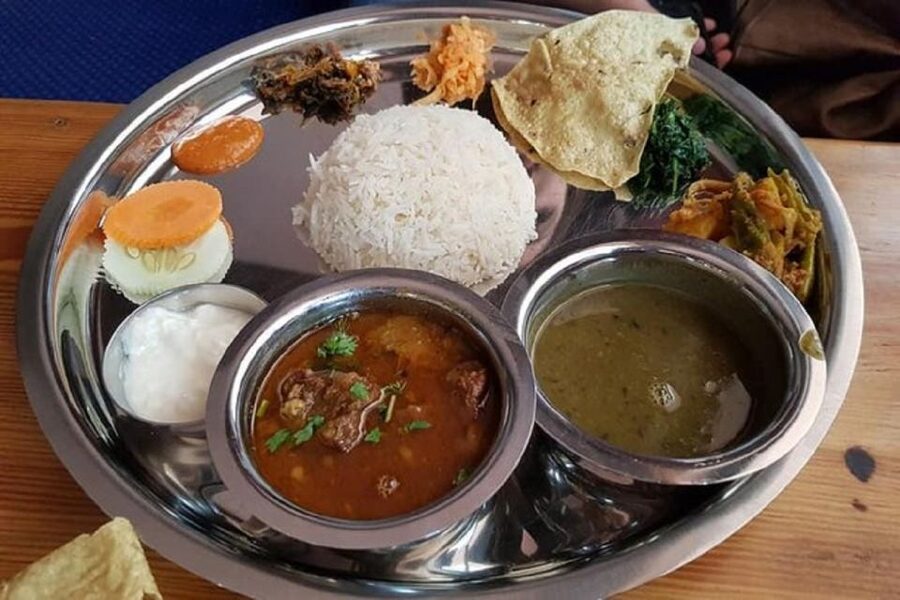
I would recommend it to couples, solo visitors, and small private groups who want a slower cultural activity in Pokhara. It fits well after trekking, when your legs need a break but you still want to do something active.
It is also a good choice for home cooks. You will have time to ask about spice use, filling changes, and ways to repeat the recipe in your own kitchen. Even if you are not confident with dough or knife work, Sarita’s patient instruction makes the class approachable.
Families may enjoy it too, provided everyone is happy to work in a home setting. The experience is intimate, so children or larger groups should confirm the group arrangement before booking.
I would skip it if you dislike cooking, need a tightly timed activity, or expect a full Pokhara sightseeing tour alongside the food lesson. The class is centered on participation and conversation, and the timing can stretch when the group is making a large batch of momos.
Cancellation is free up to 24 hours before the activity, and you can reserve now and pay later. Starting times depend on availability, so check the schedule before building the rest of your day around it.
Should you book the Pokhara momo or dal bhat class?
Book it if you want a personal introduction to Nepali home cooking, especially if you value meeting a local family more than sitting in a formal cooking studio. Sarita’s friendly teaching style, fresh ingredients, patient help, and take-home recipe make this a useful three-hour activity rather than a one-off meal.
Choose momos for hands-on shaping, a social rhythm, and a dish you can repeat in many forms. Choose dal bhat for a fuller lesson in the structure of an everyday Nepali meal.
My practical advice is to arrive hungry, allow a little flexibility beyond the advertised three hours, confirm your taxi arrangements, and bring your ID or a copy. For $28, this is good value for anyone who wants to leave Pokhara with both a taste of Nepal and a recipe you can actually use.
FAQ
How long does the cooking class last?
The stated duration is three hours. Cooking a large batch of momos may take longer, so allow some flexibility in your schedule.
Can I choose between momos and dal bhat?
Yes. The experience offers a choice between freshly steamed momos and dal bhat, Nepal’s classic meal.
Where does the class take place?
The class takes place in a real Nepalese home kitchen in Pokhara.
Is transportation included?
Yes. Round-trip transfer from the Pokhara Lakeside area is included. The listed pickup and drop-off location is Lakeside Road, Lakeside-6, Pokhara.
What languages does the guide speak?
The live guide can teach in English, Hindi, or Nepali.
What should I bring?
Bring a passport or ID card. A copy is accepted.
Recently added around Pokhara
- Paragliding in Pokhara★ 5.0 · 3 reviews
- Pokhara: 5-Day Annapurna Base Camp Trek with Hot Spring★ 5.0 · 3 reviews
- Pokhara:4-Day Ghorepani Poon Hill Guided Trek via Ghandruk★ 5.0 · 3 reviews
- Pokhara: 7-Day Annapurna Base Camp Trek via Ghandruk★ 4.3 · 3 reviews
- Peace & Panorama: Stupa and Pumdikot Scenic Drive Tour★ 3.6 · 3 reviews
- Beautiful Sarankot Sunrise with Full Day Sightseeing in Pokhara★ 4.5 · 3 reviews
- 3 Day Australian Camp Dhampus Ghandruk Easy Trek in Pokhara★ 3.5 · 3 reviews
- Overnight Dhampus Australian Camp Easy Hiking from Pokhara★ 5.0 · 3 reviews
Other Pokhara Tours worth a look
ZipFlyer Nepal – The World’s Steepest Zip-line
Read our review →

Full-Day Tibetan Cultural Tour to Tibetan Settlements Pokhara
Read our review →
Full-Day Sharing Bus Tour on 7 Iconic Destination
Read our review →
Trekking in Annapurna/Langtang/Everest/Upper Mustang regions
Read our review →This tour also appears in